
News
More troubles for former AGF Malami as CSO demands his probe over N1 billion car gifts


Embattled former Attorney General of the Federation and Minister for Justice, Abubakar Malami is facing another trouble as a civil society organisation, Human and Environmental Agenda, has demanded a “thorough, immediate and urgent investigation” into the alleged N1bn car gifts to his supporters in Kebbi State.
This is coming one week after a High Court of the Federal Capital Territory fixed new date for hearing on a case instituted against Malami for allegedly abusing his office and forcing an international businessman and property developer, Mr. Cecil Osakwe to give out a property to a woman. In the suit, Osakwe is seeking an order to compel the erstwhile AGF to pay N1billion as damages.
In the current case, Human and Environmental Agenda, an anti-corruption group, in a petition to the Independent Corrupt Practices and other Related Offences Commission, ICPC, also demanded Malami’s probe over several allegations of corruption and abuse of office levied against him.
HEDA said its four-page petition, signed by its Chairman, Olanrewaju Suraju, was also copied to the National Security Adviser, Mallam Nuhu Ribadu.
The group decried the lack of investigation by anti-corruption agencies into those allegations, which, according to a statement by the group, were conveyed by media reports and documentary evidence.
It noted that such lack of investigation went “to the root of breakdown of law and order and total disregard for the rule of law while Mr Malami served as Minister of Justice.”
HEDA cited some of the corruption allegations against Malami to include “distribution of 30 car gifts worth over N1 billion to his supporters in Kebbi State.”
The car gifts, according to the group, include “14 Mercedes Benz, eight Prado SUVs, four Toyota Hilux and four Lexus LX,” adding that “the beneficiaries were social media influencers, executive members of Mr Malami’s foundation and women support groups.”
Other allegations highlighted by the group include, “Illegal auctioning of sea vessels holding crude oil seized by the Federal Government; violating Section 31(2) and (4) of the EFCC Act 2004 and assuming the role conferred on the Economic and Financial Crimes Commission as reported by The Cable Newspaper on July 13, 2020.
“Alleged duplicity of payment of $16.9m fees to two friends as new lawyers for the recovery of the loot traced to a former Nigerian Head of State, Sani Abacha, after a Swiss lawyer, Enrico Monfrini, hired and fully paid by the previous government to help in the recovery, had completed his brief as reported by PremiumTimes on April 10, 2018.
According to the petitioners- “It was alleged that Mr Malami undertook the action with the intention for kickback from the deal.
“Allegedly seeking the withdrawal of cases against Bello Adoke, Diezani Alison-Madueke, Abubakar Aliyu and others involved in the Malabu scandal through his letters to former President Muhammadu Buhari on the grounds of lack of significant evidence to prove allegations of sharp practices against prominent players in OPL 245 oil deal,” among others.
HEDA stressed that it strongly believed that the allegations against the former AGF were too serious to be ignored or allowed to go without investigation.
In the earlier mentioned case, Justice Oluyemisi Adelaja adjourned the case for definite hearing, even as he directed the service of all the necessary court papers on the ex-AGF, Malami, SAN, to enable him to enter his defence in the matter.
He further directed that a proof of service of the suit and hearing notice on Malami, should be made available to the court.
The plaintiff, in the legal action he instituted through his team of lawyers led by Mr. Victor Giwa, told the court that the former AGF, using his office, arm-twisted him to give out two units of three-bedroom flats in one of his properties situated as Mekong Close, Maitama, Abuja to a civil servant, Mrs. Asabe Waziri.
Osakwe alleged that Malami forced him to hand the property worth about N130million to Mrs. Waziri, against a subsisting order of a court of competent jurisdiction.
The plaintiff told the court that Malami, SAN, while in office as the AGF waded into a civil dispute his firm had with Mrs. Waziri and used his position to supervise his continuous harassment by security operatives.
Alleging that his fundamental rights were grossly violated, the plaintiff, said he sued Malami both in his official and personal capacity.
He maintained that the AGF acted with malice and abused his office by raising charge of “collecting money under false pretense’’ against him with a view to ensuring that the property was fully handed over to Mrs. Waziri who was also cited as a defendant in the suit.
According to the plaintiff, Malami took the action, even though he was aware that the 2nd defendant had initially moved into the said property and stayed for over eight months before she was vacated from it by a lawful court order that terminated sales transaction between both parties.
Consequently, aside from praying the court to declare that the AGF engaged in abuse of public office, the plaintiff, urged the court order him to pay N1bn as damages.
At the resumed proceedings in the matter on last week Monday, Malami was neither present in court nor represented by any lawyer which Irked counsel to the plaintiff, Mr. Giwa to contend that the former AGF ought to be in court, insisting that he could not use the office he occupied for about eight years, to pursue his personal interest.
He told the court that the bailiff was duly mobilised to serve the processes on Malami, insisting that he was aware that the matter was slated for hearing.

The Supreme Court of Nigeria will on Thursday, deliver judgments in two cases involving the leadership crises rocking the African Democratic Congress and the Peoples Democratic Party.
According to information on the official website of the court, the matters, listed under “Political Appeals”, have been added to the cause list for Thursday, April 30, 2026.
While judgment in the ADC matter, marked SC/CV/180/2026, has been fixed for 2 pm, there is no time yet for that if the PDP.
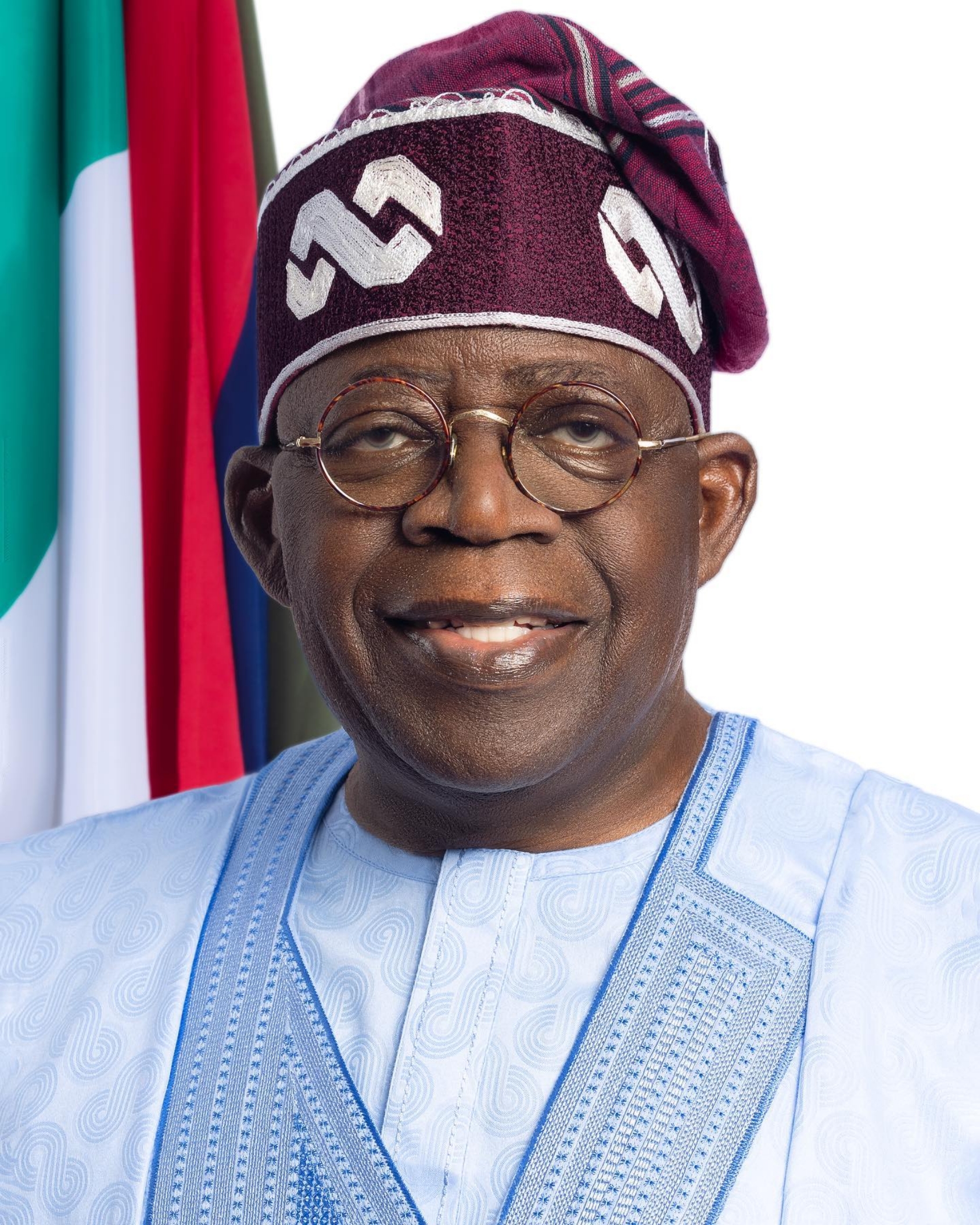
President Bola Tinubu has written the Senate, seeking the screening and subsequent confirmation of fifteen nominees to the National Human Rights Commission (NHRC).
The letter was read by the President of the Senate, Senator Godswill Akpabio.
The letter seeks the reconstitution of the commission’s board in line with statutory provisions with the list comprising nominees from diverse professional backgrounds, including the media and legal sectors.
Among the nominees are the President, Nigeria Guild of Editors and Editor, Vanguard Newspapers, Mr. Eze Anaba; and Dr. Salamatu Hussaina Suleiman, who has been proposed as chairman of the board.
The Executive Secretary of the Commission, Dr. Anthony Ojukwu (SAN) is to retain his position as the Chief Executive Officer.
Other nominees include Mrs Roseline Tasha, Ambassador Adam Yubak Baku, ACG Felix Lawrence, Mr. Edmund Chinonye, Mr. Chinonye Obiaku (SAN), Oluwakemi Asiwaju Okere-Odo, Professor Adedeji Ogunji, Kingsley Chidozie, Mohammed Adelodu, Maupe Ogun Yusuf, and Otunba Francis Meshioye as members.
Also nominated are Patience Patrick and Hawwa Ibrahim, listed as members.
The President said the nominations were made pursuant to Section 2(3) of the National Human Rights Commission (Establishment) Act, 2010, which empowers him to constitute the board subject to Senate confirmation.
He explained that the reconstitution of the board was necessary to enhance the commission’s institutional capacity and enable it to more effectively discharge its mandate to promote and protect human rights across the country.
If confirmed, the new board is expected to play a critical role in reinforcing the NHRC’s oversight functions, particularly at a time of heightened concerns over rights protection and accountability in Nigeria.
Following the presentation of the request, the Senate referred the nominations to its Committee on Judiciary, Human Rights and Legal Matters for screening and report within two weeks.

The Economic and Financial Crimes Commission, EFCC, has revealed that it investigated the founder of Streams of Joy International, Pastor Jerry Eze, for six months over suspected money laundering before clearing him.
Ola Olukoyede, chairman of the Commission, disclosed this on Wednesday while speaking at the Jerry Eze Foundation Business Grant Award Ceremony in Abuja.
According to him, the probe was triggered by intelligence reports and petitions after the commission observed large inflows of foreign currencies into the cleric’s domiciliary account.
“We work by intelligence, we work by petitions. At some point, I saw there was an account, a domiciliary account. Dollars, pounds were dropping in like raindrops, from Colombia, from America, from Sri Lanka, even from Togo.
“I said who is this man? Yes, I’ve been hearing about his name, I’ve seen his face a couple of times. I never bothered about what he was doing. I knew he was a pastor.
“So they said this one pastor of streams of joy, go and investigate him. So we went to the investigation. We combed the books,” Olukoyede stated.
The EFCC boss said he subsequently invited Eze for questioning after preliminary findings were compiled by investigators.
He added that upon meeting the cleric and reviewing the findings of the investigation, the commission found no wrongdoing.
“So he came to my office. He told me what happens and all of that, and how the money came, what he does, how he has been helping people, and all of that.
“I said, you know what, I didn’t call you here to explain to me. We have already done our work. I called you here to commend you,” he stated.
The remark drew applause from the audience, as Eze, who was present at the event, acknowledged the commendation.
He noted that the commission has a responsibility not only to investigate financial crimes but also to recognise individuals found to have acted with integrity.
The EFCC chairman, however, stated that the agency would continue to monitor financial activities where necessary, stressing that its preventive mandate remains critical in tackling corruption.
-

 News1 year ago
Senate to speed up conclusion of Nigeria Forest Security Service Bill
-

 News9 months ago
The Many Lies Against Bashir Haske
-

 News3 years ago
Breaking: Tinubu’s authentic ministerial nominees
-
 News3 years ago
“Anytime we want to kill terrorists, President would ask us to take permission from France but they were killing our soldiers-” Niger Republic coup leader
-
 News3 years ago
“I’m leaving the Catholic church because Bishop Onah is oppressing me,” says Okunerere
-

 News3 years ago
Radio Nigeria’s veteran broadcaster Kelvin Ugwu dies three months after retirement from service
-
 News3 years ago
Dokpesi and the Gazebo Mystique
-

 News3 years ago
Tsunami: Tinubu orders dissolution of managements, boards of MDAs, to sack all Buhari’s political appointees