News
Major takeaways from Gov Ododo’s inspection tour of projects in Kogi Central


By ismaila Isah
Few days ago, Governor Alhaji Ahmed Usman Ododo concluded a 5-day inspection tour of ongoing road projects and community engagement across the five local government areas of Kogi Central Senatorial District comprising Adavi, Ajaokuta, Okehi, Okene, and Ogori-Magogo local government area as part of his administration’s ongoing commitment to enhance equitable development across the state.
The tour, which formed part of the “Take Governance Closer to the People” initiative, saw the governor physically inspect key projects and engage directly with residents, community leaders, and contractors.
Importance of Project Inspection
Project inspections, monitoring and evaluation are integral parts of governance. Inspections are crucial for ensuring project success by verifying work quality, identifying potential milestones and grey areas, where there may be, early, and addressing them before they constitute set backs for the project.
Inspections also help prevent costly mistakes, delays, and safety hazards, ultimately contributing to project efficiency and completion within budget and on schedule.
Among the major projects inspected was the 8.6 kilometer Obangede–Okaito road and the 3.2 kilometer Obangede-Oboroke road linking Eika and Ihima districts in Okehi local government area and several ongoing road projects in Ihima.
The governor also visited the Obangede–Oziokutu road, as well as other access roads linking several rural communities in Adavi and Okehi local government areas.
One of the significant attractions of the road projects in Okehi and Adavi local government areas includes the over 60-years old Ategoza bridge which served as the link between the old Kabba and Ebira division in the old Kabba province which had previously defied major interventions in the past. Another key feature of the new roads is the Oziokutu bridge on the spur of the Obangede-Ogaminana road which is the link between the people of Adavi and Okehi who shared several historical, social and economic ties.
These projects, according to Governor Ododo, are designed to improve connectivity, open up rural economies, and ensure access to essential services by the people.
At every stop, Governor Ododo emphasized the importance of quality control and timely delivery, reiterating that the state government would ensure value for investment in infrastructure in all parts of the state.
“We will not tolerate substandard work. The people of Kogi state deserve quality infrastructure, and that is what this government will deliver,” he said during a stop in Adavi.
Taking Governance closer to the People
In addition to project inspection, the governor also engaged with communities in his itinerary calling for accountability from those in positions of authority and responsibility from the community to hold their leaders accountable at all times. He urged the people to take ownership of public infrastructure and maintain vigilance to protect public investments from vandalism.
In Ogori-Magongo, the governor participated in the annual Ovia Osese Festival, a cultural event of historical and communal significance to the people of the area. His presence was seen as a sign of respect for the community and a commitment to the preservation of cultural values.
Speaking at the event, the governor pledged to support the revival of cultural heritage in the state as a key driver of unity, peace and tourism development.
In Okene, where he had attended the commendation service in honour of the former deputy governor, late chief Patrick Adaba, Governor Ododo also met with the stakeholders in Upogoro, Bariki, Idoji and Onyiukoko wards where he listened to concerns about gaps in ongoing projects and the need to address challenges of youth unemployment and women empowerment.
In response, the governor assured the people that his administration would prioritize inclusion in infrastructure and social welfare plans of the state government.
In Ajaokuta, Governor Ododo paid a condolence visit to the member representing Ajaokuta federal constituency in the House of Representatives, Hon. Sanni Egidi Abdulraheem following the demise of his mother, and used the occasion to reaffirm commitment to completing ongoing projects in the area.
While inspecting roads and major erosion control projects in Etahi and other communities in Okene, Governor Ododo took time to interact with residents and assured them that infrastructural expansion by the state government would ease access to schools, markets, and healthcare facilities.
At a community town hall meeting with the people of Adavi local government area in Ogaminana, the governor expressed appreciation to the people for being peaceful and law-abiding as he outlined his administration’s goals, pledging inclusive governance and to sustain his people-oriented approach in project implementation.
Governor Ododo also urged well-to- do members of the community to continue to contribute to the development of the area, noting that government efforts must be complemented by citizens participation.
The governor reassured the people that similar efforts are underway across the three senatorial districts in the state to ensure that all ongoing projects are delivered to specifications in terms of quality and timely completion stressing “no part of the state is left behind.”
“What we are doing in Kogi Central is also taking place in Kogi East and Kogi West. Our project monitoring teams are also conducting inspections in other parts of the state. We will continue to monitor, evaluate, and complete projects that matter to the people,” Governor Ododo said.
Ismaila Isah is the Special Adviser on Media to Governor Usman Ododo.
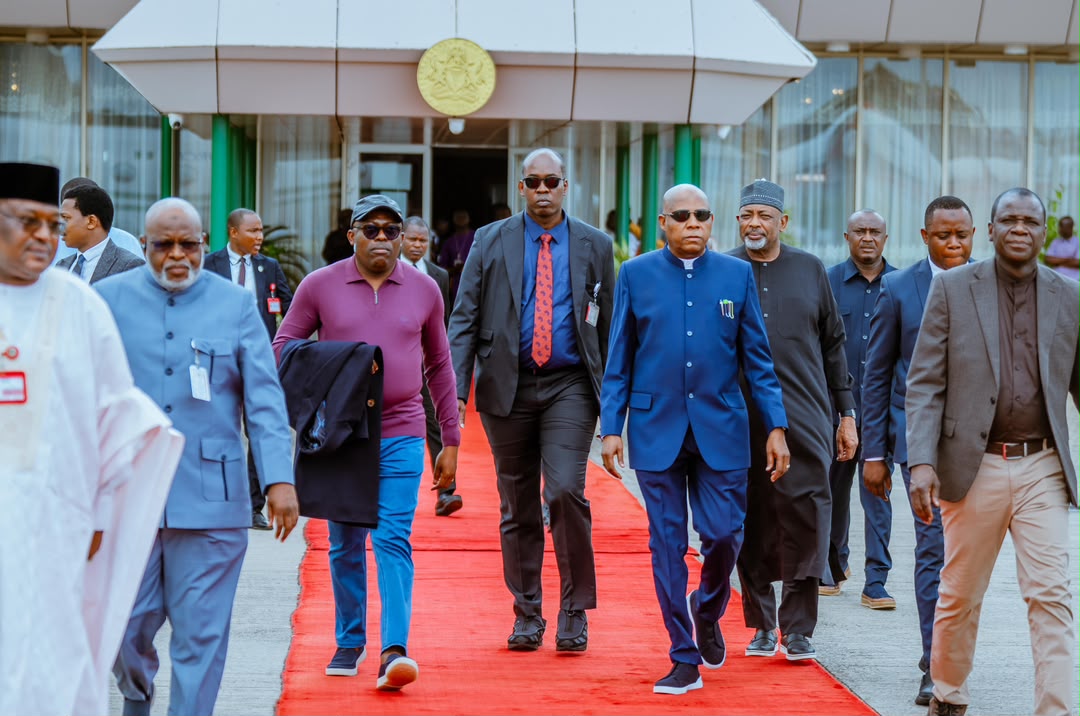
Photo caption: Vice President Kashim Shettima, Governor Fubara and other Nigerian delegates arriving in New York for UNGA
Governor Siminalayi has said that Rivers State will take centre stage at the 81st United Nations General Assembly (UNGA 81) in New York, as his administration moves to showcase the State’s huge investment potentials to the world.
Sir Fubara said the UNGA platform provides a unique opportunity to market Rivers State as Nigeria’s number one investment destination in oil and gas as well as other critical sectors.
Speaking with journalists on the sidelines of the conference in New York, the Governor said the essence of his participation at the global meeting is to give visibility to Rivers State and showcase its economic endowments and woo investors to the state.
“The issue is very simple. We’re trying to give visibility to the state and also showcase the areas where God has really endowed us in the oil and gas sector and other aspects of the state.
“I strongly believe that at the end of this conference and other side meetings, business opportunities will be made open and presented to interested investors who might have very serious and immediate needs to come to our dear state, knowing full well the position of Rivers State in the oil and gas industry.
“I also strongly believe that we are also going to make some inroad into financing and investors opportunities for our dear state,” he stated.
According to Onwuka Nzechi, Chief Press Secretary to the River State Governor, Fubara explained that the investment drive at UNGA 81 is in sync with the deliberate economic reforms of his administration, particularly the establishment of the Rivers State Investment Promotion Agency (RSIPA) as a one-stop shop to facilitate and protect investments.
“This is not different from what we have already done before in establishing what we call the Rivers State Investment Promotion Agency. What we are doing here will also aid the programme of that agency.
“Overall, I will say that Rivers State will be visible and prominent in this conference and we will come home with some good investments for our dear state,” he stated.
Onwuka in a statement quoted Governor to have assured investors that Rivers State remains peaceful, stable, and open for business, with vast opportunities in oil and gas, agriculture, blue economy, manufacturing, and renewable energy.
Rivers State is among the few Nigerian sub-nationals participating actively at UNGA 81, with engagements lined up with development finance institutions, multinational corporations, and diaspora investors.

The Nigerian Meteorological Agency (NiMet) is advancing a national digital platform intended to give farmers, livestock keepers and agricultural advisers more reliable access to location-specific weather and climate information. The NiMet Data Hub, developed with the International Livestock Research Institute (ILRI) and Crea2Solutions, has moved from design and mock-up review to an advanced Minimum Viable Product, with NiMet weather and climate services now under testing.
Work on the hub began in February 2026 under the Climate Services for Youth (CS4Y) and AGRA programmes. By July 2026 the project had progressed from early design to a testable product. The initiative is intended to improve access to historical, monitored and forecast climate information and to support risk analysis, seasonal planning and climate-informed decision-making.
Officials and partners have described the hub as a response to persistent weaknesses in agricultural climate services, including fragmented data, limited coordination among information providers, and the difficulty of turning technical forecasts into timely, practical advice. Stakeholder engagement co-hosted by NiMet and ILRI has focused on mapping Nigeria’s agro-meteorological data and advisory landscape, identifying information and delivery gaps, strengthening institutional linkages, improving last-mile communication, and supporting gender and social inclusion.
The platform is expected to serve farmers, pastoralists, extension professionals, researchers, government institutions and private advisory providers. NiMet resources such as online map rooms and agricultural climate products are expected to feed the system, enabling the development of context-specific agro-weather advisories. ILRI’s contribution is aligned with its wider work of organising research data, developing digital tools and making information more usable for partners and decision-makers.
The project is consistent with the food security, climate-smart agriculture and digital service priorities of President Bola Ahmed Tinubu’s Renewed Hope Agenda. By seeking to place usable climate information in the hands of producers and advisers, the hub is intended to support preparedness, reduce climate-related losses and strengthen agri-food livelihoods.
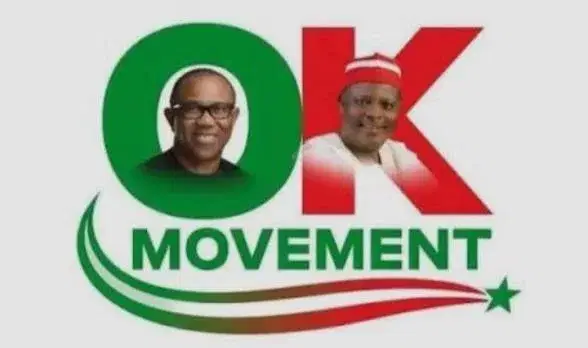
The internal dispute between the Obi/ Kwakwanso support group also known as OK Movement and the leadership of National Democratic Congress, NDC has escalated over the presidential campaign council set up by the movement ahead of the 2027 general election.
Recall that the Movement recently unveiled a 57 member presidential campaign council to work for the Peter Obi and Rabiu Kwakwanso ticket but the NDC issued a statement weekend and disowned the council.
Reacting to the development, the, OK Movement said tt does not require the personal validation or approval of any individual within the Nigeria Democratic Congress (NDC) before exercising its legitimate organisational functions in accordance with established processes.
The OK Movement National Secretary Saadatu Sani said this in a statement on Sunday in Abuja.
Sani rejected a statement credited to the party’s National Chairman, Sen. Moses Cleopas, urging him to familiarise himself with NDC’s constitution before making assertions.
Sani, in her statement, said the movement recognised the supremacy of political parties within constitutional and statutory spheres, but maintained that it remained an independent organisation with its leadership and internal processes.
She insisted that the movement would campaign for the NDC presidential and vice-presidential candidates as well as other party candidates where it had resolved to support them.
“The OK Movement does not require the personal validation or approval of any individual before exercising its legitimate organisational functions in accordance with established processes,” she said.
Sani said the movement was established from the grassroots and did not depend on sponsorship from any individual or political office holder for its activities.
She added that the movement was not seeking political appointments or positions within the NDC as a condition for its support, saying its principles remained its guiding values.
She said the movement had developed a nationwide grassroots structure, with internal membership records indicating approximately 2.5 million registered members and coordinators, supported by relevant data.
-

 News2 years ago
Senate to speed up conclusion of Nigeria Forest Security Service Bill
-

 News1 year ago
The Many Lies Against Bashir Haske
-

 News3 years ago
Breaking: Tinubu’s authentic ministerial nominees
-
 News3 years ago
“Anytime we want to kill terrorists, President would ask us to take permission from France but they were killing our soldiers-” Niger Republic coup leader
-
 News3 years ago
“I’m leaving the Catholic church because Bishop Onah is oppressing me,” says Okunerere
-

 News3 years ago
My nude photo leak was a mistake- lawyer Ifunanya
-
 News4 months ago
See your state governor’s performance ranking
-

 News3 years ago
Radio Nigeria’s veteran broadcaster Kelvin Ugwu dies three months after retirement from service