
News
“I’ve arrived Rome safely but I soorow for my flock in Iran,” Catholic Bishop cries

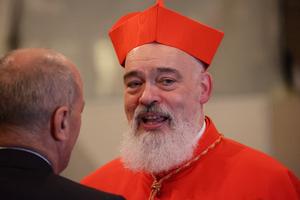
Belgian Cardinal Dominique Mathieu of Tehran-Isfahan surfaced in Rome after days of uncertainty about his whereabouts following the start of a U.S. and Israel-Iran war.
In a brief statement sent to the Belgian Catholic news site, Cathobel, Mathieu said he arrived in Rome March 8 “not without regret and sorrow for our brothers and sisters in Iran.”
His departure from Iran, he said, was “part of the complete evacuation of the Italian Embassy, which serves as the seat of the archdiocese.”
“While waiting to return, pray for the conversion of hearts to inner peace,” he wrote.
Before his statement, Mathieu’s whereabouts were unknown after the U.S.-Israeli-led campaign started Feb. 28. OSV News had reached out to the cardinal several times but had received no response since the start of the war.
Tehran’s Cathedral of the Consolata, as well as the cardinal’s residence and administrative offices, are located on the grounds of the Italian Embassy.
Italian Foreign Minister Antonio Tajani announced March 5 that the country’s embassy in Iran would be temporarily closed.
“A group of about 50 Italian nationals led by our ambassador to Iran has crossed the border into Azerbaijan,” Tajani said, adding that embassy staff will continue to operate in the Azerbaijani capital of Baku.
“We are keeping diplomatic relations with Tehran open, in order to protect the Italians there and our national interests,” he wrote on X.
It is unknown whether the cardinal traveled with the group before his arrival in Rome, and OSV News is awaiting a response from both the Italian Foreign Ministry and the Franciscan General Curia in Rome regarding the circumstances of Mathieu’s return.
According to Cathobel, Mathieu is expected to meet with Vatican officials to brief them on the situation in Iran. OSV News reached out to the Vatican press office to confirm if the cardinal is expected to meet with officials, as well as with Pope Leo XIV. By publication time, the Vatican had not responded.
The war in Iran began Feb. 28 when the United States and Israel launched joint strikes aimed at destroying Iran’s nuclear and missile programs and weakening the country’s leadership, which they accuse of threatening Israel and destabilizing the region.
The U.S. and Israel gave similar reasons for their joint attacks on Iran in 2025.
In an interview with OSV News in July, following the 12-day war between Israel and Iran, Mathieu said the rise of populist nationalism had led to “more barriers and increased armament, justified by fears of actual or potential attacks.”
“This leads to a climate where pre-emptive or preventive aggression is justified, and the notion of the other as a brother or sister to love diminishes,” he said. “Negotiations are often based on power balances rather than sincere dialogue and mutual understanding.”
“It is troubling to hear the idea of ‘obtaining peace by force,’ where violence becomes the only means of addressing conflicts,” Mathieu told OSV News in July.
With the war now in its second week, the U.S. and Israel continued strikes against Iran, as well as in southern Lebanon, where a Maronite Catholic priest was killed March 9 by Israeli artillery fire.
The killing of Fr. Pierre al-Rahi prompted a statement from the Vatican press office expressing Leo’s “profound sorrow” for victims of the Middle East, including the Maronite priest and “the many innocent people, including many children, and for those who were providing them with aid.”
This story appears in the War in Iran feature series. View the full series.
Advertisement
Advertisement
Most Read Stories
Bishop Emanuel Shaleta of the Chaldean Catholic Diocese of St. Peter the Apostle in San Diego was “contacted and detained” March 5 at that city’s international airport while “attempting to leave the country,” according to a statement issued that same day by the San Diego County Sheriff’s Office. He is pictured in an undated photo. (OSV News/Chaldean Eparchy of St. Peter the Apostle of San Diego)
#1
Chaldean Catholic bishop in California jailed for alleged financial crimes
#2
Vatican theological commission warns of replacing God with ‘a world governed by machines’
Sr. Marie Nguyen Thi Minh Hoa checks the reishi mushrooms in the growing house she and Sr. Agathe Tran Thi Mong Huyen operate at their St. Paul de Chartres convent in Ho Chi Minh City, Vietnam. This mushroom variety needs six months to grow before harvest. (Courtesy of Marie Nguyen Thi Minh Hoa)
#3
Vietnamese sisters grow organic mushrooms to serve community and fund scholarships
Traces of an air defense missile interception is seen over Tel Aviv, Israel, Saturday, Feb. 28, 2026. (AP photo/Ohad Zwigenberg)
#4
Amid escalating attacks, Catholic groups visiting Holy Land are stranded
Advertisement
Advertisement
In This Series
In a file photo, Ayatollah Seyed Mostafa Mohaghegh Damad Ahmadabadi answers reporters’ questions in Rome Oct. 14, 2010, before giving a presentation at the Vatican. Amid war in the Middle East, Damada, a prominent figure within Iran’s Shia clerical establishment, wrote a public letter to Leo calling for peace and respect for international law. (CNS/Paul Haring)
News
An Iranian ayatollah appeals to the pope as war spreads across Middle East
ByCamillo Barone
News
Cardinal Mathieu in Rome after evacuation from Iran
ByJunno Arocho Esteves, OSV News
Bishop Paolo Martinelli, apostolic vicar of Southern Arabia, greets children during a pastoral visit in February 2026. (Courtesy of Apostolic Vicariate of Southern Arabia)
News
‘No alternative to dialogue’: Southern Arabia bishop on war and fear in the Gulf
ByCamillo Barone
Washington Cardinal Robert W. McElroy speaks during an Oct. 17, 2025, event at the University of Notre Dame in Indiana. (OSV News/Michael Caterina, Courtesy of University of Notre Dame)
News
DC cardinal says US decision to go to war with Iran was not morally legitimate
ByBrian Fraga
Advertisement
Subscribe to NCR’s Free Newsletters
Enter your email address and select any of the newsletters below.
Email address
Email address
Daily Newsletters
News Updates
The latest news and feature articles
EarthBeat Daily
The latest EarthBeat articles, sent every morning
Weekly newsletters
Michael Sean Winters
The nexus between religion and politics
Culture Weekly
NCR staff talk music, television, books, movies and more
EarthBeat Weekly
EarthBeat dives into the week’s climate change news
NCR Book Club
Find your latest book to read
Spirituality
One-stop newsletter for readers seeking reflection, depth, and meaning. Curated by Shannon Evans. Includes Sunday Resources, Sr. Mary McGlone, and others.
NCR Footer Sections
NCR Sections
News
Vatican
Culture
Opinion
Spirituality
Sunday Resources
NCR Channels
EarthBeat
Global Sisters Report
Advertising
Classifieds
Obituaries
Advertise
NCR Footer Menu
Ways to Give
Give Now
Become a Member
A Culture of Giving
Ways to Give
Your NCR Legacy
Our Donors
Subscribe
Subscribe to NCR
Renew Subscription
Give a Gift
Free Newsletters
eNCR and Kindle Edition
Request a sample issue
Contact
Contact Us
How to write for NCR
Job Opportunities
Letters to Editor
Change your address
Reprints
About NCR
About
Mission & Values
Privacy Policy
Staff and Contributors
Board of Directors
National Catholic ReporterFollow
Bluesky
Twitter
Facebook
YouTube
Instagram
TikTok
Advertising Guidelines / Terms of Use / Privacy Policy / Site Map / Mailing Address: 115 E Armour Boulevard Kansas City, MO 64111 / Phone Number: +1-800-444-8910
The leadership of Nigeria Democratic Congress, NDC, has disowned the Presidential Campaign Council, PCC, set up by the OK Movement ahead of the 2027 general elections.
This is contained in a statement signed by the party’s National Chairman, Cleopas Moses, on Saturday.
Moses stated that the announcement made by one John Ugulu was not authorised and did not come from the party.
According to him, going forward, no individual or group is authorised to announce, constitute or publish any campaign structure or organ in the name of the party without the approval of the party’s National Working Committee, NWC.
The statement partly read: “The leadership of our party, the Nigerian Democratic Congress, NDC, has noted with concern a publication credited to one John Ugulu, announcing a Presidential Campaign Council, PCC, under the guise of the OK Movement.
“For the avoidance of doubt, the party wishes to state categorically as follows: The party hereby dissociates itself in totality from the said OK Movement PCC announcement. It did not emanate from the party and should be disregarded by the public and the media.
“All candidates of the party must appreciate that they are not running as independent candidates. They are products of the party and remain subject to the authority and discipline of the party. Therefore, only the party’s leadership can constitute and announce a PCC.
“No member, candidate or support group should, under any guise, undermine the party or demarcate the party. The party recognises and deeply appreciates the contribution of all support groups and encourages their continued support. We welcome even more support groups who identify with our mission to rescue Nigeria.
“While the party will continue to work collaboratively with all support groups, such groups should not see themselves as alternative party structures or parallel organs of the party.”
News
25 dead bodies recovered as families remain uncertain over fate of 500 residents abducted from Niger communities
25 decomposing bodies belonging to victims of a mass abduction that took place in four communities in Niger state have been recovered.
They were part of residents that were abducted by terrorists Dekara, Kpenya, Sabon-Gida and Gidan-Zana in Borgu Local Government Area.
The bodies were recovered after the communities were reportedly alerted on Monday by the abductors to come and identify and retrieve the bodies.
The victims were said to be among about 500 worshippers abducted after Friday Jumm’at prayers on August 21, 2026.
25 bodies were recovered and later given a mass burial in a nearby bush.
The reported killings have heightened anxiety among families whose relatives remain in captivity, with residents saying they are increasingly uncertain about the fate of the remaining abductees.
A source said the abductors allegedly warned that more captives could be killed if their ransom demands were not met.
“They first asked each family to bring N10 million for each captive, but later reduced it to N5 million. There is no way we can afford it,” he said.
News
Democracy: NHRC calls for people-centered policies, robust debate, respect for human rights, dignity
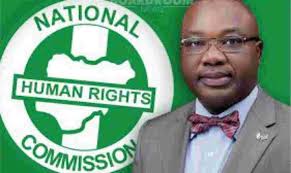
Ahead of the 2027 general election, the National Human Rights Commission (NHRC), has urged authorities and policy makers to prioritize rights of citizens and respect for human dignity over and above the quest to win election and occupy leadership position,
The Executive Secretary of the Commission, Chief Tony Ojukwu, SAN, made the call on Wednesday, as Nigeria joins the rest of the world to commemorate the 2026 International Day of Democracy.
Ojukwu said the day reminds us that democracy is not just about elections, but about the dignity, voice, and rights of every citizen.
He stated that democracy represents the freedom to speak, to choose, to participate, and to hold power accountable without fear; and called on all politicians, political parties and their supporters to exercise restraint and responsibility in public utterances.
He further stressed that democracy thrives on debate, not on hate speech, inciting statements, ethnic profiling, or threats.
A statement by Hajia Fatimah Agwai Mohammed, Director Corporate Affairs and External Linkages at the Commission, quoted Ojukwu to have reiterated that words can build peace or destroy the nation, and urged the political class to make campaigns issue-based and shun any language capable of inciting violence or undermining national unity.
The Chief Human Rights Officer of the country noted that the Commission will continue to monitor hate speech and electoral violence. He called on every eligible Nigerian to rise above voter apathy and actively exercise their civic rights, adding that citizens should not stay away from the polls, sell votes, or believe that votes do not count as these emanate from voter apathy.
Chief Ojukwu lamented that democracy dies when citizens withdraw, and remain silent, he emphasized that the Permanent Voter’s Card remains the power of the people to choose desired leaders.
He therefore urged citizens to come out, vote, and make votes count, describing the choice of leaders as both a right and a duty to Nigeria.
The Executive Secretary who is also the President of the Network of National Human Rights Institutions in West Africa (NNHRI-WA) called on the Federal Government, the Independent National Electoral Commission, and all security agencies to ensure a level playing field for all.
He further stated that government must guarantee the safety of voters, journalists, observers, human rights defenders and the citizens at large.
“Anyone regardless of status or party affiliation, who attempts to make the polity unbearable, who sponsors violence, vote-buying, voter suppression, or attacks on democratic institutions ahead of the 2027 General Elections, must be promptly investigated and prosecuted in accordance with the law, adding that impunity remains the greatest threat to democracy.
In conclusion, Chief Ojukwu called for commitment to a democracy that delivers not just elections, but justice, equality, and human rights for all.
-

 News2 years ago
Senate to speed up conclusion of Nigeria Forest Security Service Bill
-
 News1 year ago
The Many Lies Against Bashir Haske
-

 News3 years ago
Breaking: Tinubu’s authentic ministerial nominees
-
 News3 years ago
“Anytime we want to kill terrorists, President would ask us to take permission from France but they were killing our soldiers-” Niger Republic coup leader
-
 News3 years ago
“I’m leaving the Catholic church because Bishop Onah is oppressing me,” says Okunerere
-

 News3 years ago
My nude photo leak was a mistake- lawyer Ifunanya
-

 News3 years ago
Radio Nigeria’s veteran broadcaster Kelvin Ugwu dies three months after retirement from service
-
 News4 months ago
See your state governor’s performance ranking