
News
How fake agency lured Soludo’s govt to host proposed ‘Made in Nigeria Trade Fair’


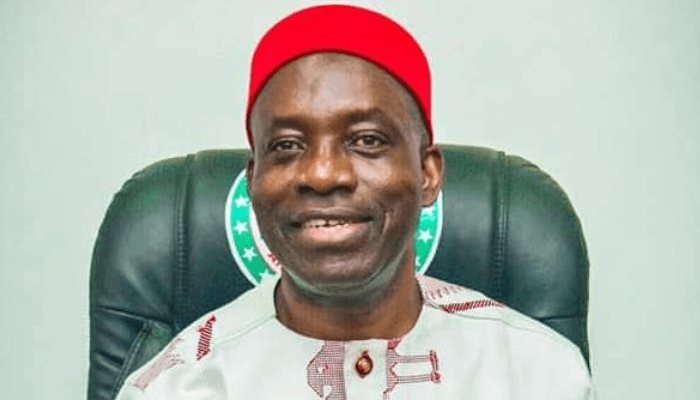
Anambra State government has made efforts to explain why and how it got involved with a reported federal agency domiciled in the office of the Secretary to the Government of the Federation (SGF), which was later discovered by the Independent Corrupt Practices and Other Related Offences Commission (ICPC) to be fake.
The agency had planned to organise a Made-in-Nigeria Fair in Anambra State after the Secretary to the State Government (SSG), Mrs Chiamaka Nnake, was nominated as the state’s focal person.
Following the ICPC’s discovery that the agency was fake, Nnake said the organisation had misled the state government into preparing to host its maiden Made-in-Nigeria Fair in December.
In a statement titled, “Clarification on the ‘Made-in-Nigeria Agency’ and My Role as State Focal Person,” Nnake explained how the state became involved with the organisation.
She said the state government was officially contacted in January 2026 after Governor Chukwuma Soludo received a letter from the purported Made-in-Nigeria Office, said to be under the Office of the Secretary to the Government of the Federation, requesting the nomination of a state focal person.
“Following the nominations, focal persons from the 36 states have been in a WhatsApp group engaging on issues relating to the activities of the office,” she said.
Nnake said the same office subsequently wrote to the state government requesting that Anambra host the South-East Made-in-Nigeria Fair.
She said the request was approved and an inaugural meeting was held about two weeks ago, with the purported National Coordinator in attendance.
“Since then, the State Committee has been working on preparations for the Fair, which is scheduled to take place from December 2 to 5, 2026,” she said.
The SSG, however, stressed that her involvement was limited to the official engagements initiated through the state government.
“Beyond these official interactions and engagements, I have no knowledge of, involvement in, or connection with any other activities, claims or developments attributed to the said office,” she said.
Nnake added: “I therefore wish to make it clear that anything beyond the above-mentioned official interactions is entirely outside my knowledge and involvement.”

By Prof. Mike Ozekhome, CON
Happy 97th Birthday to a living legend, Aare Afe Babalola, SAN, CON, OFR, FCIArb, LL.D,D.Litt, Founder and Chancellor of Afe Babalola University, Ado-Ekiti. A great man was born today, and Nigeria is still blessed by that birth.
When a man turns 97 and is still relevant, still building, still teaching and still healing, his birthday is no longer a mere episode. It becomes a national lesson and a celebration of life.
The man Afe Babalola is resilience clothed in humility,doggedness masked in simplicity. Born today in 1929, in a humble homestead in Ado-Ekiti, without any silver or golden spoon or privilege, he walked through life laboriously as farm labourer, Grade Two teacher, court registrar and became one of Africa’s most celebrated lawyers and educatioists.His life teaches that where you started can never define where you end.
From that humble beginning, he taught himself law by private study, passed all his examinations in flying colours and rose to become a Senior Advocate of Nigeria. Today his name is synonymous with legal brilliance and integrity at the Bar for which he had shone and still shines for over six decades,and till date.
He is a builder in every sense of the word. At 80, an age many have retired from active service, baba founded Afe Babalola University, Ado-Ekiti, ABUAD. What he conceptualized and built is not just a citadel of learning, it is a city within a city — vast farms, fish ponds, factories, industries, potteries, piggeries,electricity grid,and a world-class multisystem teaching hospital that rivals any in Africa.
At ABUAD, shining star shows that education must produce, not just certificate but societal relevance. The hospital has modular theatres, CT scan, MRI, ICU, dialysis and cutting-edge equipment. It is his gift to humanity, a proof that wealth is best measured by impact,not by loads of cash in the bank. .
Today at 97, the Aare still wakes up early mornings and sleeps late at nights,thinking of what to add, not what to take or rest on. That is the first lesson for today’s youths — hard work has no retirement age when purpose drives you.
The second lesson is that education has equally has no age limit. If a man who could not afford secondary school would later become a SAN and founder of one of the world’s leading universities, then no youth has any excuse to give up learning.
The third lesson is vision that works. Youths must learn that dreams must be planted like farms, nurtured like fish ponds,and built like factories. Baba Afe Babalola did not just talk vision, he manufactured,and walked it. He did not just dreamt dreams, he actualized them.
The fourth lesson is humility. With all his glittering array of titles,honours and massive wealth, our nonagenerian ( soon a centenarian, by God’s grace) still personally phones far younger ones like me,calling me “my son”. He still opens his doors, still listens,still advises, still mentors, still helps. Greatness that intimidates is fake;true greatness lifts. The Aare has epitomized the latter.
The fifth lesson is courage to start,even if late. He started his greatest legacy at 80. To every youth who thinks time has passed, Afe at 97 born today says you are still early if you start now.
The sixth lesson is integrity as capital. His name has remained untainted till date. In a world of shortcuts, he reminds youths that a good name is still better than silver and gold.
Today, as we celebrate him at 97, we celebrate more than age.We celebrate relevance. We celebrate patriotism. We celebrate impact. To live long is grace; to remain relevant at 97 is uncommon resilience.
Joining all patriots at home and in diaspora, I wish Aare Afe Babalola,the irrepressible advocate,courtroom gladiator, mentor of a generation, teacher of teachers,and philanthropist extraordinaire,a happy 97th birthday.May his hands be strengthened,his soul lifted, his muscles oiled, and his life prolonged ( Gen 6:3 ).
Born today, celebrated for all times. Happy Birthday, Papa.
Dangote Cement Plc, Obajana Plant, is set to host the 2026 Unity Football Tournament, an inter-community sporting competition designed to promote peace, unity, mutual understanding, healthy competition, youth development, and sustainable relationships among its host and catchment communities.
Group Head, Social Performance, Dangote Cement Plc, Mr. Wakeel Olayiwola, said the tournament represents another significant platform for strengthening relationships between Dangote Cement Plc and its host communities through sports, youth engagement, social inclusion, and active community participation.
Mr. Olayiwola said the tournament shows the role of sports as a powerful instrument for bridging social differences, fostering peaceful coexistence, and building a sense of belonging among the diverse communities.
He said: “The competition will bring together participating communities, namely Oyo, Iwaa, Apata, Jakura, and Obajana, at the Dangote Academy, where football will serve as a unifying platform for friendship, sportsmanship, constructive engagement, and collective development.”
Plant Director, Dangote Cement Plc, Obajana Plant, Engr. Azad Nawabuddin, urged the Local Organising Committee to work closely with relevant stakeholders and participating communities to ensure effective coordination and the successful delivery of the tournament.
The Plant Director emphasised the importance of transparent administration, proper player accreditation, adequate security arrangements, medical and health support, effective logistics, and strict adherence to established competition rules.
He said these measures are expected to ensure that the tournament is conducted in a safe, organised, fair, and professional atmosphere that reflects the values and standards of Dangote Cement Plc.
Speaking on the objectives of the tournament, Head of Social Performance at the Dangote Cement Plc, Obajana Plant, Prince Ademola Adeyemi, said the programme goes beyond winning trophies and medals.
According to him, “the tournament is designed to foster lasting bonds among participating communities, encourage positive youth engagement, identify and nurture emerging football talents, and provide young people with opportunities to demonstrate discipline, teamwork, leadership, and sporting excellence.”
Secretary, Local Organising Committee (LOC) Mr. Iguoba John said the tournament will officially open Friday October 16, 2026.
Mr. John said that community-based sporting activities remain valuable tools for strengthening stakeholder relationships, promoting social cohesion, and building mutual trust between corporate organisations and the communities within which they operate.
Speaking on behalf of the catchment communities, Comrade Ayodele Julius, Youth Chairman and Youth Leader of Apata, assured the organisers of peaceful coordination among the youths and pledged support for an atmosphere of unity, cooperation, and mutual respect throughout the competition.
The Local Organizing Committee Chairman, Mr. Idris Emmanuel, disclosed plans for the official unveiling of the tournament jerseys alongside key stakeholders on 12th and 13th October 2026, as part of activities leading up to the opening ceremony.
He also called on traditional institutions, community leaders, youth organisations, sports enthusiasts, and other relevant stakeholders to support the initiative and mobilise their respective communities for active participation.
Similarly, the Local Organizing Committee Vice Chairman, Comrade Idowu Olukasam Owolabi, encouraged participating teams, community representatives, supporters, and other stakeholders to uphold discipline, fair play, mutual respect, and the spirit of sportsmanship.
-

 News2 years ago
Senate to speed up conclusion of Nigeria Forest Security Service Bill
-

 News1 year ago
The Many Lies Against Bashir Haske
-
 News3 years ago
“Anytime we want to kill terrorists, President would ask us to take permission from France but they were killing our soldiers-” Niger Republic coup leader
-

 News3 years ago
Breaking: Tinubu’s authentic ministerial nominees
-
 News3 years ago
“I’m leaving the Catholic church because Bishop Onah is oppressing me,” says Okunerere
-
 News5 months ago
See your state governor’s performance ranking
-

 News3 years ago
My nude photo leak was a mistake- lawyer Ifunanya
-

 News3 years ago
Radio Nigeria’s veteran broadcaster Kelvin Ugwu dies three months after retirement from service