
News
How Ajuri Ngelale oppressed Bayo Onanuga before he was sacked – Report

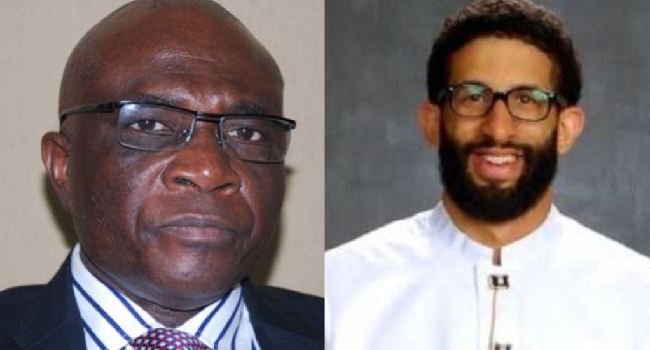
Contrary to Ajuri Ngelale’s claim of embarking on an indefinite vacation to address vexing family health issue, the former Senior Special Adviser to the President on Media and Publicity was sacked by the presidency but allowed to announce his exit as a way of soft landing.
According to an exclusive report late Saturday by an online news platform, FJI, Ngelale had been having a running battle with President Bola Tinubu’s Senior Special Adviser on Information and Strategy, Bayo Onanuga from the day the later was announced as an aide to Tinubu.
The report said that Ngelale was not happy that Onanuga was given a portfolio that was parallel with his own as Senior Special Adviser, and rather wanted the sort of administration protocol that existed between Femi Adesina and Garba Shehu when they served as Senior Special Adviser and Senior Special Assistant respectively, to former president Muhammadu Buhari.
According to the FJI report, Bayo Onanuga was denied an office space in the presidential villa for many months, therefore squatted in the office of another Tinubu’s aide, Tunde Rahman until a few months ago when an office was allocated to him.
It was also reported that Ajuri Ngelale gave a standing order that no statement from Bayo Onanuga should be put out in the public unless he, Ajuri clears it, even as they were on the same ranking, according to Villa ranking.
FJI said in the report that while Ajuri trampled on Bayo Onanuga’s rights and privileges, the Senior Special Adviser on Information and Strategy maintained a cool mien and tried his best to cultivate a better, cordial working relationship with Ngelale but he was not ready to reciprocate Onanuga’s gesture.
The tensed relationship between the two aides was said to have immensely affected the presidency’s job of pushing President Tinubu’s positive strides, so much so that it became inevitable that one of them has to leave.
In order to further confirm the veracity or otherwise of the story, Nationwide Reports put calls to both Ajuri Ngelale and Bayo Onanuga. While Ngelale’s phone was switched off, Onanuga did not take his calls.
Read details of the FJI report:
Ajuri Ngelale, the broadcast journalist who made a name for himself with his eloquence and sonorous voice, did not resign as special adviser to the president on media and publicity to tend to a “vexatious medical situation” in his family as he claimed, FIJ can report.
Instead, FIJ understands, he was fired by the presidency and only allowed to publicly resign after his repeated pleas for a soft landing.
Ngelale, who was also the special presidential envoy on climate action, stunned Nigerians on Saturday morning when he announced his abrupt exit from office, citing “medical matters presently affecting my immediate, nuclear family”.
A FACE-SAVING COVER-UP
“On Friday, I submitted a memo to the Chief of Staff to the President informing my office that I am proceeding on an indefinite leave of absence to frontally deal with medical matters presently affecting my immediate, nuclear family,” Ngelale wrote.
“While I fully appreciate that the ship of state waits for no man, this agonising decision — entailing a pause of my functions as the Special Adviser to the President on Media & Publicity and Official Spokesperson of the President; Special Presidential Envoy on Climate Action, and Chairman, Presidential Steering Committee on Project Evergreen — was taken after significant consultations with my family over the past several days as a vexatious medical situation has worsened at home.”
He said he looked “forward to returning to full-time national service when time, healing, and fate permit”, and respectfully asked “for some privacy for my family and I [sic] during this time”.
But multiple highly-placed sources in and around the presidency told FIJ on Saturday afternoon that Ngelale’s exit was not triggered by a family health emergency, but rather his loss in a power tussle with Bayo Onanuga, the Special Adviser on Information and Strategy.
LONG-RUNNING FEUD WITH ONANUGA
FIJ understands that following the election of Bola Tinubu as Nigeria’s president in 2023, Ngelale did not exactly hit it off with Onanuga, largely because having been in government before Onanuga — President Muhammadu Buhari appointed Ngelale his senior special adviser on public affairs in 2019 and he served in this position until the end of Buhari’s tenure — he considered himself Onanuga’s boss.
Ngelale, 38, began his career with the Africa Independent Television (AIT) in the 2000s, while Onanuga, 67, a former Managing Director of the News Agency of NJigeria (NAN), began his career in the 1980s. There was one problem, though: while Ngelale was special adviser on media and publicity, Onanuga was the special adviser on information and strategy.
FIJ understands that civil servants found the roles confusing. This was nothing like in the Buhari administration when Femi Adesina was the special adviser on media and publicity and Garba Shehu the senior special assistant on media publicity. In the latter case, everyone knew Adesina, as SA, was senior, while Shehu, as SSA, was subordinate.
Ngelale and Onanuga both had special adviser roles; and the profolios seemed similar. However, by design, the civil service structure of the villa reported to the SA media, and that was Ngelale.
FAVOURITE OF THE PRESIDENT — AND HIS SON
“Ngelale considered himself untouchable because he had the backing of the president’s son Seyi and Femi Gbajabiamila, the president’s chief of staff,” one source who asked not to be named for fear of retribution told FIJ.
“He was fired; I became aware of this on Tuesday, but I won’t rule out the possibility that it happened earlier. When he got the letter, he started to plead to be allowed to resign as a soft landing. He was eventually given a soft landing, which is understandable. News of his sacking in public would have thoroughly embarrassed not just Ngelale but the presidency too.”
Although this source expressed regrets that things eventually got to a head, they conceded that there was no other way out, given Ngelale’s unwillingness to discuss his long-drawn-out feud with Onanuga when the opportunities were presented to him.
“The Ngelale-Onanuga feud was no secret in the villa, so several top appointees and cabinet members attempted to intervene at separate times; and while Onanuga was open to peace talks, Ngelale wasn’t,” the source continued.
“For example, Mohammed Idris Malagi, the minister of information and national orientation, called for talks four times. Onanuga was willing to attend but Ngelale snubbed them all, always claiming he was busy.”
‘BLOCKING ONANUGA’ FROM HAVING AN OFFICE
Civil servants who asked not to be named, as well as a source familiar with presidency happenings, told FIJ that Onanuga, despite being formally appointed in October 2023 “was a squatter in the presidency and did not have an office of his own until just a few months ago”.
“When Onanuga was appointed, he had no office. He was squatting in Tunde Rahman’s office,” said one of the sources. “It was just recently that he eventually got an office that belonged to either Wale Edun or Zacheus Adedeji when they were still advisers.
Rahman, the senior special assistant to the president on media and publicity, was appointed in July 2023 — three months earlier than Onanuga’s appointment. Meanwhile, Zacheus Adedeji was appointed special adviser on revenue while and Wale Edun was appointed special adviser on monetary policy in June 2023.
While Adedeji has since become the executive chairman, Federal Inland Revenue Service (FIRS), Edun has since become minister of finance and coordinating minister of the economy. Notably, all three appointments came months ahead of Onanuga’s.
These were people who had been with Tinubu for decades, unlike Ngelale, so how did Ngelale become so powerful that he got appointed earlier, blocked Onanuga from having an office to himself and all the aforementioned appointees could not fix Onanuga an office?
As written earlier, Ngelale had the backing of Seyi Tinubu and Gbajabiamila, but a third source took it even further, saying: “It was about how he got the job.”
SO, HOW?
How Ajuri ingratiated himself with Tinubu
“During the 2023 presidential electioneering, Jumoke Oduwole, the special adviser on Presidential Enabling Business Environment Council (PEBEC), introduced Ngelale to Gbajabiamila,” said the source.
“When Ngelale got there, he met Seyi. He told Seyi he would facilitate a CNN interview during which Tinubu’s presidential ambition would be discussed. Seyi thought it was impossible, but Ngelale did it. He secured the interview on CNN. He then told Seyi the time and date it would air. Seyi promised Ngelale that Tinubu would phone him if he pulled it off. Immediately after the interview was aired, Tinubu called Ngelale.
“When Tinubu won the election, Ngelale was abroad. People told him to return home but he said no; he insisted he would get his own appointment once he arrived in the country. And that was exactly what happened: Ngelale’s appointment by Tinubu was announced days after his return to Nigeria.
“Conversely, Gbajabiamila delayed the announcement of Onanuga’s appointment for at least two months. It required Chief Bisi Akande, who originally made the case for Onanuga’s appointment, to return to Tinubu for follow-up conversations. That was when Tinubu ordered that Onanuga’s appointment should be made, and that was how Onanuga came to the villa.”
THE STRAW THAT BROKE THE CAMEL’S BACK
FIJ understands that villa staff and civil servants whose work related to the president’s communication strategy noticed the tension between Ngelale and Onanuga and thought if they worked with one, then the other thought they were against him.
“This meant thework of publicising the president’s progressive policies was derailed,” said the source.
“By the way, Ngelale instructed civil servants that no statement from Onanuga could go out if he had not personally cleared it. If you speak with sources across divides, they would tell you Onanuga was the more peace-seeking of the duo. But this particular order from Ngelale to civil servants annoyed Onanuga.”
FIJ understands Ngelale’s standing with Tinubu started to plummet once it was easy to pitch to the president how Ngelale’s unharmonious relationship not just with Onanuga but with the media was hindering good publicity for the president.
“He did not have a good relationship with journalists. Ask the reporters; ask the state house correspondents. And also ask editors,” added the source.
“Many people consider him disrespectful and arrogant, even the editors. You can hardly find any important editor in Nigeria who likes or regards Ngelale.”
NGELALE, ONANUGA MUM
FIJ sent a text and WhatsApp messages to Ngelale, seeking his comments, but they were not replied. FIJ also made cellular and WhatsApp calls to Ngelale’s number, but none was answered.
When FIJ repeated the process with Onanuga, the outcome was the same.
News
Supreme Court judgment: Wabara-led BoT takes charge of PDP, directs staff to resume at Wadata House
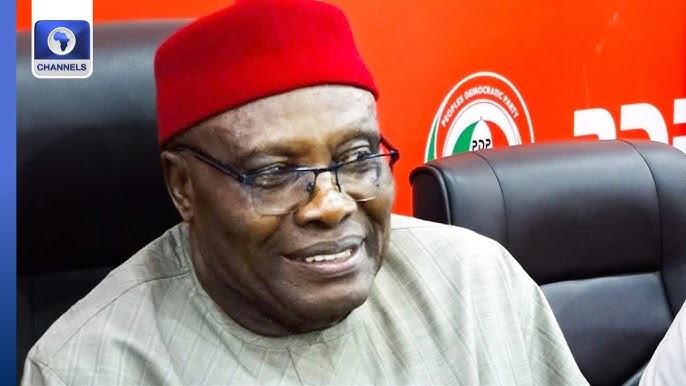
Following Thursday’s ruling of the Supreme Court, the Board of Trustees of the Peoples Democratic Party, PDP, has assumed effective charge and is expected to appoint a new caretaker committee to pilot affairs of the party.
The apex court had in its ruling, upheld judgements of the Federal high court and the court of Appeal which invalidated the November 2025 Ibadan convention as well as the expulsion of some members of the party including Sam Anyanwu and others.
By the ruling, all actions taken by the faction led by FCT Minister, Nyesom Wike, have become null and void, including the March Abuja conversation and appointment of a caretaker committee. This is in view of the fact that most of the members of the committee were among those expelled by the party.
Following the Thursday ruling by the Supreme Court, leaders and stakeholders of the PDP including governors, senators, reps members and others met in Abuja Thursday night where board of Trustees of the party took effective charge of affairs, in accordance with the party’s constitution.
Subsequently, Chairman of PDP BoT, Senator Adolphus Wabara, said the board has assumed leadership of the opposition party.
Wabara, in a statement, said the board would convene an emergency meeting of the PDP National Executive Committee(m (NEC), to appoint an interim executive to take charge of the affairs of the party.
The BoT statement reads, “It is with the utmost sense of duty and responsibility that the Board of Trustees (BoT) of the Peoples Democratic Party (PDP) assumes leadership of our great party today, Thursday, 30th April, 2026 pursuant to the empowering provisions of the Constitution of the PDP (As amended in 2017).
“This constitutional intervention of the BoT is so as not to allow any leadership vacuum at the national level of our party following judgment of the Supreme Court.
“Sadly, the Supreme Court, today delivered an unpleasant judgment against our party in which it pronounced an invalidation of the 15th to 16th November 2025 National Convention of the PDP held in Ibadan, Oyo State, which produced the Kabiru Tanimu Turaki-led National Working Committee of our Party.
“While the Supreme Court invalidated the Ibadan Convention, it also in a unanimous decision of the five justices on the panel, upheld the suspension of Senator Samuel Anyanwu, Hon. Umar Bature, Kamaldeen Ajibade as National Secretary, National Organizing Secretary and National Legal Adviser respectively from the Party.
“The implication of today’s judgment by the Supreme Court is that all actions taken by Senator Samuel Anyanwu, Hon. Umar Bature and Barr. Kamaldeen Ajibade including the appointment of Abdulrahman Mohammed as Acting National Chairman, the composition of the National Caretaker Working Committee and the conduct and outcome of the March 29th, 2026 Convention in Abuja are illegal, null and ab initio void.
“The consequential invalidation of both the Abdulrahman Mohammed-led as well as the Kabiru Tanimu Turaki-led Working Committees directly places the statutory onus of leadership of our great party on the shoulders of the Board of Trustees (BoT) as the Second Highest Organ of the Party, pursuant to the express and unambiguous provision of Section 32 (5) of the PDP Constitution (as amended in 2017).
“Against this backdrop, the BoT hereby immediately assumes responsibility of the national working leadership of the PDP as immediate constitutional remedial steps to foster genuine reconciliation, salvage, stabilize and return the party to good political health.”
Wabara added that “in the light of the foregoing an emergency meeting of the National Executive Committee (NEC), pursuant to the provisions of Section 31 of the Constitution of the PDP will be summoned to, among other things, appoint an Interim National Working Committee to take charge of the National Secretariat of our Party and pilot the affairs of the Party at the national level so as to meet all the timeline in the Electoral Act, 2026 and ensure that the PDP fields candidates and also emerged victorious in all elective positions in the 2027 general elections.
“Consequently, all staff of the PDP are hereby directed to resume at the National Secretariat of the Party under the leadership of the BoT ahead of the appointment of the Interim National Working Committee.
“The BoT commends the courage, effort and resilience of our governors, Governor Bala Mohammed and Governor Seyi Makinde, the National Assembly caucus, the National Ex-officios, the Forum of PDP State Chairmen and State chapters, the Youth and Women Wings and other organs and bodies in the PDP for standing strong for the party at this trying time.
“The BoT therefore calls on all leaders and members of the party to jettison all personal and group interests and come together as one family in the overall interest of our Party, democracy and the wellbeing of millions of Nigerians whose hope are anchored on the PDP.
“The PDP has suffered enough; the painful victims of this unfortunate episode is the Nigerian people. The time has therefore come for us to make sacrifices, sheathe our swords and embrace genuine reconciliations for lasting peace and chart a new course for our party. “

The Attorney General of the Federation and Minister of Justice, has urged the Federal High Court in Abuja to compel the Independent National Electoral Commission (INEC) to deregister five political parties, arguing that their continued existence violates constitutional provisions and undermines Nigeria’s electoral integrity.
In court filings, the Attorney General contended that unless the court intervenes, INEC would “continue to act in breach of its constitutional duty” by retaining parties that have failed to meet the minimum requirements prescribed by law.
The filing stressed that the right to associate as a political party is not absolute and must be exercised within constitutional limits. It further argued that it is in the interest of justice for the court to grant the reliefs sought by the plaintiffs.
The suit, marked FHC/ABJ/CS/2637/2026 and filed at the Abuja Judicial Division of the Federal High Court, lists the Incorporated Trustees of the National Forum of Former Legislators as the plaintiff.
The defendants include INEC as the first defendant and the Attorney General of the Federation as the second defendant, alongside five political parties: African Democratic Congress (ADC), Action Alliance (AA), Action Peoples Party (APP), Accord (A), and Zenith Labour Party (ZLP).
At the center of the issue in the case is whether INEC has a constitutional obligation to remove parties that fail to meet electoral performance thresholds set out in Section 225A of the 1999 Constitution (as amended) and reinforced by the Electoral Act 2022 and INEC’s own regulations.
The plaintiffs argue that the affected parties have persistently failed to satisfy the constitutional benchmarks required to retain their registration. These include winning at least 25 per cent of votes in a state during a presidential election or securing at least one elective seat at the national, state or local government level.
They contend that the parties performed poorly in the 2023 general elections and subsequent by-elections, failing to win seats across key tiers of government, yet continue to be recognised by INEC as eligible political platforms.
The plaintiffs maintain that this continued recognition is unlawful and undermines the integrity of Nigeria’s electoral system.
In the affidavit supporting the suit, the forum’s national coordinator, Igbokwe Raphael Nnanna, states that allowing parties that have not met constitutional requirements to remain on the register “is unconstitutional, illegal and a violation” of the governing legal framework.
The suit asks the court to declare that INEC is duty-bound to deregister such parties and to compel the commission to do so before preparations for the 2027 elections advance further.
Beyond declaratory reliefs, the plaintiffs are also seeking far-reaching orders that would bar the affected parties from participating in the next general elections or engaging in political activities such as campaigns, rallies and primaries. They further request injunctions restraining INEC from recognising or dealing with the parties in any official capacity unless and until they comply strictly with constitutional provisions.
Central to the plaintiffs’ argument is their interpretation of the law as imposing a mandatory duty on INEC. They argue that the use of the word “shall” in the Constitution leaves no room for discretion once a party fails to meet the stipulated thresholds.
In their written address, they rely on statutory provisions and judicial precedents to contend that electoral performance is an objective condition that must be enforced to maintain discipline, transparency, and accountability in the political system.
Attorney General backs plaintiff
In a notice filed pursuant to Order 15 Rule 1 of the Federal High Court (Civil Procedure) Rules, 2019, the Attorney General, who is a defendant in the suit, formally admitted the plaintiff’s case to the extent of his constitutional responsibilities.
He maintained that, as the chief law officer of the federation, he is duty-bound to defend and uphold the Constitution, including ensuring compliance with the Electoral Act and other laws governing elections in Nigeria.
The filing emphasised that the Attorney General’s role extends beyond litigation to preventive oversight, ensuring that laws are faithfully implemented to maintain public confidence in the electoral process. It described the case as a public interest litigation aimed at safeguarding democratic integrity and promoting constitutional observance.
According to the document, the Attorney General argued that citizens, including the plaintiff group, have the right to challenge constitutional breaches, particularly where electoral processes are concerned. He added that supporting such litigation aligns with his dual role as both a defender of the state and an advocate for citizens’ rights.
The submission also highlighted the broader implications of non-compliance by political parties. It argued that the continued existence of parties that fail to meet constitutional thresholds contributes to ballot congestion, increases the cost of election administration, and undermines the intent of Section 225A of the 1999 Constitution (as amended), which empowers INEC to deregister underperforming parties.
The plaintiff further contended that INEC has no residual discretion to retain parties that do not satisfy the constitutional criteria, insisting that failure to deregister them constitutes a continuing breach of constitutional duty. The suit warned that such inaction could be challenged through public interest litigation, as is the case before the court.
Additionally, the filing noted that the plaintiff, comprising former legislators, possesses the requisite standing to institute the action, having been directly involved in the enactment and oversight of Nigeria’s constitutional and electoral framework.
The Attorney General also underscored the importance of access to justice, arguing that his support for the suit would help bridge gaps faced by citizens seeking to enforce constitutional rights. He maintained that collaboration between government institutions and civic actors is essential to strengthening legal literacy, accountability, and democratic participation.
The Attorney General of the Federation is represented in the suit by a team of lawyers led by Prof. J. O. Olatoke, SAN, alongside O. J. David, U. O. Olufadi, D. O. Bamidele, V. D. Maiye, Waheed Abdulraheem and A. K. Abdulmumin, all of whom signed the court filing before the Federal High Court in Abuja.
….The Commission wants IGP to address use of excessive force by police
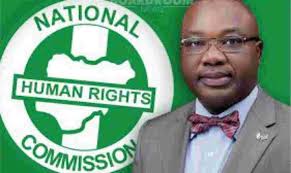
The Executive Secretary of the National Human Rights Commission (NHRC), Dr. Tony Ojukwu OFR, SAN, has strongly condemned the alleged extrajudicial killing of a 28-year-old Nigerian, Mene Ogidi, by a police officer, ASP Nuhu Usman, on April 26, 2026, in Efurun, Uvwie Local Government Area of Delta State.
In a statement issued in Abuja, Dr. Ojukwu described the incident as “deeply disturbing and a direct assault on human dignity, the Constitution of the Federal Republic of Nigeria, and the rule of law.”
He stressed that no Nigerian should lose their life at the hands of those sworn to protect them, reiterating that every life matters and must be protected.
According to him, “the reported action of the officer involved is condemnable, unacceptable, and completely inconsistent with the principles of justice and a civilized society.”
The statement which was signed by Hajia Fatimah Agwai Mohammed, Director, Corporate Affairs and External Linkages, quoted Ojukwu to have expressed grave concern over the recurring incidents of excessive use of force by law enforcement officers and called on the Nigeria Police Force to take urgent and decisive steps to address the issue.
He specifically urged the police authorities to subject officers deployed on special duties to periodic mental and psychological evaluations to ensure they are fit to carry arms and engage with civilians responsibly.
Dr. Ojukwu further called for the immediate disciplinary action against ASP Nuhu Usman in line with extant laws and police regulations.
He also emphasized the need for the Nigeria Police Force to fully implement the recommendations of the Commission’s Panel on Police Brutality as a necessary step toward meaningful reform and prevention of future violations.
“The Commission demands immediate arrest and a transparent investigation into the incident, dismissal of the officer involved, and swift prosecution in accordance with the law.
We hereby call for adequate compensation and justice for the family of the victim,” he stated.
He warned that justice delayed only deepens public distrust in state institutions and undermines confidence in law enforcement.
The Executive Secretary assured that the NHRC will continue to monitor the case closely and will persist in its advocacy for accountability, justice, and the protection of the fundamental rights of all Nigerians.
“Nigeria must never normalize brutality. Justice must speak louder than silence,” he concluded.
-

 News1 year ago
Senate to speed up conclusion of Nigeria Forest Security Service Bill
-
 News9 months ago
The Many Lies Against Bashir Haske
-

 News3 years ago
Breaking: Tinubu’s authentic ministerial nominees
-
 News3 years ago
“Anytime we want to kill terrorists, President would ask us to take permission from France but they were killing our soldiers-” Niger Republic coup leader
-
 News3 years ago
“I’m leaving the Catholic church because Bishop Onah is oppressing me,” says Okunerere
-

 News3 years ago
Radio Nigeria’s veteran broadcaster Kelvin Ugwu dies three months after retirement from service
-
 News3 years ago
Dokpesi and the Gazebo Mystique
-

 News3 years ago
Tsunami: Tinubu orders dissolution of managements, boards of MDAs, to sack all Buhari’s political appointees