
News
Have you read “The secret behind DSS, Prisons Service officials fight over Emefiele?”

By Emeka Ugwuonye
One of the good things out of spending time in Nigerian prison was that I learnt some secrets about how the prison and the Nigerian criminal justice system work. Yes, I was detained in Kuje prison. I was never convicted. No court ever found me guilty of any crime. And I did not commit a crime. Yet, I spent time in prison. I used my time in prison to study the prison and the system so well. If Nigerian prison were to be a university, I would have gotten double PhDs. In Nigerian, nobody goes to prison just because he committed a crime. You go to prison because you annoyed someone who has money to pay someone for you to be charged.
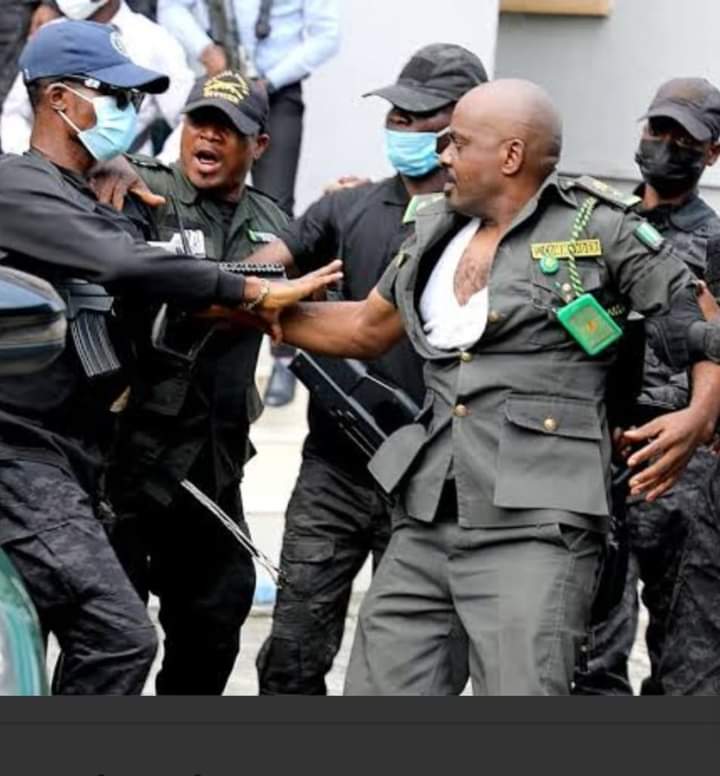
Now, about the fight you read about between DSS and prison officers, there are questions to ask. First, why was the Officer-in-Charge of Ikoyi Prison in court at that time? The Officer-in-Charge is the equivalent of Deputy Commissioner of Police. He does not go to court unless ordered to appear. The Officer-in-Charge of the correctional center does not normally go to court But this Officer-in-Charge was in court as Emefiele was ordered to be remanded in Ikoyi Prison. Why?
The prison staff, especially the Officer-in-Charge and above make a lot of money when a big man is detained in their prison. They go out of their way to curry favor from such big men. A man like Emefiele has a lot of money. He will need a lot of favors while in prison. He will need access to phones. He will want to have air-conditioned cell, specially fitted cell. He will want to have access to visitors and many other things. He is not entitled to any of this. But with the support of the Officer-in-Charge, he will have them and more. That will cost him a lot of money, like millions of money. So, everybody in the prison hierarchy would have been lined up to benefit from Emefiele. That effort starts right from the moment he leaves the court and heads to prison. He would be taken in special vehicle.
I saw this a few times in Kuje. I will never forget the day Abdulrasheed Maina arrived in Kuje prison. All the top officials went wild. They were falling over themselves in order to please Maina. I happened to be taken to the court the same day Maina was being taken to court for the first time from the prison, and they placed me in the same van with Maina. Oh my God! It was like the President’s motorcade. The entire prison top guys went to court that day in support of Maina. There were sirens and escort vehicles ahead of our van. They said they were providing security. I was laughing silently as I watched all the prison officers falling over themselves to please Maina. So, I could imagine what was going on in their camp when they guessed that Emefiele was to be arraigned in court for firearm-related offences. They knew that the court would grant Emefiele bail and that he would likely not meet the terms of bail the same day. So, he would spend at least one night in prison.
Again, I have double PhD on the Nigerian criminal justice system. I saw a part of it that lawyers do not see and which is never taught in any law school. The prison officers are at the bottom of the food chain. By the time an inmate gets to the prison, the police have taken all his money. He has paid his lawyer and may have bribed the court officials. By the time he finally gets to the prison, he is out of money. So, the prison officers do not have the opportunity to make money from their inmates as the police do from suspects. Compared to other players in the chain, prison officers are the poorest. So, they could be quite desperate and when opportunities like Emefiele comes, they grab them with both hands. They could go out of their way to please such a man, as you saw in the free-for-all fight between DSS and prison officers. Thank God they didn’t shoot themselves
Back to Maina’s case, Maina is quite a character. The first day he was taken to court from the prison and I went in the same van. By the way, all the time that I had been going to court from prison, they would put me in some rickety and dilapidated iron monger, a sort of gwongworo. The ride to court was so agonizing because the poorly constructed contraption they call vehicle was dangerous for even inmates to travel in them. But that day I went in the same van with Maina, the prison authority suddenly brought a van with air-conditioner in it. Immediately I saw Maina in the van, I chatted him up. We became friends there and then. He is an American citizen (I am sure many people did not know that). And knowing I was from America, Maina became close to me. But I knew instantly that associating with Maina could be tricky. He is a funny character.
That first day, the Officer-in-Charge went to court. He ordered even the prison doctor to go to court. The prison officials took a hospital bed and stretcher to court so that when we got to court Maina would pretend to be sick and they would wheel him in. This was calculated to increase the chances that the judge would grant him bail on health ground. I was laughing. Maina was okay when we left the prison, but he was suddenly sick by the time we got to the court. All that trick was organized by the prison officials to help the big man.
Nigerian justice system is so weird that sometimes you don’t know who to blame. Various agencies don’t trust each other. DSS does not trust the court. They believe that the judge might take bribe and compromise the case. That is why sometimes, the police, the DSS, the EFCC are reluctant to take suspects to court. They don’t trust that the judge would act without influence. But at the same time, DSS is not any better than the court. The DSS people knew that if Emefiele was allowed to go to Ikoyi Prison, he would have access to phones and would have visitors and he would probably obstruct any further investigation. DSS could not trust the court and could not trust the prison with Emefiele.
In fact, DSS only charged Emefiele because the court ordered them to charge him or release him. To frustrate the court, the DSS obtained a warrant of arrest on another offense from another court to justify their continued detention of Emefiele. They kept the warrant in their back pocket, knowing that the court would order Emefiele detained at the prisons. So, DSS took Emefiele to court but with weapons they planned to use to frustrate whatever the court ruled. That is the danger in this country. None of these agencies is acting honestly. Each has its own agenda depending on who heads it, and each is suspecting other agencies. The EFCC does not trust the police, the court, DSS or the prisons or anybody outside EFCC. DSS does not trust the court, the police, EFCC, the prisons. In an ideal setting, each of these agencies is supposed to trust the sister agencies. The only institution that should not trust anyone is the court. But surprisingly, our courts trust the police, the EFCC and DSS. And that is why the courts fail the citizens. The constitution designed it in such a way for the courts to be suspicious of these agencies and to protect citizens against them. But are courts are timid and they trust the people they supposed to be skeptical about.
I was not surprised to see that the distrust between these agencies (that are supposed to be coordinated and cooperating) would get to the point of DSS manhandling the Officer-in-Charge of the prison. Thought embarrassing for the country, it was also funny. Why would the Officer-in-Charge get so personally involved to the point of being beaten up and bundled into the DSS van. It was as if DSS were going to detain him and Emefiele. Why didn’t he just contact his boss who would contact the boss of DSS and possibly the president? Why fight like school children? That was because they were all fighting for their pockets
On many occasions, the police refuse to take suspects to prison as ordered by court, the police actually run their own illegal prisons. Why didn’t the Officer-in-Charge go to fight the police for the poor guys they abuse all the time? No, the poor guys have no money to give the prison officers. Only the Emefieles of this country would cause such a fight.
Just know one thing: all these people had their own agenda. The court knew this could happen. The court deliberately remanded him in prison. It was not a coincidence. The Officer-in-Charge of prison, instead of doing his work, personally came to the court to receive Emefiele. The DSS knew that all that would happen and they came with another warrant in their pocket, which they obtained from another judge, who also knew the game. It is a funny country. I would have asked you to pray. But if all the prayers our parents have been praying since the days of Lord Lugard did not help, how will your prayer today make any difference?

The Supreme Court of Nigeria will on Thursday, deliver judgments in two cases involving the leadership crises rocking the African Democratic Congress and the Peoples Democratic Party.
According to information on the official website of the court, the matters, listed under “Political Appeals”, have been added to the cause list for Thursday, April 30, 2026.
While judgment in the ADC matter, marked SC/CV/180/2026, has been fixed for 2 pm, there is no time yet for that if the PDP.
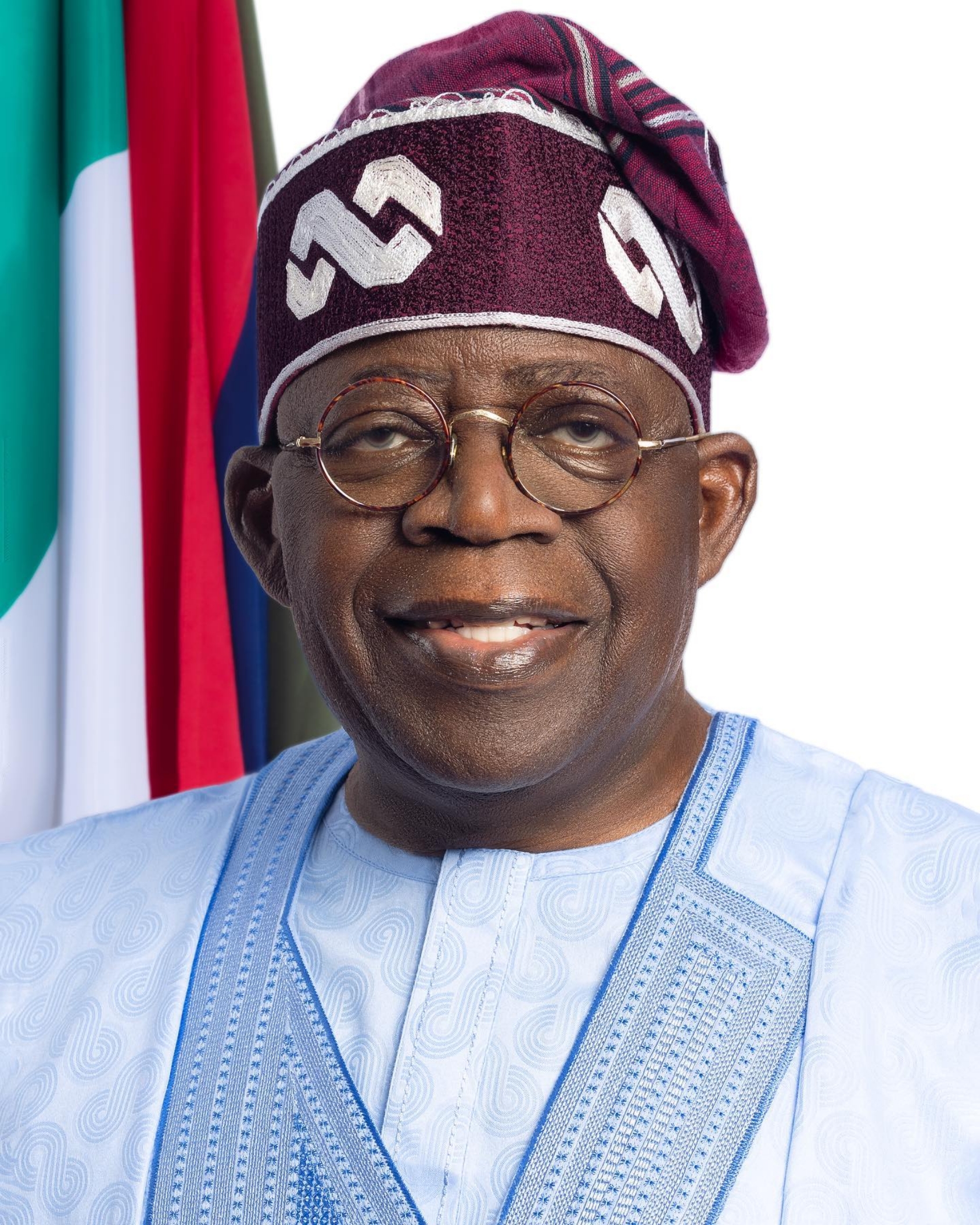
President Bola Tinubu has written the Senate, seeking the screening and subsequent confirmation of fifteen nominees to the National Human Rights Commission (NHRC).
The letter was read by the President of the Senate, Senator Godswill Akpabio.
The letter seeks the reconstitution of the commission’s board in line with statutory provisions with the list comprising nominees from diverse professional backgrounds, including the media and legal sectors.
Among the nominees are the President, Nigeria Guild of Editors and Editor, Vanguard Newspapers, Mr. Eze Anaba; and Dr. Salamatu Hussaina Suleiman, who has been proposed as chairman of the board.
The Executive Secretary of the Commission, Dr. Anthony Ojukwu (SAN) is to retain his position as the Chief Executive Officer.
Other nominees include Mrs Roseline Tasha, Ambassador Adam Yubak Baku, ACG Felix Lawrence, Mr. Edmund Chinonye, Mr. Chinonye Obiaku (SAN), Oluwakemi Asiwaju Okere-Odo, Professor Adedeji Ogunji, Kingsley Chidozie, Mohammed Adelodu, Maupe Ogun Yusuf, and Otunba Francis Meshioye as members.
Also nominated are Patience Patrick and Hawwa Ibrahim, listed as members.
The President said the nominations were made pursuant to Section 2(3) of the National Human Rights Commission (Establishment) Act, 2010, which empowers him to constitute the board subject to Senate confirmation.
He explained that the reconstitution of the board was necessary to enhance the commission’s institutional capacity and enable it to more effectively discharge its mandate to promote and protect human rights across the country.
If confirmed, the new board is expected to play a critical role in reinforcing the NHRC’s oversight functions, particularly at a time of heightened concerns over rights protection and accountability in Nigeria.
Following the presentation of the request, the Senate referred the nominations to its Committee on Judiciary, Human Rights and Legal Matters for screening and report within two weeks.

The Economic and Financial Crimes Commission, EFCC, has revealed that it investigated the founder of Streams of Joy International, Pastor Jerry Eze, for six months over suspected money laundering before clearing him.
Ola Olukoyede, chairman of the Commission, disclosed this on Wednesday while speaking at the Jerry Eze Foundation Business Grant Award Ceremony in Abuja.
According to him, the probe was triggered by intelligence reports and petitions after the commission observed large inflows of foreign currencies into the cleric’s domiciliary account.
“We work by intelligence, we work by petitions. At some point, I saw there was an account, a domiciliary account. Dollars, pounds were dropping in like raindrops, from Colombia, from America, from Sri Lanka, even from Togo.
“I said who is this man? Yes, I’ve been hearing about his name, I’ve seen his face a couple of times. I never bothered about what he was doing. I knew he was a pastor.
“So they said this one pastor of streams of joy, go and investigate him. So we went to the investigation. We combed the books,” Olukoyede stated.
The EFCC boss said he subsequently invited Eze for questioning after preliminary findings were compiled by investigators.
He added that upon meeting the cleric and reviewing the findings of the investigation, the commission found no wrongdoing.
“So he came to my office. He told me what happens and all of that, and how the money came, what he does, how he has been helping people, and all of that.
“I said, you know what, I didn’t call you here to explain to me. We have already done our work. I called you here to commend you,” he stated.
The remark drew applause from the audience, as Eze, who was present at the event, acknowledged the commendation.
He noted that the commission has a responsibility not only to investigate financial crimes but also to recognise individuals found to have acted with integrity.
The EFCC chairman, however, stated that the agency would continue to monitor financial activities where necessary, stressing that its preventive mandate remains critical in tackling corruption.
-

 News1 year ago
Senate to speed up conclusion of Nigeria Forest Security Service Bill
-
 News9 months ago
The Many Lies Against Bashir Haske
-

 News3 years ago
Breaking: Tinubu’s authentic ministerial nominees
-
 News3 years ago
“Anytime we want to kill terrorists, President would ask us to take permission from France but they were killing our soldiers-” Niger Republic coup leader
-
 News3 years ago
“I’m leaving the Catholic church because Bishop Onah is oppressing me,” says Okunerere
-

 News3 years ago
Radio Nigeria’s veteran broadcaster Kelvin Ugwu dies three months after retirement from service
-
 News3 years ago
Dokpesi and the Gazebo Mystique
-

 News3 years ago
Tsunami: Tinubu orders dissolution of managements, boards of MDAs, to sack all Buhari’s political appointees