
News
Ganduje warns Kwankwaso not to destroy new Emirates over dethroned Kano Emir Sanusi


Dr. Abdullahi Umar Ganduje, the Governor of Kano State, has warned the presidential candidate of the New Nigeria Peoples Party (NNPP), Senator Rabi’u Musa Kwankwaso, not to attempt destroying the four new Emirates created by his administration because of the consequences of such action.
Ganduje however expressed hope that God would not allow anybody to commit such act in the state.
He gave the warning during his speech to mark the 2023 Workers’ Day at Sani Abacha stadium, Kofar Mata, Kano, insisting that the four Emirates have come to stay.
The Governor spoke, in reaction to a recent comment by Kwakwanso that the incoming government of the Governor-elect, Abba Kabir Yusuf, would revisit the dethronement of Muhammadu Sanusi II, the 14th Emir of Kano.
Ganduje’s administration had created four new Emirates of Bichi, Karaye, Rano and Gaya, to exist alongside the old Kano Emirate.
But in a viral video recently, Kwankwaso said the incoming administration of Yusuf plans to review the creation of the four new Emirates.
The comment however generated controversy and tension among traditional institutions within and outside of Kano state, with many people condemning Kwakwanso for trying to cause crisis in the state which has witnessed relative peace throughout the tenure of Ganduje.
Ganduje had said that the four new Emirates were etiquettes of unity, progress and even development across the state.
“Any of you that visit the headquarters of these new emirates will believe me that we have brought development to these places. These emirates were created for unity, progress, history, and also for the recovery of the reputation of the traditional institutions. We created them to honour the people of these regions.
“I want to assure you that these emirates are permanent, they have come to stay. And anybody that will destroy them, God Almighty will not bring him to Kano state. We assure you that these emirates were created because of you, because of your progress.
“Even if we are not in government, we are praying and we will keep praying for God to protect these emirates from all evils. I thank you all.”
Sanusi was dethroned on March 9, 2020, and also banished from Kano and sent to Loko, a remote community in Nasarawa State, following allegations of wrongdoing especially mismanagement of finances of the Emirate.

Kenya’s President William Ruto has credited Aliko Dangote with solving a fuel scarcity crisis that Nigeria’s oil wealth failed to prevent for decades.
Ruto also rallied support for a planned East African refinery modelled on Dangote’s Lagos facility.
He made the remarks at an infrastructure summit in Nairobi while making the case for African-led solutions to the continent’s energy challenges.
“Nigeria has been a producer of oil for all the years that we know. Yet, when you went to Nigeria, there were queues of people looking for fuel in petrol stations for a long time.
“Until one African stepped forward and built a refinery, Aliko Dangote,” he said.
The Kenyan president used the example to argue that Africa possessed the human and financial capital to solve its own problems, without looking to Europe or Asia.
Ruto urged regional leaders, industrialists and financiers present at the summit to act without delay.
“The solution wasn’t in Europe or Asia. The solution was in Nigeria for a problem that disturbed Nigeria for years.
“I dare say, ladies and gentlemen, we have in this room the political leadership, we have the industrialists, we have the financials to transform our continent and we must waste no time looking any further,” he said.
Dangote, who was present at the summit, pledged support for the proposed East African refinery if regional governments committed their backing.

Several leading political figures have arrived Ibadan, Oyo state ahead of a national summit of opposition leaders summit in the ancient city.
Among notable figures already in Ibadan are former Vice President Atiku Abubakar and former governor of Rivers State, Rotimi Amaechi.
Peter Obi , a former governor of Anambra State and his Kano State counterpart, Rabiu Kwankwaso, national chairman of the Peoples Democratic Party, PDP, Kabiru Tanimu Turaki SAN, national chairman of African Democratic Congress, ADC, David Mark, alongside other opposition heavy weights, are expected in the summit.
They are being hosted by the Oyo State Governor, Seyi Makinde, a chieftain of the Peoples Democratic Party, PDP.
Atiku, one of the opposition leaders jostling for the presidential ticket of the African Democratic Congress, ADC, for the 2027 election, posted the video of his arrival on his Facebook page.
In the video, a large crowd of supporters were seen welcoming the former vice president to Oyo State.
By Bonaventure Phillips Melah
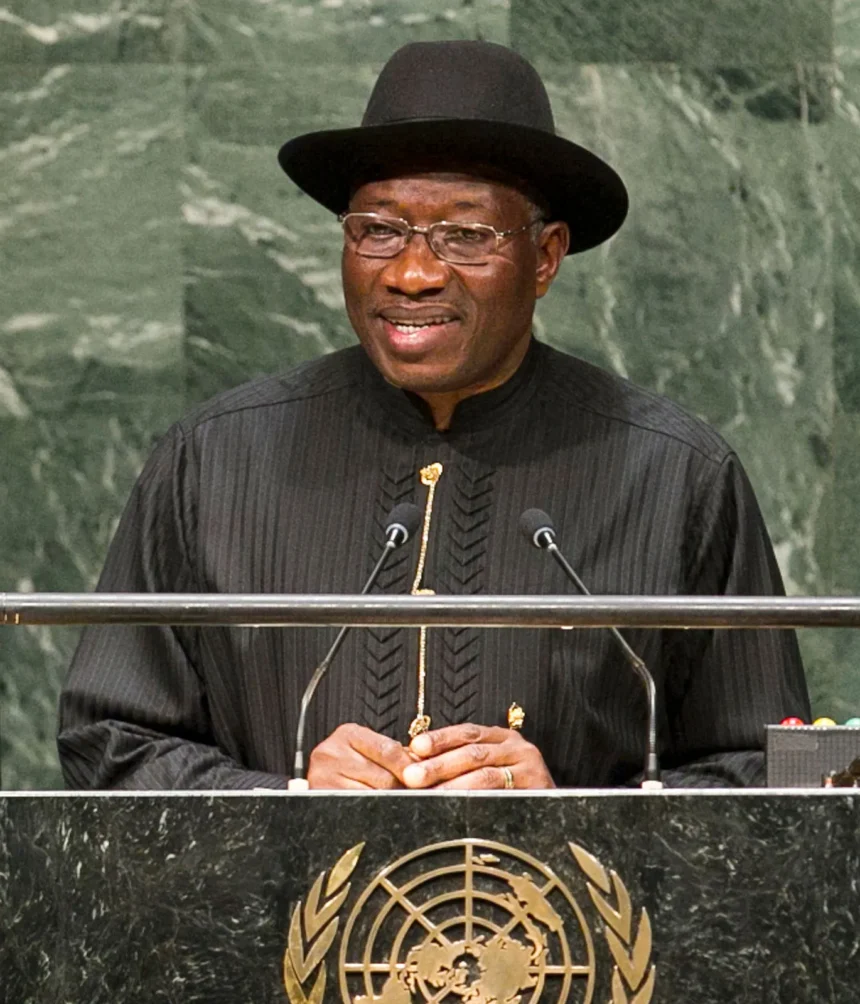
Bashir Yuguda, a former Minister of National Planning and Minister of State for Finance, has said that the administration of former President Goodluck Jonathan left a legacy of good governance, democratic leadership, economic reforms, and statesmanship that cannot be undermined by false narratives.
Yuguda who also served Nigeria as Ambassador to the United Arab Emirates and Qatar, was reacting to a remark credited to former vice president Atiku Abubakar who was quoted to have said that Jonathan’s administration was affected by inexperience.
Yuguda said in a statement on Friday that the former President governed with honour, experience, vision, and restraint, particularly during the 2015 transfer of power.
Atiku had said during an interview on ARISE News Channel, that many young leaders in Nigeria have found it difficult to succeed in office because they lack adequate experience and are not fully prepared for the demands of governance.
The former Vice-President pointed to Nigeria’s leadership transition after the tenure of the late Umaru Musa Yar’Adua, stating that although Yar’Adua had a promising start in office, the administration that followed under Goodluck Jonathan later struggled amid growing national challenges.
“For instance, like this case of Umaru Yar’Adua, who started very well and was succeeded by Goodluck Jonathan. I know Jonathan very well — a decent young man — but he was inexperienced, and that, I believe, also contributed to his failure to manage the affairs of the country, particularly when he was faced with challenges,” he said.
Reacting to the former Vice-President’s remarks, Yuguda described Atiku’s comments as inaccurate and inconsistent with the facts.
He stressed that before Jonathan took the presidential oath, he had already served in key executive positions as Deputy Governor, Governor, Vice-President, and later Acting President during the illness of the late Yar’Adua, adding that these were not ceremonial roles but critical leadership experiences that prepared him for governance at the highest level.
The former minister stated, “During that period, Nigeria’s economic profile expanded significantly. The country attained the status of Africa’s largest economy, attracted strong investor confidence, and maintained relative stability in key indicators. Poverty levels declined to some of the lowest recorded since the return to democratic rule in 1999. These are not retrospective claims; they are outcomes documented by credible institutions.
“In agriculture, the administration moved the conversation from subsistence to sustainability. Reforms in the sector improved food availability and earned Nigeria global recognition for progress towards hunger reduction targets.
“The Jonathan administration revived train routes across Nigeria to provide an inexpensive alternative to road and air travel. On behalf of the President, I personally commissioned the rehabilitation and restoration of the Zaria–Gusau–Kaura Namoda rail line, which had deteriorated over time following 26 years of neglect.
“His vision for transformational development also found expression in the attention he gave to the education sector. He established no fewer than 12 new federal universities, with nine of them in the North, and about 165 Almajiri schools to enhance access to education across the country. Those of us in government at the time understood that these gains were the result of focused policy execution, not happenstance.”
Yuguda said what stood out most about former President Jonathan to many of those who served with him was his temperament.
The former Minister of State for Finance continued:
“He possessed a calmness that steadied governance, even in moments of pressure. I recall numerous occasions when he would discourage any attempt by his appointees to respond sharply to critics, including former leaders. His position was clear: leadership must not descend into unnecessary confrontation.
“That disposition was consistent with the loyalty he demonstrated to his own principal, President Umaru Musa Yar’Adua of blessed memory. Even in trying times, he upheld the dignity of that office and the sanctity of that relationship. Even as a former President, he has continued to visit his successors, including President Bola Ahmed Tinubu, to consult them on important national and sub-regional issues. It is a standard worth reflecting on, especially when contrasted with the well-known strains that existed between Vice-President Atiku Abubakar and President Olusegun Obasanjo during their time in office.
“No leader is beyond criticism, and President Jonathan himself would be the first to acknowledge that he is human and capable of error. But to reduce his presidency to a question of inexperience is to overlook both the depth of his preparation and the substance of his record.
“His most enduring legacy, in my view, lies in his respect for democratic values. Despite the security challenges at the time of the 2015 elections, Jonathan did not use them as an excuse to prolong his stay in office. He not only ensured that elections were conducted even in areas with the most difficult security challenges, he also pioneered the deployment of technology to enhance the transparency and credibility of the electoral process.”
Yuguda recalled that Jonathan honourably conceded power without hesitation, placing national stability above personal ambition — a decision he said profoundly shaped Nigeria’s democratic culture.
The statement added, “President Jonathan has remained consistent even out of office, measured in speech, respectful of institutions, and disinclined towards inflammatory commentary. That is why he has continued to be in high demand in peace negotiations and election observation missions within and outside Africa. In an era where political discourse is often heated, that restraint is not weakness; it is statesmanship.
“Ultimately, Nigerians will judge based on evidence, not assertions. They can differentiate between leadership that left tangible footprints and narratives that seek, after the fact, to redefine it. President Jonathan’s contributions are visible, documented, and enduring.
“They do not require embellishment, and they certainly cannot be diminished by revisionist claims, especially by one whose claim to experience in the last two decades has remained an unrealised ambition to be elected President of our great country.”
“We must reflect on what might have become of our nation’s democracy if those who now criticise Jonathan had found themselves in his position when his former boss, President Yar’Adua of blessed memory, fell ill.
“Would they have acted with the same wisdom, decorum, and restraint that Jonathan demonstrated in the interest of preserving the nation’s fragile democracy, or would personal ambition have driven them to destabilise it?” he asked.
-

 News1 year ago
Senate to speed up conclusion of Nigeria Forest Security Service Bill
-
 News9 months ago
The Many Lies Against Bashir Haske
-

 News3 years ago
Breaking: Tinubu’s authentic ministerial nominees
-
 News3 years ago
“Anytime we want to kill terrorists, President would ask us to take permission from France but they were killing our soldiers-” Niger Republic coup leader
-
 News3 years ago
“I’m leaving the Catholic church because Bishop Onah is oppressing me,” says Okunerere
-

 News3 years ago
Radio Nigeria’s veteran broadcaster Kelvin Ugwu dies three months after retirement from service
-
 News3 years ago
Dokpesi and the Gazebo Mystique
-

 News3 years ago
Tsunami: Tinubu orders dissolution of managements, boards of MDAs, to sack all Buhari’s political appointees