News
Full text of President Tinubu’s address to Nigerians, July 31, 2023

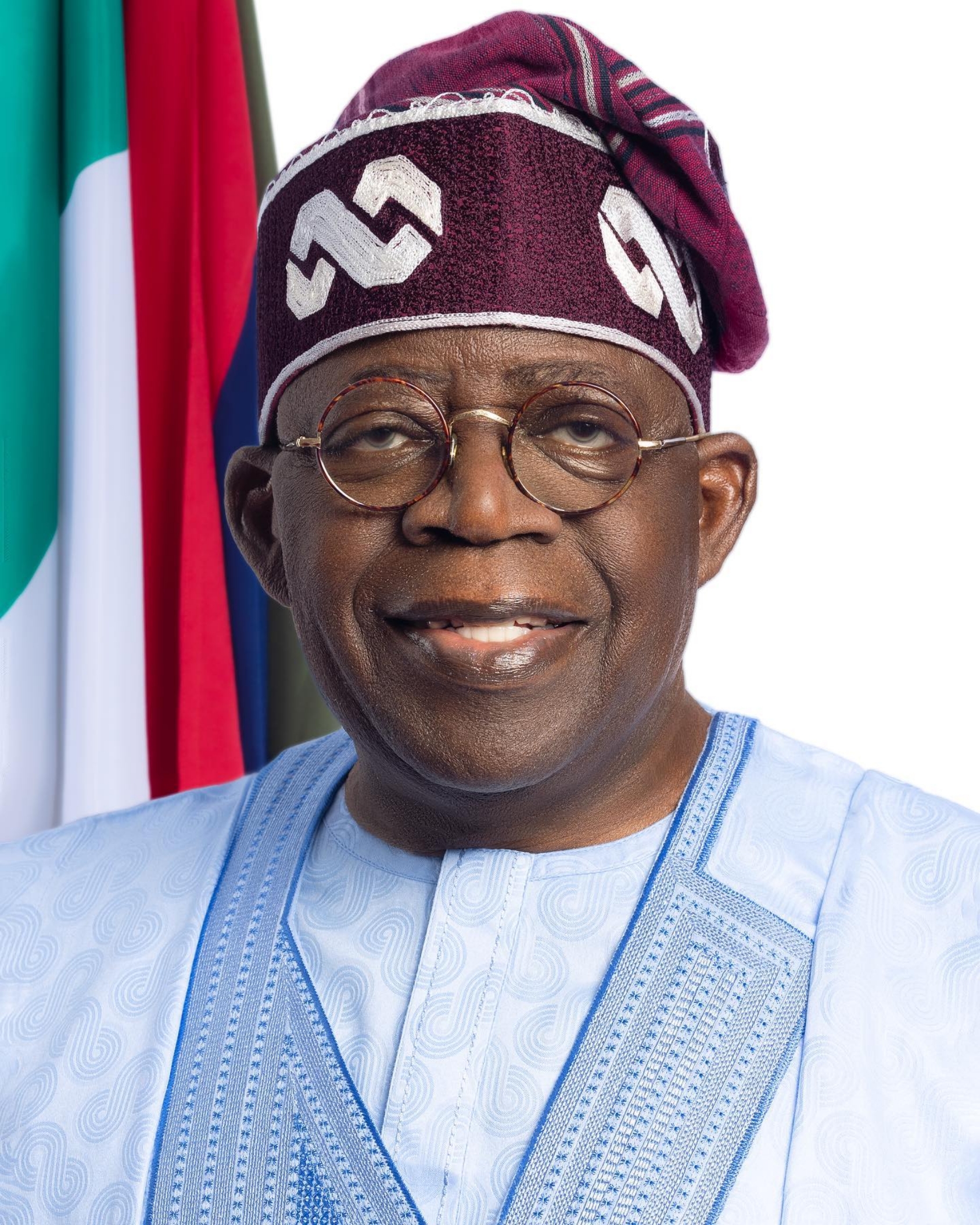
AFTER DARKNESS COMES THE GLORIOUS DAWN
My fellow citizens,
I want to talk to you about our economy. It is important that you understand the reasons for the policy measures I have taken to combat the serious economic challenges this nation has long faced.
2. I am not going to talk in difficult terms by dwelling on economic jargon and concepts. I will speak in plain, clear language so that you know where I stand. More importantly, so that you see and hopefully will share my vision regarding the journey to a better, more productive economy for our beloved country.
3. For several years, I have consistently maintained the position that the fuel subsidy had to go. This once beneficial measure had outlived its usefulness. The subsidy cost us trillions of Naira yearly. Such a vast sum of money would have been better spent on public transportation, healthcare, schools, housing and even national security. Instead, it was being funnelled into the deep pockets and lavish bank accounts of a select group of individuals.
4. This group had amassed so much wealth and power that they became a serious threat to the fairness of our economy and the integrity of our democratic governance. To be blunt, Nigeria could never become the society it was intended to be as long as such small, powerful yet unelected groups hold enormous influence over our political economy and the institutions that govern it.
5. The whims of the few should never hold dominant sway over the hopes and aspirations of the many. If we are to be a democracy, the people and not the power of money must be sovereign.
6. The preceding administration saw this looming danger as well. Indeed, it made no provision in the 2023 Appropriations for subsidy after June this year. Removal of this once helpful device that had transformed into a millstone around the country’s neck had become inevitable.
7. Also, the multiple exchange rate system that had been established became nothing but a highway of currency speculation. It diverted money that should have been used to create jobs, build factories and businesses for millions of people. Our national wealth was doled on favourable terms to a handful of people who have been made filthy rich simply by moving money from one hand to another. This too was extremely unfair.
8. It also compounded the threat that the illicit and mass accumulation of money posed to the future of our democratic system and its economy.
9. I had promised to reform the economy for the long-term good by fighting the major imbalances that had plagued our economy. Ending the subsidy and the preferential exchange rate system were key to this fight. This fight is to define the fate and future of our nation. Much is in the balance.
10. Thus, the defects in our economy immensely profited a tiny elite, the elite of the elite you might call them. As we moved to fight the flaws in the economy, the people who grow rich from them, predictably, will fight back through every means necessary.
11. Our economy is going through a tough patch and you are being hurt by it. The cost of fuel has gone up. Food and other prices have followed it. Households and businesses struggle. Things seem anxious and uncertain. I understand the hardship you face. I wish there were other ways. But there is not. If there were, I would have taken that route as I came here to help not hurt the people and nation that I love.
12. What I can offer in the immediate is to reduce the burden our current economic situation has imposed on all of us, most especially on businesses, the working class and the most vulnerable among us.
13. Already, the Federal Government is working closely with states and local governments to implement interventions that will cushion the pains of our people across socio-economic brackets.
14. Earlier this month, I signed four (4) Executive Orders in keeping with my electoral promise to address unfriendly fiscal policies and multiple taxes that are stifling the business environment. These Executive Orders on suspension and deferred commencement of some taxes will provide the necessary buffers and headroom to businesses in manufacturing sector to continue to thrive and expand.
15. To strengthen the manufacturing sector, increase its capacity to expand and create good paying jobs, we are going to spend N75 billion between July 2023 and March 2024. Our objective is to fund 75 enterprises with great potential to kick-start a sustainable economic growth, accelerate structural transformation and improve productivity. Each of the 75 manufacturing enterprises will be able to access N1billion credit at 9% per annum with maximum of 60 months repayment for long term loans and 12 months for working capital.
16. Our administration recognises the importance of micro, small and medium-sized enterprises and the informal sector as drivers of growth. We are going to energise this very important sector with N125 billion.
17. Out of the sum, we will spend N50 billion on Conditional Grant to 1 million nano businesses between now and March 2024. Our target is to give N50,000 each to 1,300 nano business owners in each of the 774 local governments across the country.
18. Ultimately, this programme will further drive financial inclusion by onboarding beneficiaries into the formal banking system. In like manner, we will fund 100,000 MSMEs and start-ups with N75 billion. Under this scheme, each enterprise promoter will be able to get between N500,000 to N1million at 9% interest per annum and a repayment period of 36 months.
19. To further ensure that prices of food items remain affordable, we have had a multi-stakeholder engagement with various farmers’ associations and operators within the agricultural value chain.
20. In the short and immediate terms, we will ensure staple foods are available and affordable. To this end, I have ordered release of 200,000 Metric Tonnes of grains from strategic reserves to households across the 36 states and FCT to moderate prices. We are also providing 225,000 metric tonnes of fertilizer, seedlings and other inputs to farmers who are committed to our food security agenda.
21. Our plan to support cultivation of 500,000 hectares of farmland and all-year-round farming practice remains on course. To be specific, N200 billion out of the N500 billion approved by the National Assembly will be disbursed as follows:
-Our administration will invest N50 billion each to cultivate 150,000 hectares of rice and maize.
-N50 billion each will also be earmarked to cultivate 100,000 hectares of wheat and cassava.
22. This expansive agricultural programme will be implemented targeting small-holder farmers and leveraging large-scale private sector players in the agric business with strong performance record.
23. In this regard, the expertise of Development Finance Institutions, commercial banks and microfinance banks will be tapped into to develop a viable and an appropriate transaction structure for all stakeholders.
24. Fellow Nigerians, I made a solemn pledge to work for you. How to improve your welfare and living condition is of paramount importance to me and it’s the only thing that keeps me up day and night.
25. It is in the light of this that I approved Infrastructure Support Fund for the States. This new Infrastructure Fund will enable States to intervene and invest in critical areas and bring relief to many of the pain points as well as revamp our decaying healthcare and educational Infrastructure.
26. The fund will also bring improvements to rural access roads to ease evacuation of farm produce to markets. With the fund, our states will become more competitive and on a stronger financial footing to deliver economic prosperity to Nigerians.
27. Part of our programme is to roll out buses across the states and local governments for mass transit at a much more affordable rate. We have made provision to invest N100 billion between now and March 2024 to acquire 3000 units of 20-seater CNG-fuelled buses.
28. These buses will be shared to major transportation companies in the states, using the intensity of travel per capital. Participating transport companies will be able to access credit under this facility at 9% per annum with 60 months repayment period.
29. In the same vein, we are also working in collaboration with the Labour unions to introduce a new national minimum wage for workers. I want to tell our workers this: your salary review is coming.
30. Once we agree on the new minimum wage and general upward review, we will make budget provision for it for immediate implementation.
31. I want to use this opportunity to salute many private employers in the Organised Private Sector who have already implemented general salary review for employees.
32. Fellow Nigerians, this period may be hard on us and there is no doubt about it that it is tough on us. But I urge you all to look beyond the present temporary pains and aim at the larger picture. All of our good and helpful plans are in the works. More importantly, I know that they will work.
33. Sadly, there was an unavoidable lag between subsidy removal and these plans coming fully on line. However, we are swiftly closing the time gap. I plead with you to please have faith in our ability to deliver and in our concern for your well-being.
34. We will get out of this turbulence. And, due to the measures we have taken, Nigeria will be better equipped and able to take advantage of the future that awaits her.
35. In a little over two months, we have saved over a trillion Naira that would have been squandered on the unproductive fuel subsidy which only benefitted smugglers and fraudsters. That money will now be used more directly and more beneficially for you and your families.
36. For example, we shall fulfill our promise to make education more affordable to all and provide loans to higher education students who may need them. No Nigerian student will have to abandon his or her education because of lack of money.
37. Our commitment is to promote the greatest good for the greatest number of our people. On this principle, we shall never falter.
38. We are also monitoring the effects of the exchange rate and inflation on gasoline prices. If and when necessary, we will intervene.
39. I assure you my fellow country men and women that we are exiting the darkness to enter a new and glorious dawn.
40. Now, I must get back to work in order to make this vision come true.
41. Thank you all for listening and may God bless Federal Republic of Nigeria.
Alhaji Mohammed Basse, a former chairman of the Kebbi State chapter of the All Progressives Congress, APC, has died in bandits’ captivity.
Besse was abducted earlier in June.
This was disclosed on Tuesday in a post on X by Bakatsine, a journalist who reports on conflict and insecurity in Nigeria’s North-West region.
A video had emerged, showing the former APC chairman and his associate being humiliated by bandits in the Birnin Gwari forest.
Bakatsine wrote: “DEVASTATING UPDATE: Alhaji Muhammadu Mai Barga Besse, the immediate former APC Chairman of Koko/Besse LGA in Kebbi State, has now also been confirmed dead in captivity.
“This means both men seen in the videos released from the Birnin Gwari forest have lost their lives without ever reuniting with their families after their abduction.
“What began as disturbing footage of humiliation has ended in the worst possible tragedy. Two lives gone, two families shattered and more painful questions about the security crisis facing communities across northern Nigeria.
“May Almighty Allah forgive them, grant them Aljannatul Firdaus and comfort their loved ones.”

Nigeria has been listed among countries through which terrorism funding is channeled across international borders.
This comes as part of the names of individuals and entities connected to financing global terrorism, including ISIS financial networks. The release is furtherance of the Donald Trump Administration’s fight against global terrorism financing.
The designations announced on Monday affect three men and six businesses “who have enabled ISIS to move money across borders.” They operate in Europe, the Middle East, and West Africa.
Washington says by crippling the web, which spans from France and Syria to Türkiye and Nigeria, the U.S. is cutting off funds that enable ISIS to execute attacks, support its regional affiliates, and threaten civilians, including religious minorities.
The targets include a Nigerian whose money exchange firms served as conduits for ISIS financing, a French man who provided information on explosives to ISIS supporters, and a Syrian who used crypto to transfer funds on behalf of ISIS allies.
The American Government reaffirmed its strong partnership with Nigeria, which joined the U.S. in the May 16, 2026, operation that resulted in the killing of Abu-Bilal al-Minuki, the number two official in ISIS.
The United States’ unrelenting pressure on ISIS, according to the State Department, continues to decentralize its operations and rely on financial intermediaries to connect its global network.
The statement reads, “We will continue to use every diplomatic and legal tool available to hold ISIS and its supporters accountable – wherever they operate and however they move money.”
The Department of Treasury’s Office of Foreign Assets Control has published the details of companies and three nationals now regarded as Specially Designated Global Terrorists (SDGT).
The Nigerian among the list, is Muhammad Mukhtar Adamu, linked to ISIS-West Africa. Born 02 (alt 03) August 1990, Muhammad’s home address shows he resides in the Agege area of Lagos State.
The Syrian is Abdelhakim Boukich a.k.a. Babili Muhammad.
The French is Abderrahmane Miloud a.k.a. Ghazi Ibrahim, DOB August 1992. Both are linked to the Islamic State of Iraq and the Levant.
The three companies linked to Muhammad, based in Nigeria, include General Currency Bureau De Change Limited, located in Lagos. It was established on January 9, 2019, with Registration Number RC 1555604.
Others: Manhattan Bureau De Change, Murtala Mohammad Way, Kano, est. 26 January 2021, Reg. No. RC 1763824; Nine To Nine Exchange Bureau De Change, FAAN Complex, Airport Road, Lagos, est. 22 August 2017, Reg. No. RC 1462752.
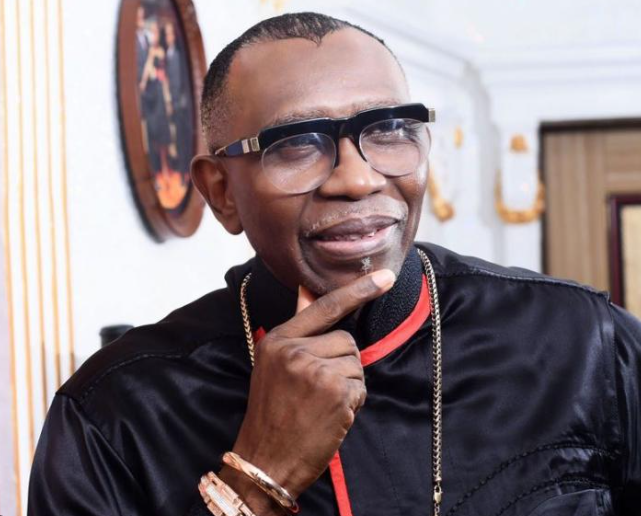
……The former CAN president urged President Tinubu not to seek reelection
By Bonaventure Phillips Melah
The founder and General Overseer of Word of Life Bible Church, Pastor Ayo Oritsejafor, has mocked those who described former president Goodluck Jonathan as clueless, saying they have failed to solve Nigeria’s problems since they took over government.
Oritsejafor, a former president of the Christian Association of Nigeria, CAN, made the remarks during an appearance on Channels Television’s Politics Today on Monday while responding to criticisms that trailed Jonathan’s administration, particularly allegations that insecurity and corruption thrived under his leadership.
“Where are those people now? Are they not the same people today who are in power?” Oritsejafor asked.
“People who called him clueless, but they wouldn’t allow him to do the things he needed to do. They protested against him all over the place in Lagos especially, and across the country.”
According to the cleric, many of those who sponsored and supported the protests against Jonathan are now occupying key positions in government.
“Now, the people who sponsored all those protests, who did a lot of all those things, many of them are the people in power today. So, now they have the clue, but look at where Nigeria is now,” he said.
Asked whether he regretted supporting Jonathan during the 2015 presidential election, Oritsejafor replied, “No, I don’t.”
The cleric also weighed in on the performance of President Bola Tinubu’s administration, expressing concern over the state of the country and advising the president against seeking a second term in office.
He said the current administration had worsened Nigeria’s challenges and questioned the government’s ability to reverse the country’s declining fortunes.
“The government of Tinubu has done more harm to this nation than this nation has ever experienced,” he said.
While declining to directly support calls for Tinubu’s resignation, Oritsejafor urged the president to honestly assess his capacity to address the country’s problems.
“I would not sit here categorically and tell him resign. But I think what I would say to him is, look, don’t pretend to know what to do when you don’t know what to do. Don’t pretend that you can take Nigeria out of where it is now, when you know you can’t,” he stated.
The cleric further criticised the administration’s “Renewed Hope” slogan, arguing that many Nigerians have lost confidence due to economic hardship and insecurity.
“The average Nigerian today has no hope, except if you say you look up to God to give you hope,” he said.
Oritsejafor concluded by urging Tinubu not to pursue another term, saying, “Don’t begin to dream of coming back to continue this same mess.”
-

 News1 year ago
Senate to speed up conclusion of Nigeria Forest Security Service Bill
-
 News11 months ago
The Many Lies Against Bashir Haske
-

 News3 years ago
Breaking: Tinubu’s authentic ministerial nominees
-
 News3 years ago
“Anytime we want to kill terrorists, President would ask us to take permission from France but they were killing our soldiers-” Niger Republic coup leader
-
 News3 years ago
“I’m leaving the Catholic church because Bishop Onah is oppressing me,” says Okunerere
-

 News3 years ago
Radio Nigeria’s veteran broadcaster Kelvin Ugwu dies three months after retirement from service
-
 News3 years ago
Dokpesi and the Gazebo Mystique
-

 News3 years ago
Tsunami: Tinubu orders dissolution of managements, boards of MDAs, to sack all Buhari’s political appointees