News
Flood: UN worried over situation at two Libyan dams as death toll hits 11,300 with 100,000 missing


The United Nation has expressed worry over the situation at two Libyan dams.
The condition at the dams came following the devastating floods a week ago in Libya.
The UN office for the Coordination of Humanitarian Affairs (OCHA) on Sunday said it was concerned about two more dams which were reportedly dealing with massive amounts of pressure.
The dams in question are the Jaza Dam – between the partly destroyed city of Darna and Benghazi – and the Qattara Dam near Benghazi, the OCHA said.
However, there have been “contradictory reports” over the dams’ stability, the UN agency said.
Both dams were in good condition and functioning, according to authorities.
Pumps were being installed at the Jaza Dam to relieve pressure on it, the OCHA cited authorities as saying.
Derna was badly hit after the severe storm last weekend, mainly due to the breach of two dams.
The storm killed thousands of people and thousands more are still missing.
The authorities do not yet have exact figures. The city had about 100,000 inhabitants before the disaster.
Confusion over the death toll continued on Sunday after the OCHA initially spoke of 11,300 dead and a further 10,100 missing.
Additionally, an estimated 170 other people had been killed elsewhere in eastern Libya, according to the UN agency.
The OCHA attributed the figures to the Libyan Red Crescent but a spokesman for the aid group voiced astonishment at the numbers and rejected them.
“The official numbers are issued by the agency authorised by the Libyan authorities,” Tawfiq al-Shukri said.
In a later version of its situation report, OCHA dropped those figures, instead citing the World Health Organisation (WHO) figure of 3,958 people dead and more than 9,000 still missing.
Late on Sunday Othman Abdel Jalil, the health minister in one of Libya’s rival governments, told a news conference that the number of people buried so far was 3,283.
The Libyan official reiterated his call to the media to follow the official numbers which are given daily by the Health Ministry.
“We regret that we saw a lot of statements being made by local officials and some came from international sides during which they gave numbers which can cause panic among the people,” the official said.
He added that he regretted to see that the UN on its site put the number of dead in eastern Libya at 11,300.
“I don’t know where they got this from,” he said. “When I got in touch with them they mentioned it was from the Red Crescent, but when I talked to the Red Crescent they said that did not talk to them.”
The minister said the UN based its report on information coming from a man who claimed to be speaking on behalf of the Red Crescent and that he lived outside Libya.
Conflicting accounts have emerged from Libya, which is divided between warring administrations in East and West.
Earlier in the week, the mayor of Derna had said it was possible up to 20,000 people had died there.
The WHO said nearly 4,000 people who were killed in the floods had been identified.
A group of Libyan data analysts and researchers also said there had been around 4,000 confirmed deaths in a count on Saturday.
A powerful storm dubbed Daniel hit Libya on Sept. 10 after earlier lashing Greece, Bulgaria, and Turkey.
Two dams broke in the mountains above the port of Derna, washing away large areas of the city of around 100,000 people.
Al-Shukri of the Libyan Red Crescent said on Sunday that the search and rescue situation in Derna was “better” now with the engagement of several Libyan and foreign teams.
While he did say that survivors had been hauled up from under the rubble through Saturday, he declined to give specific figures.
Concerns are growing about water safety in Derna.
Detected cases of diarrhea totaled 150 in the city on Saturday due to contaminated drinking water.
But the director of Libya’s National Centre for Disease Control, Haider al-Sayeh, said Sunday that field teams from the centre managed to reduce the cases, and advised locals to avoid well water and use bottled water.
The head of the internationally recognized Tripoli-based government, Abdel-Hamid Dbeibeh, ordered the provision of drinking water to flood-affected areas, his administration said Sunday. His government does not have actual control over the eastern part of Libya.
Abdel Jalil said Sunday that a vaccination campaign has been launched to protect all those living in Derna and working in it, including military, medical staff and journalists.
The minister also announced that a “horrific traffic accident” took place on Sunday which led to the death of four Greek rescue workers who were on their way to Derna.
Abdel Jalil said 15 others were wounded in the accident, of which seven were in critical condition and eight were stable.
He said the Greek team had consisted of 19 rescue members.
In total, the accident killed seven people, as the aid workers’ vehicle crashed into a car carrying a Libyan family, according to Jalil.
The Greek military initially confirmed three deaths late on Sunday night.
Two other members of the rescue team were missing, it said in a statement on Facebook.
Three of the family of five died in the accident, while the other two were seriously injured.
Libya has been in turmoil since the overthrow of dictator Moamer Gaddafi in 2011.
Countless militias are still fighting for power and influence in the oil-rich country. The conflict is further fuelled by foreign states. All diplomatic efforts to settle the conflict peacefully have failed.
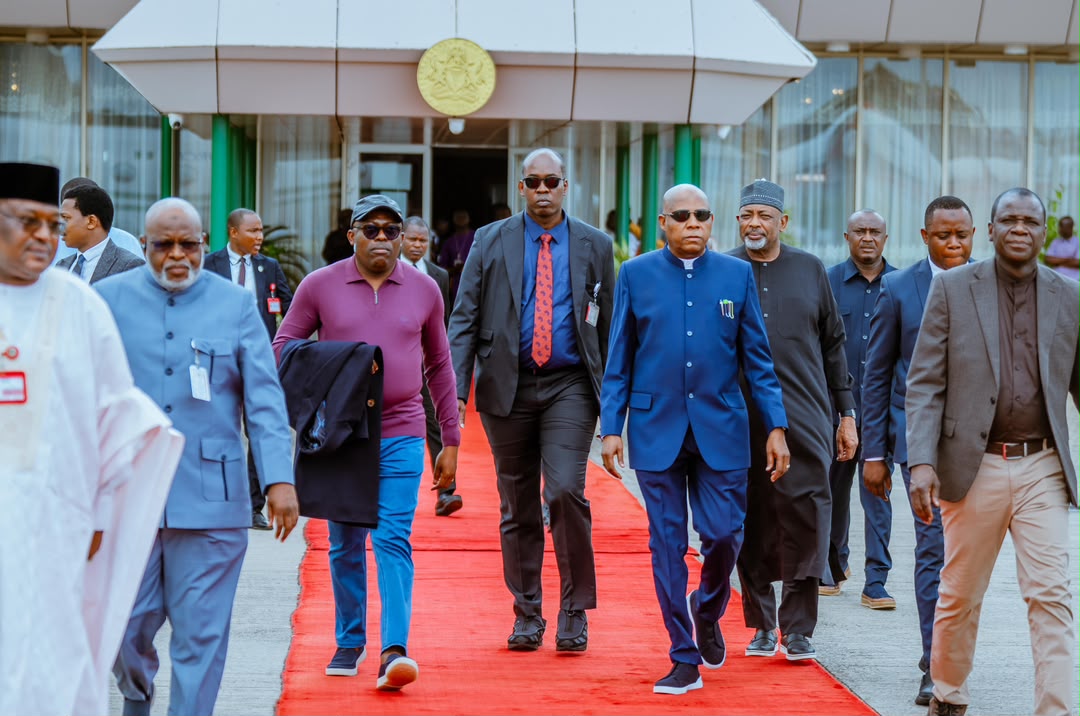
Photo caption: Vice President Kashim Shettima, Governor Fubara and other Nigerian delegates arriving in New York for UNGA
Governor Siminalayi has said that Rivers State will take centre stage at the 81st United Nations General Assembly (UNGA 81) in New York, as his administration moves to showcase the State’s huge investment potentials to the world.
Sir Fubara said the UNGA platform provides a unique opportunity to market Rivers State as Nigeria’s number one investment destination in oil and gas as well as other critical sectors.
Speaking with journalists on the sidelines of the conference in New York, the Governor said the essence of his participation at the global meeting is to give visibility to Rivers State and showcase its economic endowments and woo investors to the state.
“The issue is very simple. We’re trying to give visibility to the state and also showcase the areas where God has really endowed us in the oil and gas sector and other aspects of the state.
“I strongly believe that at the end of this conference and other side meetings, business opportunities will be made open and presented to interested investors who might have very serious and immediate needs to come to our dear state, knowing full well the position of Rivers State in the oil and gas industry.
“I also strongly believe that we are also going to make some inroad into financing and investors opportunities for our dear state,” he stated.
According to Onwuka Nzechi, Chief Press Secretary to the River State Governor, Fubara explained that the investment drive at UNGA 81 is in sync with the deliberate economic reforms of his administration, particularly the establishment of the Rivers State Investment Promotion Agency (RSIPA) as a one-stop shop to facilitate and protect investments.
“This is not different from what we have already done before in establishing what we call the Rivers State Investment Promotion Agency. What we are doing here will also aid the programme of that agency.
“Overall, I will say that Rivers State will be visible and prominent in this conference and we will come home with some good investments for our dear state,” he stated.
Onwuka in a statement quoted Governor to have assured investors that Rivers State remains peaceful, stable, and open for business, with vast opportunities in oil and gas, agriculture, blue economy, manufacturing, and renewable energy.
Rivers State is among the few Nigerian sub-nationals participating actively at UNGA 81, with engagements lined up with development finance institutions, multinational corporations, and diaspora investors.

The Nigerian Meteorological Agency (NiMet) is advancing a national digital platform intended to give farmers, livestock keepers and agricultural advisers more reliable access to location-specific weather and climate information. The NiMet Data Hub, developed with the International Livestock Research Institute (ILRI) and Crea2Solutions, has moved from design and mock-up review to an advanced Minimum Viable Product, with NiMet weather and climate services now under testing.
Work on the hub began in February 2026 under the Climate Services for Youth (CS4Y) and AGRA programmes. By July 2026 the project had progressed from early design to a testable product. The initiative is intended to improve access to historical, monitored and forecast climate information and to support risk analysis, seasonal planning and climate-informed decision-making.
Officials and partners have described the hub as a response to persistent weaknesses in agricultural climate services, including fragmented data, limited coordination among information providers, and the difficulty of turning technical forecasts into timely, practical advice. Stakeholder engagement co-hosted by NiMet and ILRI has focused on mapping Nigeria’s agro-meteorological data and advisory landscape, identifying information and delivery gaps, strengthening institutional linkages, improving last-mile communication, and supporting gender and social inclusion.
The platform is expected to serve farmers, pastoralists, extension professionals, researchers, government institutions and private advisory providers. NiMet resources such as online map rooms and agricultural climate products are expected to feed the system, enabling the development of context-specific agro-weather advisories. ILRI’s contribution is aligned with its wider work of organising research data, developing digital tools and making information more usable for partners and decision-makers.
The project is consistent with the food security, climate-smart agriculture and digital service priorities of President Bola Ahmed Tinubu’s Renewed Hope Agenda. By seeking to place usable climate information in the hands of producers and advisers, the hub is intended to support preparedness, reduce climate-related losses and strengthen agri-food livelihoods.
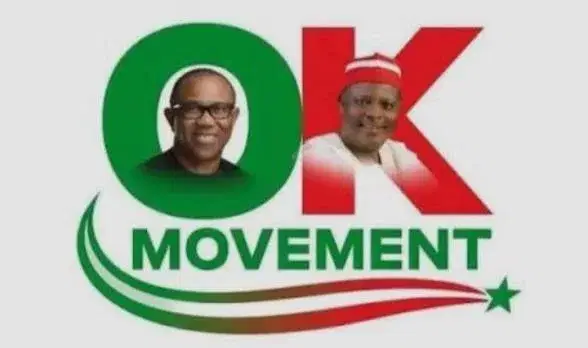
The internal dispute between the Obi/ Kwakwanso support group also known as OK Movement and the leadership of National Democratic Congress, NDC has escalated over the presidential campaign council set up by the movement ahead of the 2027 general election.
Recall that the Movement recently unveiled a 57 member presidential campaign council to work for the Peter Obi and Rabiu Kwakwanso ticket but the NDC issued a statement weekend and disowned the council.
Reacting to the development, the, OK Movement said tt does not require the personal validation or approval of any individual within the Nigeria Democratic Congress (NDC) before exercising its legitimate organisational functions in accordance with established processes.
The OK Movement National Secretary Saadatu Sani said this in a statement on Sunday in Abuja.
Sani rejected a statement credited to the party’s National Chairman, Sen. Moses Cleopas, urging him to familiarise himself with NDC’s constitution before making assertions.
Sani, in her statement, said the movement recognised the supremacy of political parties within constitutional and statutory spheres, but maintained that it remained an independent organisation with its leadership and internal processes.
She insisted that the movement would campaign for the NDC presidential and vice-presidential candidates as well as other party candidates where it had resolved to support them.
“The OK Movement does not require the personal validation or approval of any individual before exercising its legitimate organisational functions in accordance with established processes,” she said.
Sani said the movement was established from the grassroots and did not depend on sponsorship from any individual or political office holder for its activities.
She added that the movement was not seeking political appointments or positions within the NDC as a condition for its support, saying its principles remained its guiding values.
She said the movement had developed a nationwide grassroots structure, with internal membership records indicating approximately 2.5 million registered members and coordinators, supported by relevant data.
-

 News2 years ago
Senate to speed up conclusion of Nigeria Forest Security Service Bill
-
 News1 year ago
The Many Lies Against Bashir Haske
-

 News3 years ago
Breaking: Tinubu’s authentic ministerial nominees
-
 News3 years ago
“Anytime we want to kill terrorists, President would ask us to take permission from France but they were killing our soldiers-” Niger Republic coup leader
-

 News3 years ago
“I’m leaving the Catholic church because Bishop Onah is oppressing me,” says Okunerere
-

 News3 years ago
My nude photo leak was a mistake- lawyer Ifunanya
-
 News4 months ago
See your state governor’s performance ranking
-

 News3 years ago
Radio Nigeria’s veteran broadcaster Kelvin Ugwu dies three months after retirement from service