
News
Festival of blood in Imo, 50 killed in Izombe, Agwa, whole communities burnt down


The insecurity in Governor Hope Uzodinma’s Imo state has reached unbearable stage with the latest coming from Izombe in Oguta local government where more than 50 people have been killed in the last few days.

In addition, the entire community was destroyed with over 170 houses burnt into ashes.
National President of Ohanaeze Youth Council (OYC), Igboayaka O Igboayaka, told journalists in Owerri, the Imo State capital at the weekend that Izombe and other neighbouring communities such as Agwa, Ejemkwuru, Awa, Akabuo, Mgbele and Ogbaku have been recording incessant security challenges due to the nefarious activities of criminal elements with a code name ‘Umuoma’ (Good children)”

A video had gone viral where charred remains of bodies and houses allegedly burnt in Izombe communities were seen.
In the text of the briefing he jointly signed with the Secretary General, Ifeanyi Nweke, the National President expressed regret that both the State government and security agencies in the State “kept quiet” while innocent blood were being shed and property with millions of naira destroyed.
According to the statement by OYC: “Ohanaeze Youth Council noticed, with utmost dismay, the debilitating inability of Gov. Hope Uzodinma’s administration to checkmate the activities of the bandits coupled with military personnel, police and Imo State owned untrained security network called “Ebube-Agu” which has resulted to more casualties and deaths.
“But rather than help to engender peace and tranquility, the security operatives and Ebube-Agu have turned hostile to the residents of the areas particularly, Izombe.
“Unfortunately, the situation has affected socio-economic and other activities as markets, schools and churches have been closed down in Izombe for almost 8 months now.”
An indigene of Amakpurudere Izombe village said over 50 natives of his village were killed by these security operatives between June 7 and Monday June 19, 2023.
“Some of the identified people killed at Amakpurudere Village alone included Benjamin Nwadirigbo, Nwabu Onuigbo (aka Danvata), Obieze Ajaere, Izuka Izuaghanwa and Chike Izuaghanwa.
“Witnesses in the community narrated that others were equally killed in other villages of Izombe like Ndiawa, Ndioko, Orsu and Ugbele and Agwa, a neighbouring Community to Izombe.
“The combined team of police, untrained and illegal Ebube-Agu and the military had equally destroyed more than 170 buildings in various villages including over 45 houses in Amakpurudere Village alone.
“To add more Injuries into the agony of Izumbe people, a community source reported that security forces like Ebube-Agu looted people’s property even as more than 90% of the residents had fled to safety from their the community.
“Since Wednesday June 7, and Monday June 12, 2023, thousands of people fled from Izumbe that the careless security operatives killed Benjamin and four others.”
The community’s report to Ohanaeze Youth Council said that the houses burnt down in Amakpurudere Village alone belong to the following: Emmanuel Chukwudoruo, Romanus Obiagwu, Philip Okoronkwo, Ifeanyi Umezuruike, Canice Ogbonna, Herbert Nwoke, late Lucky Nwoke, Lambart Ekejiuba, Simeon Ekejiuba, Sabastine Okereke, Emeka Awaeze and Dominic Iwuanyanwu.
“Others whose houses were affected are: Benjamin Ohanyirim, Jerome Ohanyirim, Late Marcelinus Ogbonna, Lawrence Ogbonna, Calistus Ononiwu, Chief Alex Madubuko, Chief Oliver Ihejirika, Anthony Ihejirika, Alphonsius Ogbonna among others.
Alhaji Mohammed Basse, a former chairman of the Kebbi State chapter of the All Progressives Congress, APC, has died in bandits’ captivity.
Besse was abducted earlier in June.
This was disclosed on Tuesday in a post on X by Bakatsine, a journalist who reports on conflict and insecurity in Nigeria’s North-West region.
A video had emerged, showing the former APC chairman and his associate being humiliated by bandits in the Birnin Gwari forest.
Bakatsine wrote: “DEVASTATING UPDATE: Alhaji Muhammadu Mai Barga Besse, the immediate former APC Chairman of Koko/Besse LGA in Kebbi State, has now also been confirmed dead in captivity.
“This means both men seen in the videos released from the Birnin Gwari forest have lost their lives without ever reuniting with their families after their abduction.
“What began as disturbing footage of humiliation has ended in the worst possible tragedy. Two lives gone, two families shattered and more painful questions about the security crisis facing communities across northern Nigeria.
“May Almighty Allah forgive them, grant them Aljannatul Firdaus and comfort their loved ones.”

Nigeria has been listed among countries through which terrorism funding is channeled across international borders.
This comes as part of the names of individuals and entities connected to financing global terrorism, including ISIS financial networks. The release is furtherance of the Donald Trump Administration’s fight against global terrorism financing.
The designations announced on Monday affect three men and six businesses “who have enabled ISIS to move money across borders.” They operate in Europe, the Middle East, and West Africa.
Washington says by crippling the web, which spans from France and Syria to Türkiye and Nigeria, the U.S. is cutting off funds that enable ISIS to execute attacks, support its regional affiliates, and threaten civilians, including religious minorities.
The targets include a Nigerian whose money exchange firms served as conduits for ISIS financing, a French man who provided information on explosives to ISIS supporters, and a Syrian who used crypto to transfer funds on behalf of ISIS allies.
The American Government reaffirmed its strong partnership with Nigeria, which joined the U.S. in the May 16, 2026, operation that resulted in the killing of Abu-Bilal al-Minuki, the number two official in ISIS.
The United States’ unrelenting pressure on ISIS, according to the State Department, continues to decentralize its operations and rely on financial intermediaries to connect its global network.
The statement reads, “We will continue to use every diplomatic and legal tool available to hold ISIS and its supporters accountable – wherever they operate and however they move money.”
The Department of Treasury’s Office of Foreign Assets Control has published the details of companies and three nationals now regarded as Specially Designated Global Terrorists (SDGT).
The Nigerian among the list, is Muhammad Mukhtar Adamu, linked to ISIS-West Africa. Born 02 (alt 03) August 1990, Muhammad’s home address shows he resides in the Agege area of Lagos State.
The Syrian is Abdelhakim Boukich a.k.a. Babili Muhammad.
The French is Abderrahmane Miloud a.k.a. Ghazi Ibrahim, DOB August 1992. Both are linked to the Islamic State of Iraq and the Levant.
The three companies linked to Muhammad, based in Nigeria, include General Currency Bureau De Change Limited, located in Lagos. It was established on January 9, 2019, with Registration Number RC 1555604.
Others: Manhattan Bureau De Change, Murtala Mohammad Way, Kano, est. 26 January 2021, Reg. No. RC 1763824; Nine To Nine Exchange Bureau De Change, FAAN Complex, Airport Road, Lagos, est. 22 August 2017, Reg. No. RC 1462752.
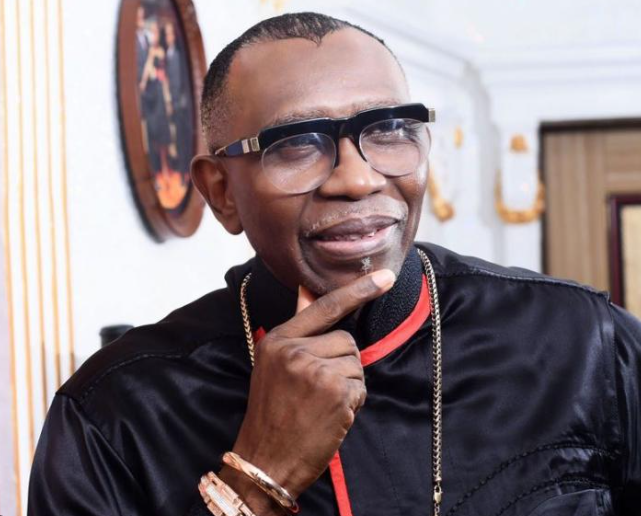
……The former CAN president urged President Tinubu not to seek reelection
By Bonaventure Phillips Melah
The founder and General Overseer of Word of Life Bible Church, Pastor Ayo Oritsejafor, has mocked those who described former president Goodluck Jonathan as clueless, saying they have failed to solve Nigeria’s problems since they took over government.
Oritsejafor, a former president of the Christian Association of Nigeria, CAN, made the remarks during an appearance on Channels Television’s Politics Today on Monday while responding to criticisms that trailed Jonathan’s administration, particularly allegations that insecurity and corruption thrived under his leadership.
“Where are those people now? Are they not the same people today who are in power?” Oritsejafor asked.
“People who called him clueless, but they wouldn’t allow him to do the things he needed to do. They protested against him all over the place in Lagos especially, and across the country.”
According to the cleric, many of those who sponsored and supported the protests against Jonathan are now occupying key positions in government.
“Now, the people who sponsored all those protests, who did a lot of all those things, many of them are the people in power today. So, now they have the clue, but look at where Nigeria is now,” he said.
Asked whether he regretted supporting Jonathan during the 2015 presidential election, Oritsejafor replied, “No, I don’t.”
The cleric also weighed in on the performance of President Bola Tinubu’s administration, expressing concern over the state of the country and advising the president against seeking a second term in office.
He said the current administration had worsened Nigeria’s challenges and questioned the government’s ability to reverse the country’s declining fortunes.
“The government of Tinubu has done more harm to this nation than this nation has ever experienced,” he said.
While declining to directly support calls for Tinubu’s resignation, Oritsejafor urged the president to honestly assess his capacity to address the country’s problems.
“I would not sit here categorically and tell him resign. But I think what I would say to him is, look, don’t pretend to know what to do when you don’t know what to do. Don’t pretend that you can take Nigeria out of where it is now, when you know you can’t,” he stated.
The cleric further criticised the administration’s “Renewed Hope” slogan, arguing that many Nigerians have lost confidence due to economic hardship and insecurity.
“The average Nigerian today has no hope, except if you say you look up to God to give you hope,” he said.
Oritsejafor concluded by urging Tinubu not to pursue another term, saying, “Don’t begin to dream of coming back to continue this same mess.”
-

 News1 year ago
Senate to speed up conclusion of Nigeria Forest Security Service Bill
-

 News11 months ago
The Many Lies Against Bashir Haske
-

 News3 years ago
Breaking: Tinubu’s authentic ministerial nominees
-
 News3 years ago
“Anytime we want to kill terrorists, President would ask us to take permission from France but they were killing our soldiers-” Niger Republic coup leader
-
 News3 years ago
“I’m leaving the Catholic church because Bishop Onah is oppressing me,” says Okunerere
-

 News3 years ago
Radio Nigeria’s veteran broadcaster Kelvin Ugwu dies three months after retirement from service
-
 News3 years ago
Dokpesi and the Gazebo Mystique
-

 News3 years ago
Tsunami: Tinubu orders dissolution of managements, boards of MDAs, to sack all Buhari’s political appointees