News
Ex-AGF Malami in trouble, to face probe over Ajaokuta, four other shady deals


Immediate past Attorney General of the Federation and Minister for Justice, Abubakar Malami, is in trouble and faces probe over at least five suspicious transactions during his time in office.
According to a publication earlier Monday by the Cable, five of the transactions under investigation are:
The mysterious payment of $496 million to Global Steel Holdings Ltd (GSHL) as settlement for the termination of the Ajaokuta Steel concession nine years after the Indian company had waved all claims for compensation; Malami’s handling of the sale of assets worth billions of naira forfeited to the Economic and Financial Crimes Commission (EFCC) by politically exposed persons; His role in the $419 million judgment debt awarded to consultants who claimed to have facilitated the Paris Club refunds to the states; The strange agreement to pay Sunrise Power $200 million compensation in its dispute with the federal government over the Mambilla power project; and the duplicated legal fees in the transfer of $321 million Abacha loot from Switzerland to Nigeria.
TheCable understands that his name has cropped up in a number of questionable deals under the last administration.
A security agency will handle his interrogation, sources said.
Malami agreed to pay $496 million compensation to Global Steel over Ajaokuta steel plant despite the company having withdrawn claims for compensation in 2013
In September 2022, Malami announced that the federal government had finally resolved the “long-standing contractual dispute” with Global Steel over the Ajaokuta Steel Company Limited (ASCL) and the National Iron Ore Mining Company (NIOMCO), Itakpe, concessions. He said instead of paying the original claim of $5.258 billion by GSHL over the termination of the concessions by the Olusegun Obasanjo administration, Nigeria had secured a 91 percent reduction and would pay $496 million only.
In 2013, Smart Adeyemi, then senator from Kogi state, had said the Goodluck Jonathan administration — which was in power at the time — had recovered the Ajaokuta mill “without any attendant financial obligation whatsoever”.
Malami’s settlement also came five years after Kayode Fayemi, then minister of mines and steel development, announced that Nigeria had resolved all the issues around Ajaokuta and recovered ownership.
Global Steel had entered the Nigerian steel industry in 2004 after securing five major concessions and entering share purchase agreements by the Obasanjo administration. Things went sour when the new administration of the late President Umaru Musa Yar’Adua came to power.
The government, in June 2008, revoked Global Steel’s 10-year Ajaokuta concession on the ground that the company was involved in asset stripping. It also terminated Global Steel’s concession for NIOMCO. This prompted Global Steel to opt for arbitration against Nigeria.
In 2010, a committee headed by Abdullahi Yola, then solicitor-general of the federation, recommended that the Jonathan administration should pay a compensation of $525 million to Global Steel for the revocations. Jonathan opted for mediation, with the Indian-owned company agreeing to mediation reportedly after its “underbelly” was exposed.
It was alleged that Global Steel had violated the terms of the concessions by not bringing in any foreign investment but rather leveraging on the assets of the companies to raise loans from Nigerian banks. It was also alleged that Global Steel had engaged in asset stripping — that is, selling the assets without regard for the company’s fortune. The company was accused of tax evasion and its promoters were to be prosecuted in a Nigerian court.
Faced with possible criminal charges, the promoters gave up their claims to Ajaokuta without any payment by the Nigerian government. In return, Itakpe was to be restored to them because the process of termination was considered faulty, unlike in the Ajaokuta case.
In 2016, the Buhari administration approved the execution of the modified concession agreement with Global Steel which allowed the firm to retain Itakpe. In September 2017, Fayemi announced that all agreements had been signed and Nigeria had now retrieved full ownership of the mills . Yemi Osinbajo, who was then vice-president, executed the agreement on behalf of Nigeria.
“With this development, both NIOMCO and Ajaokuta Steel Company Limited have now reverted to the Federal Government Nigeria, and we can now proceed to engage a new core investor with the financial and technical capacity to run the steel complex,” Fayemi said.
In May 2020, Global Steel curiously threatened to return to arbitration at the ICC sitting in Paris, France, in respect of all the contracts cancelled by the Yar’Adua administration. This was kept out of public knowledge by both the federal government and the company, with some insiders suggesting that the new threat was made in connivance with some senior government officials. The company’s lawyers threatened to claim up to $14 billion in damages but later reduced it to $5.258 billion.
On September 3, 2022, Nigeria announced that it had reached a settlement of $496 million with Global Steel, that it had rescued the Nigerian steel, iron ore and rail industries “from a variety of interminable and complex disputes”. Meanwhile, the legacy allegations of asset stripping, tax evasion and violation of the terms of agreement remain unresolved.
Ladidi Mohammed, Malami’s aide, was detained by the EFCC over assets recovery
In August 2022, Ladidi Mohammed, head of asset recovery and management unit, ministry of justice, was grilled by the EFCC over allegations of fraud but no charges were brought against her.
Mohammed, who is very close to Malami, was grilled over allegations of fraudulent sale of recovered assets worth billions. She was granted administrative bail with strident conditions which she could not meet immediately, and was later invited for further questioning.
She reportedly told EFCC that she acted under Malami’s instructions in disposing of some assets which were forfeited to the federal government by persons undergoing corruption trials. She was unable to produce any documented evidence to back her claims but said instructions were given to her verbally.
Malami had reportedly secretly granted a company and its attorneys a multibillion-naira assets recovery contract. The AGF gave the firm, Gerry Ikputu & Partners, an estate valuer, the task of recovering significant tracts of lands and structures believed to belong to the federal government in 10 states and the federal capital territory (FCT), Abuja. The firm also hired a legal firm, M. E. Sheriff & Co, to act as its agent.
With a confidentiality agreement prohibiting them from disclosing the specifics of the job, Malami’s letter granting them the contract said that they would be entitled to three percent of the value of each successful recovery. The award letter’s “confidentiality” clause forbids contractors from making public “any issue from this engagement without prior consent of the attorney-general of the federation and minister of justice”.
The letter dated October 5, 2021 gave the contractors six months period to lapse in April 2022. In the contract with M.E Sherrif & Co, Malami said the law firm had the duty of handing over the recovered assets to the AGF “for further necessary action and directives”.
He also asked the law firm “to work as a project team in collaboration with the Asset Recovery and Management Unit (ARMU) under the Office of the honourable attorney-general of the federation and minister of justice in carrying out this instruction”.
As many as 74 properties listed in the letter are located in high brow areas in Lagos, Rivers, Akwa Ibom, Cross River, Abia, Anambra, Edo, Enugu, Imo and Delta states and the FCT.
The AGF and the justice ministry came under the spotlight for their role in the recovery and sale of assets which was supposed to be the duty of the EFCC. Itse Sagay, then chairman of the presidential advisory committee against corruption (PACAC), had said there was no justification for engaging private firms to execute the recovery the anti-graft agencies were competent to do.
“The EFCC and the ICPC are authorised to recover stolen public assets. So, there is absolutely no justification for hiring a third party to do what government agencies have powers and experience to do,” he said. “So, it is strange for an outside agency, who does not have that record, and will have to be paid to recover the property. That shouldn’t be; it’s wrong. That doesn’t make sense.”
Ned Nwoko is one of the beneficiaries of a judgment debt against the government. The judgment was defended staunchly by Malami, who is accused of filing a weak defence in court
In one of the most controversial cases under Malami’s tenure, some consultants, who claimed to have helped the states calculate their share of the Paris Club refunds, sued the federal government to court demanding to be paid their fees.
Malami, in what the governors described as a case of collusion but which he denies, opted for an out-of-court settlement. He agreed that the states — which were still vigorously disputing the claims — would pay $418 million to the consultants and the monies would be deducted from their federation allocations over time.
Ned Nwoko, the senator representing Delta north, was to get $68,658,192.83, while Ted Isighohi Edwards would receive $159,000,000. Others are: Riok Nig. Limited, $142,028,941.95; Orji Orizu, $1,219,440.45; Olaitan Bello, $215,195.36; and Panic Alert Security Systems Limited, $47.821,920.
This generated a public spat between Malami and the governors. While President Muhammadu Buhari initially withheld consent, he eventually approved and the consultants were given promissory notes. A federal high court sitting in Abuja has now restrained the consultants from transacting with the promissory notes.
In August 2022, the Nigeria Governors’ Forum (NGF) said the consultants were using Malami “to hustle” the states’ funds. Malami said that the NGF had no basis to reject the proposed deduction of $418 million, adding that the consultants’ claims were justified.
Abdulrazaque Bello-Barkindo, the forum’s head of media and public affairs, said there was no collective agreement between the consultants and the NGF, adding that the forum has requested the consultants to provide evidence of work done.
“There is no component that compels the governors’ forum to pay consultants anything, and there is no agreement between the consultants collectively and governors collectively,” he said. “The Paris fund money has been exhausted, and the consultants and the attorney general are expecting the money to be deducted from states’ accounts from sources over 52 or 58 months. That is unheard of. And what the NGF is saying is that there is no money to be paid and the monies that have been paid are gross errors.
“Where they are asking the monies to be gotten from is the biggest sacrilege. This money belongs to the states, the masses of this country and because you’re powerful, you want money to be taken and given to you. That’s why they are using the attorney general of the federation to get the money at the source because the state does not have any reason [to pay]. What the attorney general is claiming that there is a consent judgement is what the NGF is saying did not exist.
“What the NGF is saying is tasking is evidence of work done. Some of them said they have constructed primary health cares across the country, and other said they have provided boreholes, these are physical things that you can show. This matter is in court. The court is the only authority that can determine clearly whether there is a reason for payment or not, why are highly placed lawyers afraid of their own platform?”
In 2021, the governors obtained an order from a federal high court in Abuja restraining the federal government from deducting the money from states’ accounts for the purpose of paying the disputed debt.
Malami inexplicably committed Nigeria to paying Sunrise Power $200 million compensation over the Mambilla project without getting clearance from Buhari
Early 2020, Malami committed the federal government to paying Sunrise Power and Transmission Company Limited (SPTCL) $200 million to as “final settlement” of the dispute over the Mambilla power project in Taraba state. He also agreed to pay a penalty of 10 per cent in case of a default in fulfilling the settlement agreement — in addition to restoring Sunrise as the local content partner for the $5.8 billion hydroelectric project.
In documents seen by TheCable, Malami and Mamman signed on behalf of the federal government while Leno Adesanya signed as chairman and CEO of Sunrise.
Sources told TheCable at the time that Sunrise Power had previously asked for an $80 million settlement in order to withdraw its arbitration claim against Nigeria in France over an alleged breach of contract.
But Babatunde Fashola, who was minister of power, had contended in 2017 that there was no breach of contract as Sunrise had not done any work to warrant any demand or arbitration. Fashola also questioned the integrity of the contract. However, with Fashola’s exit from the ministry, a deal was put together by Mamman and Malami and facilitated by a female figure in Aso Rock.
The project, the biggest plant in the country, was conceived in the 1970s but has suffered severe delays. The 3,050-megawatt facility will be the second largest hydropower plant in Africa when completed.
In 2017, Sunrise Power, which claimed to have been awarded the build, operate and transfer (BOT) contract in 2003, had dragged the federal government and its Chinese partners before the International Chamber of Commerce (ICC) in Paris, France, over alleged breach of contract.
In a letter dated June 20, 2017 to the then Acting President Yemi Osinbajo requesting his intervention in the matter, Adesanya accused the late Abba Kyari, chief of staff to Buhari, of taking the unilateral decision of directing the ministry of power to sideline the company from the contract “against the advice of Malami”.
In the letter dated July 24, 2017 to Osinbajo, with a copy to the chief of staff, Malami had said SPTCL should be engaged as a local content partner to the project “as a means of accommodating its prior contractual interests on the project”.
He backtracked a few weeks later. In another letter dated August 17, 2017 to the company, Malami said he issued the previous opinion on the project based on the limited materials provided at the time. He added that there was no requisite federal executive council (FEC) approval for the project.
“The logical conclusion in the circumstances should be that there was no valid contract between Federal Government of Nigeria and SPTC in respect of the project or at all,” Malami wrote.
Not long after that, TheCable understands, Malami and Adesanya became very close, and the former AGF changed his legal opinion. In a memo to Buhari dated March 26, 2020, Malami asked him to approve the payment of $200 million to Sunrise Power as “full and final settlement” to discontinue the arbitration in Paris and set the government free from all liabilities in the dispute. However, Buhari, in his reply dated Monday, April 20, said: “FG does not have USD 200 million to pay SPTCL”.
The case is still in arbitration.
Okpeseyi is one of Malami’s closest allies and partook in the sharing of legal fees from the return of Abacha loot
ABACHA LOOT: $17 MILLION BONANZA FOR LAWYERS
In 1999, federal government engaged the services of Enrico Monfrini, a Swiss lawyer, to help trace, identify, freeze and recover all looted funds traced to Sani Abacha, Nigeria’s military ruler, from 1993 to 1998. After seven years of work, including investigations and litigation across various countries, Monfrini traced and recovered $321 million from Luxemborg banks.
The funds were domiciled with the government of Switzerland in 2014 pending a final request for transfer from Nigeria. Monfrini and other lawyers involved had also been paid their fees, with the Swiss getting about $12 million.
However, Malami, rather than write directly to the Swiss authorities to seek the transfer of the funds to Nigeria, engaged Oladipo Okpeseyi and Temitope Adebayo, two Nigerian lawyers, to do the job again. Their involvement was basically to write to the Swiss authorities to return the funds to Nigeria as there was no asset tracing and recovery involved again.
They were paid $17 million as “professional fees” for writing the letter — more than the Swiss lawyer who traced and recovered the funds over a period of seven years. Okpeseyi and Adebayo were both members of the Congress for Progressive Change (CPC), the party founded by Buhari to contest in the 2011 presidential election. Malami was the legal adviser to the party.
Okpeseyi’s name featured regularly in legal transactions while Malami was in office.

The Supreme Court of Nigeria will on Thursday, deliver judgments in two cases involving the leadership crises rocking the African Democratic Congress and the Peoples Democratic Party.
According to information on the official website of the court, the matters, listed under “Political Appeals”, have been added to the cause list for Thursday, April 30, 2026.
While judgment in the ADC matter, marked SC/CV/180/2026, has been fixed for 2 pm, there is no time yet for that if the PDP.
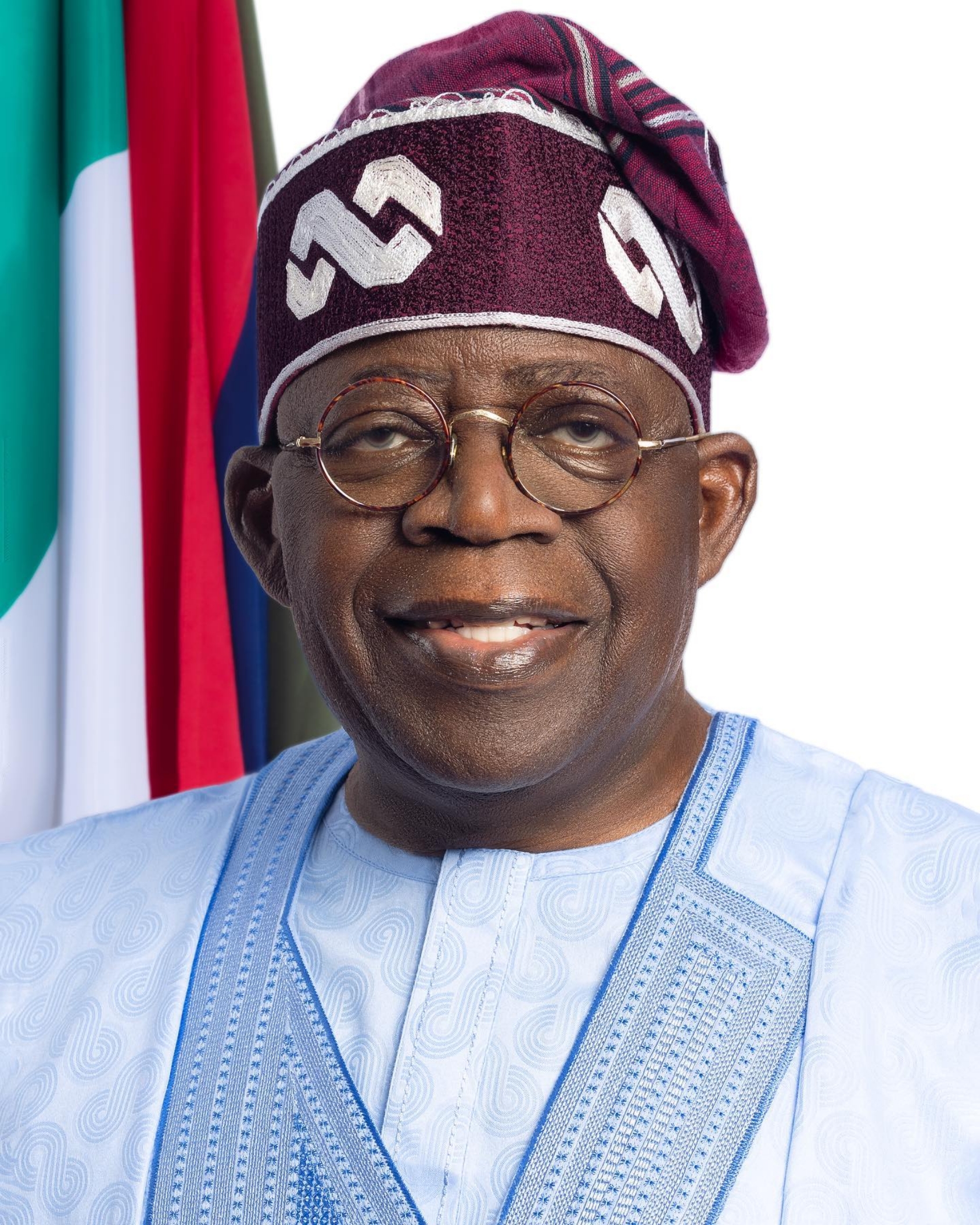
President Bola Tinubu has written the Senate, seeking the screening and subsequent confirmation of fifteen nominees to the National Human Rights Commission (NHRC).
The letter was read by the President of the Senate, Senator Godswill Akpabio.
The letter seeks the reconstitution of the commission’s board in line with statutory provisions with the list comprising nominees from diverse professional backgrounds, including the media and legal sectors.
Among the nominees are the President, Nigeria Guild of Editors and Editor, Vanguard Newspapers, Mr. Eze Anaba; and Dr. Salamatu Hussaina Suleiman, who has been proposed as chairman of the board.
The Executive Secretary of the Commission, Dr. Anthony Ojukwu (SAN) is to retain his position as the Chief Executive Officer.
Other nominees include Mrs Roseline Tasha, Ambassador Adam Yubak Baku, ACG Felix Lawrence, Mr. Edmund Chinonye, Mr. Chinonye Obiaku (SAN), Oluwakemi Asiwaju Okere-Odo, Professor Adedeji Ogunji, Kingsley Chidozie, Mohammed Adelodu, Maupe Ogun Yusuf, and Otunba Francis Meshioye as members.
Also nominated are Patience Patrick and Hawwa Ibrahim, listed as members.
The President said the nominations were made pursuant to Section 2(3) of the National Human Rights Commission (Establishment) Act, 2010, which empowers him to constitute the board subject to Senate confirmation.
He explained that the reconstitution of the board was necessary to enhance the commission’s institutional capacity and enable it to more effectively discharge its mandate to promote and protect human rights across the country.
If confirmed, the new board is expected to play a critical role in reinforcing the NHRC’s oversight functions, particularly at a time of heightened concerns over rights protection and accountability in Nigeria.
Following the presentation of the request, the Senate referred the nominations to its Committee on Judiciary, Human Rights and Legal Matters for screening and report within two weeks.
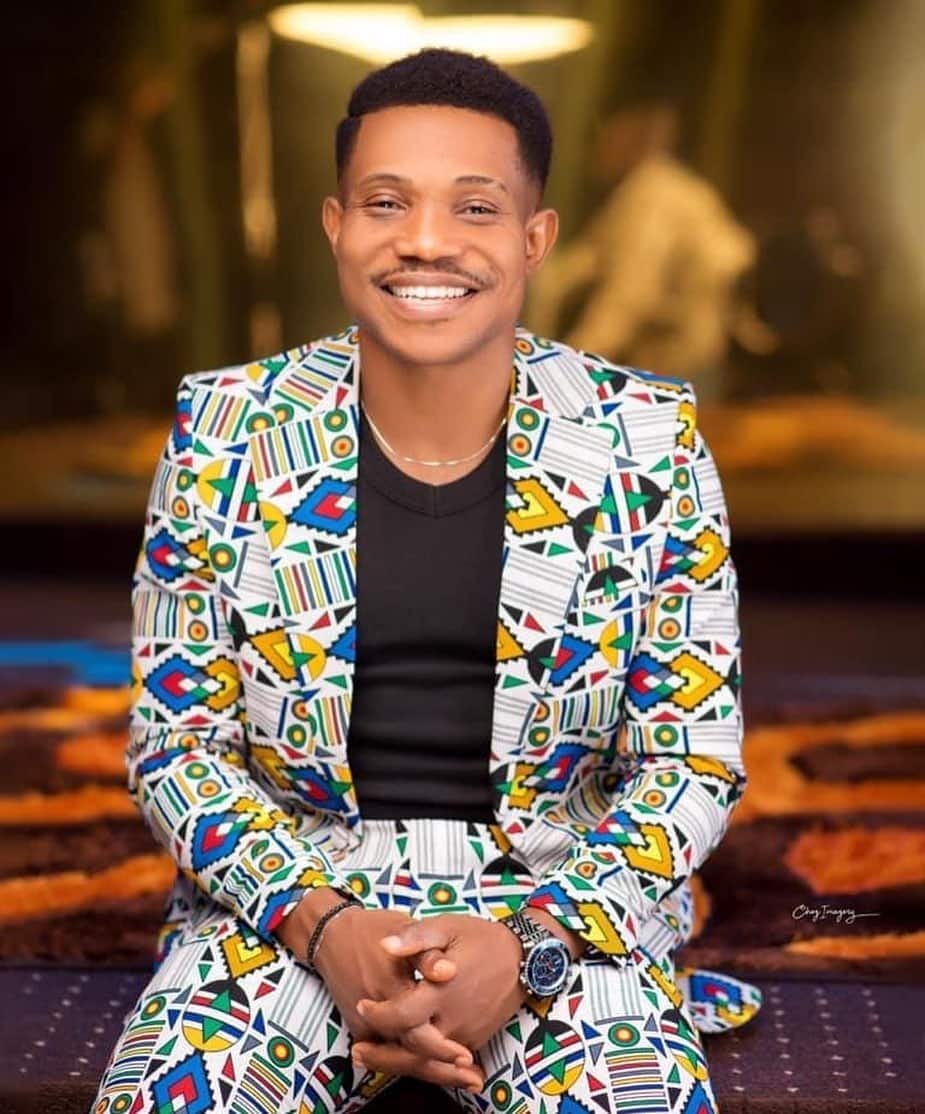
The Economic and Financial Crimes Commission, EFCC, has revealed that it investigated the founder of Streams of Joy International, Pastor Jerry Eze, for six months over suspected money laundering before clearing him.
Ola Olukoyede, chairman of the Commission, disclosed this on Wednesday while speaking at the Jerry Eze Foundation Business Grant Award Ceremony in Abuja.
According to him, the probe was triggered by intelligence reports and petitions after the commission observed large inflows of foreign currencies into the cleric’s domiciliary account.
“We work by intelligence, we work by petitions. At some point, I saw there was an account, a domiciliary account. Dollars, pounds were dropping in like raindrops, from Colombia, from America, from Sri Lanka, even from Togo.
“I said who is this man? Yes, I’ve been hearing about his name, I’ve seen his face a couple of times. I never bothered about what he was doing. I knew he was a pastor.
“So they said this one pastor of streams of joy, go and investigate him. So we went to the investigation. We combed the books,” Olukoyede stated.
The EFCC boss said he subsequently invited Eze for questioning after preliminary findings were compiled by investigators.
He added that upon meeting the cleric and reviewing the findings of the investigation, the commission found no wrongdoing.
“So he came to my office. He told me what happens and all of that, and how the money came, what he does, how he has been helping people, and all of that.
“I said, you know what, I didn’t call you here to explain to me. We have already done our work. I called you here to commend you,” he stated.
The remark drew applause from the audience, as Eze, who was present at the event, acknowledged the commendation.
He noted that the commission has a responsibility not only to investigate financial crimes but also to recognise individuals found to have acted with integrity.
The EFCC chairman, however, stated that the agency would continue to monitor financial activities where necessary, stressing that its preventive mandate remains critical in tackling corruption.
-

 News1 year ago
Senate to speed up conclusion of Nigeria Forest Security Service Bill
-
 News9 months ago
The Many Lies Against Bashir Haske
-

 News3 years ago
Breaking: Tinubu’s authentic ministerial nominees
-
 News3 years ago
“Anytime we want to kill terrorists, President would ask us to take permission from France but they were killing our soldiers-” Niger Republic coup leader
-
 News3 years ago
“I’m leaving the Catholic church because Bishop Onah is oppressing me,” says Okunerere
-

 News3 years ago
Radio Nigeria’s veteran broadcaster Kelvin Ugwu dies three months after retirement from service
-
 News3 years ago
Dokpesi and the Gazebo Mystique
-

 News3 years ago
Tsunami: Tinubu orders dissolution of managements, boards of MDAs, to sack all Buhari’s political appointees