News
Democracy Day: IAWPA urges Tinubu to set up Peace and Reconciliation Committee, says new Electricity Act would engender rapid development

The International Association of World Peace Advocates, IAWPA has urged President Bola Ahmed Tinubu to set up a Committee that would reconcile Nigerians and ensure there is peace and unity across the country.
The African Director of IAWPA, Ambassador John Metchie made the call on Monday, in a goodwill message to President Tinubu and the people of Nigeria, on this year’s Democracy Day celebration.
He also commended the President for signing the Electricity Act 2023 into law, saying it would contribute to rapid infrastructural development of the country and expressed joy that the Act is in line with the Light-Up Umueri Project, his personal initiative which has been distributing solar powered energy to hundreds of households in the community where he is the President General.
Dr, Metchie who is also the Prime Minister of Anambra Association of Town Unions (ASATU), expressed the hope that with the signing into law of the Electricity Act, the President would as well sign the Nigerian Hunters and Forest Security Service (NHFSS) Bill into law, soon.
Metchie issued the statement in Dubai, United Arab Emirate (UAE) where he is scheduled for a meeting of the Global Eminent Peace Ambassadors to review decisions taken at the UN-Habitat Assembly meeting which took place last week in Nairobi Kenya.
He said that the highly contested 2023 presidential election in Nigeria shows that the country and its people have come to a consensus that democracy is the best form of government, adding however, that the election witnessed unprecedented level of hate speech and threat of violence, the need therefore, for a committee for healing and national reconciliation.
Metchie noted that according to data available at the National Human Rights Commission (NHRC), there were over 53 reported incidents of hate speeches during the 2023 general election and that the hurting speeches were made by politically exposed persons including governors, lawmakers and community leaders and others, which he said bruised a lot of individuals and groups across the country.
He said for the administration of President Bola Tinubu to achieve its set objectives, all hands must be on deck to support the efforts of the President, adding that there must be a deliberate attempt by the government to carry all citizens along, irrespective of their ethnic, political and religious leanings.
On the President’s assent to the Electricity Bill, Metchie said that the law which empowers states, firms and individuals to generate electricity is one of the best decisions of the federal government in recent times, as according to him, the law satisfies the yearnings and aspirations of majority of Nigerians for the unbundling of some sectors of the nation’s economy, including electricity, education and police, among others.
Metchie who is also the Deputy Commander General of the Nigerian Hunters and Forest Security Service (NHFSS) in charge of Technical Services, therefore expressed hope that with the prompt action of the President in signing the Electricity Act into law less than two weeks of his assumption of office, there was hope that the NHFSS Bill which Tinubu inherited from his predecessor, would also be assented to very soon.
He said he was sure President Tinubu would assent to the Bill because of the strategic roles officers and men of the NHFSS are expected to play towards effective security of lives and property of the people of Nigeria.
He said that most criminal elements known as terrorists, gunmen, bandits and kidnappers, among others, use the forests as their hideout and also retire back to the forests after carrying out their nefarious activities.
He stated that apart from curbing the various crimes mentioned above, signing the Bill into law, would enable government recruit thousands of young men and women as hunters, which would help to solve the issue of acute unemployment, one of the most serious challenge facing the nation.
The leadership of Nigeria Democratic Congress, NDC, has disowned the Presidential Campaign Council, PCC, set up by the OK Movement ahead of the 2027 general elections.
This is contained in a statement signed by the party’s National Chairman, Cleopas Moses, on Saturday.
Moses stated that the announcement made by one John Ugulu was not authorised and did not come from the party.
According to him, going forward, no individual or group is authorised to announce, constitute or publish any campaign structure or organ in the name of the party without the approval of the party’s National Working Committee, NWC.
The statement partly read: “The leadership of our party, the Nigerian Democratic Congress, NDC, has noted with concern a publication credited to one John Ugulu, announcing a Presidential Campaign Council, PCC, under the guise of the OK Movement.
“For the avoidance of doubt, the party wishes to state categorically as follows: The party hereby dissociates itself in totality from the said OK Movement PCC announcement. It did not emanate from the party and should be disregarded by the public and the media.
“All candidates of the party must appreciate that they are not running as independent candidates. They are products of the party and remain subject to the authority and discipline of the party. Therefore, only the party’s leadership can constitute and announce a PCC.
“No member, candidate or support group should, under any guise, undermine the party or demarcate the party. The party recognises and deeply appreciates the contribution of all support groups and encourages their continued support. We welcome even more support groups who identify with our mission to rescue Nigeria.
“While the party will continue to work collaboratively with all support groups, such groups should not see themselves as alternative party structures or parallel organs of the party.”
News
25 dead bodies recovered as families remain uncertain over fate of 500 residents abducted from Niger communities
25 decomposing bodies belonging to victims of a mass abduction that took place in four communities in Niger state have been recovered.
They were part of residents that were abducted by terrorists Dekara, Kpenya, Sabon-Gida and Gidan-Zana in Borgu Local Government Area.
The bodies were recovered after the communities were reportedly alerted on Monday by the abductors to come and identify and retrieve the bodies.
The victims were said to be among about 500 worshippers abducted after Friday Jumm’at prayers on August 21, 2026.
25 bodies were recovered and later given a mass burial in a nearby bush.
The reported killings have heightened anxiety among families whose relatives remain in captivity, with residents saying they are increasingly uncertain about the fate of the remaining abductees.
A source said the abductors allegedly warned that more captives could be killed if their ransom demands were not met.
“They first asked each family to bring N10 million for each captive, but later reduced it to N5 million. There is no way we can afford it,” he said.
News
Democracy: NHRC calls for people-centered policies, robust debate, respect for human rights, dignity
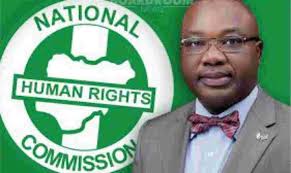
Ahead of the 2027 general election, the National Human Rights Commission (NHRC), has urged authorities and policy makers to prioritize rights of citizens and respect for human dignity over and above the quest to win election and occupy leadership position,
The Executive Secretary of the Commission, Chief Tony Ojukwu, SAN, made the call on Wednesday, as Nigeria joins the rest of the world to commemorate the 2026 International Day of Democracy.
Ojukwu said the day reminds us that democracy is not just about elections, but about the dignity, voice, and rights of every citizen.
He stated that democracy represents the freedom to speak, to choose, to participate, and to hold power accountable without fear; and called on all politicians, political parties and their supporters to exercise restraint and responsibility in public utterances.
He further stressed that democracy thrives on debate, not on hate speech, inciting statements, ethnic profiling, or threats.
A statement by Hajia Fatimah Agwai Mohammed, Director Corporate Affairs and External Linkages at the Commission, quoted Ojukwu to have reiterated that words can build peace or destroy the nation, and urged the political class to make campaigns issue-based and shun any language capable of inciting violence or undermining national unity.
The Chief Human Rights Officer of the country noted that the Commission will continue to monitor hate speech and electoral violence. He called on every eligible Nigerian to rise above voter apathy and actively exercise their civic rights, adding that citizens should not stay away from the polls, sell votes, or believe that votes do not count as these emanate from voter apathy.
Chief Ojukwu lamented that democracy dies when citizens withdraw, and remain silent, he emphasized that the Permanent Voter’s Card remains the power of the people to choose desired leaders.
He therefore urged citizens to come out, vote, and make votes count, describing the choice of leaders as both a right and a duty to Nigeria.
The Executive Secretary who is also the President of the Network of National Human Rights Institutions in West Africa (NNHRI-WA) called on the Federal Government, the Independent National Electoral Commission, and all security agencies to ensure a level playing field for all.
He further stated that government must guarantee the safety of voters, journalists, observers, human rights defenders and the citizens at large.
“Anyone regardless of status or party affiliation, who attempts to make the polity unbearable, who sponsors violence, vote-buying, voter suppression, or attacks on democratic institutions ahead of the 2027 General Elections, must be promptly investigated and prosecuted in accordance with the law, adding that impunity remains the greatest threat to democracy.
In conclusion, Chief Ojukwu called for commitment to a democracy that delivers not just elections, but justice, equality, and human rights for all.
-

 News2 years ago
Senate to speed up conclusion of Nigeria Forest Security Service Bill
-
 News1 year ago
The Many Lies Against Bashir Haske
-

 News3 years ago
Breaking: Tinubu’s authentic ministerial nominees
-
 News3 years ago
“Anytime we want to kill terrorists, President would ask us to take permission from France but they were killing our soldiers-” Niger Republic coup leader
-
 News3 years ago
“I’m leaving the Catholic church because Bishop Onah is oppressing me,” says Okunerere
-

 News3 years ago
My nude photo leak was a mistake- lawyer Ifunanya
-

 News3 years ago
Radio Nigeria’s veteran broadcaster Kelvin Ugwu dies three months after retirement from service
-
 News4 months ago
See your state governor’s performance ranking