News
Civil society groups hail Ojukwu as champion of rights of underprivileged


….As NHRC pushes for passage of bill creating special constituencies for women
Civil society groups and other stakeholders, have commended the Executive Secretary of the National Human Rights Commission, NHRC, Dr. Tony Ojukwu, SAN, for his commitment and dedication to the fight against all forms of injustice, especially protection of the rights of the less privileged members of the society.
The commendations were made Friday in Abuja at the headquarters of the Commission, during a press conference to flag-off 16-Day Activism in commemoration of the 2025 International Campaign on Against Gender-Based Violence (GBV) themed- “Unite to End Digital Violence Against Women and Girls.”
In her remark, Ene Ada, Chief Facilitator, Edoka Trauma Care Centre, said listed several achievements recorded by the National Human Rights Commission under Dr. Ojukwu leadership, including putting in place, a sexual harassment policy which she said was supposed to be championed by the national assembly.
According to her, in addition to monitoring, documentation and reporting of cases of abuse of rights of people, the Commission has initiated a partnership platform which it empowers women and other indigent and vulnerable people.
“We want to celebrate you for all you are doing. Especially your partnership with the media to bring issues related to gender violence and general matters concerning human rights abuses and violations to the public,” she stated.
She noted that Ojukwu takes proactive measures and responds promptly whenever issues of abuses are raised.
“Under your leadership, the NHRC has grown in leaps and bounds. The fight is a marathon not a sprint because abuses occur every minute,” she stated.
Also speaking, the District Chair, Inner Wheel District 910, Felicia Agbonhese, said the NHRC has become a rallying point for organization, groups and individuals interested in advocating for justice and rights of people across the country and attributed the landmark achievement of the Commission to the managerial skills of Dr. Ojukwu, describing him as a role model.
She pledged Inner-Wheels’ readiness to continue to partner with the Commission, especially in the area of empowerment of women and others in need.
Speaking earlier, Ojukwu called on the National Assembly to pass the Bill creating special constituencies for women.
He said the Commission was interested in using the occasion to renew its commitment to a Nigeria where violence, discrimination, and harmful practices have no place, and where women and girls can live free from fear.
Ojukwu said- “We use the opportunity to call on the National Assembly to pass the law creating special constituencies for women to aid more women participation in politics and governance. Refusal to do this constitutes violation against women because a refusal to implement Affirmative Action is a violence against women, which should be prohibited.”
He explained the significance of the 16 Days of Activism against Gender Based Violence, saying it was an important international campaign that was started by the Center for Women’s Global Leadership (CWGL) in 1991.
According to Ojukwu, the 16 Days runs from November 25, (International Day against Violence against Women) to December 10, (International Human Rights Day) to symbolically link violence against women and human rights and to emphasise that such violence is a violation of human rights.
He stated that the 16-day period also highlights other significant dates including December 1, which is World AIDS Day, and December 6, which marks the Anniversary of the Montreal Massacre in 1989, when 14 women students were massacred by a lone gun-man opposed to the affirmative action policies promoted by feminists at the University of Montreal.
“Since it began, the 16 Days of Activism has been used as an organizing strategy by women’s groups to call for the elimination of violence against women by raising awareness about gender based violence as a human rights issue at the local, national, regional and international levels; strengthening local work around violence against women; establishing a clear link between local and international work to end violence against women; providing a forum in which organizers can develop and share effective strategies; demonstrating the solidarity of women around the world organizing against violence against women and creating tools to pressure governments to implement promises made to eliminate violence against women”, Dr. Ojukwu further explained.
He noted that GBV remains one of the most pervasive human rights violations in the world and in Nigeria, Ojukwu assured that NHRC stands firmly with survivors, with women and girls across the country, and with communities demanding justice, safety, and equality.
See details of the events lined up for the 16-Day Activism:
25 November: A road show in collaboration with CSOs, NBA/FIDA and partners, beginning from the NHRC State office and ending at the Office of the First Lady of the State, who will officially flag off the campaign in that State. This will be followed by an advocacy visit to the Speaker of the State House of Assembly of the State.
26 November: Nationwide engagements with Traditional Rulers and community structures in each of the States to examine sociocultural norms, policies, and state-level legislation that influence violence against women. This is supported by the Ford Foundation.
27 November: Advocacy visits to the Chief Judge of each State and/or the, Presiding Judge of the Federal High Court to emphasize the need for effective handling of SGBV cases.
28 November: Meetings with women and youth groups in each State to review life cases by victims and validate identified violations and deepen awareness on women’s rights and plan protection of victims including discrimination of such cases.
30 November – 2 December: Submission and Compilation of reports from engagement with traditional leaders, religious leaders, and documentation of harmful practices affecting women and children.
3 December: School outreach activities where students use drama and other creative presentations to raise awareness on SGBV, while other teams engage religious bodies such as CAN, Muslim associations and other faith-based organisations.
4 December: Further visits to health facilities to assess responses to SGBV and ensure availability of Post Exposure for Prophylaxis (PEP). This will be carried out in collaboration with FIDA, NBA, CSOs etc on the same date at Abuja headquarters. A High-Level Conference on Proportionate Force and Respect for Human Dignity will also be held in collaboration with Citizens FM Abuja. This conference will only take place in Abuja.
5 December: A media parley with stakeholders, NBA, FIDA, CSOs, and the Commission at State level to discuss key issues, legislation, and avenues for redress at the State level.
8 December: Advocacy visit by the State team to State Governors to present findings, summarizing all engagements at the State level.
This will coincide with the Human Rights Forum for MDAs and CSOs to be held in Abuja at the Continental Hotel, the forum will provide opportunity to brainstorm and assess human rights situation and chart a way forward for 2026.
9 December: State compilation of reports from the findings at the various States meetings and visits conducted. Communique is made ready for dissemination to the State Authorities.
10 December: A nationwide Human Rights Awareness rally across all 36 states and the FCT to commemorate International Human Rights Day. Messages from the UN Secretariat, OHCHR and the Executive Secretary will be delivered at all state offices and Abuja headquarters.
The leadership of Nigeria Democratic Congress, NDC, has disowned the Presidential Campaign Council, PCC, set up by the OK Movement ahead of the 2027 general elections.
This is contained in a statement signed by the party’s National Chairman, Cleopas Moses, on Saturday.
Moses stated that the announcement made by one John Ugulu was not authorised and did not come from the party.
According to him, going forward, no individual or group is authorised to announce, constitute or publish any campaign structure or organ in the name of the party without the approval of the party’s National Working Committee, NWC.
The statement partly read: “The leadership of our party, the Nigerian Democratic Congress, NDC, has noted with concern a publication credited to one John Ugulu, announcing a Presidential Campaign Council, PCC, under the guise of the OK Movement.
“For the avoidance of doubt, the party wishes to state categorically as follows: The party hereby dissociates itself in totality from the said OK Movement PCC announcement. It did not emanate from the party and should be disregarded by the public and the media.
“All candidates of the party must appreciate that they are not running as independent candidates. They are products of the party and remain subject to the authority and discipline of the party. Therefore, only the party’s leadership can constitute and announce a PCC.
“No member, candidate or support group should, under any guise, undermine the party or demarcate the party. The party recognises and deeply appreciates the contribution of all support groups and encourages their continued support. We welcome even more support groups who identify with our mission to rescue Nigeria.
“While the party will continue to work collaboratively with all support groups, such groups should not see themselves as alternative party structures or parallel organs of the party.”
News
25 dead bodies recovered as families remain uncertain over fate of 500 residents abducted from Niger communities
25 decomposing bodies belonging to victims of a mass abduction that took place in four communities in Niger state have been recovered.
They were part of residents that were abducted by terrorists Dekara, Kpenya, Sabon-Gida and Gidan-Zana in Borgu Local Government Area.
The bodies were recovered after the communities were reportedly alerted on Monday by the abductors to come and identify and retrieve the bodies.
The victims were said to be among about 500 worshippers abducted after Friday Jumm’at prayers on August 21, 2026.
25 bodies were recovered and later given a mass burial in a nearby bush.
The reported killings have heightened anxiety among families whose relatives remain in captivity, with residents saying they are increasingly uncertain about the fate of the remaining abductees.
A source said the abductors allegedly warned that more captives could be killed if their ransom demands were not met.
“They first asked each family to bring N10 million for each captive, but later reduced it to N5 million. There is no way we can afford it,” he said.
News
Democracy: NHRC calls for people-centered policies, robust debate, respect for human rights, dignity
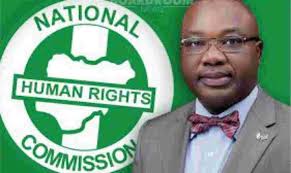
Ahead of the 2027 general election, the National Human Rights Commission (NHRC), has urged authorities and policy makers to prioritize rights of citizens and respect for human dignity over and above the quest to win election and occupy leadership position,
The Executive Secretary of the Commission, Chief Tony Ojukwu, SAN, made the call on Wednesday, as Nigeria joins the rest of the world to commemorate the 2026 International Day of Democracy.
Ojukwu said the day reminds us that democracy is not just about elections, but about the dignity, voice, and rights of every citizen.
He stated that democracy represents the freedom to speak, to choose, to participate, and to hold power accountable without fear; and called on all politicians, political parties and their supporters to exercise restraint and responsibility in public utterances.
He further stressed that democracy thrives on debate, not on hate speech, inciting statements, ethnic profiling, or threats.
A statement by Hajia Fatimah Agwai Mohammed, Director Corporate Affairs and External Linkages at the Commission, quoted Ojukwu to have reiterated that words can build peace or destroy the nation, and urged the political class to make campaigns issue-based and shun any language capable of inciting violence or undermining national unity.
The Chief Human Rights Officer of the country noted that the Commission will continue to monitor hate speech and electoral violence. He called on every eligible Nigerian to rise above voter apathy and actively exercise their civic rights, adding that citizens should not stay away from the polls, sell votes, or believe that votes do not count as these emanate from voter apathy.
Chief Ojukwu lamented that democracy dies when citizens withdraw, and remain silent, he emphasized that the Permanent Voter’s Card remains the power of the people to choose desired leaders.
He therefore urged citizens to come out, vote, and make votes count, describing the choice of leaders as both a right and a duty to Nigeria.
The Executive Secretary who is also the President of the Network of National Human Rights Institutions in West Africa (NNHRI-WA) called on the Federal Government, the Independent National Electoral Commission, and all security agencies to ensure a level playing field for all.
He further stated that government must guarantee the safety of voters, journalists, observers, human rights defenders and the citizens at large.
“Anyone regardless of status or party affiliation, who attempts to make the polity unbearable, who sponsors violence, vote-buying, voter suppression, or attacks on democratic institutions ahead of the 2027 General Elections, must be promptly investigated and prosecuted in accordance with the law, adding that impunity remains the greatest threat to democracy.
In conclusion, Chief Ojukwu called for commitment to a democracy that delivers not just elections, but justice, equality, and human rights for all.
-

 News2 years ago
Senate to speed up conclusion of Nigeria Forest Security Service Bill
-

 News1 year ago
The Many Lies Against Bashir Haske
-

 News3 years ago
Breaking: Tinubu’s authentic ministerial nominees
-
 News3 years ago
“Anytime we want to kill terrorists, President would ask us to take permission from France but they were killing our soldiers-” Niger Republic coup leader
-
 News3 years ago
“I’m leaving the Catholic church because Bishop Onah is oppressing me,” says Okunerere
-

 News3 years ago
My nude photo leak was a mistake- lawyer Ifunanya
-

 News3 years ago
Radio Nigeria’s veteran broadcaster Kelvin Ugwu dies three months after retirement from service
-
 News4 months ago
See your state governor’s performance ranking