
News
Bonaventure Phillips Melah: The Glorious Return of General Christopher Musa


(First published as Lead Story in the December 2025 edition of African Leadership Scorecard Magazine)
THE TRANSMUTATION
There are four different adjectives that can attempt to explain the rapid movement in the life of General Christopher Gwabin Musa, OFR, within just one month- October and December 2025.
You would be right to call it any of transition, transformation or metamorphosis. It also therefore sounds pleasant in the ear if you say- ‘The Metamorphosis of General Christopher Musa.’
However, the word, transmutation seems to capture the narrative more succinctly as transmutation describes it as ‘an act or instance of transmuting or conversion of base metals into gold or silver.
…. Musa and the December Transition Spirit
Do you know that General Musa was born on Christmas Day?
December marks the end of one year and the beginning of another. It is a period filled with transitions and new beginnings. December is a time when nature slows down, preparing for the cold winter months ahead. The reappearance of General Christopher Musa on Nigeria’s leadership and political landscape a few weeks after retirement from the military, symbolizes strength, adaptability and readiness for great transformation.
Footprints of General Christopher Musa as CDS
Chinue Achebe, one of Nigeria’s most prolific writers in history said that the problem of Nigeria, was absence of quality leadership.
However, Nigeria has also had a number of leaders who have shown patriotism, commitment and dedication to the goals and mission they set out to achieve and made remarkable achievements for the overall wellbeing of the people.
One of those that have achieved such enviable heights, is General Christopher Musa. As Nigeria’s Chief of Defence Staff, his style of leadership was a signpost of hope.
Throughout his tenure in that position, he was steadfast in his commitment to his personal vision of sustaining peace and tranquility in Nigeria, through the double approach of deploying the stick and the carrot, also known as kinetic and non-kinetic warfare, while deploying diplomatic soldiering to get Nigeria’s neighbours to partner with their big brother for the safety of West Africa.
As CDS, Musa’s office enjoyed a robust working relationship with the other Chiefs, comprising the Nigerian Army, the Nigerian Navy and the Nigerian Air Force, as together, they strived to root out all forms of violent criminalities in the country.
He also fostered harmonious relationship between the military and civil populace; and ensured healthy workable synergy with sister security agencies including the Police, Office of the National Security Adviser and others.
His innovative approach emphasizes the strategic deployment of informational, psychological, diplomatic, economic, social, and civil-military cooperation to pursue national interests.
In the course of his tenure, General Musa ensured that welfare of officers and men of the Nigerian military was treated as first-line charge in the scheme of things including logistics enhancement, housing, medicals, insurance and hazard entitlements, among others. The same is true of training and capacity building as thousands of military officers and men were sponsored to attend local and overseas courses with over 312 personnel trained in counter-terrorism abroad including in the US, Egypt, Turkey, Pakistan, India and other countries.
One of the most remarkable achievements recorded by General Musa as CDS, was transforming the Armed Forces of Nigeria through policy reforms that enhanced intelligence gathering, troop confidence, teamwork, and discipline. It was a combination of these that engendered progress in the fight against terrorists, bandits, and kidnappers, among others as thousands of them were either neutralized or apprehended, while over 5,200 kidnapped victims were freed from their captors. hostages. Conservatively, over 129,000 terrorists surrendered during his tenure.
Under his command also, some notable terror leaders were elimination including Sububu and 38 others while many terrorist formations were dislodged.
One plank of his numerous efforts aimed at boosting morale of military personnel as well as build broader partnership was his invitation to the Duke and Duchess of Sussex who were excited to be in Nigeria. Their visit to military formations and one-on-one with some wounded soldiers in military hospital cannot be forgotten. The Duke also participated in Invictus Games aimed at telling injured soldiers that they can still normal life and enjoy themselves, in the face of challenges.
A Grateful Nation Rewards Musa with Gratitude and Praises
At no time in the history of Nigeria had any public official received accolades from the citizens than was the case when General Musa was asked to exit service in October 2025. The social media was on fire with millions of Nigerians singing his praises for his exceptional leadership qualities, style and achievements recorded he recorded in office. Incidentally, his brief exit came two weeks after First Green White Resources (FGWR) has honoured him with Nigeria’s Pride Award as Shield of the Nation. Television stories of the award therefore generated millions of views and likes as General Musa was celebrated as a true Hero that he is, and while still alive.
WHY FGWR HONOURED GEN. MUSA AS ‘SHIELD OF THE NATION’
On Tuesday, September 30th, General Christopher Musa, OFR, who was still Chief of Defence Staff at that, was honoured as ‘Shield of the Nation’ at the 2025 Nigeria’s Pride Awards, organized by our organization- First Green White Resources, FGWR. The event took place at Barcelona Hotel, Wuse 2, Abuja.
General Musa was honoured alongside Governor Francis Nwifuru of Ebonyi State, Senator Ireti Kingibe, Dangote Group and its Group Head of Corporate Communications, Anthony Chiejina, Minister of Aviation and Aerospace Development, Festus Keyamo, SAN, Sir Jideani Agabaidu, DG of Abuja Chamber of Commerce and Industry and Nollywood personality, Tonto Dikeh, among others.
Although General Musa was not present at the event, he was the major focus of the audience and received standing ovation when his name and award was announced. Speakers took turn to pour praises on him and commended him for the great works he was doing for the nation. The Founder/CEO of FGWR, Bonaventure Phillips Melah, in his introductory remark, said General Musa’s patriotism and motivational leadership style have combined to boost the morale of officers and men of the Nigerian military, even as he commits himself to synergizing with other service Chiefs, the Police and related security agencies towards providing best quality service to the fatherland. “The result of the combined approaches as well as his commitment to duty, is drastic reduction in incidents of insecurity across the country, especially North East and South East, as well as oil theft in the Niger Delta region, among many other achievements,” he said.
The Chairman of the occasion, Brigadier General Paul Boroh (trd), said Nigeria’s Pride Awards was a well-thought initiative to honour those who have served the nation well and contributed to nation-building. He commended the Chief off Defence Staff, General Christopher Musa for his efforts in rooting terrorism and other criminalities in the country and suggested that the awards be an annual event while the Minister of Information and National Orientation Mohammed Idris, who was represented by the Director, Publications, Production and Documentation, Mr. Ibidapo Okunnu, praised General Musa for his patriotism and multi-dimensional approach in securing Nigeria. He commended the organisers of the awards for their commitment to the unity of Nigeria and for honouring citizens who have contributed t the development of the nation.
A few days after the Awards ceremonies, the Founder/CEO of FGWR, Bonaventure Phillips Melah, led a team to Defence headquarters where the Director, Defence Information, Brigadier General Tukur Gusau received the Shield of the Nation Award frame and plaque on behalf of General Musa, OFR.
GENERAL MUSA’S BRIEF PAUSE
General Christopher Gwabin Musa (rtd), was Nigeria’s Chief of Defence Staff (CDS) until October 30, when he was replaced by General Olufemi Oluyede who served as Chief of Army Staff (COAS).
Although the Presidency had said in a statement that the President Bola Tinubu made changes to the “hierarchy of the Service Chiefs in furtherance of the efforts of the Federal Government of Nigeria to strengthen the national security architecture,” the exit of Christopher Musa was greeted with mixed feelings with majority of Nigerians praising his bravery, patriotism, commitment and dedication to duty which they said combined to engender remarkable achievements in the government’s fight against terrorism, banditry, kidnapping and other violent criminalities in the country. Those who shared this opinion, therefore wondered why the President chose to replace him at such a critical time when his efforts were yielding positive results. It was also more curios when juxtaposed with Musa’s assertion months earlier that ‘anytime we are making progress
On the hand were others who said the President, being the Commander-In-Chief of the nation’s armed forces knows what was best for his government.
Any which way however, it is true that insecurity escalated across the country within the six weeks of Musa’s exit from service. For example, there were series of mass abductions across several communities in some states, including Kebbi, Katsina, Kogi, Niger and Kwara, among others. Victims included religious worshippers, students and others.
The situation attracted national and international uproar that was raised to the rooftop when the United States government raised concern about the massive killing of Nigerians by terrorists. President Donald Trump had brushed diplomatic coatings aside and bluntly accused Nigerian government of looking the other way while Christians were killed in what was described by some as religious genocide against Christians. Trump therefore threatened that US would directly and physically intervene both diplomatically and militarily, to deal with the terrorists inside Nigeria, if the government fails to take decisive action.
On Tuesday, December 2nd 2025, President Bola Tinubu, nominated General Christopher Gwabin Musa (rtd), as Minister of Defence.
THE GLORIOUS RETURN
On Tuesday, December 2nd 2025, President Bola Ahmed Tinubu nominated General Christopher Musa (rtd), as Nigeria’s new Minister of Defence.
This was transmitted to the Senate through a letter addressed to Senate President Godswill Akpabio but was made public via a statement issued by the Special Adviser on Information and Strategy, Bayo Onanuga.
The nomination took place one day after Alhaji Mohammed Badaru Abubakar, resigned from Tinubu’s cabinet on M “health grounds.”
The following day. Wednesday, December 3rd, Musa appeared for screening before the Senate, during which the former CDS
faced tough questions on security lapses while he was on retirement. Musa assured the Senate and Nigerians of an all-out was against terrorists and other enemies of the country, saying- “We are going to go after them fully, working together with all the security agencies and Ministries, Departments and Agencies.
He highlighted gaps within the armed forces and called for enhanced funding, strengthened community engagement, and coordinated inter-agency operations while emphasizing the need to protect schools through the Safe Schools Initiative and a zero-tolerance approach to terrorism and banditry. He was thereafter confirmed by the Senate.
The next in the rapid sequence took place Thursday, December 4th, when President Tinubu administered the oath of office on Gen. Musa at the State House, Abuja.
Jubilation as Musa Resumes in Office
On Friday, December 5th, General Christopher Musa (rtd), received a heroic reception as he formally assumed office at the Ministry of Defence headquarters in Abuja.
Officials of the Ministry trooped out in numbers, singing solidarity songs and applauding the former Chief of Defence Staff The warm welcome created an atmosphere of enthusiasm among staff, who described his appointment as a step toward strengthened national security.
In a show of institutional support, the Chief of Defence Staff, General Olufemi Oluyede, led a delegation of service chiefs to receive the Minister. The high-powered military delegation included heads of the Army, Navy, and Air Force, reflected the armed forces’ readiness to work under the new ministerial leadership.
In an emotion-filled but clear voice, General Musa, expressed gratitude for the reception, pledged to deepen inter-agency cooperation, strengthen troops’ welfare, and intensify efforts toward securing the country. He emphasized that national security remains a collective responsibility and promised to build on ongoing reforms within the defence sector.
It is worthy of mention here, that, in the history of Nigeria, no public official has made such swift and rapid transmutation from a military General to civilian minister as was the case of Christopher Musa. It was also the first time in the nation’s history that a ministerial nomination and appointment have received such widespread acceptance, cutting across all ethnic, religious and political divides.
WHO IS GENERAL CHRISTOPHER GWABIN MUSA?
General Christopher Gwabin Musa was born on Christmas Day and would urn 58 on December 25 2025. Widely regarded as one of Nigeria’s most seasoned infantry commanders.
He served as Chief of Defence Staff from 2023 until October 2025 and received the prestigious Colin Powell Award for Soldiering in 2012.
Some of his notable positions include General Staff Officer 1, Training and Operations, Headquarters 81 Division; Commanding Officer, 73 Battalion; Assistant Director, Operational Requirements, Army Policy and Plans; and Infantry Representative on the Training Team at the Nigerian Army Armour Corps.
He also served as Deputy Chief of Staff (Training/Operations) at the Infantry Centre and Corps in 2019; Commander, Sector 3, Operation Lafiya Dole; and later Commander, Sector 3 of the Multinational Joint Task Force (MNJTF) in the Lake Chad Basin.
In 2021, he became Theatre Commander of Operation Hadin Kai, the military’s flagship counterterrorism operation in the Northeast. He subsequently commanded the Nigerian Army Infantry Corps before President Tinubu appointed him CDS in 2023.
In his letter appointing General Christopher Musa as Minister of Defence, President Bola Tinubu said the former CDS has “extensive operational experience and leadership record” making him eminently qualified to lead the Defence Ministry.
Bonaventure Phillips Melah
Publisher/Editor-In-Chief
MD/CEO, FGWR; Founder, Nigeria’s Pride Awards
Email: bonamelah123@gmail.com
Mobile: 08036062975
The leadership of Nigeria Democratic Congress, NDC, has disowned the Presidential Campaign Council, PCC, set up by the OK Movement ahead of the 2027 general elections.
This is contained in a statement signed by the party’s National Chairman, Cleopas Moses, on Saturday.
Moses stated that the announcement made by one John Ugulu was not authorised and did not come from the party.
According to him, going forward, no individual or group is authorised to announce, constitute or publish any campaign structure or organ in the name of the party without the approval of the party’s National Working Committee, NWC.
The statement partly read: “The leadership of our party, the Nigerian Democratic Congress, NDC, has noted with concern a publication credited to one John Ugulu, announcing a Presidential Campaign Council, PCC, under the guise of the OK Movement.
“For the avoidance of doubt, the party wishes to state categorically as follows: The party hereby dissociates itself in totality from the said OK Movement PCC announcement. It did not emanate from the party and should be disregarded by the public and the media.
“All candidates of the party must appreciate that they are not running as independent candidates. They are products of the party and remain subject to the authority and discipline of the party. Therefore, only the party’s leadership can constitute and announce a PCC.
“No member, candidate or support group should, under any guise, undermine the party or demarcate the party. The party recognises and deeply appreciates the contribution of all support groups and encourages their continued support. We welcome even more support groups who identify with our mission to rescue Nigeria.
“While the party will continue to work collaboratively with all support groups, such groups should not see themselves as alternative party structures or parallel organs of the party.”
News
25 dead bodies recovered as families remain uncertain over fate of 500 residents abducted from Niger communities
25 decomposing bodies belonging to victims of a mass abduction that took place in four communities in Niger state have been recovered.
They were part of residents that were abducted by terrorists Dekara, Kpenya, Sabon-Gida and Gidan-Zana in Borgu Local Government Area.
The bodies were recovered after the communities were reportedly alerted on Monday by the abductors to come and identify and retrieve the bodies.
The victims were said to be among about 500 worshippers abducted after Friday Jumm’at prayers on August 21, 2026.
25 bodies were recovered and later given a mass burial in a nearby bush.
The reported killings have heightened anxiety among families whose relatives remain in captivity, with residents saying they are increasingly uncertain about the fate of the remaining abductees.
A source said the abductors allegedly warned that more captives could be killed if their ransom demands were not met.
“They first asked each family to bring N10 million for each captive, but later reduced it to N5 million. There is no way we can afford it,” he said.
News
Democracy: NHRC calls for people-centered policies, robust debate, respect for human rights, dignity
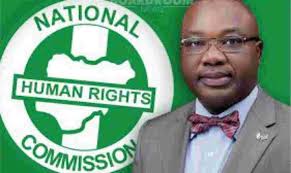
Ahead of the 2027 general election, the National Human Rights Commission (NHRC), has urged authorities and policy makers to prioritize rights of citizens and respect for human dignity over and above the quest to win election and occupy leadership position,
The Executive Secretary of the Commission, Chief Tony Ojukwu, SAN, made the call on Wednesday, as Nigeria joins the rest of the world to commemorate the 2026 International Day of Democracy.
Ojukwu said the day reminds us that democracy is not just about elections, but about the dignity, voice, and rights of every citizen.
He stated that democracy represents the freedom to speak, to choose, to participate, and to hold power accountable without fear; and called on all politicians, political parties and their supporters to exercise restraint and responsibility in public utterances.
He further stressed that democracy thrives on debate, not on hate speech, inciting statements, ethnic profiling, or threats.
A statement by Hajia Fatimah Agwai Mohammed, Director Corporate Affairs and External Linkages at the Commission, quoted Ojukwu to have reiterated that words can build peace or destroy the nation, and urged the political class to make campaigns issue-based and shun any language capable of inciting violence or undermining national unity.
The Chief Human Rights Officer of the country noted that the Commission will continue to monitor hate speech and electoral violence. He called on every eligible Nigerian to rise above voter apathy and actively exercise their civic rights, adding that citizens should not stay away from the polls, sell votes, or believe that votes do not count as these emanate from voter apathy.
Chief Ojukwu lamented that democracy dies when citizens withdraw, and remain silent, he emphasized that the Permanent Voter’s Card remains the power of the people to choose desired leaders.
He therefore urged citizens to come out, vote, and make votes count, describing the choice of leaders as both a right and a duty to Nigeria.
The Executive Secretary who is also the President of the Network of National Human Rights Institutions in West Africa (NNHRI-WA) called on the Federal Government, the Independent National Electoral Commission, and all security agencies to ensure a level playing field for all.
He further stated that government must guarantee the safety of voters, journalists, observers, human rights defenders and the citizens at large.
“Anyone regardless of status or party affiliation, who attempts to make the polity unbearable, who sponsors violence, vote-buying, voter suppression, or attacks on democratic institutions ahead of the 2027 General Elections, must be promptly investigated and prosecuted in accordance with the law, adding that impunity remains the greatest threat to democracy.
In conclusion, Chief Ojukwu called for commitment to a democracy that delivers not just elections, but justice, equality, and human rights for all.
-

 News2 years ago
Senate to speed up conclusion of Nigeria Forest Security Service Bill
-
 News1 year ago
The Many Lies Against Bashir Haske
-

 News3 years ago
Breaking: Tinubu’s authentic ministerial nominees
-
 News3 years ago
“Anytime we want to kill terrorists, President would ask us to take permission from France but they were killing our soldiers-” Niger Republic coup leader
-
 News3 years ago
“I’m leaving the Catholic church because Bishop Onah is oppressing me,” says Okunerere
-

 News3 years ago
My nude photo leak was a mistake- lawyer Ifunanya
-

 News3 years ago
Radio Nigeria’s veteran broadcaster Kelvin Ugwu dies three months after retirement from service
-
 News4 months ago
See your state governor’s performance ranking