News
BEYOND THE BOARDROOM: Prof. Anosike’s Transformative Leadership and NiMet’s current global applause


Last week, Nigeria GovTech Public Service Awards 2025, recongised NiMet as the “Best Federal MDA in Open Data Excellence.” In addition, the Director General/CEO of NiMet, Prof. Charles Anosike, was honoured with the Distinguished GovTech Trailblazer’s Award. A combination of the two awards, serve as lasting testimonies that NiMet and its leadership are at the front seat, among agencies driving Nigeria’s digital agenda. They also serve as very loud testimony and acknowledgement of the agency’s outstanding performance in data transparency and digital transformation.
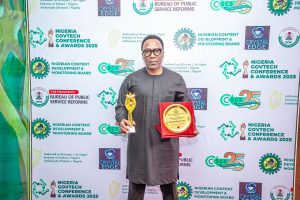
Within the same period, Anosike was also named as one of the Top 100 Environmental and Sustainability Professionals during awards organized by Environment Africa Magazine.
According to the organisers, Anosike earned the recognition, for his forward-thinking work in climate resilience, particularly his efforts to ensure that weather and climate information directly supports vulnerable communities, critical sectors, and long-term national planning.
The Nigerian Meteorological Agency (NiMet), has risen from relative obscurity to become one of best performing federal government agencies in Nigeria. The agency is now a household name in the country while at the same time, receiving accolades and laurels from several international publics and stakeholders, especially organizations that are concerned with weather and climate related matters.
These achievements are coming, in addition to unprecedented welfare initiative of the current management for staff of the agency, who hitherto, were denied training opportunities and other benefits.
Since he assumed office less than two years ago, more than 1,700 staff have benefitted from different categories of trainings to equip them with requisite skills and knowledge to operate a modern institution that is knowledge-based and critical to the overall wellbeing of the nation.
Before Professor Charles Anosike was appointed as the Director General/CEO, of NiMet in December 2023, the agency’s performance was rated low, caused mainly by factors like lack of leadership drive, slow and ineffective migration to modern technologies and a demoralized workforce that were denied series of entitlements and claims.
The current Grade-A performance of NiMet and the various recognitions the agency and its management are getting, are attributable to a triangular chain that include deliberate and concerted efforts to key into President Bola Tinubu’s Renewed Hope Agenda which hammers on providing best quality service to the people; strict supervisory approach by the Minister of Aviation and Aerospace Management, Barrister Festus Keyamo, SAN, who does not joke when it comes to compliance to highest operational standards and the managerial acumen of Prof. Anosike, who has deployed his knowledge and talents to drive required changes through proactive approach that have resulted in modernization of operations.
With a combination of several ‘Cs’ of leadership- including competence, Courage, Consistency, Commitment, Character, Communication and Clarity, Anosike has leveraged digital innovations and strategic partnerships which he has built with local and international institutions, to close critical gaps and achieve remarkable milestones in less than two years.
Under Prof. Anosike’s management, NiMet is undergoing series of transformations that have ensured that Nigeria’s weather services are more accurate, reliable, and impactful than ever before. Through the modernization efforts, there is currently, improved service delivery, effective communication through various synergy and partnership with the media which helps to successfully convey early warning to NiMet’s information consumers.
Among the technologies that have been adopted by the management is the Electronic Flight Folder (e-Flight Folder) for the aviation sector. This digital tool provides pilots with real-time weather updates, directly enhancing safety and operational efficiency at Nigerian airports, many of which have also achieved ISO quality management certification under Anosike’s tenure.
Also, Prof. Anosike’s management has prioritized strengthening early warning systems to help Nigerians adapt to a changing climate. The agency actively works with the World Meteorological Organization (WMO) and other partners to improve the communication of climate information to the public. According to the NiMet boss, these collaborations are vital in building a climate-resilient society and mitigating the impact of extreme weather. The agency has also been playing crucial role in supporting the Sustainable Development Goals (SDGs) by providing essential data to combat desertification and restore land affected by drought, thereby establishing itself as an agency with clear understanding that its responsibilities go beyond daily weather reports, but include long-term climate and environmental protection.
To that effect also, NiMet monitors major rivers and basins that shape the health of freshwater ecosystems, forests, and dryland lands.
in the last three months in particular , the management of NiMet has taken several steps to further strengthen the agency’s capacity to, not only continue to deliver high quality services, but improve upon its standards. Several partnerships have been entered into with sister government agencies, universities and research institutions within Nigeria and across the world. The agency also participated in stakeholders’ forum and addressed gatherings meant to dialogue with the media to foster better understanding and improve working relationship.
On August 11, NiMet signed a Memorandum of Understanding (MoU) with the African Agricultural Technology Foundation (AATF), which was a strategic partnership to drive climate-resilient agriculture across the continent aimed at ensuring that both organizations work together to develop climate-smart weather tools, build capacity for farmers, and promote technologies that strengthen agricultural value chains against the impacts of climate change.
“For agriculture to be truly climate-resilient, access to reliable weather and climate information is essential. This MoU enables us to combine our expertise with AATF to deliver impactful solutions to farmers,” Anosike said after signing the MoU.
Also in August, NiMet, Sahel, IRI and Gates Foundation launched ENACTS Initiative to strengthen access to climate data. The two-day event, held in Abuja under the Building Agricultural Systems Resilience in Nigeria Project financed by the Bill & Melinda Gates Foundation also featured a Project Review Workshop with stakeholders across agriculture, health, water resources, blue economy and disaster management, among others.
ENACTS integrates ground-based observations with satellite data to deliver reliable, user-friendly climate information products. A highlight of the launch was the unveiling of NiMet’s Maproom portal, an online platform offering over 40 years of high-resolution climate data at a 4km grid resolution.
Another significant milestone within the period under review was successful launch of a centralised Secure Aviation Data Information Service (SADIS) Application Programming Interface (API) platform aimed at boosting Aviation safety efficiency in Nigeria.
The development was a significant step in the modernisation of the country’s aviation weather services with Nigeria becoming a trailblazer in Africa. The country therefore has assumed a leading role in deploying advanced meteorological technologies that enhance flight safety and operational efficiency.
The SADIS API, operated by the United Kingdom Met Office under the supervision of the International Civil Aviation Organization (ICAO), grants programmatic access to the World Area Forecast System (WAFS) datasets alongside other vital meteorological information.
The new system replaces the outdated SADIS File Transfer Protocol (FTP), ushering in a modern, System-Wide Information Management (SWIM)-compliant platform capable of delivering high-resolution weather data in real time.
By adopting the SADIS API, aviation stakeholders in Nigeria now benefit from secure and instant access to key forecasts, weather charts, and observational data.
At the stakeholders forum in Lagos on Wednesday September 11, with the theme “Early warnings: Raising awareness on climate risks and promoting early action,” NiMet said it is providing timely information to critical gathering of the economy such as aviation, agriculture, marine and blue economy, energy, health to achieve disaster risk reduction.
The gathering it said, serves as a collaborative space for diverse stakeholders to exchange insights, foster partnerships, and advance proactive strategies aimed at strengthening Nigeria’s resilience against the escalating impacts of climate change.
Then stakeholders’ forum was followed two days later with Prof. Anosike, calling for collaboration to integrate quality weather and climate data into sustainability reporting. He made the call at an Investor Roundtable hosted by the Nigerian Exchange Group (NGX) to commemorate the International Sustainability Standards Board (ISSB) Preparers Readiness Programme. He also highlighted the critical role of climate data in informed decision-making.
Extreme weather, he stated raises significant risks to financial institutions, including increased costs, physical risks, and liquidity issues, adding that climate disasters can impact borrowers’ ability to repay loans, leading to increased credit risk, and cause market risks as asset values decline. He therefore urged financial regulators and stakeholders to integrate climate risk management into financial reporting, ensuring that sustainability reporting is informed by accurate climate data.
NiMet also entered into partnership with the Kingdom of Morocco on AI-Based Weather Forecast, Early Warning Systems. At the event Anosike and his
Moroccan counterpart, Mohammed Dhkissi, pledged to deepen bilateral cooperation between the two institutions, particularly in the area of Artificial Intelligence (AI)-driven weather forecasting and early warning systems for enhanced climate resilience.
The pledge was made when Prof. Anosike paid a working visit to the Directorate of General Meteorology in the Kingdom of Morocco. The visit took place on the sidelines of the ongoing United Nations Systematic Observation Financing Facility (SOFF) workshop for Peer Advisors and Implementing Entities in Casablanca. Parts of the discussions include implementation of the WMO Integrated Global Observing System (WIGOS) Centre in Abuja, the exchange of expertise and support for the establishment of an Instrument Calibration Centre, as well as joint initiatives in data management, Information and Communication Technology (ICT), and education and training.
They also agreed to promote bilingual capacity building in French and English to reach a wider audience, deepen cooperation in Agricultural Meteorology and stakeholder engagement, and share knowledge and experience in the implementation of SOFF Peer Advisory Services, Numerical Weather Prediction, and the integration of Artificial Intelligence (AI) in numerical modelling.
Even though the list of activities are inexhaustible, Prof. Anosike, in his determination to further get NiMet to do more exploits for the benefit of Nigerian people as well as security of the nation, led a team of the agency’s management to a public hearing on Tuesday, July 22, 2025 with the aim of advancing reasons why the NiMet Act No. 29, 2022 should be amended.
He said that weather and climate have a direct and far-reaching impact on virtually every sector of the Nigerian economy – aviation, maritime, agriculture, construction, oil and gas, telecommunications, and disaster risk reduction, among others.
He said that although the NiMet Act was amended as recently as 2022 to strengthen the Agency’s legal and operational framework, the realities of implementation have revealed some gaps that hinder its full effectiveness. In particular, challenges remain in the areas of cost recovery, rulemaking, and compliance & enforcement.
“We must acknowledge that no law, however well-conceived, can anticipate every future challenge at the time of enactment. Legal frameworks must therefore remain flexible and responsive to evolving needs, especially in rapidly changing, data-driven sectors such as meteorology. Against this backdrop, it is pertinent to note that NiMet has made significant progress over the years in enhancing the quality, accuracy, and reach of its services. Nevertheless, to keep pace with the growing demands of Nigeria’s dynamic economy and to ensure the long-term sustainability of its operations, it is imperative that the Agency be equipped with a strengthened legal framework that addresses existing gaps and aligns with both national development priorities and international best practices. Purpose of this presentation.”
He said that the purpose of the presentation was simply to justify the amendments proposed in the NiMet Bill, 2025. Particularly, those geared towards the establishment of a cost recovery framework that ensures the sustainable delivery of critical meteorological services to sectors such as marine, construction and telecommunications. “These amendments are intended to: • Strengthen national meteorological infrastructure and resilience; • Enhance safety, efficiency, and planning across sectors; • Ensure that users of specialized meteorological services in the stated sectors pay costs associated with the provision of such services.”
At the end of Anosike’s presentation, the lawmakers praised him for the giant strides being recorded by NiMet under his leadership and pledged to speed up the process to ensure that whatever necessary legislative actions needed to add impetus to the agency to achieve its set goals are provided without delays.
Uchendu Ugbala Nnadi is a Lagos-based Climate Researcher and activist Email- ugbalannadi142@gmail.com

The Supreme Court of Nigeria will on Thursday, deliver judgments in two cases involving the leadership crises rocking the African Democratic Congress and the Peoples Democratic Party.
According to information on the official website of the court, the matters, listed under “Political Appeals”, have been added to the cause list for Thursday, April 30, 2026.
While judgment in the ADC matter, marked SC/CV/180/2026, has been fixed for 2 pm, there is no time yet for that if the PDP.
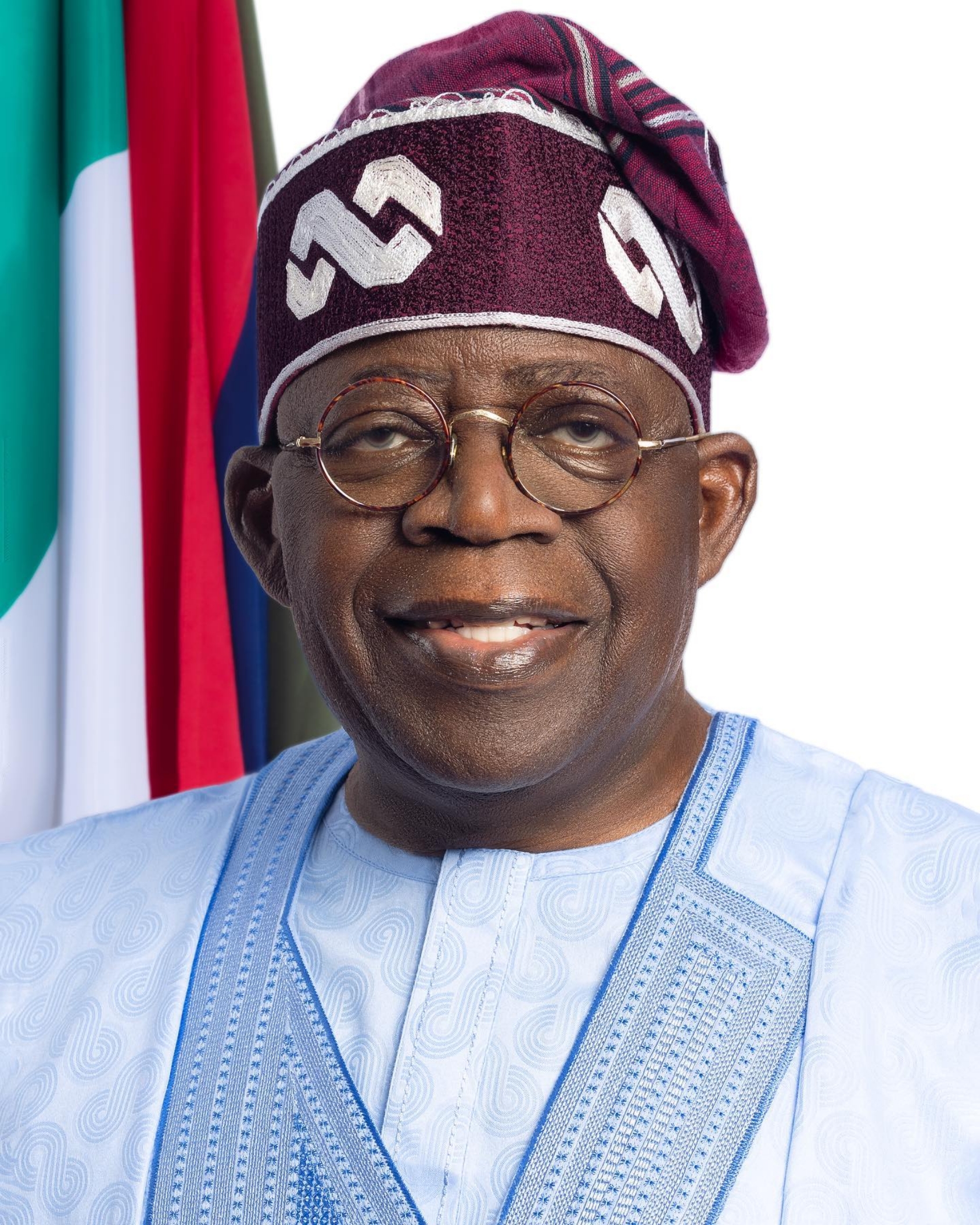
President Bola Tinubu has written the Senate, seeking the screening and subsequent confirmation of fifteen nominees to the National Human Rights Commission (NHRC).
The letter was read by the President of the Senate, Senator Godswill Akpabio.
The letter seeks the reconstitution of the commission’s board in line with statutory provisions with the list comprising nominees from diverse professional backgrounds, including the media and legal sectors.
Among the nominees are the President, Nigeria Guild of Editors and Editor, Vanguard Newspapers, Mr. Eze Anaba; and Dr. Salamatu Hussaina Suleiman, who has been proposed as chairman of the board.
The Executive Secretary of the Commission, Dr. Anthony Ojukwu (SAN) is to retain his position as the Chief Executive Officer.
Other nominees include Mrs Roseline Tasha, Ambassador Adam Yubak Baku, ACG Felix Lawrence, Mr. Edmund Chinonye, Mr. Chinonye Obiaku (SAN), Oluwakemi Asiwaju Okere-Odo, Professor Adedeji Ogunji, Kingsley Chidozie, Mohammed Adelodu, Maupe Ogun Yusuf, and Otunba Francis Meshioye as members.
Also nominated are Patience Patrick and Hawwa Ibrahim, listed as members.
The President said the nominations were made pursuant to Section 2(3) of the National Human Rights Commission (Establishment) Act, 2010, which empowers him to constitute the board subject to Senate confirmation.
He explained that the reconstitution of the board was necessary to enhance the commission’s institutional capacity and enable it to more effectively discharge its mandate to promote and protect human rights across the country.
If confirmed, the new board is expected to play a critical role in reinforcing the NHRC’s oversight functions, particularly at a time of heightened concerns over rights protection and accountability in Nigeria.
Following the presentation of the request, the Senate referred the nominations to its Committee on Judiciary, Human Rights and Legal Matters for screening and report within two weeks.

The Economic and Financial Crimes Commission, EFCC, has revealed that it investigated the founder of Streams of Joy International, Pastor Jerry Eze, for six months over suspected money laundering before clearing him.
Ola Olukoyede, chairman of the Commission, disclosed this on Wednesday while speaking at the Jerry Eze Foundation Business Grant Award Ceremony in Abuja.
According to him, the probe was triggered by intelligence reports and petitions after the commission observed large inflows of foreign currencies into the cleric’s domiciliary account.
“We work by intelligence, we work by petitions. At some point, I saw there was an account, a domiciliary account. Dollars, pounds were dropping in like raindrops, from Colombia, from America, from Sri Lanka, even from Togo.
“I said who is this man? Yes, I’ve been hearing about his name, I’ve seen his face a couple of times. I never bothered about what he was doing. I knew he was a pastor.
“So they said this one pastor of streams of joy, go and investigate him. So we went to the investigation. We combed the books,” Olukoyede stated.
The EFCC boss said he subsequently invited Eze for questioning after preliminary findings were compiled by investigators.
He added that upon meeting the cleric and reviewing the findings of the investigation, the commission found no wrongdoing.
“So he came to my office. He told me what happens and all of that, and how the money came, what he does, how he has been helping people, and all of that.
“I said, you know what, I didn’t call you here to explain to me. We have already done our work. I called you here to commend you,” he stated.
The remark drew applause from the audience, as Eze, who was present at the event, acknowledged the commendation.
He noted that the commission has a responsibility not only to investigate financial crimes but also to recognise individuals found to have acted with integrity.
The EFCC chairman, however, stated that the agency would continue to monitor financial activities where necessary, stressing that its preventive mandate remains critical in tackling corruption.
-

 News1 year ago
Senate to speed up conclusion of Nigeria Forest Security Service Bill
-

 News9 months ago
The Many Lies Against Bashir Haske
-

 News3 years ago
Breaking: Tinubu’s authentic ministerial nominees
-

 News3 years ago
“Anytime we want to kill terrorists, President would ask us to take permission from France but they were killing our soldiers-” Niger Republic coup leader
-

 News3 years ago
“I’m leaving the Catholic church because Bishop Onah is oppressing me,” says Okunerere
-

 News3 years ago
Radio Nigeria’s veteran broadcaster Kelvin Ugwu dies three months after retirement from service
-

 News3 years ago
Dokpesi and the Gazebo Mystique
-

 News3 years ago
Tsunami: Tinubu orders dissolution of managements, boards of MDAs, to sack all Buhari’s political appointees