
News
Bayelsa relatively calm as tension envelops Imo, Kogi over off-season election

Nationwide Reports correspondents in Imo, Kogi and Bayelsa say there is tension across the three states as off-season election is set to begin this Saturday morning.
Communities in Kogi and Imo states are said to be in fear of violence while there is relative calm in Bayelsa state.
However, Police and other security authorities have assured voters of maximum security and this could be seen from the fact that the three states have been saturated with operatives from the Police, Army, Civil Defence, the DSS and others.
On its part, the Independent National Electoral Commission (INEC) on Friday, pleaded with the political parties for a peaceful poll.
The commission disclosed that 5,169,692 registered voters who collected their PVCs would cast their votes in the three states today.
The breakdown indicates that out of 1,056,862 registered voters in Bayelsa State, 1,017,613 have collected PVCs. In Imo State, the number of registered voters is 2,419,922 out of which 2,318,919 have collected PVCs. In Kogi State, out of 1,932,654 registered voters, 1,833,160 have collected PVCs.
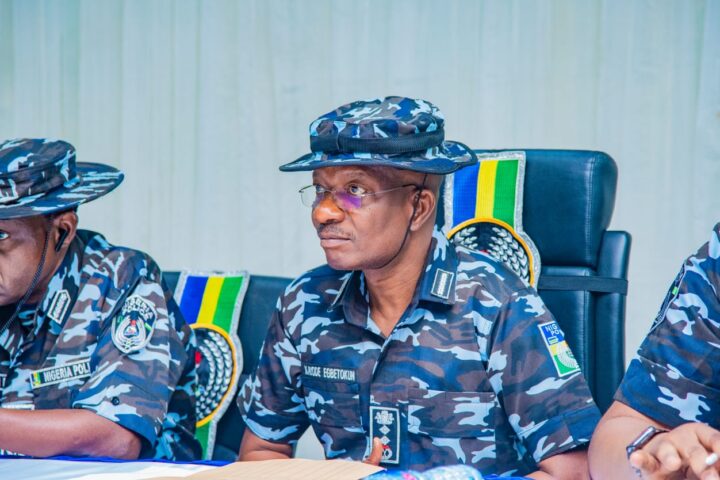
The Inspector-General of Police, Kayode Egbetokun, has ordered restriction of vehicular movement in the three states from 11:59 p.m yesterday to 6.00 p.m today to curb the movement of illicit arms and political thugs.
Egbetokun has deployed no fewer than 92,000 officers and men for election duties in the three states.
By yesterday morning, the Police had completed its operational deployment in the three states. The IG assured that the force has enough manpower ready for election duty.
Egbetokun said his men will deal with hoodlums who may be planning to snatch ballot boxes during today’s governorship elections.
Egbetokun said: “Concerning security at the collation centres, if collation centres have been porous in the past, I’ve said it before now, collation centres in this election will be heavily secured.”The IG also ordered the distribution of additional 220 operational vehicles for election security management across the states. Anti-riot equipment, including water cannons, Armoured Personnel Carriers, helmets, bulletproof vests, and tear gas canisters have also been deployed across the three states.
Also yesterday, the National Security Adviser, Nuhu Ribadu, assured residents of Kogi, Bayelsa, and Imo states of their security during the governorship elections. This is as he warned political actors against any act of violence in the states.
Ribadu stressed that there would be “severe consequences” for anyone found trying to disrupt the elections in the three states and noted a monitoring system had been established with monitors deployed to the field to collect any evidence of violence and irregularities.
For Kogi in particular, the gubernatorial election is a three-horse race in Kogi State.
The leading contestants are Usman Ododo of the APC, Dino Melaye of the PDP and Murtala Ajaka also known as Muri of the SDP.
Indications show that the three candidates are from different ethnic backgrounds, namely Ebira, Okun and Igala, respectively and that the voting pattern may likely reflect the same.
For Imo, the key contestants in today’s election are incumbent Governor Hope Uzodinma of the APC, Sam Anyanwu of the PDP and Athan Achonu of the Labour Party.
While the Governor is relying on power of incumbency and support from Abuja, the race is seen as unpredictable and could swing in favour of any of the three leading contenders.
For Athan Achonu, the candidate of Labour Party, his selling points is the fact that Uzodinma has never been a popular leader in Imo State due to the factors that made him governor as well as the huge insecurity in the state. Achonu is therefore expected to pool the majority of the votes from the Okigwe zone. The Peter Obi LP sentiments would equally enhance Achonu’s chances, especially in the metropolitan capital city of Owerri where collapsing infrastructure, particularly road network, had distanced the people from Uzodinma. But the LP is weakened by internal bickering after its hotly contested governorship primary which led to the exodus from the party of several ‘Obedients’ who would have brought the Peter Obi wave to bear on the election.
The PDP candidate, Sam Anyanwu is also faced with internal bickering, including the Emeka Ihedioha factor which may work against his chances today. It would seem the absence of Ihedioha in the race united his Mbaise people to solidly line up behind Uzodinma. The PDP boasts of widespread structures, but the bickering and sabotage rocking the party had clearly diminished its potential and robbed Anyanwu of the enormous goodwill the party hitherto enjoyed.
In Bayelsa state, the leading candidate is incumbent Governor Douye Diri of the PDP, followed by Timipre Sylva of the APC and Udengs Eradiri of the LP.
Douye Diri was a Senator, a former member of the House of Representatives, and former Commissioner for Youth and Sports in the state.
The incumbent governor is looking good for a second term based on his first term performance and the fact that leading opposition parties in the state are in crisis.
Timipre Sylva, based on his antecedent and pedigree, is the strongest among those jostling to wrestle power from Diri. However, his campaign was negatively affected by the failed attempts to disqualify him through the court. He was a former governor of the state for four years and immediate past Minister of State for Petroleum Resources.
Some members have accused him of running the party as his private estate and abysmal performance of the party in the state at the 2023 elections on his overbearing attitude.
Udengs Eradiri is the youngest among the leading candidates at just 47. The former President, IYC worldwide was Commissioner for Youths and later Environment under the Seriake Dickson administration. Eradiri is regarded as the dark horse among those jostling to occupy the Creek.

The Supreme Court of Nigeria will on Thursday, deliver judgments in two cases involving the leadership crises rocking the African Democratic Congress and the Peoples Democratic Party.
According to information on the official website of the court, the matters, listed under “Political Appeals”, have been added to the cause list for Thursday, April 30, 2026.
While judgment in the ADC matter, marked SC/CV/180/2026, has been fixed for 2 pm, there is no time yet for that if the PDP.
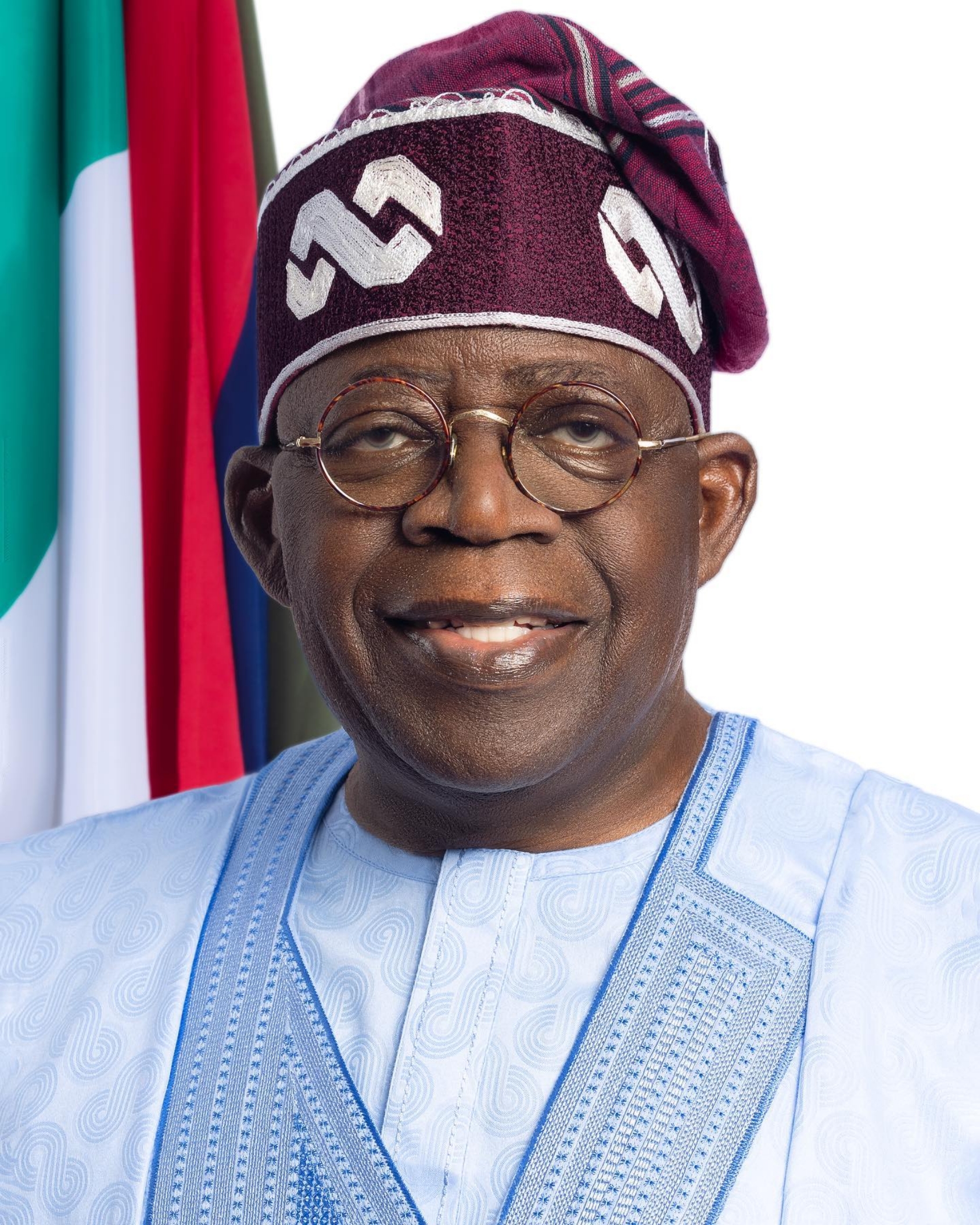
President Bola Tinubu has written the Senate, seeking the screening and subsequent confirmation of fifteen nominees to the National Human Rights Commission (NHRC).
The letter was read by the President of the Senate, Senator Godswill Akpabio.
The letter seeks the reconstitution of the commission’s board in line with statutory provisions with the list comprising nominees from diverse professional backgrounds, including the media and legal sectors.
Among the nominees are the President, Nigeria Guild of Editors and Editor, Vanguard Newspapers, Mr. Eze Anaba; and Dr. Salamatu Hussaina Suleiman, who has been proposed as chairman of the board.
The Executive Secretary of the Commission, Dr. Anthony Ojukwu (SAN) is to retain his position as the Chief Executive Officer.
Other nominees include Mrs Roseline Tasha, Ambassador Adam Yubak Baku, ACG Felix Lawrence, Mr. Edmund Chinonye, Mr. Chinonye Obiaku (SAN), Oluwakemi Asiwaju Okere-Odo, Professor Adedeji Ogunji, Kingsley Chidozie, Mohammed Adelodu, Maupe Ogun Yusuf, and Otunba Francis Meshioye as members.
Also nominated are Patience Patrick and Hawwa Ibrahim, listed as members.
The President said the nominations were made pursuant to Section 2(3) of the National Human Rights Commission (Establishment) Act, 2010, which empowers him to constitute the board subject to Senate confirmation.
He explained that the reconstitution of the board was necessary to enhance the commission’s institutional capacity and enable it to more effectively discharge its mandate to promote and protect human rights across the country.
If confirmed, the new board is expected to play a critical role in reinforcing the NHRC’s oversight functions, particularly at a time of heightened concerns over rights protection and accountability in Nigeria.
Following the presentation of the request, the Senate referred the nominations to its Committee on Judiciary, Human Rights and Legal Matters for screening and report within two weeks.

The Economic and Financial Crimes Commission, EFCC, has revealed that it investigated the founder of Streams of Joy International, Pastor Jerry Eze, for six months over suspected money laundering before clearing him.
Ola Olukoyede, chairman of the Commission, disclosed this on Wednesday while speaking at the Jerry Eze Foundation Business Grant Award Ceremony in Abuja.
According to him, the probe was triggered by intelligence reports and petitions after the commission observed large inflows of foreign currencies into the cleric’s domiciliary account.
“We work by intelligence, we work by petitions. At some point, I saw there was an account, a domiciliary account. Dollars, pounds were dropping in like raindrops, from Colombia, from America, from Sri Lanka, even from Togo.
“I said who is this man? Yes, I’ve been hearing about his name, I’ve seen his face a couple of times. I never bothered about what he was doing. I knew he was a pastor.
“So they said this one pastor of streams of joy, go and investigate him. So we went to the investigation. We combed the books,” Olukoyede stated.
The EFCC boss said he subsequently invited Eze for questioning after preliminary findings were compiled by investigators.
He added that upon meeting the cleric and reviewing the findings of the investigation, the commission found no wrongdoing.
“So he came to my office. He told me what happens and all of that, and how the money came, what he does, how he has been helping people, and all of that.
“I said, you know what, I didn’t call you here to explain to me. We have already done our work. I called you here to commend you,” he stated.
The remark drew applause from the audience, as Eze, who was present at the event, acknowledged the commendation.
He noted that the commission has a responsibility not only to investigate financial crimes but also to recognise individuals found to have acted with integrity.
The EFCC chairman, however, stated that the agency would continue to monitor financial activities where necessary, stressing that its preventive mandate remains critical in tackling corruption.
-

 News1 year ago
Senate to speed up conclusion of Nigeria Forest Security Service Bill
-
 News9 months ago
The Many Lies Against Bashir Haske
-

 News3 years ago
Breaking: Tinubu’s authentic ministerial nominees
-
 News3 years ago
“Anytime we want to kill terrorists, President would ask us to take permission from France but they were killing our soldiers-” Niger Republic coup leader
-
 News3 years ago
“I’m leaving the Catholic church because Bishop Onah is oppressing me,” says Okunerere
-

 News3 years ago
Radio Nigeria’s veteran broadcaster Kelvin Ugwu dies three months after retirement from service
-
 News3 years ago
Dokpesi and the Gazebo Mystique
-

 News3 years ago
Tsunami: Tinubu orders dissolution of managements, boards of MDAs, to sack all Buhari’s political appointees