
News
Maputo Protocol: NHRC renews commitment to women and children’s rights


As Africa and the world marks the 20th anniversary of the Maputo Protocol, the National Human Rights Commission (NHRC) says it is more than ever, committed to the protection of universal human rights of all citizens, especially as they affect women, children and the vulnerable.
In a statement Tuesday, signed by Agharese Arese, Director Corporate Affairs and External Linkages, the Executive Secretary of the Commission Chief Tony Ojukwu, OFR, SAN said the Commission reflects upon this significant milestone and acknowledges the strides made towards gender equality in the African Continent.
He stated this on the eve of the Commemoration of the two decades of adoption of the Protocol, noting that several challenges still persist in achieving women’s civil, political, social, economic and cultural rights on the continent of Africa.
The Maputo Protocol, also known as the Protocol to the African Charter on Human and Peoples’ Rights on the Rights of Women in Africa, was adopted in Maputo, Mozambique by the Heads of States and Government of the African Union on the 11th of July 2003, to promote and protect the rights of women in Africa.
The Protocol offers protection from discrimination, gender-based violence, harmful practices, armed conflicts, disabilities, and distress amongst others.
The Protocol further offers African women guarantees of the right to dignity, integrity and security of person, equality in marriage and before the law, political participation, social welfare and economic empowerment, inheritance, sustainable development, and health and reproductive rights.
Over the past two decades, the protocol has served as a guiding framework to promote equality and eliminate discrimination, violence, and harmful practices against women and girls.
Nigeria’s Human Rights Chief uses the occasion of this commemoration to reaffirm the commitment of the National Human Rights Commission to upholding the principles enshrined in the Maputo Protocol, saying “we recognize that gender equality and the empowerment of women are essential for achieving sustainable development, social justice, and the overall promotion and protection of human rights”.
He reiterated that while Nigeria has made significant progress in advancing women’s rights, there are still challenges that need to be addressed urgently.
According to the Learned Silk, the Commission recognizes the importance of collaborative and concerted efforts to address these challenges which include: gender-based violence, discrimination, harmful traditional practices, and the socio-economic disparities that continue to impede women’s progress.
“We call upon all stakeholders, including the government, development partners, civil society organizations, and the private sector, to join hands with us to intensify our commitment to eliminate these obstacle as we particularly urge the Legislature to domesticate the Protocol to ensure its effective implementation ” Ojukuwu said.
Stating further, Chief Ojukwu emphasized that in line with the Maputo Protocol, the National Human Rights Commission will continue to play a pivotal role in promoting gender equality and ensuring the protection and enforcement of women’s rights. “We will collaborate with government institutions, civil society organizations, and international partners to strengthen legal frameworks, enhance access to justice, provide support services for survivors of gender-based violence, and raise awareness about the rights of women and girls”.
He said the Commission acknowledges the indispensable contributions of women’s rights activists, organizations, and individuals who have tirelessly advocated for gender equality and the elimination of discrimination. “We extend our appreciation to all partners and stakeholders who have supported our efforts in promoting women’s rights in Nigeria. We call on them not to relent on their efforts in working with us to see to the realization of the full implementation of the Maputo Protocol” he added.
“As we commemorate the 20th anniversary of the Maputo Protocol, the NHRC renews its commitment to upholding the dignity and rights of women and girls. We will strive to create an inclusive society where women can fully participate, contribute, and thrive without fear of discrimination or violence”.

The Supreme Court of Nigeria will on Thursday, deliver judgments in two cases involving the leadership crises rocking the African Democratic Congress and the Peoples Democratic Party.
According to information on the official website of the court, the matters, listed under “Political Appeals”, have been added to the cause list for Thursday, April 30, 2026.
While judgment in the ADC matter, marked SC/CV/180/2026, has been fixed for 2 pm, there is no time yet for that if the PDP.
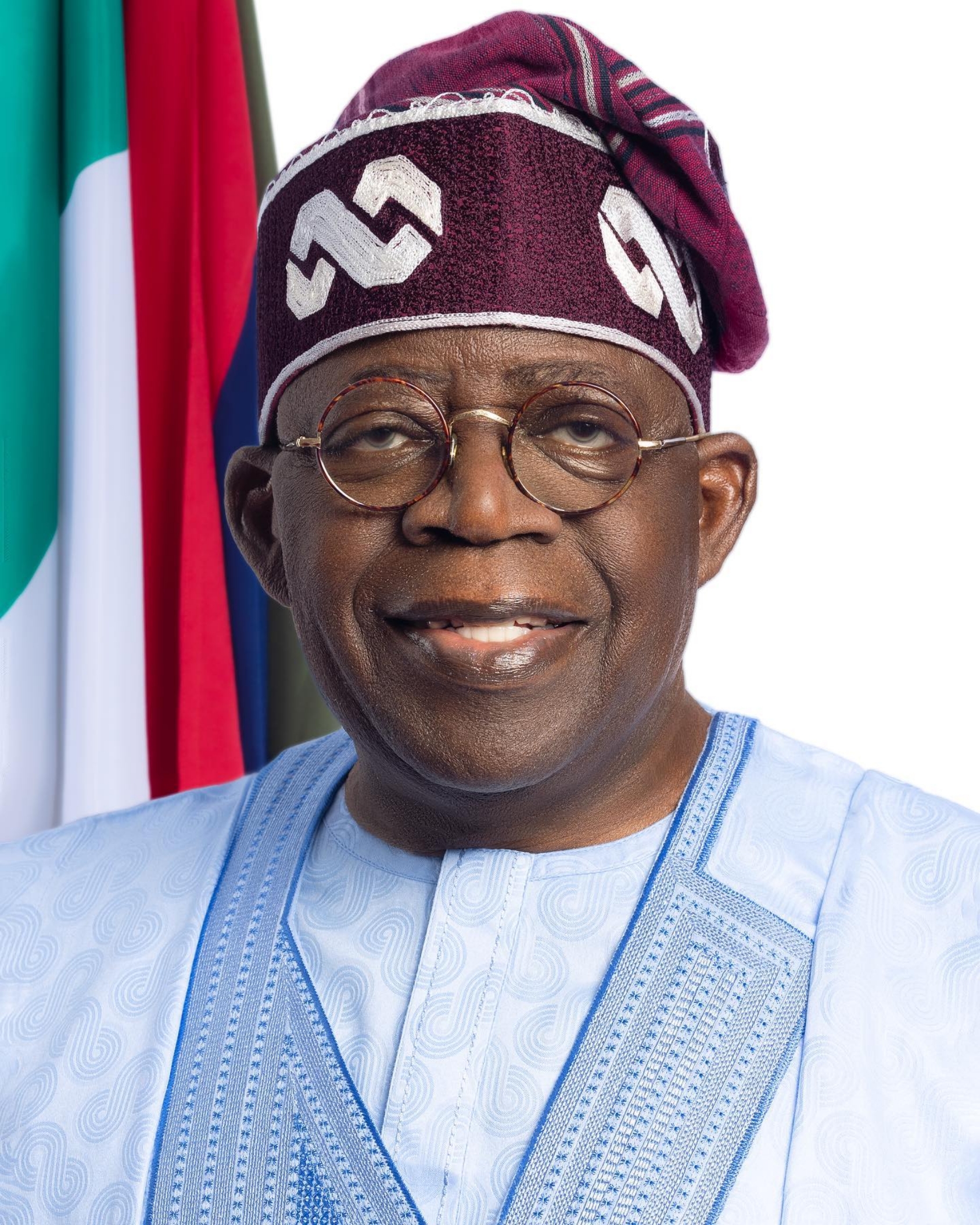
President Bola Tinubu has written the Senate, seeking the screening and subsequent confirmation of fifteen nominees to the National Human Rights Commission (NHRC).
The letter was read by the President of the Senate, Senator Godswill Akpabio.
The letter seeks the reconstitution of the commission’s board in line with statutory provisions with the list comprising nominees from diverse professional backgrounds, including the media and legal sectors.
Among the nominees are the President, Nigeria Guild of Editors and Editor, Vanguard Newspapers, Mr. Eze Anaba; and Dr. Salamatu Hussaina Suleiman, who has been proposed as chairman of the board.
The Executive Secretary of the Commission, Dr. Anthony Ojukwu (SAN) is to retain his position as the Chief Executive Officer.
Other nominees include Mrs Roseline Tasha, Ambassador Adam Yubak Baku, ACG Felix Lawrence, Mr. Edmund Chinonye, Mr. Chinonye Obiaku (SAN), Oluwakemi Asiwaju Okere-Odo, Professor Adedeji Ogunji, Kingsley Chidozie, Mohammed Adelodu, Maupe Ogun Yusuf, and Otunba Francis Meshioye as members.
Also nominated are Patience Patrick and Hawwa Ibrahim, listed as members.
The President said the nominations were made pursuant to Section 2(3) of the National Human Rights Commission (Establishment) Act, 2010, which empowers him to constitute the board subject to Senate confirmation.
He explained that the reconstitution of the board was necessary to enhance the commission’s institutional capacity and enable it to more effectively discharge its mandate to promote and protect human rights across the country.
If confirmed, the new board is expected to play a critical role in reinforcing the NHRC’s oversight functions, particularly at a time of heightened concerns over rights protection and accountability in Nigeria.
Following the presentation of the request, the Senate referred the nominations to its Committee on Judiciary, Human Rights and Legal Matters for screening and report within two weeks.

The Economic and Financial Crimes Commission, EFCC, has revealed that it investigated the founder of Streams of Joy International, Pastor Jerry Eze, for six months over suspected money laundering before clearing him.
Ola Olukoyede, chairman of the Commission, disclosed this on Wednesday while speaking at the Jerry Eze Foundation Business Grant Award Ceremony in Abuja.
According to him, the probe was triggered by intelligence reports and petitions after the commission observed large inflows of foreign currencies into the cleric’s domiciliary account.
“We work by intelligence, we work by petitions. At some point, I saw there was an account, a domiciliary account. Dollars, pounds were dropping in like raindrops, from Colombia, from America, from Sri Lanka, even from Togo.
“I said who is this man? Yes, I’ve been hearing about his name, I’ve seen his face a couple of times. I never bothered about what he was doing. I knew he was a pastor.
“So they said this one pastor of streams of joy, go and investigate him. So we went to the investigation. We combed the books,” Olukoyede stated.
The EFCC boss said he subsequently invited Eze for questioning after preliminary findings were compiled by investigators.
He added that upon meeting the cleric and reviewing the findings of the investigation, the commission found no wrongdoing.
“So he came to my office. He told me what happens and all of that, and how the money came, what he does, how he has been helping people, and all of that.
“I said, you know what, I didn’t call you here to explain to me. We have already done our work. I called you here to commend you,” he stated.
The remark drew applause from the audience, as Eze, who was present at the event, acknowledged the commendation.
He noted that the commission has a responsibility not only to investigate financial crimes but also to recognise individuals found to have acted with integrity.
The EFCC chairman, however, stated that the agency would continue to monitor financial activities where necessary, stressing that its preventive mandate remains critical in tackling corruption.
-

 News1 year ago
Senate to speed up conclusion of Nigeria Forest Security Service Bill
-

 News9 months ago
The Many Lies Against Bashir Haske
-

 News3 years ago
Breaking: Tinubu’s authentic ministerial nominees
-
 News3 years ago
“Anytime we want to kill terrorists, President would ask us to take permission from France but they were killing our soldiers-” Niger Republic coup leader
-
 News3 years ago
“I’m leaving the Catholic church because Bishop Onah is oppressing me,” says Okunerere
-

 News3 years ago
Radio Nigeria’s veteran broadcaster Kelvin Ugwu dies three months after retirement from service
-
 News3 years ago
Dokpesi and the Gazebo Mystique
-

 News3 years ago
Tsunami: Tinubu orders dissolution of managements, boards of MDAs, to sack all Buhari’s political appointees