News
Abuja Chamber of Commerce DG wants better environment for women-owned businesses


Nigeria’s missed opportunity: Why we need a definition for women-owned businesses now.
In boardrooms, markets, farms, and digital spaces, Nigerian women are driving enterprise, generating jobs, and sustaining livelihoods. Despite their contributions, women entrepreneurs still face significant challenges in accessing finance, securing contracts, or qualifying for government support. One of the major reasons for this is that Nigeria does not have a definition for what qualifies as a Women-Owned Business (WoB).
This policy gap has created a silent barrier that limits access to opportunities and leaves millions of women entrepreneurs on the margins of economic growth.
Across Africa, countries that have defined what constitutes a women-owned business have used it to unlock tailored financing schemes, inclusion in public procurement, and gender responsive policy development. In contrast, Nigeria’s lack of clarity creates confusion. Government agencies, banks, and donors have no standard benchmark to determine who qualifies as a WoB.
As a result, many women fall through the cracks, unable to access the very tools designed to support them. Without a definition, how can we collect gender-specific business data or design programs that close the persistent inequality gaps?
To address this, the Abuja Chamber of Commerce and Industry (ACCI), with the support of the Investment Climate Reform (ICR) Facility, facilitated a landmark dialogue involving government, civil society, women’s business networks, and the private sector.
This process culminated in the adoption of a working definition on May 1, 2025, by ACCI and its MDA partners under a Joint Action Committee. It states: A women-owned business is any sole proprietorship owned by a woman, or a company or partnership with more than 51 percent female ownership.
This definition is not arbitrary. It aligns with international benchmarks while reflecting Nigeria’s unique sensibilities and on-the-ground realities. It was designed to be verifiable, culturally appropriate, and inclusive, particularly avoiding complex certification systems that often exclude micro and small businesses, especially those led by rural or informal women entrepreneurs.
While no definition can perfectly fit every context, the 51 percent threshold offers a workable standard. It acknowledges practical realities such as shared ownership between spouses or equity dilution during fundraising, yet still ensures a credible threshold for women’s control and participation.
What the Joint Action Committee has put forward is a pragmatic middle ground; a definition that maintains integrity and ease of verification, while harmonizing with global norms. The real question now is whether Nigeria will seize this opportunity and move from concept to national commitment.
While others move forward, Nigeria risks being left behind. Women-led enterprises remain significantly underrepresented in public procurement, with less than 5 percent of government contracts awarded to women-owned businesses (Open Contracting Partnership, 2022). Women entrepreneurs also face higher barriers to finance. According to the Central Bank of Nigeria (2024), they are 20 percent more likely to be denied loans compared to their male counterparts. The World Bank (2023) estimates that women-owned businesses in Nigeria face an annual financing gap of $1.5 billion.
A 2023 report by McKinsey & Company projects that unlocking the potential of women entrepreneurs could add over $1 trillion to Africa’s GDP by 2030, with Nigeria standing to benefit the most. But without a formal WoB definition, we are simply not positioned to tap into this economic gold mine.
Why, then, has this not yet been realized? The delay can be attributed to bureaucratic inertia, fragmented coordination, and competing development priorities. Nonetheless, these challenges no longer constitute justifiable barriers. The momentum is building, and the path toward a nationally recognized definition of women-owned businesses has never been clearer.
The ACCI, with backing from the ICR Facility, co-funded by the European Union, the Organisation of African, Caribbean and Pacific States, the German Federal Ministry for Economic Cooperation and Development (BMZ), and the British Council, is advocating for the formal adoption of the WoB definition at the national level.
To this end, ACCI and the Joint Action Committee are actively mobilizing. On June 10, 2025, ACCI and the Joint Action Committee will host a Business Breakfast to bring together government agencies, representatives of financial institutions, women’s business groups, and other key players to push this agenda forward.
This is a pivotal moment. Adopting a national definition of women-owned businesses is not just about words on paper. It is about giving millions of women their rightful place in the economy, unlocking inclusive growth, and boosting Nigeria’s global competitiveness.
Let us not miss this opportunity. Let us define what matters.
….The Commission wants IGP to address use of excessive force by police
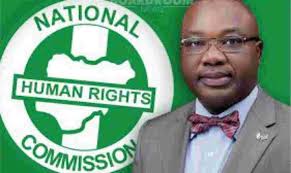
The Executive Secretary of the National Human Rights Commission (NHRC), Dr. Tony Ojukwu OFR, SAN, has strongly condemned the alleged extrajudicial killing of a 28-year-old Nigerian, Mene Ogidi, by a police officer, ASP Nuhu Usman, on April 26, 2026, in Efurun, Uvwie Local Government Area of Delta State.
In a statement issued in Abuja, Dr. Ojukwu described the incident as “deeply disturbing and a direct assault on human dignity, the Constitution of the Federal Republic of Nigeria, and the rule of law.”
He stressed that no Nigerian should lose their life at the hands of those sworn to protect them, reiterating that every life matters and must be protected.
According to him, “the reported action of the officer involved is condemnable, unacceptable, and completely inconsistent with the principles of justice and a civilized society.”
The statement which was signed by Hajia Fatimah Agwai Mohammed, Director, Corporate Affairs and External Linkages, quoted Ojukwu to have expressed grave concern over the recurring incidents of excessive use of force by law enforcement officers and called on the Nigeria Police Force to take urgent and decisive steps to address the issue.
He specifically urged the police authorities to subject officers deployed on special duties to periodic mental and psychological evaluations to ensure they are fit to carry arms and engage with civilians responsibly.
Dr. Ojukwu further called for the immediate disciplinary action against ASP Nuhu Usman in line with extant laws and police regulations.
He also emphasized the need for the Nigeria Police Force to fully implement the recommendations of the Commission’s Panel on Police Brutality as a necessary step toward meaningful reform and prevention of future violations.
“The Commission demands immediate arrest and a transparent investigation into the incident, dismissal of the officer involved, and swift prosecution in accordance with the law.
We hereby call for adequate compensation and justice for the family of the victim,” he stated.
He warned that justice delayed only deepens public distrust in state institutions and undermines confidence in law enforcement.
The Executive Secretary assured that the NHRC will continue to monitor the case closely and will persist in its advocacy for accountability, justice, and the protection of the fundamental rights of all Nigerians.
“Nigeria must never normalize brutality. Justice must speak louder than silence,” he concluded.

The Supreme Court of Nigeria will on Thursday, deliver judgments in two cases involving the leadership crises rocking the African Democratic Congress and the Peoples Democratic Party.
According to information on the official website of the court, the matters, listed under “Political Appeals”, have been added to the cause list for Thursday, April 30, 2026.
While judgment in the ADC matter, marked SC/CV/180/2026, has been fixed for 2 pm, there is no time yet for that if the PDP.
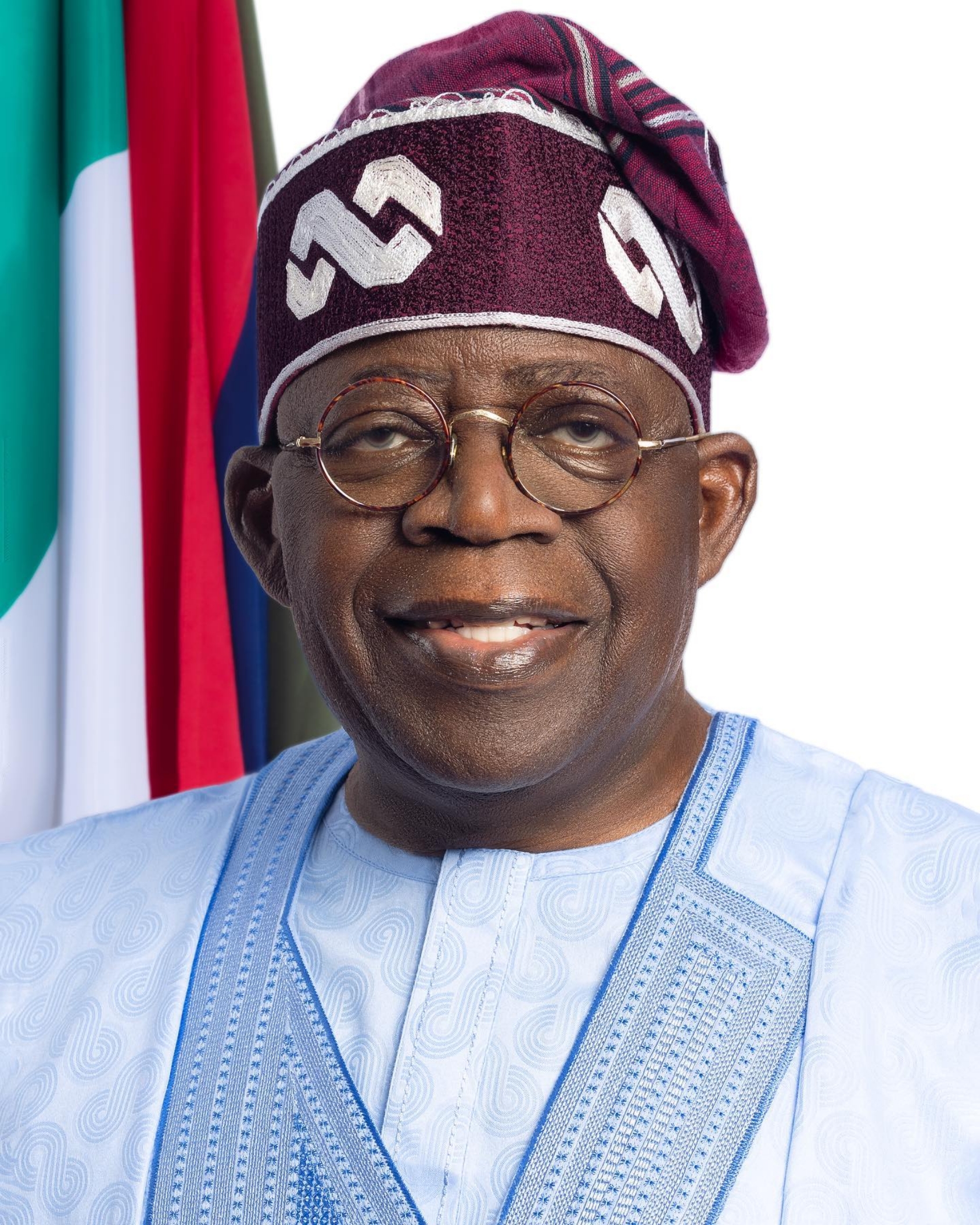
President Bola Tinubu has written the Senate, seeking the screening and subsequent confirmation of fifteen nominees to the National Human Rights Commission (NHRC).
The letter was read by the President of the Senate, Senator Godswill Akpabio.
The letter seeks the reconstitution of the commission’s board in line with statutory provisions with the list comprising nominees from diverse professional backgrounds, including the media and legal sectors.
Among the nominees are the President, Nigeria Guild of Editors and Editor, Vanguard Newspapers, Mr. Eze Anaba; and Dr. Salamatu Hussaina Suleiman, who has been proposed as chairman of the board.
The Executive Secretary of the Commission, Dr. Anthony Ojukwu (SAN) is to retain his position as the Chief Executive Officer.
Other nominees include Mrs Roseline Tasha, Ambassador Adam Yubak Baku, ACG Felix Lawrence, Mr. Edmund Chinonye, Mr. Chinonye Obiaku (SAN), Oluwakemi Asiwaju Okere-Odo, Professor Adedeji Ogunji, Kingsley Chidozie, Mohammed Adelodu, Maupe Ogun Yusuf, and Otunba Francis Meshioye as members.
Also nominated are Patience Patrick and Hawwa Ibrahim, listed as members.
The President said the nominations were made pursuant to Section 2(3) of the National Human Rights Commission (Establishment) Act, 2010, which empowers him to constitute the board subject to Senate confirmation.
He explained that the reconstitution of the board was necessary to enhance the commission’s institutional capacity and enable it to more effectively discharge its mandate to promote and protect human rights across the country.
If confirmed, the new board is expected to play a critical role in reinforcing the NHRC’s oversight functions, particularly at a time of heightened concerns over rights protection and accountability in Nigeria.
Following the presentation of the request, the Senate referred the nominations to its Committee on Judiciary, Human Rights and Legal Matters for screening and report within two weeks.
-

 News1 year ago
Senate to speed up conclusion of Nigeria Forest Security Service Bill
-

 News9 months ago
The Many Lies Against Bashir Haske
-

 News3 years ago
Breaking: Tinubu’s authentic ministerial nominees
-
 News3 years ago
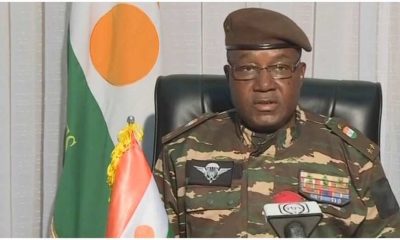
“Anytime we want to kill terrorists, President would ask us to take permission from France but they were killing our soldiers-” Niger Republic coup leader
-
 News3 years ago
“I’m leaving the Catholic church because Bishop Onah is oppressing me,” says Okunerere
-

 News3 years ago
Radio Nigeria’s veteran broadcaster Kelvin Ugwu dies three months after retirement from service
-
 News3 years ago
Dokpesi and the Gazebo Mystique
-

 News3 years ago
Tsunami: Tinubu orders dissolution of managements, boards of MDAs, to sack all Buhari’s political appointees