News
The Igbo Dilemma: A Self-Inflicted Identity Crisis

By Hon. Chimazuru Nnadi-Oforgu Duruebube
The Igbo nation, once unified in its resilience and cultural depth, now faces an existential crisis that is largely self-inflicted. We have become experts at dismembering ourselves, at developing standards for inclusion that are so impossibly high that even we cannot meet them. It is ironic, if not outright tragic, that we demand more of others, like the Ikwerre, than we demand of ourselves, as though we are guardians of an exclusive ethnic club. This is not just a problem of cultural identity; it is a suicidal act of reverse ethnic cleansing, a gradual dismantling of what once held us together.
The Ikwerre Question: A Double Standard
Why is it that when some Ikwerre people say they are not Igbo, we amplify their voices and insist on their exclusion? Yet, when hinterland Igbo declare themselves to be Jews, Bini, Ogodomigodo, Igala, or anything but “Igbo,” we still insist they are part of us. Even when they cite feelings of inferiority, marginalization, or historical grievances, we persist in calling them our own. But for the Ikwerre, we create a higher standard, a labyrinth of requirements they must meet before we “accept” them.
They must prove their reliability, their loyalty, their cultural alignment. They must do more, say more, and “put their acts together.” Meanwhile, the rest of us, fragmented and disoriented, fail to meet even the basic standards we impose on others. It is the same story as the systemic discrimination against the Igbo in Nigeria, where higher benchmarks are required for Igbo success. And yet, we complain bitterly about those external injustices while replicating them internally.
A Struggle for Survival or Dismemberment?
There is a larger struggle at play here, a deliberate effort to dismember the Igbo into scattered, unviable “dots in a circle.” It is a strategy, a deliberate scheme, and we are playing into it. The Igbo have been deeply penetrated—first by politicians who sell out our collective interests, and now by a more calamitous invasion of our intellectual sphere.
Where are the intellectuals who once deciphered the deepest intrigues, who once showed the light so others could find the way? Today, they are either silent or complicit, unable to connect the dots. How is it that even traders understand the significance of an Ohanaeze President-General of Rivers extraction, yet intellectuals fail to grasp the larger picture? This is not just about a cultural office. It is about cultural survival. It is about cohesion, about ensuring that we do not allow ourselves to be erased.
The Bigger Picture: Survival or Extinction
Inside this “little” matter of an Ohanaeze leader from Rivers State lies the global question of Igbo survival. It is tied to the history of pogroms, genocide, and ethnic cleansing aimed at erasing the Igbo as a viable race. It is tied to adversarial landlocking schemes, economic strangulation, and cultural disintegration. It is not a trivial matter of who occupies what position; it is about whether we survive as a people.
The Igbo must wake up. We cannot continue to act as though the enemy lies outside when we are doing their work for them from within. If we fail to understand the stakes, if we allow ourselves to be dismembered and scattered, then we will have no one to blame but ourselves.
The Call to Action
The survival of the Igbo race requires cohesion, not fragmentation; inclusion, not exclusion; unity, not division. We must stop playing into the hands of those who wish to see us dismembered. We must recognize that the little matters are never just little, they are symptoms of larger schemes.
It is time to hold our intellectuals, politicians, and cultural leaders accountable. It is time to redefine what it means to be Igbo, not as an exclusive club but as a resilient, unified people. If we fail to act now, history will not forgive us for letting our greatest strength, our identity, become our greatest weakness.
We are at a crossroads. It is up to us to choose survival over self-destruction. The time to act is now.
Hon. Chimazuru Nnadi-OforguDuruebube Uzii na Abosi
….The Commission wants IGP to address use of excessive force by police
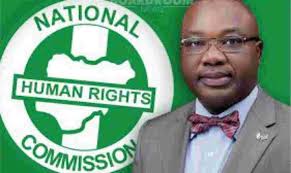
The Executive Secretary of the National Human Rights Commission (NHRC), Dr. Tony Ojukwu OFR, SAN, has strongly condemned the alleged extrajudicial killing of a 28-year-old Nigerian, Mene Ogidi, by a police officer, ASP Nuhu Usman, on April 26, 2026, in Efurun, Uvwie Local Government Area of Delta State.
In a statement issued in Abuja, Dr. Ojukwu described the incident as “deeply disturbing and a direct assault on human dignity, the Constitution of the Federal Republic of Nigeria, and the rule of law.”
He stressed that no Nigerian should lose their life at the hands of those sworn to protect them, reiterating that every life matters and must be protected.
According to him, “the reported action of the officer involved is condemnable, unacceptable, and completely inconsistent with the principles of justice and a civilized society.”
The statement which was signed by Hajia Fatimah Agwai Mohammed, Director, Corporate Affairs and External Linkages, quoted Ojukwu to have expressed grave concern over the recurring incidents of excessive use of force by law enforcement officers and called on the Nigeria Police Force to take urgent and decisive steps to address the issue.
He specifically urged the police authorities to subject officers deployed on special duties to periodic mental and psychological evaluations to ensure they are fit to carry arms and engage with civilians responsibly.
Dr. Ojukwu further called for the immediate disciplinary action against ASP Nuhu Usman in line with extant laws and police regulations.
He also emphasized the need for the Nigeria Police Force to fully implement the recommendations of the Commission’s Panel on Police Brutality as a necessary step toward meaningful reform and prevention of future violations.
“The Commission demands immediate arrest and a transparent investigation into the incident, dismissal of the officer involved, and swift prosecution in accordance with the law.
We hereby call for adequate compensation and justice for the family of the victim,” he stated.
He warned that justice delayed only deepens public distrust in state institutions and undermines confidence in law enforcement.
The Executive Secretary assured that the NHRC will continue to monitor the case closely and will persist in its advocacy for accountability, justice, and the protection of the fundamental rights of all Nigerians.
“Nigeria must never normalize brutality. Justice must speak louder than silence,” he concluded.

The Supreme Court of Nigeria will on Thursday, deliver judgments in two cases involving the leadership crises rocking the African Democratic Congress and the Peoples Democratic Party.
According to information on the official website of the court, the matters, listed under “Political Appeals”, have been added to the cause list for Thursday, April 30, 2026.
While judgment in the ADC matter, marked SC/CV/180/2026, has been fixed for 2 pm, there is no time yet for that if the PDP.
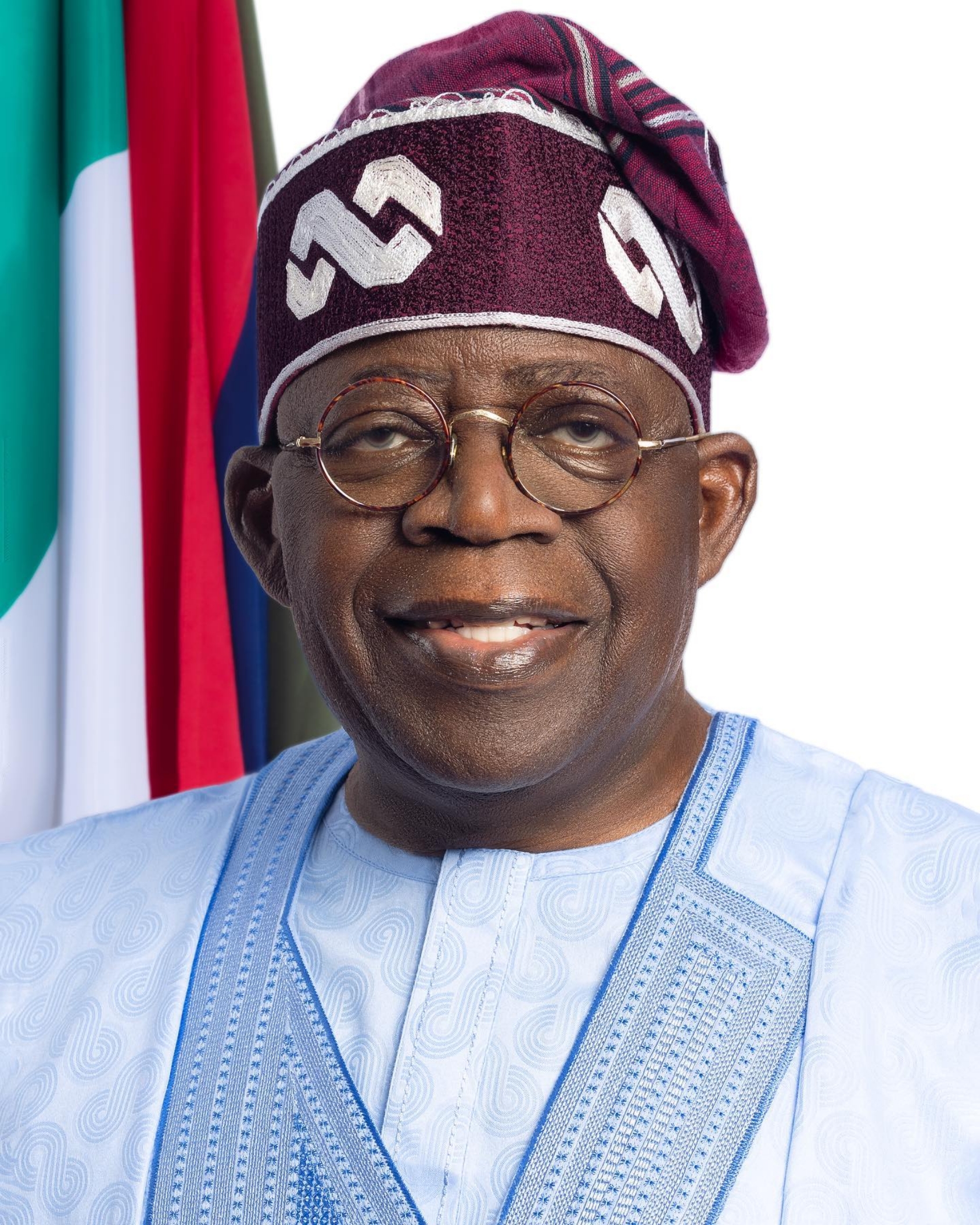
President Bola Tinubu has written the Senate, seeking the screening and subsequent confirmation of fifteen nominees to the National Human Rights Commission (NHRC).
The letter was read by the President of the Senate, Senator Godswill Akpabio.
The letter seeks the reconstitution of the commission’s board in line with statutory provisions with the list comprising nominees from diverse professional backgrounds, including the media and legal sectors.
Among the nominees are the President, Nigeria Guild of Editors and Editor, Vanguard Newspapers, Mr. Eze Anaba; and Dr. Salamatu Hussaina Suleiman, who has been proposed as chairman of the board.
The Executive Secretary of the Commission, Dr. Anthony Ojukwu (SAN) is to retain his position as the Chief Executive Officer.
Other nominees include Mrs Roseline Tasha, Ambassador Adam Yubak Baku, ACG Felix Lawrence, Mr. Edmund Chinonye, Mr. Chinonye Obiaku (SAN), Oluwakemi Asiwaju Okere-Odo, Professor Adedeji Ogunji, Kingsley Chidozie, Mohammed Adelodu, Maupe Ogun Yusuf, and Otunba Francis Meshioye as members.
Also nominated are Patience Patrick and Hawwa Ibrahim, listed as members.
The President said the nominations were made pursuant to Section 2(3) of the National Human Rights Commission (Establishment) Act, 2010, which empowers him to constitute the board subject to Senate confirmation.
He explained that the reconstitution of the board was necessary to enhance the commission’s institutional capacity and enable it to more effectively discharge its mandate to promote and protect human rights across the country.
If confirmed, the new board is expected to play a critical role in reinforcing the NHRC’s oversight functions, particularly at a time of heightened concerns over rights protection and accountability in Nigeria.
Following the presentation of the request, the Senate referred the nominations to its Committee on Judiciary, Human Rights and Legal Matters for screening and report within two weeks.
-

 News1 year ago
Senate to speed up conclusion of Nigeria Forest Security Service Bill
-
 News9 months ago
The Many Lies Against Bashir Haske
-

 News3 years ago
Breaking: Tinubu’s authentic ministerial nominees
-
 News3 years ago
“Anytime we want to kill terrorists, President would ask us to take permission from France but they were killing our soldiers-” Niger Republic coup leader
-
 News3 years ago
“I’m leaving the Catholic church because Bishop Onah is oppressing me,” says Okunerere
-

 News3 years ago
Radio Nigeria’s veteran broadcaster Kelvin Ugwu dies three months after retirement from service
-
 News3 years ago
Dokpesi and the Gazebo Mystique
-

 News3 years ago
Tsunami: Tinubu orders dissolution of managements, boards of MDAs, to sack all Buhari’s political appointees