News
“I’m leaving the Catholic church because Bishop Onah is oppressing me,” says Okunerere


A Catholic priest, Rev. Fr Paul Obinna Obayi popularly known as Okunerere, has said he would leave the church soon due to oppression he duffers from the Bishop of Nsukka Diocese, Geofrey Onah.
In a 30-minute video he posted on social media, the director of the Okunere Adoration Ministry reeled out accusations against Bishop Onah, saying he has suffered so much in the Bishop’s hand and that it was time he left the church
He said- “The church is my vineyard, I love the church, I love my Nsukka (Catholic) church, I love the bishop, I love the priests, I love them, but they are oppressing me.
“I was looking for a land where I will conduct my adoration but couldn’t find. I rented a place behind Queens College Nsukka and started my adoration there. Bishop Onah chased me out of the place, saying I was causing noise and distracting the Students of Queens.
“The past governor of Enugu State, Gburugburu gave me this piece of land I’m staying in now. I told the bishop that I have a land and I took him there to see the land. When he came, he then said that the land is fine to be used to build the Marian Shrine. I told him it’s my adoration ministry I want to start here and not Marian Shrine. He said I shouldn’t talk about it again. It is the same land that the bishop gave out to the church without consulting me, without any discussion.
“I give everything to the church, yet the church wants to strangle me to death. But it can’t happen!
“I bought and installed the best transformer in the cathedral of Nsukka Diocese which they’re using till today.
“Bishop Onah mandated me to build a museum where I would keep the deities I remove from villages. I spent 2.8m to build the museum upstairs inside the cathedral and reported to my bishop. The only ‘thank you’ I got my bishop was that he asked me where did I get the money to build it when he has banned me from selling olive oil. Yet, I endured it.
“At Obimo, I got a land to build my adoration ministry. It’s a mountain. I spent more than 50m to level the place and create roads, then built a 30 room self con house there. The church collected it from me and I surrendered it. Kidnappers are using that building today to keep their victims because the church isn’t using it till today after collecting it from me. Bishop Onah said he wants to use the place as Nsukka Diocesan Pilgrimage Centre.
“I was posted to Obollo where I spent 10 million to build a church. Bishop Onah came to dedicate it and on the day of the dedication, everybody present were acknowledged but they refused to acknowledge me, Fr Obayi who built the church. Just after 2 months of dedicating the church, the bishop transfered me to Ikem, where everybody knows that the roads there are filled with kidnappers.
“I was an associate professor but no one in the Diocese ever announced me as associate professor, but those priests who became associate professors yesterday are recognized by the Diocese but I was ignored till today.
“It got to the point that fellow priests broke my gate just to take my land, they said they were sent.
“On bishop Onah’s Episcopal ordination, I supplied drinking water free to everybody in attendance.
“The oppressing is too much. Priests are avoiding coming to my adoration because if they see any priest in my adoration, during posting, they will post the priest in a far away village beyond Adani in Uzo Uwani LGA.
“I have been inviting the bishop to my adoration but he refused coming, saying he doesn’t understand what we are doing here.
“If Charismatic draft a programme and include my name as a guest priest, when they take it to the Diocese for approval, the authorities will tear the programme on seeing my name there. They would ask the Charismatic why should they invite Fr Okunerere. For 10 years now, I have not attended any charismatic programme because the church authorities won’t permit me.
“Bishop Onah stopped me from going to London to preach, saying that I would go there to preach heresy. I asked him, before you became my bishop, I had attended 10 different programmes in London where I preached. Is it now you’re my bishop that I will preach heresy?
“The church refused to give me land for my adoration, and the one given to me by the government, the church wants to collect it from me.
“Since the church doesn’t want me again, I am leaving the Catholic church any moment from now. I can’t kill myself”.
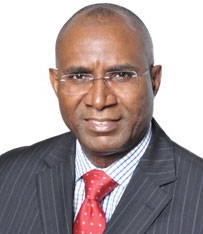
A Federal High Court in Warri has sacked Senator Ovie Omo-Agege as the Nigeria Democratic Congress, NDC, candidate for Delta Central in the 2027 election.
The court, presided over by Justice Hyeladzira Ajiya Nganjiwa, in a ruling on Tuesday, nullified Omo-Agege’s nomination on the grounds that it did not follow the Electoral Act.
The judge ordered the Independent National Electoral Commission, INEC, to delete Omo-Agege’s name from its list of candidates for Delta Central.
Justice Nganjiwa also granted an order stopping Omo-Agege from parading himself as the NDC senatorial candidate for Delta Central.
According to the Electoral Act, primaries must be done at least 180 days before the general election.
The judge held that the window has closed.
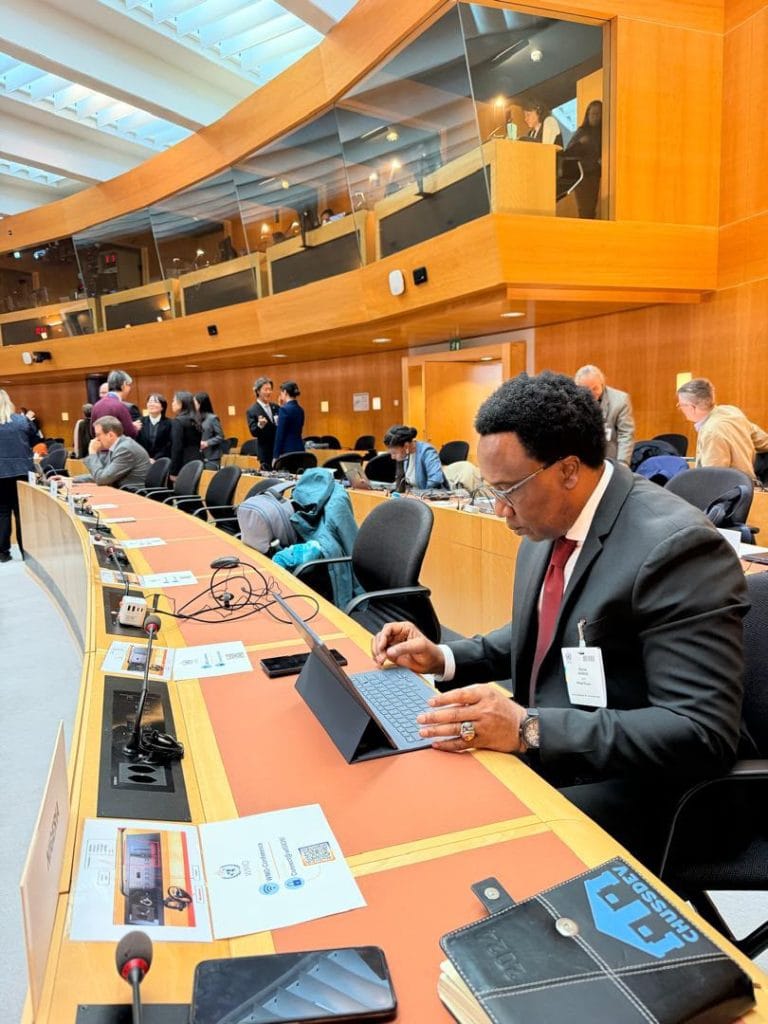
The Director General/CEO of Nigerian Meteorological Agency (NiMet) and Permanent Representative of Nigeria with WMO, Prof. Charles Anosike joins other experts and stakeholders in Geneva for a week-long session of the Commission for Observation, Infrastructure and Information Systems (INFCOM).
The fourth session of INFCOM began on Monday 23rdNovember 2026 and will discuss various technical regulations, competency requirements, standards, cooperations, data generation and exchange including marine, hydrology and cryosphere data, data quality, emerging technologies such as artificial intelligence and machine learning, satellite systems, ICT, etc. that underpin infrastructure on which meteorological, hydrological and related observations depend on.
The next accurate and reliable weather forecast and atmospheric prediction is a function of the quality and quantity of the earth system observations that are available; be it over land, the ocean and in the atmosphere. Hence, the critical importance of the session to all WMO Member Countries, including Nigeria.
Particularly, the first day discussions included WMO Integrated Global Observing System (WIGOS), Global Basic Observing Network (GBON) expansion, the WMO Information System (WIS) improvement, the framework of WMO Integrated Processing and Prediction System (WIPPS), Capacity Development of members, education and training for satellite meteorology, and various competency requirements for officers/experts involved installation, maintenance, calibration, and usage of various instruments for earth system observations.
At a side event on capacity development, the specific role of NiMet as a Peer Advisor in improving observation infrastructure and service delivery for other Meteorological Services on the continent was duly acknowledged.
Journalists in Nigeria have been called upon to adhere to the rules of their profession as they cover the 2027 general election.
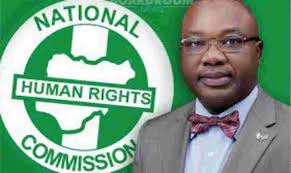
The Executive Secretary of the National Human Rights Commission (NHRC), Dr. Tony Ojukwu, SAN, OFR, stated this on Tuesday in Abuja at a media parley organized by the Commission with the theme- “Ethical Journalism and the 2027 General Elections: Promoting Professionalism, Peace and Accountability.”
Ojukwu said the choice of the theme was deliberate because elections are much more than political contests or the transfer of power but fundamental human rights processes involving the rights to freedom of expression, access to information, peaceful assembly, political participation and the right of citizens to freely determine their leaders.
He stated that the media occupies a strategic position as it informs voters, scrutinises political actors, shapes public opinion and provides a platform for democratic engagement.
“However, this influence comes with enormous responsibility, particularly at a time when misinformation, disinformation, hate speech, manipulated digital content and politically motivated narratives are increasingly capable of deepening divisions and undermining public confidence in democratic institutions,’ he said.
Accordingly, Ojukwu said the distinction between responsible journalism and irresponsible reporting can have far-reaching implications for national peace, public safety and the enjoyment of human rights adding that media must therefore remain guided by the principles of accuracy, fairness, verification, balance and respect for human dignity.
“While freedom of expression is fundamental to democracy, its exercise must be accompanied by professional responsibility. Our message is simple: the media must not become a vehicle for electoral division; it must remain an instrument for democratic accountability, peaceful participation and national cohesion.
“At the same time, the responsibility for a healthy media environment does not rest on journalists alone. The Commission recognises that journalists must operate in an environment where media freedom is protected and they can perform their professional duties without intimidation, harassment or unlawful interference. Citizens must also have access to credible information to make informed decisions and participate meaningfully in the electoral process.
“As Nigeria’s National Human Rights Institution, the Commission remains committed to promoting and protecting the rights of journalists and strengthening an environment that supports independent, free and responsible media practice. We recognise that protecting journalists is also about protecting the public’s right to information and safeguarding the democratic space.
“Furthermore, as we prepare for the 2027 General Elections, I encourage media practitioners to pay particular attention to human rights issues in the electoral process. These include voter intimidation, political violence, discrimination, attacks on journalists, restrictions on civic participation and violations of the rights of women, children, persons with disabilities and other vulnerable groups.
“In undertaking this important responsibility, however, we must not lose sight of the safety and security of journalists themselves. Election coverage can expose media practitioners to considerable professional and personal risks, particularly in volatile environments.
“It is in recognition of this challenge that the Commission, in collaboration with the Konrad Adenauer Stiftung, will on the 26th of this month launch a Safety Handbook for Journalists and Media Practitioners. The handbook is intended to provide practical guidance to journalists as they navigate the risks associated with field reporting, particularly during the forthcoming elections. We believe that journalists who inform and defend the public interest must also have the knowledge and support required to protect themselves while carrying out their duties,” Ojukwu stated.
Ojukwu thanked journalists for their partnership with the Commission in carrying out its statutory responsibilities and said their job would have been impossible without journalists
He thanked the Director of the United Nations Information Centre (UNIC), Nigeria, Mr. Ronald Kayanja, Civil Society Organisations; Directors and staff of the National Human Rights Commission for attending the parley.
“This gathering represents more than an annual meeting between the Commission and its media partners. It is an opportunity to appreciate your invaluable contributions to human rights reporting, strengthen our longstanding partnership and reflect on the shared responsibility we bear in building a society where human rights, justice, accountability and democratic values are respected.
“In this regard, let me express my sincere appreciation to journalists and media organisations that have consistently reported the activities of the Commission, amplified the voices of victims of human rights violations and brought critical human rights issues to national attention. Through your reports, investigations and public enlightenment programmes, you help connect the Commission with the people we serve. We deeply value this partnership and do not take your contributions for granted.”
He expressed confidence that the day’s parley will provide an opportunity for frank and constructive conversations on the responsibilities of the media in the electoral process.
The Chief Justice of Nigeria, represented by the Senior Special Assistant on Media, asked journalists to priorities accuracy and not speed in their reportage.
He urged journalists to obey the code of conduct of their profession, adding that they should fact chek their stories before going to the press.
He also urged media houses to invest fact checking desks to avoid regrets that comes with publishing unverified information.
Other who spoke at the event include the National Secretary of Nigerian Union of journalists (NUJ)who represented the Union’s President.
-

 News2 years ago
Senate to speed up conclusion of Nigeria Forest Security Service Bill
-
 News1 year ago
The Many Lies Against Bashir Haske
-
 News3 years ago
“Anytime we want to kill terrorists, President would ask us to take permission from France but they were killing our soldiers-” Niger Republic coup leader
-

 News3 years ago
Breaking: Tinubu’s authentic ministerial nominees
-
 News6 months ago
See your state governor’s performance ranking
-

 News4 years ago
My nude photo leak was a mistake- lawyer Ifunanya
-

 News3 years ago
Radio Nigeria’s veteran broadcaster Kelvin Ugwu dies three months after retirement from service
-
 News3 years ago
Dokpesi and the Gazebo Mystique