
News
TInubu call DSS to order

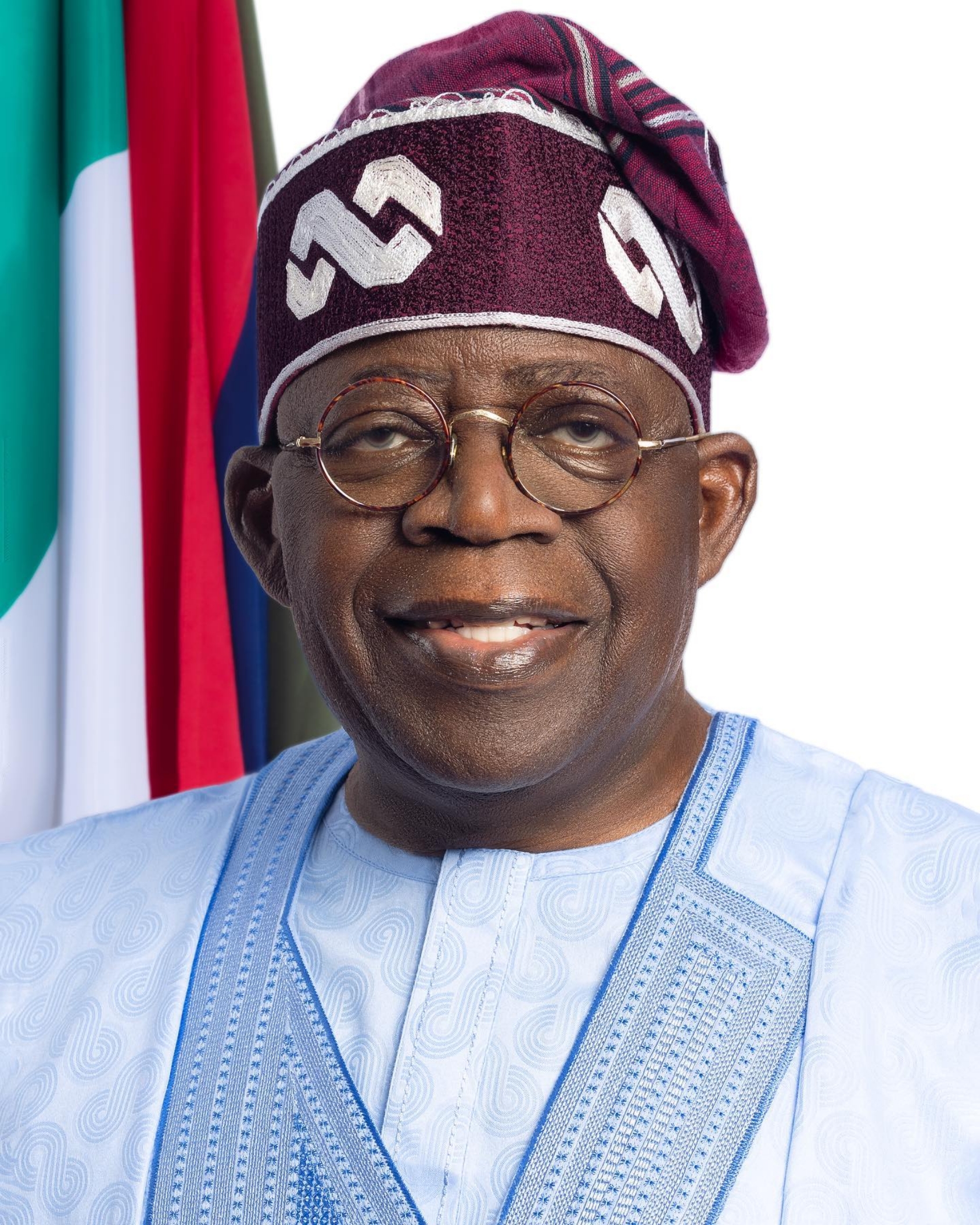
Daily Trust Editorial of Monday July 31, 2023
In his Democracy Day speech to Nigerians last month, then Speaker of the House of Representatives, Femi Gbajabiamila, now the top presidential aide, described President Bola Ahmed Tinubu as “a product of democracy” and “a thoroughbred democrat who is noted for his tenacious defence of democracy”.
We do not question the president’s claim to democratic credentials, but those credentials are now being put to test by the public behaviour of the Department of State Services (DSS), an agency that had its origins in Nigeria’s undemocratic past. How President Tinubu responds to the DSS’s increasingly erratic, and in several instances outrightly illegal behaviour towards Nigerian laws, sister agencies and citizens will go a long way in burnishing or tarnishing the President’s reputation as a democrat.
Unlike Tinubu, the DSS is not much known as a champion of democracy. Established near the twilight of military rule, the DSS was still an infant—scarcely a decade old—when Nigeria returned to democracy in 1999. By all reasonable expectations then, the agency should have matured along with democratic norms and practices. But few will credit the DSS with such a reputation. As late as last week, legal experts, civil society organizations and the media lambasted the DSS for yet more of its undemocratic practices, the litany of which, sadly, has by now become legion.
Not once but several times in the recent past, the DSS had laid siege on the National Assembly and barred members either from accessing their chambers, or from holding sessions. It has been on several occasions accused of interfering in election matters. Its men have clashed with those of other agencies, particularly the Police and the Armed Forces, sometimes at the real risk of agency-on-agency gun fights. The DSS has stormed or taken over buildings belonging to other government agencies, without legal warrants, in the name of conducting “investigations.”
And yet, as if in a bid to outdo its own undistinguished past, the DSS has literally run amok lately. We do not make this assertion lightly. First, we note, with concern that the DSS has conducted its activities more in the open and on the pages of newspapers than in the clandestine fashion required of an organization originally designed to be known only by its positive impact on internal security, but not to be seen or heard. This much was raised lately by many newspapers and civil society organizations in the country.
More worrisome still, the DSS has turned incompetent aggression into an operational method of sorts. In December, the Chief Judge of the Federal High Court, no less, declined, for lack of sufficient evidence, an application by the DSS to arrest and detain then Governor of the Central Bank, Mr Godwin Emefiele, in order to pursue further investigations into allegations of “terrorism financing and economic crimes” against him.
Two weeks ago, three separate judges ruled that the DSS should release Mr Emefiele or charge him to court after having detained him since 10th June. The DSS then proceeded to court, but rather than with charges for terrorism financing or other economic crimes, the agency charged Emefiele for illegal possession of firearms and , leaving Nigerians asking, ‘what took you so long if this was all you had?
Still, when a judge granted Emefiele bail for that, the DSS promptly re-arrested him for yet to be disclosed charges, never mind the public show of shame between the DSS operatives and officials of the Nigeria Correctional Service who, by law, should have custody of accused persons processing bail terms and conditions.
We are deeply concerned by how the DSS has conducted itself in public through all these proceedings. First, all of these point to incompetence for an agency that should do its homework about allegations it makes against citizens before going public with them. Otherwise, security agencies are known to secretly share classified information with legislators and judges when pursuing sensitive cases that cannot be publicly disclosed. If this be the case with Emefiele, all the DSS needs to do is to share evidence of its allegations with respective judges and pursue the case more competently in classified fashion, rather than turn itself into a laughing stock before the whole nation.
We are equally concerned because Nigeria currently faces internal security challenges from disparate collection of non-state actors, from insurgents in the Northeast, to violent secessionists in the Southeast, to bandits and organized criminals almost everywhere else.
These are the challenges the DSS should be best equipped to help the Nigerian State deal with as a secret Police outfit. But to do that requires credibility and public confidence of Nigerians, both of which are now being frittered away.
We, therefore, call on President Tinubu to call the DSS to order. A democrat must oversee institutions that are seen to be democratic.
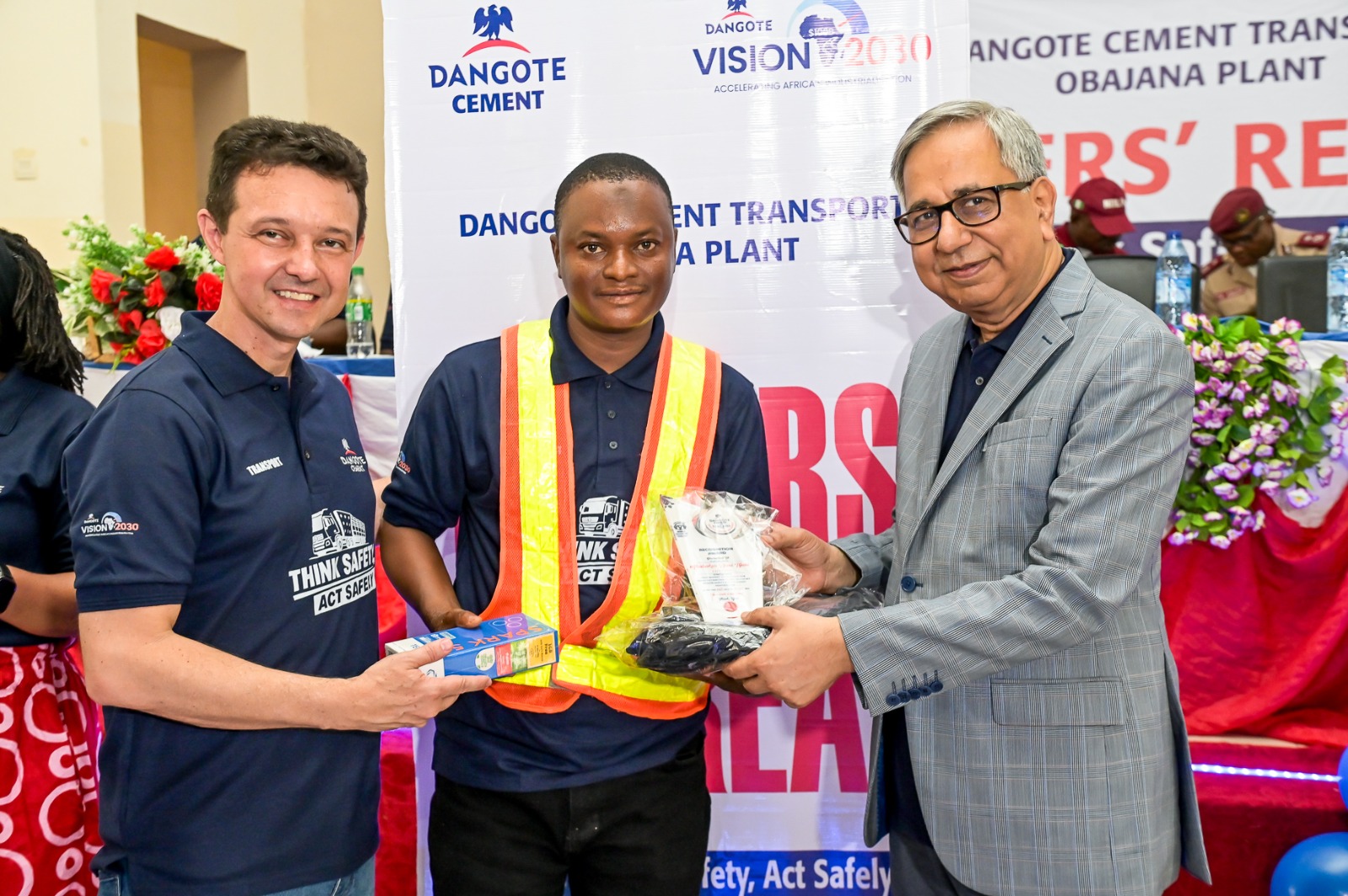
Photo caption: Head of Transport, Dangote Cement Plc, Mr. Murilo Silva(L) and the Group Managing Director, DCP, Arvind Pathak(R), present an award to one of the company’s drivers at the Drivers Safety Retreat at the Obajana Plant
Dangote Cement Plc, Africa’s leading cement conglomerate, has intensified its commitment to road safety by strengthening measures to improve drivers’ safety awareness, competence, and compliance with best practices across its African operations.
Speaking at the 2026 Drivers Safety Retreat at the Dangote Cement Plc, Obajana Plant, Kogi State, Group Managing Director (GMD) of the Dangote Cement Plc, Mr. Arvind Pathak, said drivers must ‘Think Safety, Act Safely’ across all its operations in Africa.
He reiterated its commitment to the safety and welfare of its drivers, urging them to prioritise safe driving practices and ensure they return home safely after every journey.
According to him, Dangote Cement, as the largest cement producer in Nigeria and Africa, places a premium on the quality of its products, while its drivers play a crucial role in ensuring that the products reach customers safely and efficiently.
Pathak stressed that no business delivery was worth the loss of human life, describing the safety of drivers as more important than operational targets and commercial considerations.
The retreat, themed: “Think Safety, Act Safely,” brought together drivers, transport personnel and management representatives to promote responsible driving, address welfare concerns and strengthen the Company’s safety culture across its logistics operations.
Addressing the participants, Pathak reminded the drivers that they represented the Dangote brand on highways across the country and had a responsibility to protect their lives and those of other road users.
“Every time you get behind the wheel, you are carrying more than a product. You are carrying the reputation of this Company, the trust of other road users and, most importantly, your own life. We can replace a truck; we cannot replace a human being,” he said.
He assured the drivers that the Company would continue to invest in initiatives aimed at improving their welfare, developing their professional capacity and promoting safer transportation operations.
According to him, drivers remain indispensable to the Company’s growth and distribution network, making their safety and wellbeing a priority.
“We appreciate the sacrifices you make every day to keep our business moving. That is why we are committed not only to providing you with the tools and training to work safely, but also to listening to your concerns and improving your welfare. When our drivers are safe, our operations are stronger and our communities are safer,” Pathak stated.
He urged the drivers to avoid speeding, fatigue and other dangerous driving practices, emphasising that professional competence should be measured by safe arrival rather than the speed with which a journey is completed.
The Dangote Cement chief executive advised drivers to take breaks whenever they felt tired and to avoid taking unnecessary risks on the road.
“I want every driver to remember one simple principle: if you are tired, stop and rest. If a situation looks unsafe, do not take chances. The goal is not just to reach your destination; the goal is to return home safely to your family,” he added.
Dangote Cement’s Head of Transport, Murilo Silva, while addressing them cautioned against reckless driving, proxy driving and other unsafe transportation practices, warning that such conduct would not be tolerated.
Silva urged the drivers to take personal responsibility for their actions and contribute to making Nigerian roads safer for motorists and other road users.
Ebere Okonkwo- Group Head, Transport Health, Safety and Environment- Pan Africa Nigeria said the retreat is necessary for the Dangote drivers for their safety and also to avoid any accident that will push the company to sack them.
She noted that with the retreat most of the drivers of Dangote will be very careful because the management is watching all their movement any where they travel to.
The retreat also provided an opportunity for drivers to interact with management and discuss issues affecting their welfare and working conditions.
Among the concerns raised during the interactive session were the rising cost of living, work-related expenses and the need for timely communication of drug test results.
Several drivers who spoke at the event commended the Company’s continued investment in their welfare, saying the retreat demonstrated management’s concern for their lives beyond their operational responsibilities.
They pledged to maintain high safety standards and handle the trucks entrusted to them as valuable business assets while avoiding practices that could endanger human lives.
As part of the programme, Dangote Cement recognised outstanding personnel for their performance and commitment to safety.
Awards were presented to 10 outstanding drivers, while Ismaila Suleiman was the most performing driver in the year under review.
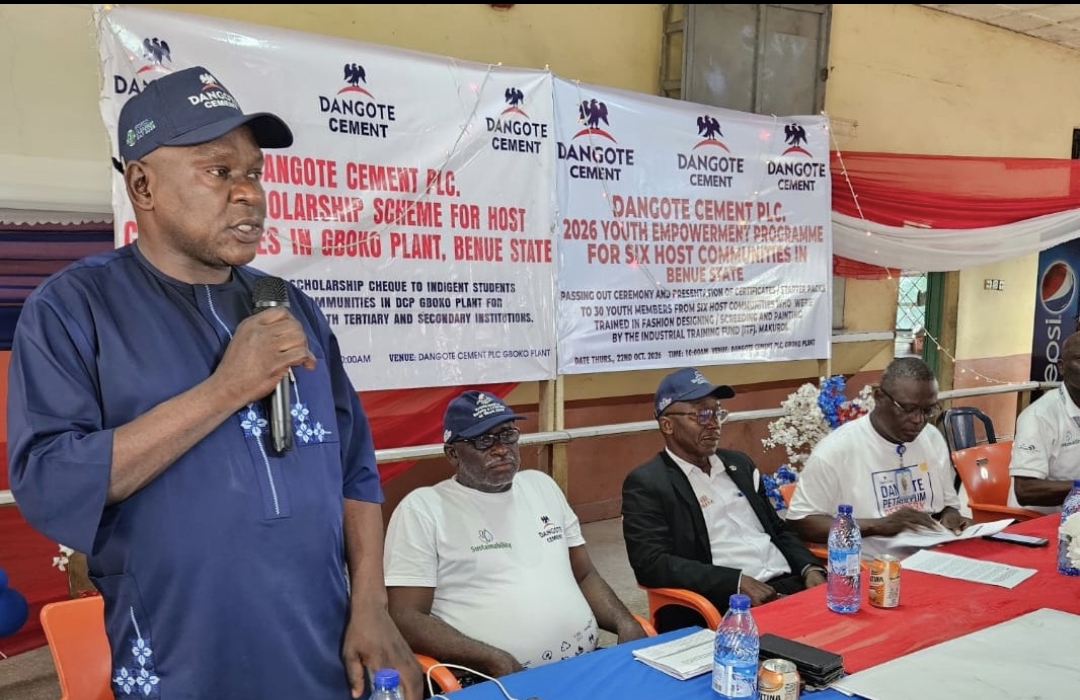
Dangote Cement Plc, Gboko Plant has awarded multi-million-naira scholarships to tertiary and secondary school students from its six host communities in Benue State.

The company also presented starter packs, working tools and certificates to graduates of its Youth Empowerment Programme to enable them to establish their own businesses, apply the skills acquired during the training and become financially reliant.
The Minister of Solid Minerals Development, Dr. Henry Dele Alake, lauded Dangote Cement Plc for its community development interventions, calling on other private sector players to adopt similar initiatives to promote socio-economic development in their host communities.
Dr. Alake, who was represented by the Federal Mines Officer of the Federal Ministry of Solid Minerals Development in Benue State, Engr. Achi Gregory, urged the company to sustain its commitment to implementing community development programmes agreed upon with its host communities.
Speaking at the official presentation ceremony, Group Head, Social Performance, Dangote Cement Plc, Mr. Wakeel Olayiwola, said the implementation of the Community Development Agreement underscores Dangote Cement’s commitment to equipping young people with practical skills and resources to promote entrepreneurship, create employment opportunities and improve livelihoods in its host communities.
Mr. Olayiwola, who was represented by the Head of Social Performance of the Dangote Cement, Gboko Plant, Dr. Johnson Kor, said the scholarship and youth empowerment programmes came against the backdrop of several other programmes recently executed by the company, which include farmers and women empowerment programmes.
The Acting Plant Director, Dangote Cement, Gboko, Engr. Arbind Singh, said: “This annual scholarship scheme for indigent students of the host communities is an indication of our company’s commitment to its Corporate Social Responsibilities (CSR).”
Engr Singh, who was represented by the company’s General Manager, Production, Engr Tabershima Soom, said: “The Gboko Plant has already launched 150 Women Empowerment Programme and 50 Farmerss Empowerment Programme where women were provided with cash to support their businesses, and farmers were supported with farm inputs.”
The beneficiary communities for these programs are: Tse-Kucha, Quarry, Amua, Mbazembe, Mbatur, and Pass Brothers.
Speaking on behalf of the Benue State Attorney-General, the Chairman of the Mineral Resources and Environmental Management Committee (MIREMCO), Barr. Dooshima Orosaga, commended Dangote Cement Plc for its compliance with the Community Development Agreement (CDA), urging the beneficiaries and host communities to maximise the benefits of the company’s interventions.
Chairman of the Gboko Local Government, Hon Yina Elias said the government will continue to provide the support needed for the company to succeed, adding that the Dangote Cement Plc is an exemplary company in Corporate Social Responsibilities programmes.
In his remarks, the District Head of Ukpekpe, Chief Tsegba Igbarumun, commended Dangote Cement Plc’s Gboko Plant for its contributions to the community, assuring the company of the community’s continued support.
He said the community valued its mutually beneficial relationship with the company and would continue to serve as its ambassadors.
A beneficiary of the Youth Empowerment Programme, Mr Ignatius Aondohemba, expressed appreciation to Dangote Cement Plc for the support, pledging to put the skills and resources provided to good use and build a business that would enable him to become an employer of labour.
-

 News2 years ago
Senate to speed up conclusion of Nigeria Forest Security Service Bill
-

 News1 year ago
The Many Lies Against Bashir Haske
-
 News3 years ago
“Anytime we want to kill terrorists, President would ask us to take permission from France but they were killing our soldiers-” Niger Republic coup leader
-

 News3 years ago
Breaking: Tinubu’s authentic ministerial nominees
-

 News3 years ago
“I’m leaving the Catholic church because Bishop Onah is oppressing me,” says Okunerere
-
 News5 months ago
See your state governor’s performance ranking
-

 News3 years ago
My nude photo leak was a mistake- lawyer Ifunanya
-

 News3 years ago
Radio Nigeria’s veteran broadcaster Kelvin Ugwu dies three months after retirement from service