News
Dangote refinery uncovers criminal cabal behind recent dirty campaign to sabotage its $20b facility, drag Nigeria back

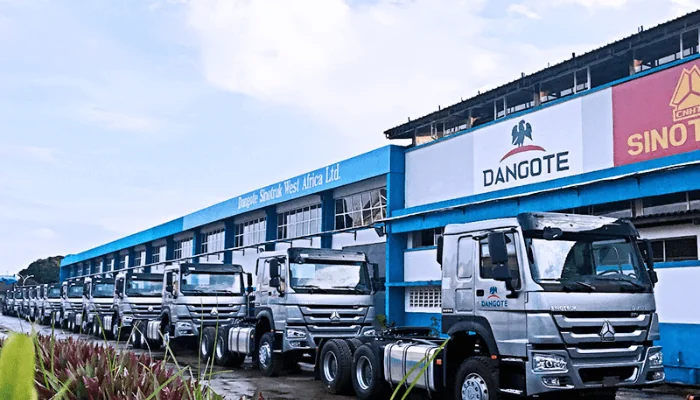
Dangote Petroleum Refinery says it has uncovered a criminal cabal behind recent covert media insertions aimed at sabotaging its $20 billion investment and take Nigeria back into the days of product scarcity and long queues.
Describing the cabal as made up of “unpatriotic and unscrupulous” elements, Dangote said they are orchestrating a sophisticated misinformation campaign designed to undermine its facility and preserve the country’s dependency on fuel imports, a trade that has enriched a select group of middlemen.
The allegations, made public on Tuesday following newspaper advertisements that misrepresented the refinery’s operations, have exposed the deep-seated resistance to Nigeria’s notoriously opaque petroleum import business. The dispute centres on claims, allegedly amplified through S&P Global reports, that Dangote imports finished petrol into Nigeria, an assertion the company categorically denies.
“This propaganda is being promoted by unpatriotic and unscrupulous individuals who cannot afford to see Nigeria stop imports,” Dangote Refinery stated, adding that it has identified those responsible and would reveal their identities “at the appropriate time.”
The company went further, alleging that those behind the campaign had previously “helped to milk the NNPC refineries through fraudulent financing transactions for refinery repairs, which ended up being squandered.”
The accusation strikes at the heart of Nigeria’s troubled petroleum sector, where successive governments have spent billions of dollars on state-owned refinery rehabilitation projects that consistently failed to restore production capacity.
These perpetual “turnaround maintenance” programmes became synonymous with corruption, creating lucrative opportunities for contractors while Nigeria paradoxically imported virtually all its refined products despite being Africa’s largest crude producer.
Dangote Refinery acknowledges importing feed stocks and blending components, including high-sulphur reformates, low-RON condensates, and high-sulphur cracked gasoline, but insists these intermediate streams require further processing before meeting regulatory specifications for finished petrol.
“These materials must undergo further processing before they meet regulated market specifications,” the company explained, describing the practice as standard among advanced refining hubs in Europe and Asia, where facilities routinely optimise crude slates and blending strategies to enhance operational flexibility and margins.
However, critics have seized upon these imports, characterising them as finished fuel and thereby suggesting Dangote is merely repackaging imported petrol rather than genuinely refining crude oil—a narrative the company describes as “inaccurate and deceptive” and designed to “distort public understanding and undermine confidence in Nigeria’s domestic refining progress.”
The battle reflects broader tensions surrounding the 650,000-barrel-per-day facility, which represents Africa’s largest single-train refinery and potentially threatens established business models built around petroleum product imports.
For years, a complex web of traders, financiers, and politically connected individuals profited from Nigeria’s refinery dysfunction, securing lucrative contracts to supply imported fuel to a country sitting atop vast oil reserves.
Industry analysts suggest the stakes are considerable.
Nigeria historically spent billions of dollars annually importing refined petroleum products, creating opportunities for arbitrage, letters of credit financing, and various intermediary arrangements that enriched participants while burdening the national economy. Dangote’s operational refinery threatens to eliminate much of this trade, redirecting value from importers to domestic production.
Following clarification at an S&P Global forum in the United Kingdom on Tuesday, the gathering reportedly acknowledged the refinery’s “pivotal role in reshaping the global refining landscape.” The company emphasised that it supplies only Euro 5-compliant petrol to the Nigerian market, fuel that undergoes “rigorous quality checks to ensure Nigerians receive fuel that ranks among the highest quality available globally.”
This quality distinction matters. Nigeria historically imported lower-grade, high-sulphur gasoline, particularly products that struggled to find markets in more regulated jurisdictions. Dangote’s higher specifications potentially set new standards for the West African market, though critics question whether the refinery can maintain consistent production volumes without supplementary feedstock imports.
Dangote Petroleum Refinery called upon S&P Global and industry stakeholders to adopt “higher levels of technical accuracy, balance, and responsibility in their reporting,” highlighting how influential industry publications shape international perceptions of Nigeria’s energy sector.

The self-styled deputy prime minister and chief of staff of the United States of Biafra (USB), Dr. Ngozi Orabueze, has shared an acknowledgement letter from the White House, complete with the autopen signature of US President Donald Trump.
Orabueze posted the letter on social media platform X on Tuesday. The letter has the template, imprimatur and wording of a ‘form letter’.
A form letter is a standardised, pre-written template used by government offices or organisations for mass communication. Informally called a ‘boilerplate’, it allows the same message to be sent to multiple recipients.
The correspondence, emblazoned with the White House letterhead, appreciated Orabueze for taking her time to write the president.
“Thank you for your letter. I appreciate you taking the time to share your views and concerns with me. Your thoughts are important, and I value the opportunity to hear from citizens like you,” it reads.
“As we work to make America great again, your input helps guide our efforts. For more information on my administration’s policies and priorities, please visit the White House website.
“Melania joins me in sending our best wishes to you and your family,” Trump wrote.
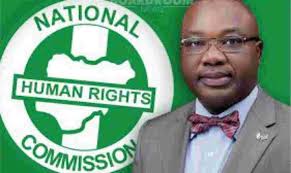
The House of Representatives Committee on Human Rights, has acknowledged the need for improved funding for National Human Rights Commission, NHRC, to enable it achieve its statutory responsibility of ensuring the protection of rights of citizens of Nigeria and other nationals living in the country.
The Committee therefore pledged to support the passage of the Commission’s 2026 proposed budget and commended its numerous achievements, especially 2025 budget performance, describing it as impactful despite significant fiscal constraints and a complex human rights landscape.
The Chairman of the Committee, Hon. Peter Abiola Makinde, states these during the Commission’s 2025 budget defence and presentation of its 2026 appropriation proposal. He acknowledged that, amid rising human rights concerns, including challenges affecting freedom of religion and other fundamental freedoms, the Commission sustained measurable progress in fulfilling its statutory mandate.
Hon. Makinde particularly noted the Commission’s ability to maintain transparency and public engagement through its Human Rights Dashboard, which provides regular updates on complaints and interventions. He assured the NHRC of the National Assembly’s continued collaboration, emphasizing the legislature’s responsibility to strengthen institutions that safeguard citizens’ rights.
Presenting the Commission’s report, the Executive Secretary, Dr. Tony Ojukwu, OFR, SAN, expressed appreciation for the Committee’s support, which he said enabled the NHRC to implement most of its planned programmes and interventions in 2025.
Dr. Ojukwu disclosed that the Commission recorded over 3.7 million complaints in 2025, reflecting both increased public trust and the growing demand for rights protection. He explained that the upward trend in complaints necessitates greater investment in complaint handling, investigation, and redress mechanisms in the coming year.
The Executive Secretary also underscored the importance of institutional independence in line with the Paris Principles, which require National Human Rights Institutions to operate autonomously. He revealed that the Commission constructed eight state offices since he assumed office to deepen access to justice at the sub national level and plans to build twenty four additional offices in 2026. He further highlighted the urgent need to expand and renovate the Commission’s headquarters, noting that staff strength has tripled since 2007.
For the 2026 fiscal year, the Executive Secretary presented a proposed budget of ₦20 billion, with 33.67 percent allocated to personnel and overhead costs, and 66.33 percent earmarked for capital expenditure, demonstrating a strategic focus on infrastructure, operational expansion, and improved service delivery.
In response, the Committee expressed its readiness to support the proposed budget, while urging the Commission to consolidate its gains and continue advancing the protection and promotion of human rights across Nigeria.
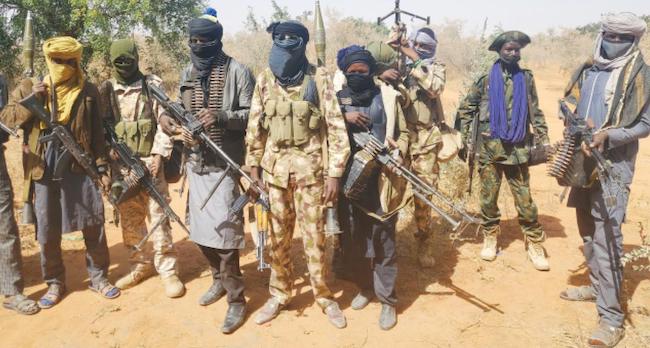
Bandits have attacked Kutaho and Kugir communities in Aribi Ward of Kagarko Local Government Area of Kaduna State, taking with them a Catholic priest, pregnant woman and 30 there persons.
The midnight deadly midnight attack has made residents to desert the communities in fear of possible return of the gunmen.
Confirming the incident, the Parish Priest of St. Joseph Catholic Church, Kutaho, Linus Matthew Bobai, said fear has gripped the area, forcing over 90 percent of residents to flee to neighbouring villages for safety.
According to him, the attack occurred around 2 a.m. on Monday when armed bandits stormed the communities after earlier issuing threats and ransom demands to residents.
“Before the incident, they called one of my parishioners and demanded ₦10 million, threatening to kidnap him if he failed to comply,” Fr. Bobai said. “They claimed our people are into irrigation farming and ginger cultivation, and that means money.”
He explained that despite warnings issued to the community to remain vigilant, the bandits returned as threatened, launching a coordinated attack while he was away in Kaduna procuring textbooks for St. Joseph School.
-

 News11 months ago
Senate to speed up conclusion of Nigeria Forest Security Service Bill
-

 News3 years ago
Breaking: Tinubu’s authentic ministerial nominees
-
 News3 years ago
“Anytime we want to kill terrorists, President would ask us to take permission from France but they were killing our soldiers-” Niger Republic coup leader
-

 News6 months ago
The Many Lies Against Bashir Haske
-
 News2 years ago
“I’m leaving the Catholic church because Bishop Onah is oppressing me,” says Okunerere
-

 News2 years ago
Radio Nigeria’s veteran broadcaster Kelvin Ugwu dies three months after retirement from service
-
 News3 years ago
Dokpesi and the Gazebo Mystique
-

 News3 years ago
Tsunami: Tinubu orders dissolution of managements, boards of MDAs, to sack all Buhari’s political appointees