
News
Boko Haram parade 176 women, children abducted from Kwara communities


Gunmen suspected to be Boko Haram terrorists have released a disturbing video in which they paraded 176 abducted victims, including women, children and a nursing mother seized from Woro community in Kaiama Local Government Area of Kwara State.
The group, formally known as Jama’atu Ahlissunnah Lidda’awati wal-Jihad, was seen interrogating the captives in the footage shared online.
In the video, one of the terrorists asked the captives to state where they were kidnapped.
Responding in Hausa, three women – including a nursing mother – said they were abducted from Woro community in Kaiama Local Government Area.
The footage shows dozens of women and children standing in rows, visibly distressed, suggesting harsh and degrading conditions.
While parading the victims, one of the terrorists accused the Kwara State Government of allegedly downplaying the scale of the abduction.
According to him, authorities claimed that between 20 and 30 persons were kidnapped, whereas he insisted that 176 victims were currently in their custody.
“The Kwara State government lied to Nigeria and to the whole world,” the terrorist alleged in the video.

There are moments in the life of a nation when words feel insufficient, when language strains under the weight of loss. This is one of those moments.
Nine days ago, in a piece titled The Ink Bleeds Again, I warned that the cost of documenting power in Nigeria was becoming unbearably high. I wrote then with anxious hope, praying that those in critical condition would recover, and that our familiar tragedy would not claim another name. That warning was not rhetorical. It was a plea.
Today, that plea echoes back as lament.
The death of Kani Ben, a cameraman with Channels Television, is not merely another headline in our weary catalogue of national grief. It is the grim confirmation that the ink I spoke of has indeed bled into loss.
It is a stark reminder that in Nigeria, even those who document history are not safe from becoming its casualties.
Kani was not a man of loud opinions. He spoke through images. Through his lens, we witnessed ribbon cuttings, policy launches, and declarations of progress.
He framed optimism carefully, capturing the theatre of governance as it unfolded across the North East. Yet behind the steady hand that held the camera was a professional navigating the perilous reality of our roads, our logistics, and our indifference to safety.
For years, I have observed a troubling pattern. The press is summoned to bear witness to achievement, but little thought is given to the cost of that summons.
Journalists and crew members are too often treated as incidental, necessary for publicity, yet invisible in planning. Transport is improvised. Safety protocols are assumed rather than assured.
Risk is normalised.
We must confront an uncomfortable truth, that this culture persists because we have allowed it to persist.
When I wrote The Ink Bleeds Again, I hoped it would serve as a mirror—an urgent reflection that might provoke change before grief became irreversible. Instead, it now reads like a preface to this mourning.
A news story is never worth a life. No commissioning ceremony, no speech, no carefully choreographed display of development justifies a journey undertaken without adequate protection.
When institutions—whether governmental or corporate—invite journalists into their orbit, they assume a duty of care. That duty cannot be rhetorical. It must be practical, structured, and enforceable.
The loss of Kani Ben should force us to reconsider what we mean by professionalism. Professionalism is not merely punctual attendance and technical excellence; it is the creation of conditions in which professionals can perform their duties without unreasonable danger.
If we truly value the media as a pillar of democracy, then safeguarding its practitioners must become non-negotiable.
There is also an introspection required within our own ranks.
We have, at times, internalised the hazards of the job as though they were badges of honour. We speak casually of dangerous assignments, unreliable transport, and impossible deadlines. We pride ourselves on resilience. But resilience should not mean resignation.
The silence that follows a death such as this is often filled with condolences and promises. Yet silence can also signal complicity if it is not followed by reform. We must demand clear safety standards for press engagements.
We must insist on accountability when those standards are ignored. And we must cultivate a professional culture that empowers journalists to refuse unsafe conditions without fear of reprisal.
Kani Ben devoted his career to ensuring that others were seen and heard. In his passing, we must ensure that he is neither reduced to a fleeting tribute nor absorbed into routine tragedy. His death is not only a loss; it is the fulfilment of a warning we should have heeded.
The camera has fallen silent. The frame is empty. What remains is our responsibility.
If we do not act—collectively and decisively—the ink will bleed again. And next time, we may once more pretend we were not warned.
~Shu’aibu Usman Leman is a former National Secretary of Nigeria Union of Journalists-NUJ~
… AUF…
(Sunday 15/02/2026)
#Opinion.
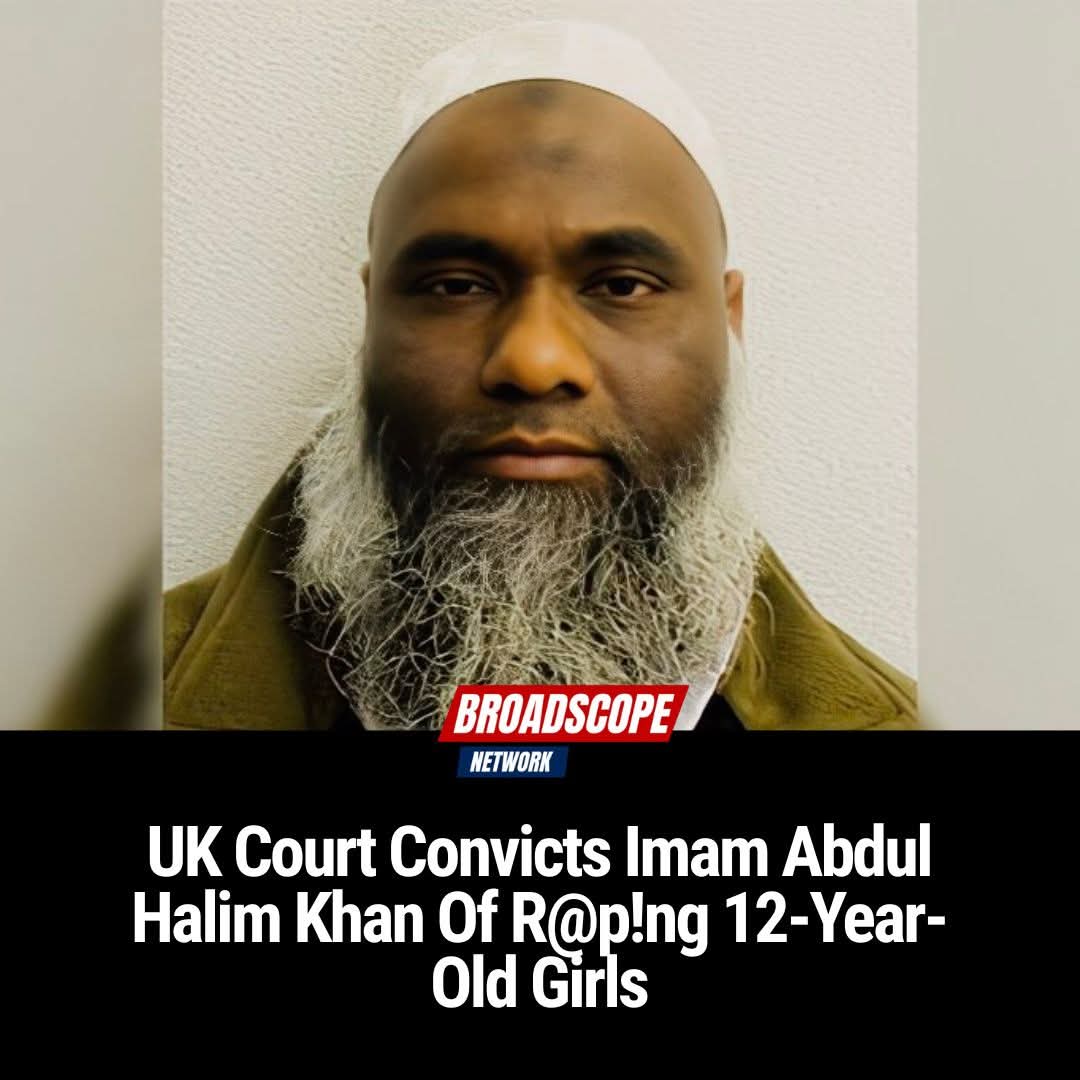
A court in the United Kingdom has convicted Imam Abdul Halim Khan of serious sexual offences involving underage girls.
The 54-year-old, who lived on Old Forde Road in London, was found guilty of 21 offences, including nine counts of rape.
Police said the abuse lasted for more than a decade, between 2004 and 2015. During that period, Khan reportedly used his position as a respected religious leader to gain the trust of families. Investigators said he claimed to have spiritual powers and used threats against victims’ relatives to silence and control the girls, some of whom were as young as 12.
The charges he was convicted of include:
• Nine counts of rape
• Four counts of sexual assault
• Two counts of sexual assault of a child under 13
• Five counts of rape of a child under 13
• One count of assault by penetration
He has been remanded in custody and is expected to be sentenced on May 14 at Snaresbrook Crown Court.
Detective Sergeant Sara Yems, who led the investigation, praised the seven women who reported the abuse. She said it takes courage to speak out, especially when the suspect is seen as a trusted figure in the community. She added that their bravery may encourage other victims to come forward.
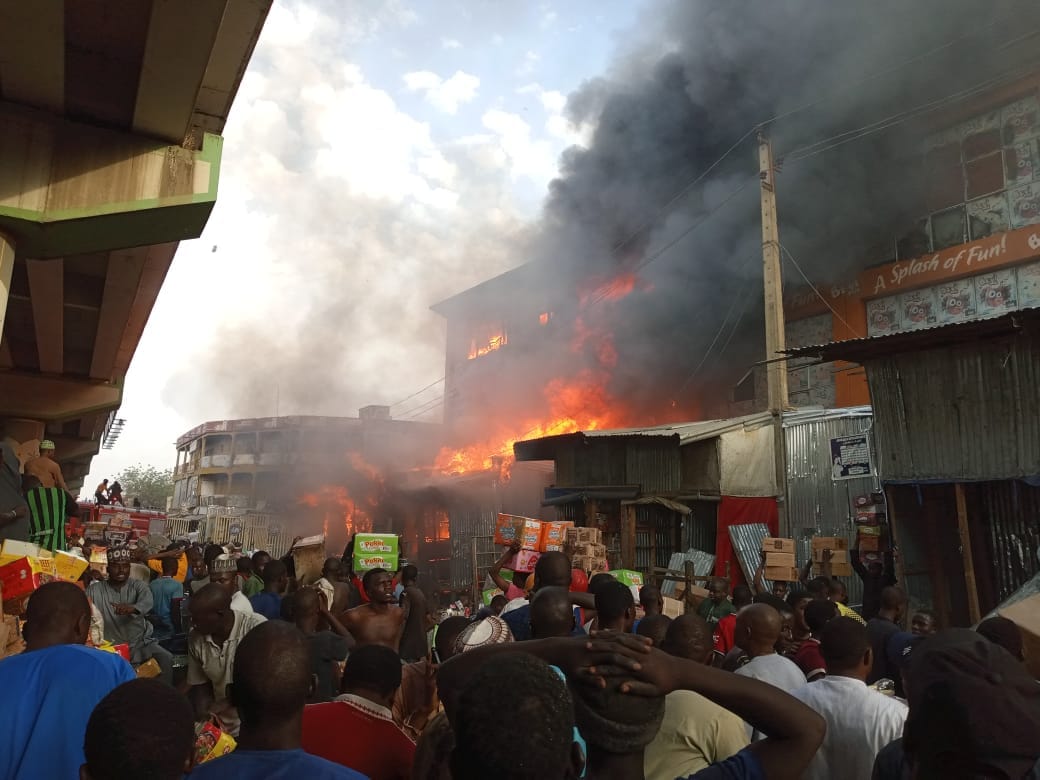
A major market in Kano, popularly known as Singer market, has been gutted by fire. It started late Saturday night and raged through early hours of Sunday.
Although the fire has been contained as at the time of this report, officials of the Kano State Fire Service are still working to ensure all parts of the market are secire.
Singer is the biggest commodity market in Kano and northern Nigeria, supplying provision wares and foodstuff to most northern states and some neighbouring West and Central African countries.
-

 News11 months ago
Senate to speed up conclusion of Nigeria Forest Security Service Bill
-

 News3 years ago
Breaking: Tinubu’s authentic ministerial nominees
-

 News3 years ago
“Anytime we want to kill terrorists, President would ask us to take permission from France but they were killing our soldiers-” Niger Republic coup leader
-

 News6 months ago
The Many Lies Against Bashir Haske
-

 News2 years ago
“I’m leaving the Catholic church because Bishop Onah is oppressing me,” says Okunerere
-

 News2 years ago
Radio Nigeria’s veteran broadcaster Kelvin Ugwu dies three months after retirement from service
-

 News3 years ago
Dokpesi and the Gazebo Mystique
-

 News3 years ago
Tsunami: Tinubu orders dissolution of managements, boards of MDAs, to sack all Buhari’s political appointees