News
The Igbo Dilemma: A Self-Inflicted Identity Crisis

By Hon. Chimazuru Nnadi-Oforgu Duruebube
The Igbo nation, once unified in its resilience and cultural depth, now faces an existential crisis that is largely self-inflicted. We have become experts at dismembering ourselves, at developing standards for inclusion that are so impossibly high that even we cannot meet them. It is ironic, if not outright tragic, that we demand more of others, like the Ikwerre, than we demand of ourselves, as though we are guardians of an exclusive ethnic club. This is not just a problem of cultural identity; it is a suicidal act of reverse ethnic cleansing, a gradual dismantling of what once held us together.
The Ikwerre Question: A Double Standard
Why is it that when some Ikwerre people say they are not Igbo, we amplify their voices and insist on their exclusion? Yet, when hinterland Igbo declare themselves to be Jews, Bini, Ogodomigodo, Igala, or anything but “Igbo,” we still insist they are part of us. Even when they cite feelings of inferiority, marginalization, or historical grievances, we persist in calling them our own. But for the Ikwerre, we create a higher standard, a labyrinth of requirements they must meet before we “accept” them.
They must prove their reliability, their loyalty, their cultural alignment. They must do more, say more, and “put their acts together.” Meanwhile, the rest of us, fragmented and disoriented, fail to meet even the basic standards we impose on others. It is the same story as the systemic discrimination against the Igbo in Nigeria, where higher benchmarks are required for Igbo success. And yet, we complain bitterly about those external injustices while replicating them internally.
A Struggle for Survival or Dismemberment?
There is a larger struggle at play here, a deliberate effort to dismember the Igbo into scattered, unviable “dots in a circle.” It is a strategy, a deliberate scheme, and we are playing into it. The Igbo have been deeply penetrated—first by politicians who sell out our collective interests, and now by a more calamitous invasion of our intellectual sphere.
Where are the intellectuals who once deciphered the deepest intrigues, who once showed the light so others could find the way? Today, they are either silent or complicit, unable to connect the dots. How is it that even traders understand the significance of an Ohanaeze President-General of Rivers extraction, yet intellectuals fail to grasp the larger picture? This is not just about a cultural office. It is about cultural survival. It is about cohesion, about ensuring that we do not allow ourselves to be erased.
The Bigger Picture: Survival or Extinction
Inside this “little” matter of an Ohanaeze leader from Rivers State lies the global question of Igbo survival. It is tied to the history of pogroms, genocide, and ethnic cleansing aimed at erasing the Igbo as a viable race. It is tied to adversarial landlocking schemes, economic strangulation, and cultural disintegration. It is not a trivial matter of who occupies what position; it is about whether we survive as a people.
The Igbo must wake up. We cannot continue to act as though the enemy lies outside when we are doing their work for them from within. If we fail to understand the stakes, if we allow ourselves to be dismembered and scattered, then we will have no one to blame but ourselves.
The Call to Action
The survival of the Igbo race requires cohesion, not fragmentation; inclusion, not exclusion; unity, not division. We must stop playing into the hands of those who wish to see us dismembered. We must recognize that the little matters are never just little, they are symptoms of larger schemes.
It is time to hold our intellectuals, politicians, and cultural leaders accountable. It is time to redefine what it means to be Igbo, not as an exclusive club but as a resilient, unified people. If we fail to act now, history will not forgive us for letting our greatest strength, our identity, become our greatest weakness.
We are at a crossroads. It is up to us to choose survival over self-destruction. The time to act is now.
Hon. Chimazuru Nnadi-OforguDuruebube Uzii na Abosi
Chairman of the Nigeria Democratic in Congress (NDC), Fiidi Council Ward in Makurdi Local Government Area of Benue State, Igbu Terhemen, has reportedly been killed by unknown assailants.
Terhemen was said to have been attacked and left unconscious in a bush near his residence around the NNPC Depot, along the Makurdi-Otukpo Road, on the outskirts of Makurdi, the state capital.
A friend of the deceased, who spoke on condition of anonymity, said Terhemen left his residence on Tuesday evening to watch a local football match in the Kanshio axis of the town but did not return home.
According to him, family members and friends became worried after the deceased failed to return and subsequently began searching for him.
He said, “He left home to watch the match Tuesday evening and he was expected back home, but nobody saw him. It was while people were looking around for him that he was discovered around 2am Wednesday in a bush near his residence unconscious.
“Unfortunately, he died before he could get medical attention. Strangely, his attackers did not take his phone, which was discovered on him when he was taken to the morgue.
“There was also a needle-like injury on his body, indicating that he could have been injected with a substance by his attackers, dumped in the bush and left to die.
“All that is left for the police to uncover in the course of their investigation because this is a sad development in the state.”
The incident has sparked concern among members of the NDC, with the state chapter condemning the alleged killing and calling on security agencies to investigate the circumstances surrounding Terhemen’s death.
In a statement issued by the party’s State Publicity Secretary, Agile Bem, the NDC described the deceased as a committed member who contributed significantly to the growth of the party in the state.
The statement said, “The Nigeria Democratic Congress (NDC), Benue State Chapter, has condemned the gruesome murder of Hon. Igbu Terhemen, who, until his death, was the NDC Chairman of Fiidi Council Ward in Makurdi Local Government Area.
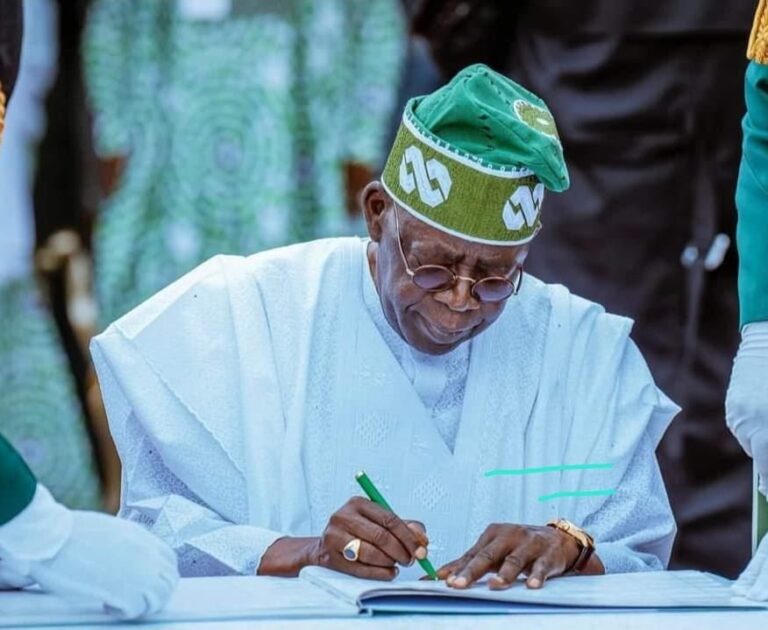
President Bola Ahmed Tinubu has signed into law the Appropriation (Amendment) (No.4) Bill, 2025, extending the implementation period of the 2025 budget from September 30, 2026 to December 31, 2026.
Presidential spokesman, Bayo Onanuga stated this in a press release on Wednesday, saying the president’s assent followed the amendment’s swift passage by both the Senate and the House of Representatives on Tuesday, September 29, 2026.
According to Onanuga, the extension gives Ministries, Departments and Agencies more time to complete ongoing capital projects. It ensures that funds already appropriated are fully put to work for Nigerians, without disrupting critical programmes.
“The President commended the leadership and members of the National Assembly for their prompt consideration of the bill, a further sign of the cooperation between the Executive and the Legislature in the service of the nation,” Onanuga said.
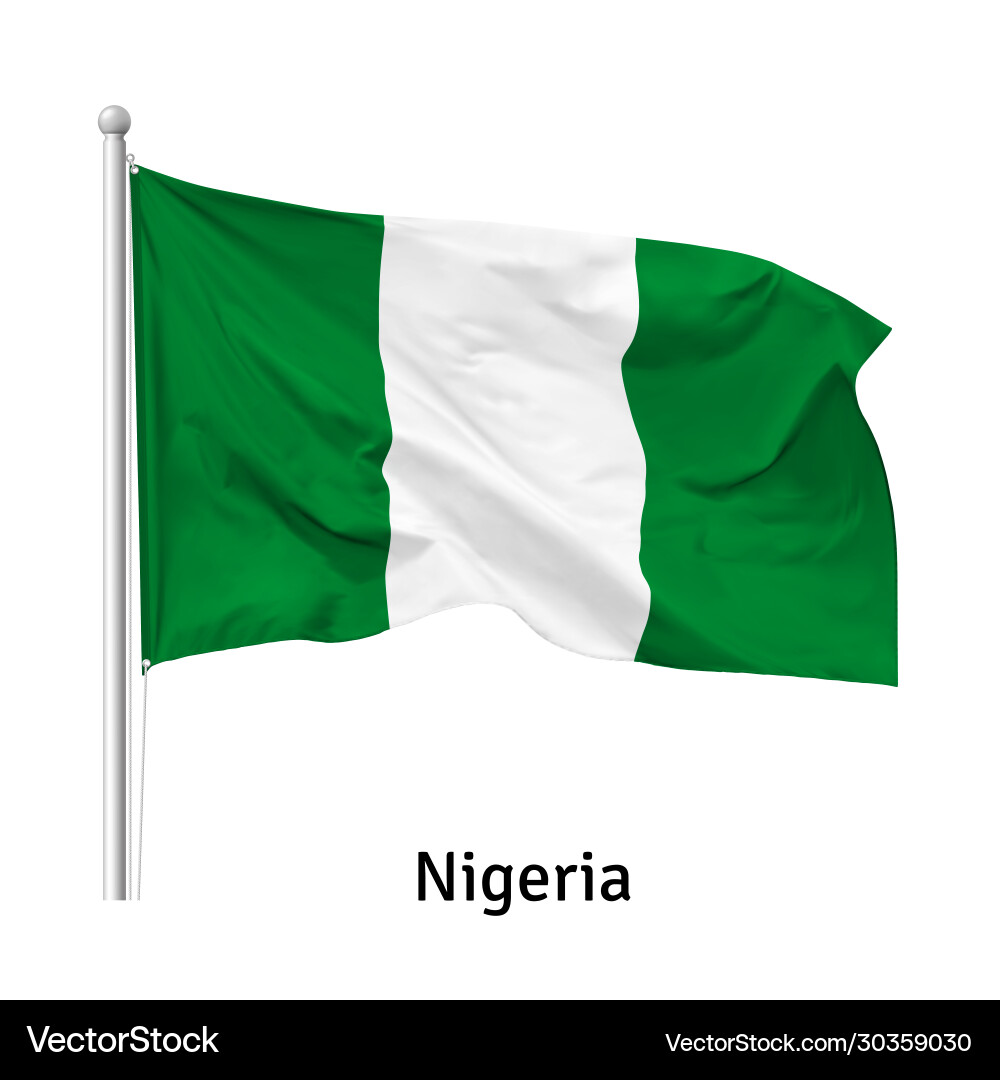
Governor of Rivers State, His Excellency Sir Siminalayi Fubara, has congratulated the federal government to and people of Nigeria on the occasion of the country’s 66 independence anniversary.
Fubara also called on the people of the State to embrace peace and unity, describing them as indispensable pillars for the socioeconomic development of any society.
In a goodwill message issued on Fubara’s behalf by Onwuka Nzechi, Chief Press Secretary to the Governor, he said the anniversary celebration offers an opportunity for the people to reflect on Nigeria’s journey since 1960 and to renew their commitment to peaceful coexistence.
The Governor noted that Rivers State, as the “treasure base of the nation” and a melting pot of diverse ethnic nationalities, has always thrived when its people lived in harmony. He said no meaningful development can take place in an atmosphere of rancour, division and political hostility.
According to him, while political differences are normal in a democracy, they must never be allowed to undermine the collective interest of the State. “We may disagree as politicians, but we must never disagree on the peace and progress of Rivers State,” he stated.
Governor Fubara stressed that since assumption of office, his administration has anchored its governance philosophy on peace, describing it as the most invaluable infrastructure. He said the relative peace enjoyed in the State today has made it possible for his government to attract investments and execute projects across the three senatorial districts.
He therefore appealed to youths, traditional rulers, political leaders and all stakeholders to be ambassadors of peace in their communities, wards and local government areas, stressing that no one benefits when the State is in crisis.
The Governor further urged Rivers people to continue to support the Federal Government under President Bola Ahmed Tinubu, noting that national unity and sub-national cooperation are critical to achieving the goals of the Renewed Hope Agenda.
-

 News2 years ago
Senate to speed up conclusion of Nigeria Forest Security Service Bill
-

 News1 year ago
The Many Lies Against Bashir Haske
-

 News3 years ago
Breaking: Tinubu’s authentic ministerial nominees
-
 News3 years ago
“Anytime we want to kill terrorists, President would ask us to take permission from France but they were killing our soldiers-” Niger Republic coup leader
-
 News3 years ago
“I’m leaving the Catholic church because Bishop Onah is oppressing me,” says Okunerere
-

 News3 years ago
My nude photo leak was a mistake- lawyer Ifunanya
-
 News4 months ago
See your state governor’s performance ranking
-

 News3 years ago
Radio Nigeria’s veteran broadcaster Kelvin Ugwu dies three months after retirement from service