News
Buhari’s minister Pantemi opposes Tax Reform Bills


Isa Pantemi, who served as Communications minister during the administration of president Muhammadu Buhari, has said several sections of the Tax Reform Bills presented to the National Assembly by President BolaTinubu make him uncomfortable, saying they contain ambiguities and potential constitutional conflicts that could hinder its implementation.
The Bills seek to prioritise the location of consumption as the basis for sharing Value Added Tax (VAT) but has faced widespread resistance, particularly from northern stakeholders, including governors, traditional rulers, and the Northern Elders Forum.
Nevertheless, rhe Senate passed the bills for a second reading on Thursday amid a rowdy plenary session.
In a statement on X on Tuesday, Pantami noted that while the bill holds promise for transforming tax collection administration, it requires significant improvements to serve the national interest effectively.
He highlighted that certain sections lack clear definitions, creating room for regulatory exploitation and implementation challenges.
The former minister advised the National Assembly to suspend legislative action on the bill temporarily, advocating for broader consultations involving all relevant stakeholders.
He emphasised that resolving the bill’s challenges requires contributions from constitutional, tax, and business law experts.
Among the sections Pantami identified for review are Sections 3(3), 7(6), 8(2), 23, 28, 95, 96, 97, 118, and 141, the latter being a supremacy clause he found particularly concerning.
However, he called on the government to rebuild trust with citizens, noting that widespread suspicion towards government policies is amplifying the country’s challenges.
He wrote, “I have been preoccupied for the past week, having attended the World Halal Summit 2024 as a speaker at the invitation of the Presidency of the Republic of Turkiye. Consequently, I couldn’t find time to read and review all the 4 bills, including the Nigeria Tax Administration Bill, 2024. However, over the last 40 hours, I have been reading them, particularly the Nigeria Tax Administrative Bill.
“The bill has the potential to transform tax collection administration if improved and implemented in the national interest. Nevertheless, there are critical observations that need to be addressed, including a potential conflict with the Federal Republic of Nigeria’s constitution.
“Several sections of the Bill make me uncomfortable, primarily because they lack clear definitions, which could lead to significant challenges during implementation. Furthermore, regulatory bodies may exploit these ambiguities when developing their regulatory instruments.
“In light of this, I offer two pieces of advice to the National Assembly (NASS):
“i) Suspend Legislative Action for now as some of the challenges could not be addressed by the chambers alone. In leadership, the ability to change one’s mind is a sign of intelligence and empathy, not weakness; and
“ii) Allow for wider consultations on the bills, ensuring that all relevant stakeholders are contacted and any ambiguities are effectively reviewed and addressed.
“Specifically, I recommend reviewing the following sections:
1) Section 3(3)
2) Section 7(6)
3) Section 8(2)
4) Section 23
5) Section 28
6) Sections 95, 96,
97, and 118
7) Section 141 (supremacy clause)
“I believe that tax, constitutional, and business lawyers, among others, also have a significant role to play in improving the bills. As a policy researcher, I may also commend on the remaining 3 bills later.
“Finally, the government must try to address the mistrust between it and its citizens, as our situation as a nation is deteriorating due to this mistrust. Citizens are largely suspicious. Building trust is crucial at this juncture for all arms and tiers of government. We must also prioritise our national interest over and above our personal interests. Issues must also be discussed objectively and critically.
“May we continue to serve our country diligently and honestly, praying to Allah to bless the Federal Republic of Nigeria.”

Health professionals have warned that regular consumption of shawarma containing high amounts of salt, sugar, fat, seasoning and processed meat may contribute to hypertension, obesity, diabetes and kidney disease.
Excessive salt can raise blood pressure and put additional strain on the kidneys, while high-calorie sauces may contribute to weight gain.
Nutrition experts advised Nigerians to eat shawarma in moderation, use less mayonnaise and other sauces, choose lean grilled meat and add more vegetables. Consumers were also urged to check vendors’ cleanliness and avoid food prepared where ingredients are exposed to flies, dust or poor handling.
A recent report by experts also warned that frequent consumption of Shawarma may increase the risk of other food-borne infections and long-term health problems.
The report contains documented cases of people who suffered vomiting, diarrhoea, stomach pain and weakness after eating shawarma, with some requiring hospital treatment.
According to the report, poor hygiene could allow bacteria and other contaminants into shawarma, causing illnesses including cholera, dysentery, typhoid and salmonellosis.
It also raised concerns about mayonnaise and creamy sauces kept without proper refrigeration and warned that poor storage could encourage bacterial growth and increase the risk of food poisoning.
A study cited in the report found bacterial contamination in ready-to-eat shawarma sold on the streets
Experts also raised concerns about processed meat such as sausage, noting that the International Agency for Research on Cancer classifies processed meat as carcinogenic to humans.
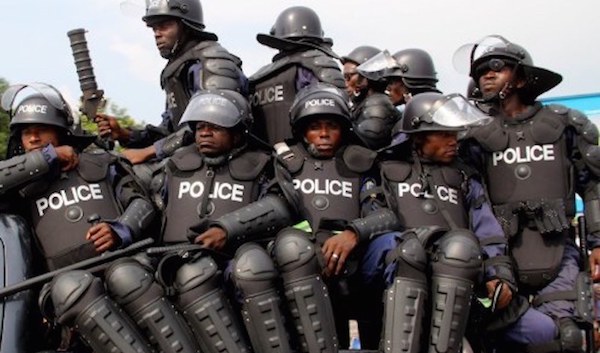
The mystery surrounding the death of a man whose body was found by the roadside in Abuja has taken a new turn, with police tracing the case through his missing mobile phone to a married woman who allegedly spent time with him at a hotel.
The FCT Commissioner of Police, Mohammed Sanusi, disclosed this on Saturday in Abuja, saying investigators arrested Rukayat Muhammed after tracing the deceased’s final communications.
The man was found dead on August 26 along the Kubwa Expressway, near Katampe under the bridge, after his family had earlier reported him missing.
According to the police, the case initially raised suspicion of a possible “one chance” incident. Investigators, however, established that the dead man was the missing person after identifying his remains.
Sanusi said the deceased’s mobile phone was missing and had been switched off. Police investigators subsequently traced his last known communication, leading them to Rukayat, a resident of Garki Area 2.
Investigators reportedly discovered that Rukayat, who is married, was allegedly in a romantic relationship with the deceased. The police said she had saved his contact under the name “Safiyat.”
The CP said the pair had lodged at Good Samaritan Guest House on 2nd Avenue, Gwarinpa, where the man later died.
Sanusi said Rukayat allegedly discovered that the man was no longer breathing but failed to alert the police or hotel management. Instead, she allegedly took his phone and left the hotel.
The case took another turn when hotel management later discovered the man’s body inside the room after attempts to contact the occupants failed.
Rather than reporting the discovery, two hotel staff members, Ibrahim Omeiza and Kefat Bitrus, allegedly removed the body from the room and transported it to the Kubwa Expressway, where they dumped it under the Katampe bridge.
The police said the action was apparently intended to distance the hotel and its management from the death.
Sanusi said detectives were still working to establish exactly how the man died and determine the individual roles of those connected to the incident.
He warned that anyone found to have participated in the death, concealment or abandonment of the body would face prosecution.
The commissioner said the investigation remains ongoing.
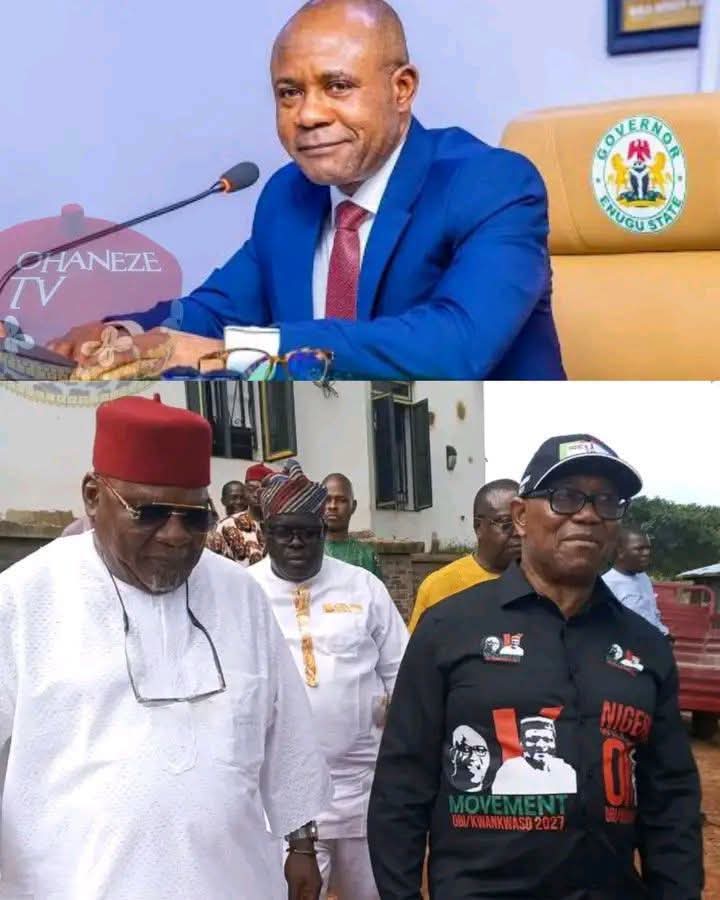
The Enugu State Government has suspended His Royal Majesty, Igwe Eze William Ezugwu, the traditional ruler of Ibagwa Ogbozalla Opi Autonomous Community, in Nsukka Local Government Area of Enugu state.
The state government accused Igwe Ezugwu of violating provisions of the state’s Traditional Rulers Law.
In a letter of suspension dated September 24, the Enugu State Government cited his alleged failure to constitute his cabinet, failure to establish a Town Union governing body, and persistent conduct deemed inconsistent with the laws governing traditional rulers in the state.
The suspension comes barely three weeks after Igwe William Ezugwu received NDC presidential candidate Peter Obi at his palace in Opi, Nsukka LGA, where he reportedly blessed Obi’s presidential ambition.
-

 News2 years ago
Senate to speed up conclusion of Nigeria Forest Security Service Bill
-

 News1 year ago
The Many Lies Against Bashir Haske
-

 News3 years ago
Breaking: Tinubu’s authentic ministerial nominees
-
 News3 years ago
“Anytime we want to kill terrorists, President would ask us to take permission from France but they were killing our soldiers-” Niger Republic coup leader
-
 News3 years ago
“I’m leaving the Catholic church because Bishop Onah is oppressing me,” says Okunerere
-

 News3 years ago
My nude photo leak was a mistake- lawyer Ifunanya
-
 News4 months ago
See your state governor’s performance ranking
-

 News3 years ago
Radio Nigeria’s veteran broadcaster Kelvin Ugwu dies three months after retirement from service