News
Reps Speaker Abbas assures improved financing for NHRC in 2025


The House of Representatives has commended the leadership of the National Human Rights Commission, NHRC, for the quality work it is doing to protect the rights of Nigerian citizens and others living in the country.
The Speaker, Hon. Tajudeen Abbas, made the commendation on Tuesday in Abuja, while declaring open Legislative Forum on Human Rights, convened by the NHRC, as part of activities commemorating the 2024 International Human Rights Day.
Abbas said the House would ensure improved funding for the Commission in 2025 and going forward, to ensure it continued to discharge its constitutional obligations.
The Speaker who was represented at the event by the Majority Leader of the House, Prof Julius Ihonbvere said National Assembly will ensure that the Commission’s financial and operational autonomy, is achieved to enable it fulfil its mandate more effectively.
He stated that the National Assembly has consistently demonstrated its commitment to advancing human rights through legislative action, adding that significant achievement has been made in the sustained efforts to place the Commission on first-line charge of the Consolidated Revenue Fund.
He said- “This year’s event reminds us of the historic moment on 10th December 1948, when the United Nations General Assembly adopted the Universal Declaration of Human Rights, a milestone document affirming the equal and inalienable rights of all individuals.
“The theme for this year’s celebration, “Our Rights, Our Future, Right Now,” is both timely and compelling. It serves as a clarion call for immediate and sustained action to advance human rights in Nigeria and underscores the critical role of rights in shaping a secure and prosperous future for all citizens. This theme challenges us to move beyond aspirations and commit to practical steps that translate the promise of rights into tangible improvements in the lives of Nigerians.
“As we reflect on this theme, it is essential to acknowledge the strides we have made in advancing human rights while confronting the challenges that persist. Nigeria’s constitutional guarantees and international commitments establish a strong framework for protecting the dignity and freedoms of all citizens. However, translating these commitments into reality requires addressing issues such as gender-based violence, police accountability, discrimination, and threats to freedom of expression.
“These challenges, exacerbated by insecurity, systemic poverty, and weak enforcement mechanisms, present opportunities for growth and reform. We must strengthen our institutions, enhance enforcement capabilities, and foster trust between the government and the people. By doing so, we can build a nation where human rights are respected and protected as the bedrock of our democracy.
“Insecurity remains a significant obstacle to human rights in Nigeria. From insurgency and banditry to the marginalisation of vulnerable groups in conflict zones, the impact on individuals and communities is profound. Addressing these issues requires holistic legislative and institutional responses that prioritise accountability, justice, and the welfare of the most affected.
“Parliament is the cornerstone of democracy and a critical actor in the promotion and protection of human rights. Through our legislative, oversight, and representative roles, we ensure that the laws we pass uphold fundamental freedoms and that institutions tasked with safeguarding these freedoms are effective and accountable.
“By securing its independence, we are empowering the NHRC to address human rights violations with the responsiveness and integrity Nigerians expect.
“The 9th Assembly also laid an important foundation for the promotion of human rights through the enactment of the Police Act 2020. This landmark legislation requires the Nigerian Police Force to uphold and protect fundamental rights as enshrined in our Constitution, the African Charter on Human and Peoples’ Rights, and other international instruments. Among its key provisions, the Act mandates that every police division have a qualified legal practitioner to ensure compliance with human rights standards. This measure underscores our collective resolve to embed respect for human rights into the operational framework of law enforcement agencies.
“Building on these achievements, the 10th House of Representatives is working to further institutionalise accountability within the security sector. A notable effort is the consideration of amendments to the Armed Forces Act to establish a Human Rights Ombudsman. This initiative seeks to create a structured mechanism for addressing human rights violations within the military, ensuring that justice and accountability remain central to the operations of our armed forces.
“Through the work of its committees, particularly the House Committee on Human Rights and the Public Petitions Committee, the National Assembly continues to address pressing human rights concerns. These committees provide platforms for redress and oversight, ensuring that citizens have accessible mechanisms to seek justice when their rights are infringed. For example, the Public Petitions Committee is currently deliberating on over 70 cases of alleged human rights violations, highlighting its critical role in upholding accountability and justice.
“The NHRC remains at the forefront of human rights advocacy in Nigeria. However, its effectiveness is hindered by resource limitations, including the need for independently owned state offices, expanded headquarters facilities, and operational vehicles across all states and the FCT. The National Assembly is committed to providing the necessary support to ensure that the Commission can meet the growing expectations of Nigerians.
“Education is a powerful tool for fostering a culture of respect for dignity and equality. We must integrate human rights education into school curricula and public enlightenment campaigns to equip citizens with an understanding of their rights and responsibilities. This will not only empower individuals but also foster empathy, civic responsibility, and social cohesion.
“Such initiatives are critical for rebuilding trust between citizens and the government. When institutions are strong, and citizens are well-informed, the prevalence of human rights abuses diminishes, creating a stable and harmonious society.
The House Speaker charged Nigerians to recommit themselves to the collective endeavour of building a Nigeria where every citizen lives with dignity, free from fear and oppression.
Earlier in his welcome address,the NHRC Executive Secretary,Dr.Tony Ojukwu urged stakeholders to join the Commission in its quest to uphold rights of every citizens in Nigeria.He commended members of the National Assembly, civil society groups and the media for the unalloyed support to the commission.
Also in his goodwill message,the Chairman, House Committee on Human Rights,Hon Dr.Abiola P.Makinde, who was represented by his Deputy, Hon.Mudashir Lukman assured that House of Representatives will work towards increasing the budget allocation for the commission in the 2025 Budget.
The Chairman, Senate Committee on Judiciary, Human Rights, and Legal Matters,Senator Adeniyi Adegbomire said the Nigeria Senate and National Assembly will work on legislation,make necessary amendments to ensure that NHRC live to the expectation of Nigerians.He therefore assured that 2025 budget wlll cater for financial challenges being faced by the commission.
There were goodwill messages from other members of the 10th National Assembly, State legislators, NHRC partners and civil society groups.
National Legislative Forum serves as a platform to bridge the gap between legislators, civil society, and human rights defenders. It aims to foster dialogue, collaboration, and actionable strategies to promote and protect fundamental human rights in Nigeria.

Health professionals have warned that regular consumption of shawarma containing high amounts of salt, sugar, fat, seasoning and processed meat may contribute to hypertension, obesity, diabetes and kidney disease.
Excessive salt can raise blood pressure and put additional strain on the kidneys, while high-calorie sauces may contribute to weight gain.
Nutrition experts advised Nigerians to eat shawarma in moderation, use less mayonnaise and other sauces, choose lean grilled meat and add more vegetables. Consumers were also urged to check vendors’ cleanliness and avoid food prepared where ingredients are exposed to flies, dust or poor handling.
A recent report by experts also warned that frequent consumption of Shawarma may increase the risk of other food-borne infections and long-term health problems.
The report contains documented cases of people who suffered vomiting, diarrhoea, stomach pain and weakness after eating shawarma, with some requiring hospital treatment.
According to the report, poor hygiene could allow bacteria and other contaminants into shawarma, causing illnesses including cholera, dysentery, typhoid and salmonellosis.
It also raised concerns about mayonnaise and creamy sauces kept without proper refrigeration and warned that poor storage could encourage bacterial growth and increase the risk of food poisoning.
A study cited in the report found bacterial contamination in ready-to-eat shawarma sold on the streets
Experts also raised concerns about processed meat such as sausage, noting that the International Agency for Research on Cancer classifies processed meat as carcinogenic to humans.
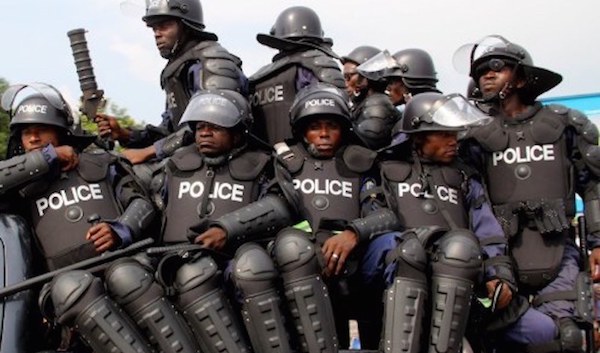
The mystery surrounding the death of a man whose body was found by the roadside in Abuja has taken a new turn, with police tracing the case through his missing mobile phone to a married woman who allegedly spent time with him at a hotel.
The FCT Commissioner of Police, Mohammed Sanusi, disclosed this on Saturday in Abuja, saying investigators arrested Rukayat Muhammed after tracing the deceased’s final communications.
The man was found dead on August 26 along the Kubwa Expressway, near Katampe under the bridge, after his family had earlier reported him missing.
According to the police, the case initially raised suspicion of a possible “one chance” incident. Investigators, however, established that the dead man was the missing person after identifying his remains.
Sanusi said the deceased’s mobile phone was missing and had been switched off. Police investigators subsequently traced his last known communication, leading them to Rukayat, a resident of Garki Area 2.
Investigators reportedly discovered that Rukayat, who is married, was allegedly in a romantic relationship with the deceased. The police said she had saved his contact under the name “Safiyat.”
The CP said the pair had lodged at Good Samaritan Guest House on 2nd Avenue, Gwarinpa, where the man later died.
Sanusi said Rukayat allegedly discovered that the man was no longer breathing but failed to alert the police or hotel management. Instead, she allegedly took his phone and left the hotel.
The case took another turn when hotel management later discovered the man’s body inside the room after attempts to contact the occupants failed.
Rather than reporting the discovery, two hotel staff members, Ibrahim Omeiza and Kefat Bitrus, allegedly removed the body from the room and transported it to the Kubwa Expressway, where they dumped it under the Katampe bridge.
The police said the action was apparently intended to distance the hotel and its management from the death.
Sanusi said detectives were still working to establish exactly how the man died and determine the individual roles of those connected to the incident.
He warned that anyone found to have participated in the death, concealment or abandonment of the body would face prosecution.
The commissioner said the investigation remains ongoing.
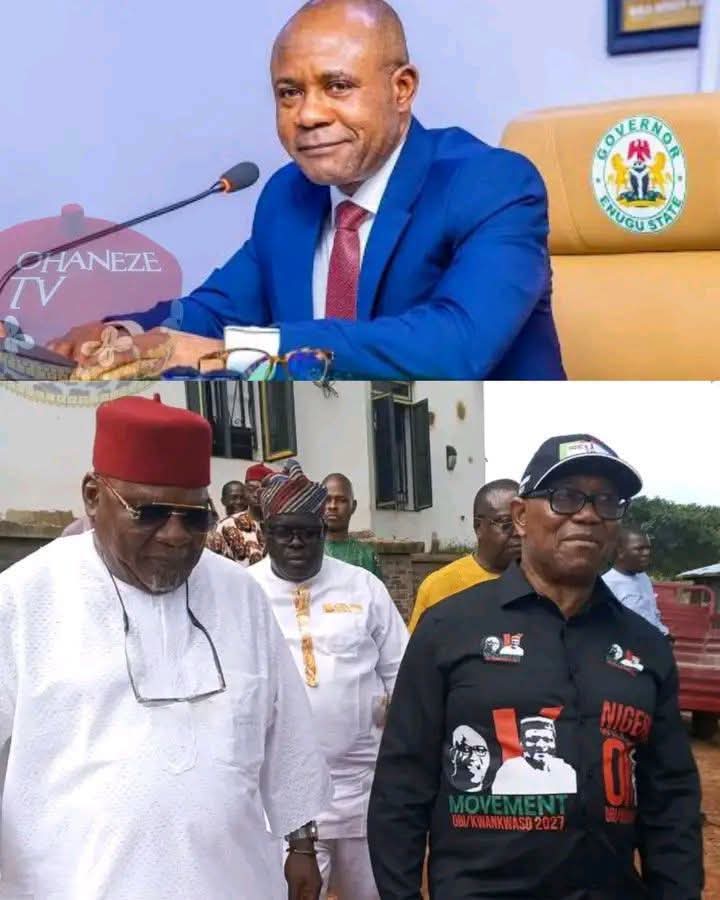
The Enugu State Government has suspended His Royal Majesty, Igwe Eze William Ezugwu, the traditional ruler of Ibagwa Ogbozalla Opi Autonomous Community, in Nsukka Local Government Area of Enugu state.
The state government accused Igwe Ezugwu of violating provisions of the state’s Traditional Rulers Law.
In a letter of suspension dated September 24, the Enugu State Government cited his alleged failure to constitute his cabinet, failure to establish a Town Union governing body, and persistent conduct deemed inconsistent with the laws governing traditional rulers in the state.
The suspension comes barely three weeks after Igwe William Ezugwu received NDC presidential candidate Peter Obi at his palace in Opi, Nsukka LGA, where he reportedly blessed Obi’s presidential ambition.
-

 News2 years ago
Senate to speed up conclusion of Nigeria Forest Security Service Bill
-
 News1 year ago
The Many Lies Against Bashir Haske
-

 News3 years ago
Breaking: Tinubu’s authentic ministerial nominees
-
 News3 years ago
“Anytime we want to kill terrorists, President would ask us to take permission from France but they were killing our soldiers-” Niger Republic coup leader
-
 News3 years ago
“I’m leaving the Catholic church because Bishop Onah is oppressing me,” says Okunerere
-

 News3 years ago
My nude photo leak was a mistake- lawyer Ifunanya
-
 News4 months ago
See your state governor’s performance ranking
-

 News3 years ago
Radio Nigeria’s veteran broadcaster Kelvin Ugwu dies three months after retirement from service