
News
The Pope who encountered the devil thrice, saw gates of hell

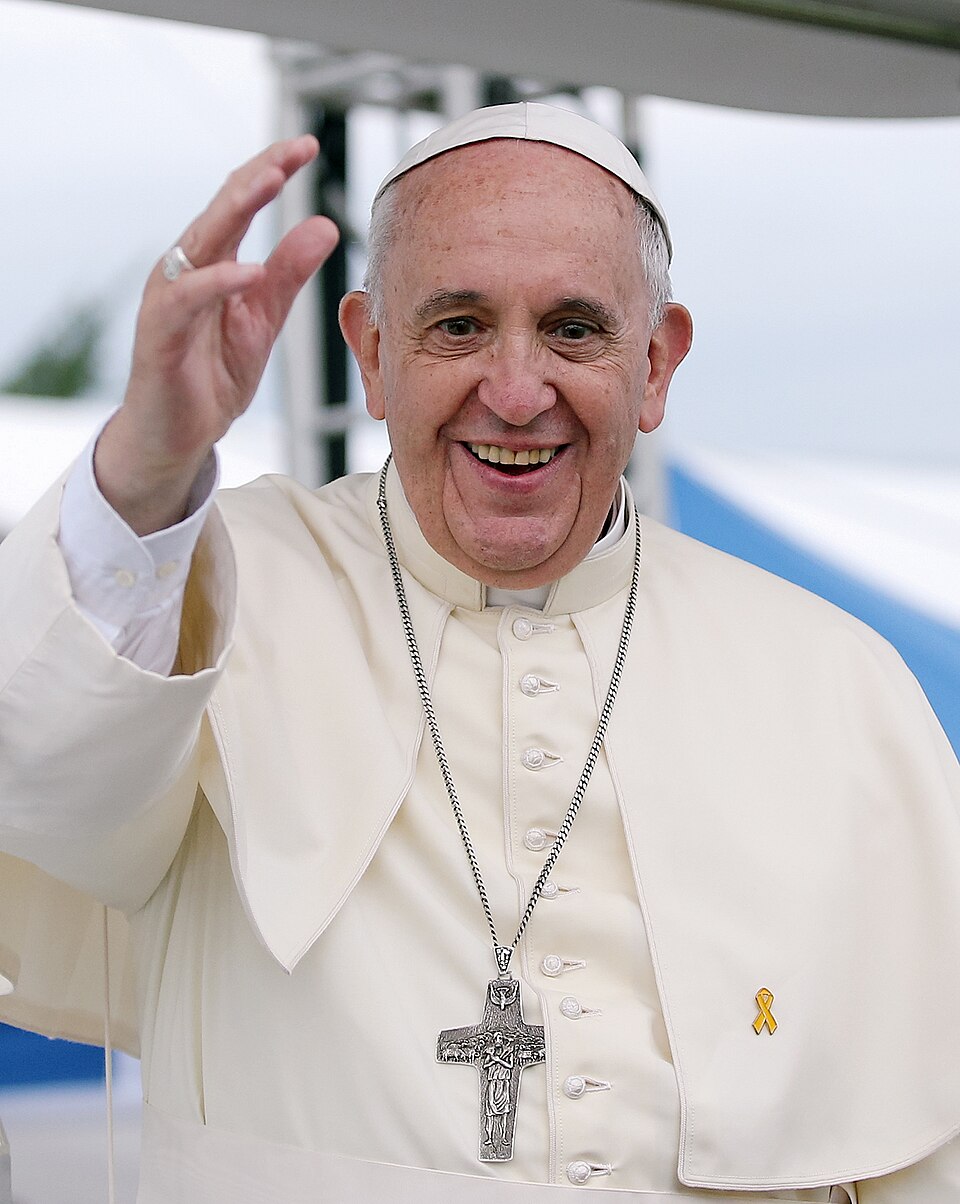
The late Pope Francis recounted three encounters with what he described as the devil and a terrifying vision of the entrance to hell in his private diaries published posthumously on Tuesday.
The diaries also reveal that the pontiff experienced a two-year spiritual crisis between 2021 and 2022, during which he struggled with temptations associated with power and the exercise of authority.
The revelations are contained in The Private Diary of Pope Francis, a 160-page book written by Cardinal Víctor Manuel Fernández, one of the late pope’s closest aides and a fellow Argentine.
According to CNN, which reported the revelations on Tuesday, the book contains entries from diaries Francis kept intermittently between 1992 and 2024, first as a bishop in Argentina and later as pope.
The volume reveals that Francis faced “frequent demonic attacks” and detailed three encounters with the devil—two while he was archbishop of Buenos Aires and a third in 2018 after his election as pope.
In an August 18, 2024 entry, Francis wrote of the devil’s “eyes of fire,” describing them as “menacing” and “seductive.”
“I can’t forget his eyes the first two times — from the car when I was returning to the house, and in the choir loft during Mass. However, he always reappears in different situations,” he noted.
The third encounter came shortly after a 2018 trip to Chile overshadowed by the clerical sexual abuse scandal.
In a January 24, 2021 entry, Francis recalled: “On one occasion, a few days after returning to Rome, I was in a meeting. I saw him and heard his voice [his underlining], triumphant, possessing everything: ‘Now I’ve gotten everything I wanted.’ Just as I can’t forget his eyes from the previous two, in this case, I can’t forget the powerful raspiness of his voice. The Lord granted me an opportunity to leave that meeting, and he thus freed me.”
Based on Catholic teaching, the devil is a fallen angel. Catholic tradition cautions that those who are serious about attaining holiness will often encounter strong spiritual opposition.
The diaries also describe a vision of “the entrance to hell” in 2018, which Francis characterized as a form of “pagan seduction in full force.”
“I peeked in to look a little and it terrified me. It was before going to sleep. I grabbed the rosary as a weapon. I thank the Lord for this help,” he wrote.
The book reveals that Francis experienced a spiritual crisis in 2021 and 2022, which Fernández linked to temptations associated with power, excessive activity and feelings of self-sufficiency.
The late pontiff reportedly described the crisis as involving “governance issues, pressure regarding decisions to make, and aridity and desolation.”
To overcome the temptation, Francis sought to practice greater humility and patience, including by retaining some officials in the Church’s central administration despite criticism of their conduct.
Fernández recalled an occasion when a bishop asked Francis why he had not dismissed an official in the Roman Curia who had publicly criticised him and pursued what the bishop considered a different agenda.
“After an interminable silence, he responded by explaining that he felt a strong sensation in his heart that God did not want him to become a puppeteer who uses and manipulates people according to his own convenience. He explained that, for this reason, he preferred to let that person remain in his position,” Fernández wrote.
In an entry dated December 30, 2022, Francis said he had resisted the temptation to treat “others like puppets”.
He also recalled that, in 2018, a sense of self-sufficiency and the belief that he could solve everything had brought him close to what he described as the gates of hell.
“This sense of self-sufficiency and I can solve everything brought me to the gates of hell. I can’t forget the day I saw it,” he wrote.
Fernández explained that the crisis was connected to Francis’ struggle with the temptation to discover what it meant to exercise personal power.
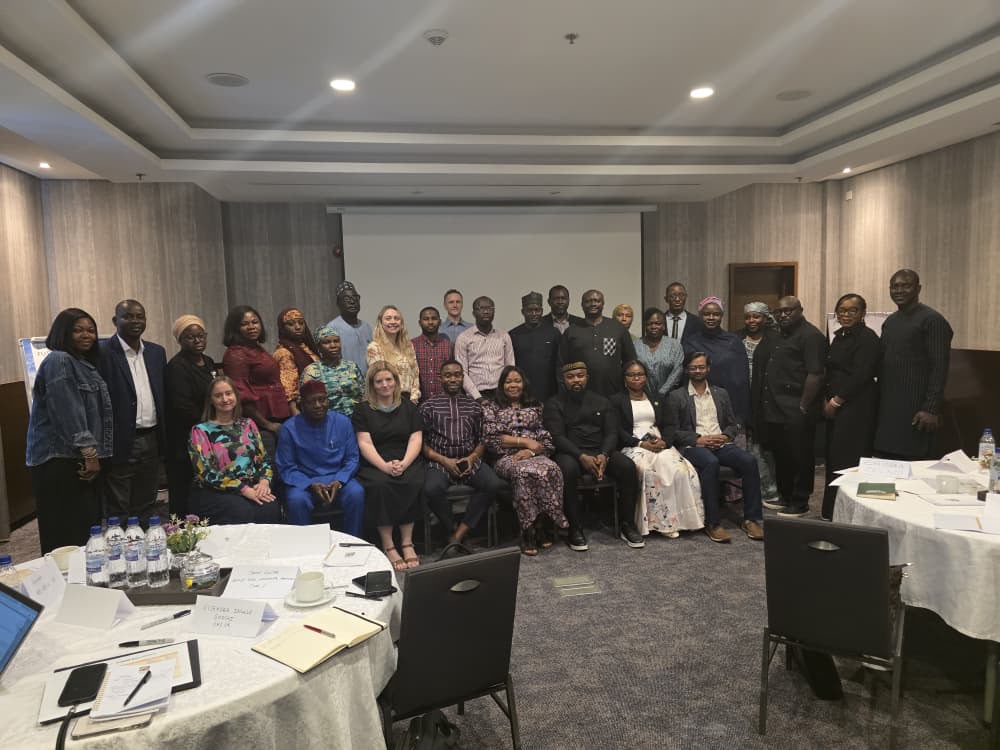
The Nigerian Meteorological Agency (NiMet), in partnership with the UK Met Office, this week, held a one-week Wiser Climate and Health Learning Lab, aimed to strengthen Nigeria’s Health and Early Warning Systems (HEWS) as well as improve preparedness for climate-related public health risks.
The event which held from November 23 to 27, 2026, at Envoy Hotel Abuja, brought together officials of the Federal Ministry of Health and Social Welfare, UK Met Office, Foreign, Commonwealth & Development Office (FCDO) and other government agencies.
The Programme focused on examining pathways to institutionalizing a national health early warning system, including clearer roles and coordination mechanisms, a shared climate-health risk narrative and the use of existing systems and data platforms.
In his opening remarks, NiMet’s Director-General/CEO and Nigeria’s Permanent Representative at the World Meteorological Organization (WMO), Prof. Charles Anosike, said climate change and variability increasingly threaten public health, citing rising temperatures, heat stress, changing rainfall patterns, flooding and climate-sensitive diseases. He called for stronger collaboration among meteorological, health, water resources and emergency management institutions.
Anosike said the Learning Lab’s success should be measured by practical outcomes, institutional commitments and actionable recommendations.
Anosike who was represented by the Director, Applied Meteorological Services, Mrs. Glory Onyegbule, thanked the UK Met Office for its technical support through the WISER programme and urged participants to contribute towards a sustainable, functional Health Early Warning System (HEWS) for Nigeria.
Participants examined pathways to an institutionalized national health early warning system, including clearer roles and coordination mechanisms, a shared climate-health risk narrative, and use of existing systems and data platforms.
The programme also stressed evidence and policy recommendations to sustain government commitment.
Presentations covered the mandates of NiMet, NEMA, NOA, NCDC, NIHSA, NBS, NCCC and the Federal Ministry of Health and Social Welfare.
NiMet’s mandate was presented by Oyegade Adeleke, DGM/CS.
A major feature of the session was the UK Met Office’s ACTION FIRST approach, which shifts the focus from considering “what the weather will do” to “what can be done” to protect lives and livelihoods. The approach comprises four stages: setup, preparation, warning and review.
An interactive session allowed participants to exchange experiences and seek clarification on climate and health, disaster management, agriculture and related issues, with agencies responding according to their mandates.
The wrap-up identified key areas for further discussion: integrating indigenous knowledge into risk education, addressing institutional and technical gaps, sustainable financing, and stronger coordination and partnerships among MDAs.
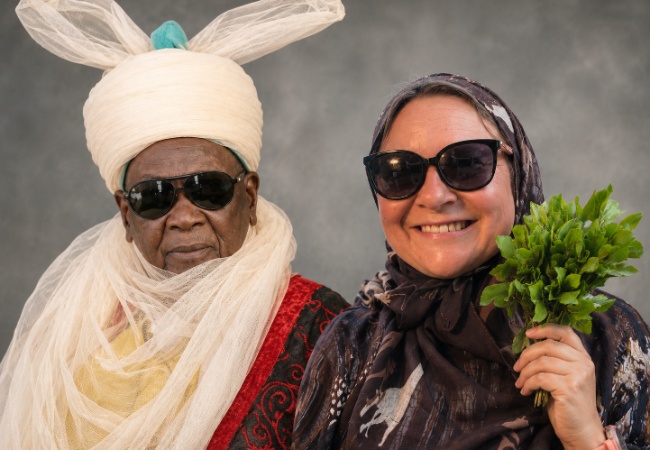
The Executive Secretary of the National Human Rights Commission (NHRC), Chief Tony Ojukwu, OFR, SAN, has expressed grave concern over allegations of sexual assault against the Emir of Daura, Alhaji Faruk Umar Faruk, involving a female tourist who alleged unwanted sexual touching during a visit to the palace.
Chief Ojukwu described the allegations as deeply disturbing, stressing that power, status, title or public office must never be used as a licence to violate the bodily autonomy, dignity or fundamental rights of any woman.
He emphasised that every woman had the right to decide who touched her body. Consent, he said, was fundamental, and no woman should be subjected to unwanted sexual advances or touching under any circumstance, irrespective of the position or influence of the person involved.
While acknowledging the action taken by the Katsina State Government in suspending the Emir from official engagements and constituting an investigative committee, the Executive Secretary insisted that suspension alone was not enough. He called for a thorough, impartial, transparent and credible investigation to establish the facts and ensure accountability in accordance with the law.
In a message signed by Fatimah Agwai Mohammed, Director Corporate Affairs and External Linkages, the Learned Silk stressed that the investigation must not be compromised by the status, influence or traditional authority of the person involved, adding that no one is above the law and no position of authority should serve as a shield against accountability for alleged human rights violations.
The Human Rights Advocate noted that this conversation is coming at a critical time when Nigeria is observing the 16 Days of Activism Against Gender-Based Violence, a campaign calling for justice, survivor protection and an end to impunity. He said the allegations reinforced the urgent need to confront sexual and gender-based violence, particularly where persons in positions of power were implicated.
Chief Ojukwu called on the relevant authorities to ensure that the complainant is protected from intimidation, harassment, threats, victim-blaming and retaliation throughout the investigation.
He urged traditional rulers, political leaders, public officials and all persons occupying positions of authority to recognise that leadership carried responsibility, not entitlement, and that power must never be used to undermine the rights of others.
A woman’s dignity is not negotiable. Her consent is not optional. Her rights are not subordinate to anyone’s power.
The Executive Secretary reiterated that no title is above human rights, no authority is above accountability, and no woman should be made to suffer sexual harassment or assault in silence.
The Commission would continue to advocate for the protection of women’s rights, access to justice for survivors and accountability for human rights violations, irrespective of the status of those implicated he concluded.

Have you ever wondered why people eat chicken eggs almost every day but rarely eat turkey eggs, despite the popularity of turkey meat?
Interestingly, turkey eggs are perfectly edible, nutritious and delicious. They are larger than chicken eggs and contain more protein, fat and calories per egg.
However, several factors explain why they are rarely available for human consumption.
- Low egg production:
While a productive laying hen can produce between 250 and 300 eggs annually, a turkey typically lays between 60 and 100 eggs a year, depending on its breed and management.
- High cost of production:
Turkeys consume more food, require more space and are generally more expensive to maintain than chickens. This makes their eggs relatively expensive.
- Late maturity:
Chickens can start laying eggs at about five months, while turkeys generally take about seven months or longer before they begin laying.
- Commercial considerations:
Poultry farmers prefer to hatch turkey eggs and raise the birds for meat because this is generally more profitable than selling the eggs for consumption.
- Consumer habits:
Over the centuries, chicken eggs have become the standard eggs for household consumption, baking and commercial food production. Consequently, there is little established market for turkey eggs.
- Seasonal production:
Unlike commercial laying chickens, turkeys naturally tend to lay eggs seasonally, making regular supply more difficult.
Turkey eggs are not poisonous, dangerous or unsuitable for human consumption. They can be boiled, fried, scrambled or used in baking, just like chicken eggs, provided they are properly handled and thoroughly cooked.
The major reason we rarely eat turkey eggs is therefore economic rather than nutritional. To most poultry farmers, a turkey egg is potentially more valuable as a future turkey than as breakfast.
-

 News2 years ago
Senate to speed up conclusion of Nigeria Forest Security Service Bill
-
 News1 year ago
The Many Lies Against Bashir Haske
-
 News3 years ago
“Anytime we want to kill terrorists, President would ask us to take permission from France but they were killing our soldiers-” Niger Republic coup leader
-

 News3 years ago
Breaking: Tinubu’s authentic ministerial nominees
-
 News6 months ago
See your state governor’s performance ranking
-
 News3 years ago
“I’m leaving the Catholic church because Bishop Onah is oppressing me,” says Okunerere
-

 News4 years ago
My nude photo leak was a mistake- lawyer Ifunanya
-

 News3 years ago
Radio Nigeria’s veteran broadcaster Kelvin Ugwu dies three months after retirement from service