
News
NLC General Secretary is dead

The Nigeria Labour Congress (NLC) General Secretary, Emmanuel Ugboaja, has passed away at the age of 60.
His death was revealed in a letter from his family to members of the National Executive Council (NEC) of the labour body, which was later made public by NLC President, Joe Ajaero.
Ugboaja, who was the fifth General Secretary of the NLC, was a veteran trade unionist and lawyer appointed to the position in August 2019.
The late NLC scribe was born on 15 May 1966 and obtained a law degree from the University of Calabar in 1987.
According to the NLC’s historical biography, Ugboaja is the first Nigerian lawyer to work full-time for a trade union.
He began his major union career with the National Union of Chemical, Footwear, Rubber, Leather and Non-Metallic Products Employees, where he later served as General Secretary between 2000 and 2005.
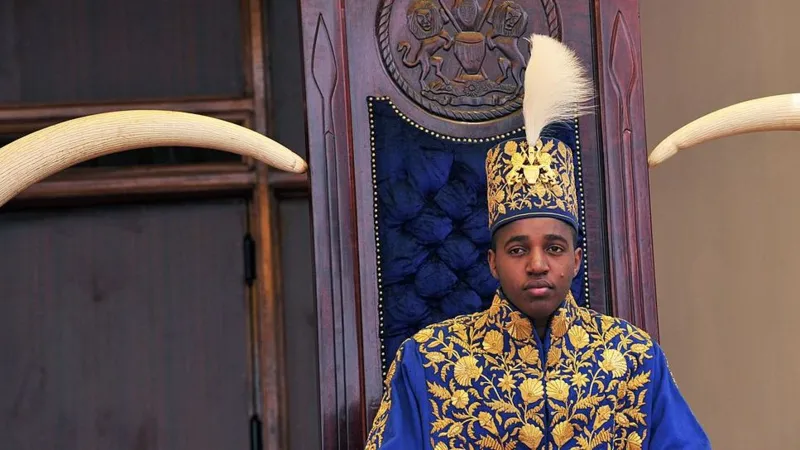
Oyo Nyimba Babamba Oguru Kulidi IV, a traditional Ugandan ruler named as the world’s youngest monarch has died aged 34, his prime minster announced.
He became king of Tooro in western Uganda at just three years old in 1995 after the death of his father.
The Tooro kingdom did not disclose the cause of King Oyo’s death, but a Ugandan government minister was quoted in local media saying that he had been critically ill and was seeking treatment in the US.
Though Uganda is governed by an elected president and parliament, it has several traditional kingdoms which continue to have significant cultural influence despite not having political power.
Oyo, who Guinness World Records listed as the world’s youngest reigning monarch, ruled over more than two million people. He was the 13th monarch of a kingdom that was founded in the early 19th Century.
Announcing his death, Tooro’s Prime Minister Calvin Armstrong Rwomiire Akiiki called his passing on Thursday an “immeasurable loss” to the royal family and the people of Tooro.
“I call upon all the people of Tooro to remain united, calm and prayerful during this profoundly difficult time,” Akiiki said on Friday. “May His Majesty the King rest in eternal peace.”
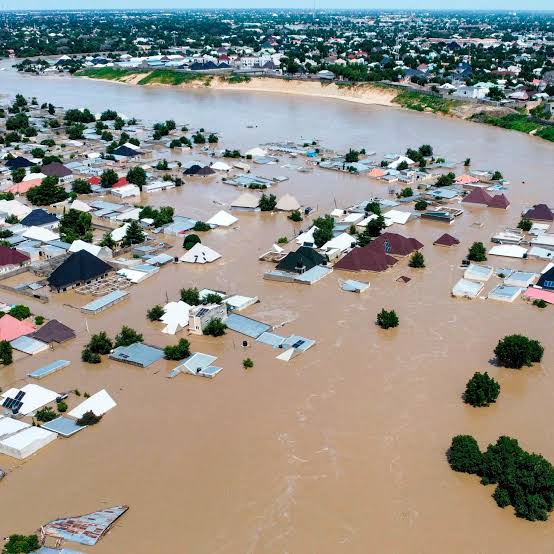
The rainy season enters its peak period within end of August and September, the Nigrrian Government has warned that 915 communities across 19 states and the Federal Capital Territory are at critical risk of flooding between August 27 and September 9, 2026, urging residents in the affected areas to take immediate precautionary measures and prepare for possible evacuation.
The National Flood Early Warning Systems Centre classified 915 communities across the affected areas as being at critical flood risk, requiring immediate watch, preparedness and protective action.
Another 429 communities in seven states were classified as high risk, while 656 communities across 13 states were placed on moderate-risk watch.
The critical-risk states are Kogi, Benue, Rivers, Edo, Delta, Cross River, Bayelsa, Akwa Ibom, Abia, Anambra, Ebonyi, Enugu, Imo, Ekiti, Lagos, Ogun, Ondo, Osun and Oyo.
Major cities and communities listed include Lokoja, Makurdi, Port Harcourt, Benin City, Asaba, Calabar, Yenagoa, Uyo, Aba, Onitsha, Enugu, Owerri, Lagos, Abeokuta, Akure, Osogbo and Ibadan.
The federal government attributed the projected flood risk to a combination of high soil moisture, rainfall, rapid surface runoff, drainage surcharge and rising river levels.
In the advisory signed by the Director, Erosion, Flood and Coastal Zone Management Department, Usman Abdullahi Bokani, the government urged residents in critical-risk areas to maintain immediate flood watch and verify evacuation routes.
It also advised residents to protect vulnerable households and essential property, and to avoid settlement, parking, trading, or storage activities within floodplains, wetlands, riverbanks, and low-lying drainage corridors.
The government directed state emergency management agencies, environmental officers and community flood focal persons to intensify surveillance around rivers, streams, culverts, bridges, drains, estuaries, reservoirs and erosion-prone corridors.
Communities classified as high risk in Benue, Kogi, Kwara, Niger, Adamawa, Taraba and Kebbi states were advised to intensify drainage clearance and monitor culverts and watercourses.

The Federal Airports Authority of Nigeria has lifted its restriction on Bolt operations at airports.
The reversal followed a directive from the Minister of Aviation and Aerospace Development, Festus Keyamo, who intervened after passengers and social media users raised concerns about the disruption.
In a post on his X handle, Keyamo said, “Following my directive to FAAN to urgently address the issue of exorbitant taxi fare increases at our airports, the issue has been resolved as follows.”
FAAN announced the decision in a statement signed by its Director of Public Affairs and Consumer Protection, Henry Agbebire, and made available to our correspondent on Thursday.
According to the statement, the resolution followed constructive engagements between FAAN and Bolt, resulting in an agreeable operational framework for the e-hailing company to operate at FAAN-managed airports.
“The Authority is therefore pleased to announce that, following constructive engagements, FAAN and Bolt have reached an agreeable operational framework and Bolt is cleared to commence its services at FAAN-managed airports immediately.”
The development came after concerns over the management of commercial and e-hailing vehicles at airports, with FAAN noting that it had been working for nearly a decade to address challenges associated with the operations of such vehicles.
The Authority said the challenges included passenger solicitation and touting, unregulated operations, random pick-ups, as well as safety, security and accountability concerns.
“
-

 News1 year ago
Senate to speed up conclusion of Nigeria Forest Security Service Bill
-

 News1 year ago
The Many Lies Against Bashir Haske
-

 News3 years ago
Breaking: Tinubu’s authentic ministerial nominees
-

 News3 years ago
“Anytime we want to kill terrorists, President would ask us to take permission from France but they were killing our soldiers-” Niger Republic coup leader
-

 News3 years ago
“I’m leaving the Catholic church because Bishop Onah is oppressing me,” says Okunerere
-

 News3 years ago
Radio Nigeria’s veteran broadcaster Kelvin Ugwu dies three months after retirement from service
-

 News3 years ago
My nude photo leak was a mistake- lawyer Ifunanya
-
 News3 years ago
Dokpesi and the Gazebo Mystique