News
NHRC declares support for state police, says human rights must be top priority


The National Human Rights Commission (NHRC), has thrown its support for the establishment of state police, adding however that it must be operated in line with the rule of law and in compliance with strong human rights principles..
The Executive Secretary of the Commission, Chief Anthony Ojukwu, OFR, SAN, who stated this on Tuesday, also stressing that decentralising policing is necessary to improve security, shorten response time and strengthen the protection of citizens’ rights.
Chief Ojukwu made the call in Portharcourt while speaking during a panel session at the 66th Annual General Conference of the Nigerian Bar Association (NBA), themed “Beyond Limits.”
He identified the slow response to security threats as one of the major weaknesses of Nigeria’s current centralised policing system, warning that citizens cannot continue to live in fear while waiting for security interventions.
“If you don’t have State Police, you can never have adequate security. We have over 200 million people in Nigeria with far less number of policemen to police them. The response time is so long that we only live by God’s grace,” he said.
According to the NHRC Executive Secretary, State Police would enable law enforcement agencies to respond more quickly to security threats because officers operating at the state and local levels would have greater knowledge of the terrain, communities and local security challenges.
“With State Police, the governors will have the wherewithal to respond quickly. The police will be more effective because they know the terrain; they know the people,” he stated.
While advocating decentralisation, Chief Ojukwu stressed that State Police must be built on strong human rights safeguards, accountability and independent oversight.
He warned against creating a policing structure that could be abused for political repression, unlawful arrests, torture, intimidation or other violations of citizens’ fundamental rights.
“We must insist that when the National Policing Bill comes, it must be well drafted. There must be a board that runs it. There must be oversight. Otherwise, it will become another problem,” he cautioned.
According to Hajia Fatimah Agwai Mohammed, Director, Corporate Affairs and External Linkages, at the Commission, Ojukwu emphasised that effective policing is not measured only by the ability to apprehend suspects, but also by the extent to which law enforcement agencies respect human dignity, due process, the rule of law and fundamental rights.
Chief Ojukwu therefore called on lawyers and citizens to remain vigilant and demand accountability from security agencies.
“Lawyers should be the people to insist on the right thing to do. If the police is going to arrest anybody, insist on the right procedure. Don’t let them abuse power. We have to watch them,” he said.
The NHRC Executive Secretary stressed that security and human rights are not competing objectives. Rather, he said, sustainable security can only be achieved when policing is anchored on legality, professionalism, accountability and respect for human rights.
He noted that persistent insecurity and delayed security responses have weakened public confidence in institutions and left many Nigerians feeling that their safety depends more on chance than on an effective system.
“Our people live by God’s grace because the system is not working. That must change.”
Chief Ojukwu concluded that Nigeria must move beyond a policing system that is overstretched and insufficiently responsive to local security realities.
“We cannot continue with a system where only a few police officers are expected to secure millions. It is time to go beyond limits and give Nigerians the security they deserve; securely, effectively and accountably.”

Oyo Nyimba Babamba Oguru Kulidi IV, a traditional Ugandan ruler named as the world’s youngest monarch has died aged 34, his prime minster announced.
He became king of Tooro in western Uganda at just three years old in 1995 after the death of his father.
The Tooro kingdom did not disclose the cause of King Oyo’s death, but a Ugandan government minister was quoted in local media saying that he had been critically ill and was seeking treatment in the US.
Though Uganda is governed by an elected president and parliament, it has several traditional kingdoms which continue to have significant cultural influence despite not having political power.
Oyo, who Guinness World Records listed as the world’s youngest reigning monarch, ruled over more than two million people. He was the 13th monarch of a kingdom that was founded in the early 19th Century.
Announcing his death, Tooro’s Prime Minister Calvin Armstrong Rwomiire Akiiki called his passing on Thursday an “immeasurable loss” to the royal family and the people of Tooro.
“I call upon all the people of Tooro to remain united, calm and prayerful during this profoundly difficult time,” Akiiki said on Friday. “May His Majesty the King rest in eternal peace.”
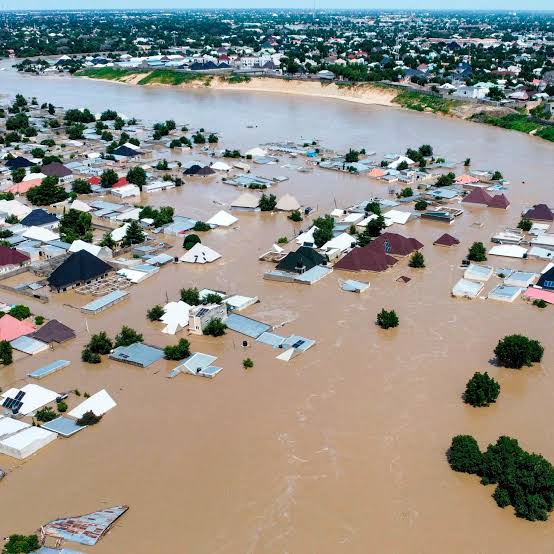
The rainy season enters its peak period within end of August and September, the Nigrrian Government has warned that 915 communities across 19 states and the Federal Capital Territory are at critical risk of flooding between August 27 and September 9, 2026, urging residents in the affected areas to take immediate precautionary measures and prepare for possible evacuation.
The National Flood Early Warning Systems Centre classified 915 communities across the affected areas as being at critical flood risk, requiring immediate watch, preparedness and protective action.
Another 429 communities in seven states were classified as high risk, while 656 communities across 13 states were placed on moderate-risk watch.
The critical-risk states are Kogi, Benue, Rivers, Edo, Delta, Cross River, Bayelsa, Akwa Ibom, Abia, Anambra, Ebonyi, Enugu, Imo, Ekiti, Lagos, Ogun, Ondo, Osun and Oyo.
Major cities and communities listed include Lokoja, Makurdi, Port Harcourt, Benin City, Asaba, Calabar, Yenagoa, Uyo, Aba, Onitsha, Enugu, Owerri, Lagos, Abeokuta, Akure, Osogbo and Ibadan.
The federal government attributed the projected flood risk to a combination of high soil moisture, rainfall, rapid surface runoff, drainage surcharge and rising river levels.
In the advisory signed by the Director, Erosion, Flood and Coastal Zone Management Department, Usman Abdullahi Bokani, the government urged residents in critical-risk areas to maintain immediate flood watch and verify evacuation routes.
It also advised residents to protect vulnerable households and essential property, and to avoid settlement, parking, trading, or storage activities within floodplains, wetlands, riverbanks, and low-lying drainage corridors.
The government directed state emergency management agencies, environmental officers and community flood focal persons to intensify surveillance around rivers, streams, culverts, bridges, drains, estuaries, reservoirs and erosion-prone corridors.
Communities classified as high risk in Benue, Kogi, Kwara, Niger, Adamawa, Taraba and Kebbi states were advised to intensify drainage clearance and monitor culverts and watercourses.

The Federal Airports Authority of Nigeria has lifted its restriction on Bolt operations at airports.
The reversal followed a directive from the Minister of Aviation and Aerospace Development, Festus Keyamo, who intervened after passengers and social media users raised concerns about the disruption.
In a post on his X handle, Keyamo said, “Following my directive to FAAN to urgently address the issue of exorbitant taxi fare increases at our airports, the issue has been resolved as follows.”
FAAN announced the decision in a statement signed by its Director of Public Affairs and Consumer Protection, Henry Agbebire, and made available to our correspondent on Thursday.
According to the statement, the resolution followed constructive engagements between FAAN and Bolt, resulting in an agreeable operational framework for the e-hailing company to operate at FAAN-managed airports.
“The Authority is therefore pleased to announce that, following constructive engagements, FAAN and Bolt have reached an agreeable operational framework and Bolt is cleared to commence its services at FAAN-managed airports immediately.”
The development came after concerns over the management of commercial and e-hailing vehicles at airports, with FAAN noting that it had been working for nearly a decade to address challenges associated with the operations of such vehicles.
The Authority said the challenges included passenger solicitation and touting, unregulated operations, random pick-ups, as well as safety, security and accountability concerns.
“
-

 News1 year ago
Senate to speed up conclusion of Nigeria Forest Security Service Bill
-

 News1 year ago
The Many Lies Against Bashir Haske
-

 News3 years ago
Breaking: Tinubu’s authentic ministerial nominees
-

 News3 years ago
“Anytime we want to kill terrorists, President would ask us to take permission from France but they were killing our soldiers-” Niger Republic coup leader
-

 News3 years ago
“I’m leaving the Catholic church because Bishop Onah is oppressing me,” says Okunerere
-

 News3 years ago
Radio Nigeria’s veteran broadcaster Kelvin Ugwu dies three months after retirement from service
-

 News3 years ago
My nude photo leak was a mistake- lawyer Ifunanya
-
 News3 years ago
Dokpesi and the Gazebo Mystique