
News
Out of 120, 54 passed DNA test as Abiola’s children – Olalekan

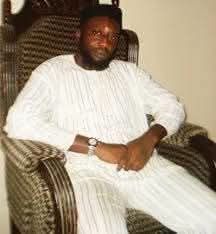
Olalekan, one of the children of late Chief Moshood Kashimawo (MKO) Abiola, said the presumed winner of June 12 1993 presidential election, had 54 genuine children out of 129 people that claimed he was their father after his demise..
Olalekan said Abiola was a great and generous man while alive and women took advantage of the is kind heart to force themselves on him.
He said 66 children who claimed to be Abiola’s children failed DNA test, adding that it was the confusion created by the several women around him that made the late business mogul and politician include a clause in his will that demanded all his children must undergo DNA test.
He said- “My father never drank alcohol, he didn’t go partying. The only thing you could say about my father that was kind of negative was that he had a lot of women but a lot of these women’s were those that came to him to give themselves willingly.
” They usually begged him for shelter, school fees and even food. They line up in front of the house every month to collect their allowance. They then began to call themselves Mrs Abiola. They would change their children ‘s name to Abiola and that was why my father wrote in his will that DNA test had to be done for all those who claimed to be his children.
“About 120 children came forward to say they were MKO ‘s children but only 54 of them passed the DNA test at the end of the day .66 failed DNA test.”
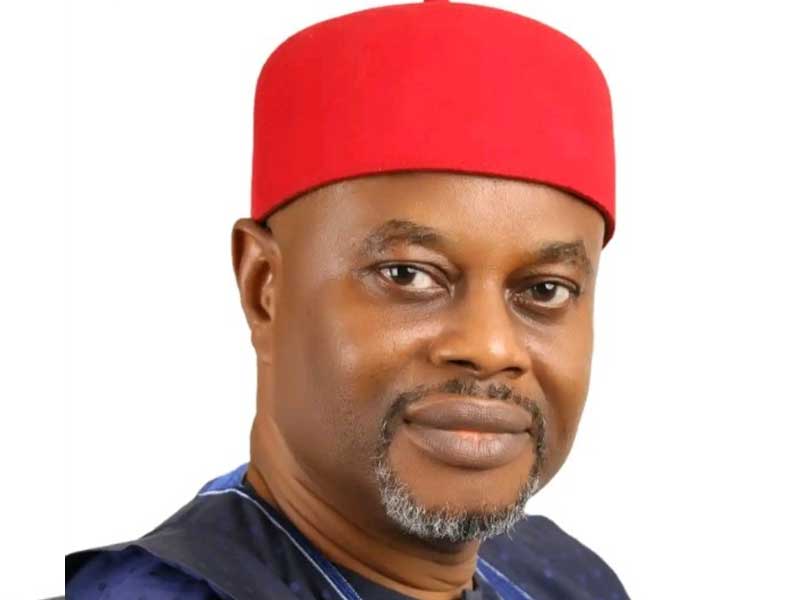
The immediate past Minister of Science and Technology, Uche Nnaji, was arrested on Wednesday at the Nnamdi Azikiwe International Airport, Abuja, on arrival from Enugu via a chartered flight.
Authoritative sources at the airport confirmed the arrest, saying Mr Nnaji would be handed over to the Independent Corrupt Practices and Other Related Offences Commission (ICPC) for interrogation.
The reported arrest comes weeks after the Federal High Court reportedly granted the ICPC permission to arrest and investigate Nnaji over the allegations.
The court also authorised the anti-graft agency to declare him wanted through newspapers, social media platforms and other media channels after the commission alleged that he repeatedly failed to honour invitations for questioning.
According to the ICPC, its application to the court followed Nnaji’s alleged refusal to appear before investigators despite several invitations relating to the forgery allegations.
The case stems from a two-year investigation which alleged that Nnaji submitted forged University of Nigeria degree and National Youth Service Corps certificates during his ministerial screening and confirmation process in 2023.
The report alleged that the documents were presented to President Bola Ahmed Tinubu, the Nigerian Senate, the Office of the Secretary to the Government of the Federation and the State Security Service.
Nnaji later acknowledged that the University of Nigeria did not issue him the degree certificate in question.
The former minister had previously denied the existence of the court order authorising his arrest, dismissing the publication as a “media trial.”
However, on June 18, he reportedly filed an appeal before the Court of Appeal, seeking to overturn the arrest order.
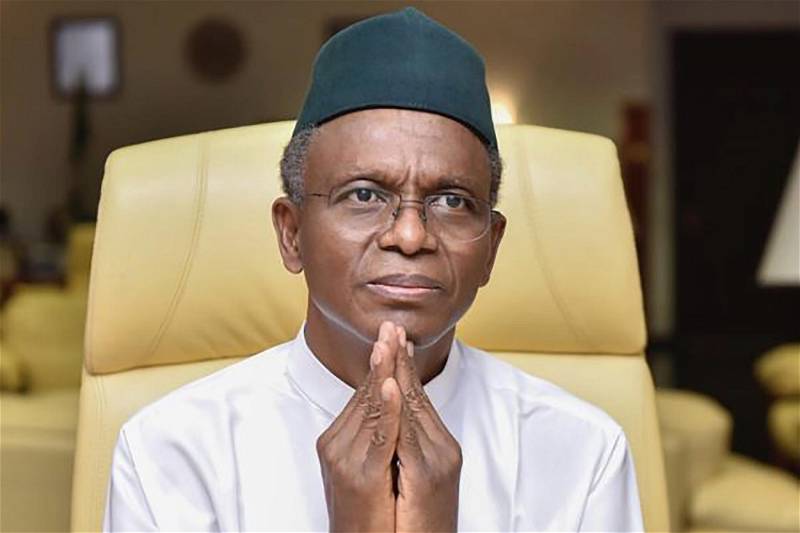
The Kaduna State High Court on Monday declined the bail application filed by former Kaduna State Governor, Nasir El-Rufai, who is standing trial on a nine-count charge bordering on alleged abuse of office. The court however granted him access to medical attention.
Ruling on the application, the trial judge, Justice Diruis Khobo, held that the application lacked merit, saying the defendant failed to place sufficient and convincing materials before the court to justify the grant of bail.
The judge noted that the applicant did not present reliable evidence or credible documents capable of persuading the court to exercise its discretion in his favour.
The proceedings were conducted in the absence of the defendant, who remained in the custody of the Independent Corrupt Practices and Other Related Offences Commission.
Despite refusing the bail request, Justice Khobo directed the ICPC to grant El-Rufai unhindered access to his medical team or any medical facility of his choice within Nigeria to enable him to receive appropriate medical attention.
The court further ordered that the former governor remain in the custody of the anti-graft agency pending the determination of the case.
…as 20m children drop out of school after primary
The Federal Government, Tuesday, directed the overhaul of Nigeria’s education structure.
Minister of Education, Dr. Maruf Tunji Alausa, announced this during the inauguration of the Universal Basic Education Commission (UBEC) Ministerial Implementation and Monitoring Committee in Abuja.
Nigeria operates a formal education framework generally referred to as the 6-3-3-4 system, which consists of 6 years of primary education, 3 years of junior secondary, 3 years of senior secondary, and a minimum of 4 years of tertiary education.
The system is broken down into three major tiers: Basic Education, Post-Basic/Senior Secondary, and Tertiary Education.
Dr. Alausa however, stated that the arrangement separating Junior Secondary Schools (JSS), from Senior Secondary Schools (SSS) had failed and contributed to the alarming number of out-of-school children.
He said findings by the government showed that while Nigeria has about 80,000 public primary schools, there are only about 15,000 junior secondary schools, creating a huge transition gap that has left millions of children stranded after completing primary education.
According to him, the policy requiring JSS and SSS to operate as separate institutions has worsened access to education by overcrowding junior secondary schools while leaving many senior secondary schools underutilised.
He said successive governments had failed to adequately address the problem but assured that the Tinubu administration was determined to reverse the trend by expanding access to basic education.
The minister cited evidence from Kaduna and several northern states showing that the disarticulation policy created unnecessary administrative structures at the expense of students.
“About 24million children enrol in our primary schools, but only about 4million of them complete senior secondary. We have over 20 million children dropping out between primary school and junior secondary school. Where are those students?
“The previous governments may have failed in this regard, but this government will not fail. We are fixing this. We need to create more opportunities for children to move seamlessly through the education system.
“We have overflowing junior secondary schools and empty senior secondary schools. I can objectively report today that this disarticulation policy has failed. We will phase it out. We cannot continue creating administrative positions while damaging our education system. It is about doing what is best for every Nigerian child,” he said.
Alausa disclosed that the proposal to abolish the policy would be presented at the next meeting of the National Council on Education for formal consideration.
He also inaugurated a high-powered committee chaired by renowned education expert, Prof. Rashid Aderinoye, to fast-track the completion, handover and operationalisation of hundreds of Smart Schools, Bilingual Schools and Alternative Schools funded by UBEC across the country.
The minister lamented that despite huge public investments, many of the schools remained abandoned, while several completed projects had yet to be handed over to state governments or opened for academic activities.
He described the situation as a waste of scarce public resources and a denial of learning opportunities to thousands of Nigerian children.
“The purpose of these schools is to educate children, not to remain locked up after completion,” he said, charging the committee to eliminate implementation bottlenecks and ensure the facilities begin serving their intended purpose.
Speaking earlier, UBEC Executive Secretary, Aisha Garba, said the Federal Government had recorded significant progress in expanding access to quality basic education through the Smart Schools, Bilingual Schools and Alternative Schools programmes.
She disclosed that 37 Smart Schools had been established nationwide, with 24 already in operation, while the remaining schools were at various stages of completion, furnishing and readiness for academic activities.
Garba added that under the UBEC-Islamic Development Bank Bilingual Education Programme, 30 schools had been established across nine states, with three boarding schools already commissioned and four others substantially completed and awaiting inauguration.
She also noted that the Alternative Schools Programme was expanding access to education for vulnerable and out-of-school children through flexible and inclusive learning models.
According to her, the newly inaugurated implementation committee will oversee project execution, ensure the timely completion and handover of schools, resolve implementation challenges and guarantee that government investments translate into fully functional learning centres.
-

 News1 year ago
Senate to speed up conclusion of Nigeria Forest Security Service Bill
-
 News11 months ago
The Many Lies Against Bashir Haske
-

 News3 years ago
Breaking: Tinubu’s authentic ministerial nominees
-
 News3 years ago
“Anytime we want to kill terrorists, President would ask us to take permission from France but they were killing our soldiers-” Niger Republic coup leader
-
 News3 years ago
“I’m leaving the Catholic church because Bishop Onah is oppressing me,” says Okunerere
-

 News3 years ago
Radio Nigeria’s veteran broadcaster Kelvin Ugwu dies three months after retirement from service
-
 News3 years ago
Dokpesi and the Gazebo Mystique
-

 News3 years ago
Tsunami: Tinubu orders dissolution of managements, boards of MDAs, to sack all Buhari’s political appointees