
News
Another set of 40 ‘repentant’ terrorists set to be integrated into Nigerian Army

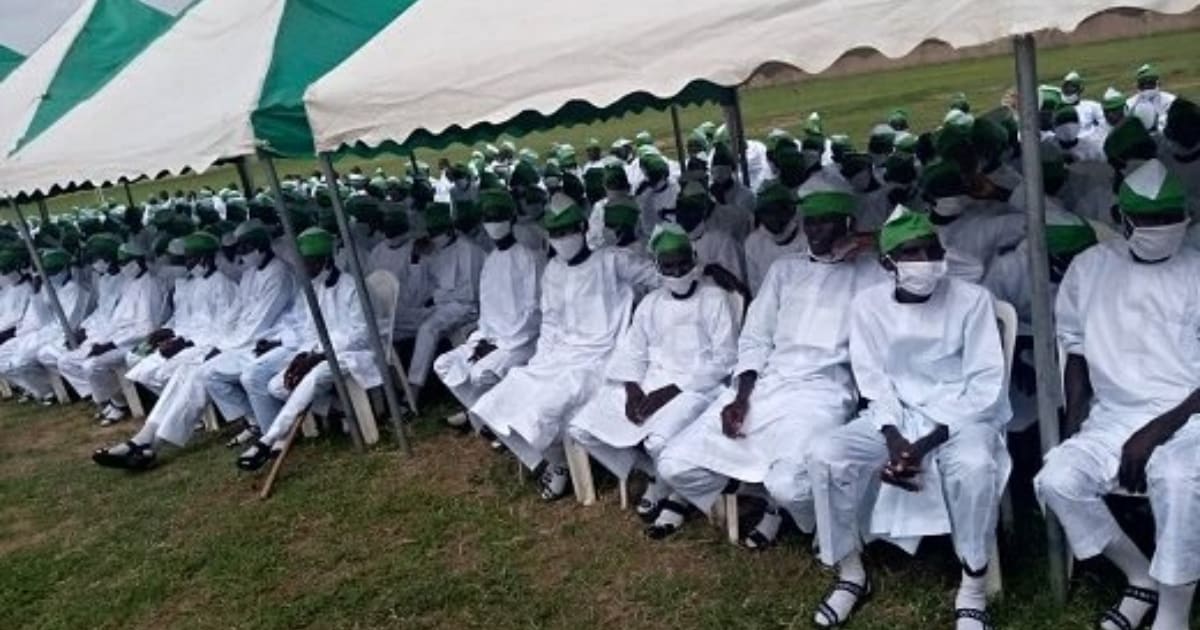
Despite public outcry and condemnation, Nigerian authorities have concluded plans to integrate another set of terrorists, tagged ‘repentant’ into the nation’s military.
The latest group consist of at least 40 “repentant” Boko Haram insurgents who have been shortlisted for the Nigerian Army’s 91st Regular Recruits Intake (RRI 91).
According to SaharaReporters which quoted multiple sources, the shortlisted candidates were said to be part of the 3,740 repentant members of Boko Haram reintegrated into society by the Borno State government.
The Nigerian Army’s 2026 recruitment for the 91st Regular Recruits Intake (RRI) is actively underway.
The screening exercise, which commenced on June 9, 2026 is being conducted in accordance with established military standards. Both the application and screening processes for the main intakes took place in the first half of the year.
A military source told SaharaReporters that 40 ex-Boko Haram fighters sponsored by the Borno State government underwent medical examinations on Wednesday at the Nigerian Army 7 Division Military Hospital, Maimalari Cantonment, in Maiduguri as part of the screening process to join the Army.
“I can categorically confirm to you that the Borno State government brought forty repentant Boko Haram fighters who were shortlisted by the Army for their medical examinations during the week. Though some of them were rejected as not medically fit, most of them were screened to the next stage. It happened here at the 7 Division medical centre,” a serving Army Major told SaharaReporters.
“It seems the repentant Boko Haram fighters are so special to the Borno State government. We are still surprised how they were shortlisted, because to join the Army, you need to provide documents such as a birth certificate or age declaration, educational certificates, a certificate of state of origin, and a recommendation letter or attestation from government officials, but these guys have none of this.”
“You can’t recruit people who haven’t finished secondary school simply because you want to compensate them. We hope the Borno State government hasn’t provided them with fake certificates to force them in as soldiers.”
Another officer, a Lieutenant, wondered how they were shortlisted in the first instance by the Nigerian Army.
“Yes, they all came for medicals this week, and this raises concern about the shortlisting process. It simply means convicted criminals can join the Army easily. They were all brought in by a bus provided by the Borno Government.”
Boko Haram and its offshoot, Islamic State West Africa Province, have killed thousands and displaced millions in northeastern Nigeria.
The terrorists also attack critical infrastructure, and the insurgency has spread to other parts of the country, including Adamawa, Yobe, Abuja, and Kano.
The Nigerian military has repeatedly claimed that the insurgency has been largely defeated and frequently downplays any losses.
In recent months, soldiers have been targeted by insurgents.
More than 1,000 soldiers and officers have reportedly been killed since January 2021.
Earlier, SaharaReporters reported how some soldiers battling Boko Haram insurgents in the North-East accused the Borno State government of issuing a fresh directive compelling them to work alongside ‘repentant’ terrorists who were recently reintegrated into society under the state’s controversial deradicalisation programme.
The development, according to serving military personnel who spoke to SaharaReporters, triggered unease within frontline formations, with many soldiers expressing fears that the arrangement could expose military operations to renewed sabotage and intelligence leaks.
Sources told SaharaReporters that some of the former Boko Haram fighters who publicly pledged loyalty to the Nigerian state during recent reintegration exercises have now been mobilised and attached to local security groups that support military operations against insurgents across parts of Borno State.
The soldiers alleged that the move was part of efforts by the state government to justify its rehabilitation and reintegration programme, which has come under criticism from members of the public, including victims of insurgency and some security personnel.
According to the sources, military authorities and troops on the ground remain sceptical about the sincerity of several former insurgents despite undergoing rehabilitation programmes.
“The government wants to prove that the reintegration programme is working, so some of these ‘repentant’ Boko Haram members are being attached to security groups that work with troops in operations,” one soldier told SaharaReporters.
“But many of us are uncomfortable with the arrangement because there have been cases in the past where information leaked and operations were compromised. Trust is a major issue.”
Another source said soldiers have deliberately kept some of the former insurgents at separate locations within military facilities because of fears that they could still maintain links with active terrorist cells operating in the region.
“We don’t trust them completely. There have been too many incidents in the past. That is why they are often given separate accommodation. Yet now there is pressure for us to work closely with them during our missions,” the source said.
“You can see how these Boko Haram fighters have been killing our commanders. That should tell you there is a leak in information about their movements. Yet the government is asking us to trust these people and work with them. It won’t work,” the source said.
The soldiers argued that instead of compelling troops to collaborate with former Boko Haram fighters, the Nigerian government should focus on providing better equipment, intelligence support, and welfare packages for personnel risking their lives in the fight against terrorism.
According to them, the latest directive has generated anxiety among troops who fear that operational details could once again find their way to insurgent groups still active in parts of Borno and neighbouring states.
The concerns come barely two weeks after the Borno State government reintegrated 720 ‘repentant’ insurgents, alongside 992 spouses and 2,050 children, into various communities under its “Borno Model” deradicalisation and rehabilitation programme.
The beneficiaries were among former insurgents who surrendered to security forces and subsequently underwent rehabilitation at the Hajj Camp in Maiduguri before being formally returned to society.
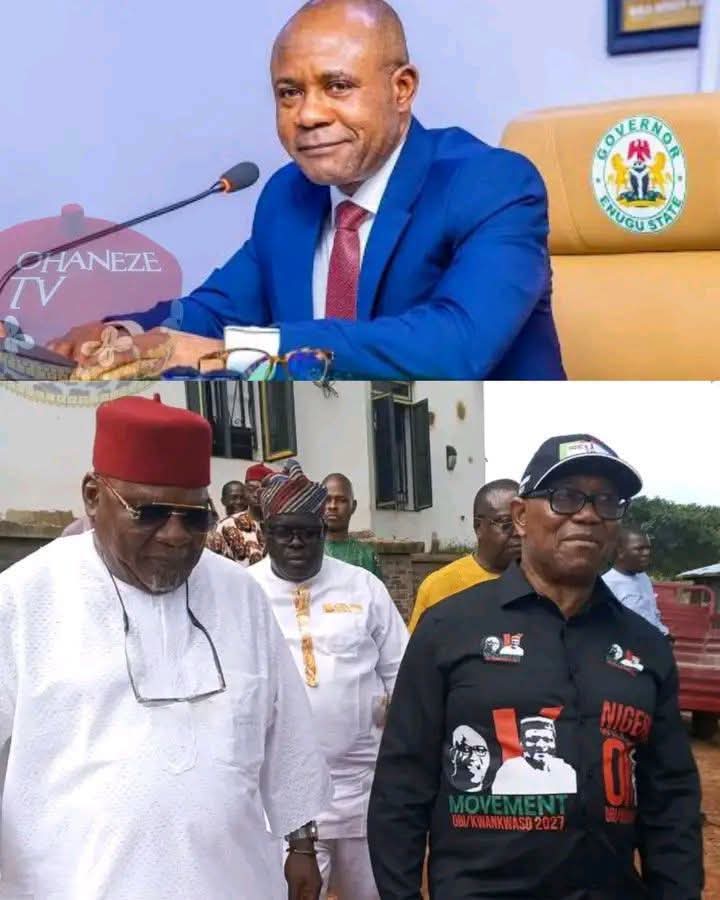
The Enugu State Government has suspended His Royal Majesty, Igwe Eze William Ezugwu, the traditional ruler of Ibagwa Ogbozalla Opi Autonomous Community, in Nsukka Local Government Area of Enugu state.
The state government accused Igwe Ezugwu of violating provisions of the state’s Traditional Rulers Law.
In a letter of suspension dated September 24, the Enugu State Government cited his alleged failure to constitute his cabinet, failure to establish a Town Union governing body, and persistent conduct deemed inconsistent with the laws governing traditional rulers in the state.
The suspension comes barely three weeks after Igwe William Ezugwu received NDC presidential candidate Peter Obi at his palace in Opi, Nsukka LGA, where he reportedly blessed Obi’s presidential ambition.
The Deputy Commander of Operation Rainbow, CSP (Chief Superintendent of Police) Dennis David Babale, has been killed after gunmen suspected to be Fulani Bandits ambushed personnel of the security outfit along the Bokkos-Barkin Ladi road in Barkin Ladi Local Government Area of Plateau State.
Operation Rainbow is a State-backed community security and intelligence-gathering outfit in Plateau State, Nigeria, originally established in 2010 under former Governor Jonah Jang and recently revamped by Governor Caleb Mutfwang to combat rural violence and beef up grassroots security.
The incident reportedly occurred at about 4:06 p.m. on Tuesday, September 22, 2026 when the personnel, travelling in a Toyota Hilux vehicle, came under attack by unidentified gunmen.
Troops of Sector 4, Operation ENDURING PEACE (OPEP), responded to a distress report and moved to the location of the attack.
Sources told reporters that Babale sustained gunshot wounds during the ambush and was evacuated to the General Hospital, Barkin Ladi, for medical attention.
Following the attack, troops, working alongside personnel of other security agencies, launched offensive operations and a manhunt for the assailants within the general area.
Security forces have intensified efforts to track the attackers and prevent further attacks along the route.

Director General/CEO of the Nigerian Meteorological Agency (NiMet) and Nigeria’s Permanent Representative at the World Meteorological Organization, Prof. Charles Anosike and other Chief Executive Officers of similar agencies across the world, have concluded a one week high level dialogue on Climate Science Information for Climate Finance and the 53rd Senior Official Field Exchange (SOFE) in Beijing, China.
The event which was hosted by World Meteorological Organization (WMO), took place from September 14 to 18, 2026 and featured discussions on: strengthening the role and leadership development of National Meteorological and Hydrological Services (NMHSs) in mobilizing climate finance; aligning scientific and technical capabilities with risk-informed, people-centred early warning systems; shifting from technical assistance to sustainable investments by expanding practical cooperation between meteorological frameworks and multilateral financing entities; and support to NMHSs leadership on strengthening strategic thinking and fostering productive partnerships.
Held back-to-back with the High-level dialogue was the 53rd Senior Official Field Exchange to Fujian Province for first-hand exposure to the implementation of Multi-hazard, Alert, Zero-gap and Universal (MAZU) platform – China’s AI-driven meteorological early warning solution in support of the Early Warnings for All (EW4All) initiative and disaster risk reduction practices through technical exchanges, field visits and peer learning.
-

 News2 years ago
Senate to speed up conclusion of Nigeria Forest Security Service Bill
-

 News1 year ago
The Many Lies Against Bashir Haske
-

 News3 years ago
Breaking: Tinubu’s authentic ministerial nominees
-
 News3 years ago
“Anytime we want to kill terrorists, President would ask us to take permission from France but they were killing our soldiers-” Niger Republic coup leader
-

 News3 years ago
“I’m leaving the Catholic church because Bishop Onah is oppressing me,” says Okunerere
-

 News3 years ago
My nude photo leak was a mistake- lawyer Ifunanya
-
 News4 months ago
See your state governor’s performance ranking
-

 News3 years ago
Radio Nigeria’s veteran broadcaster Kelvin Ugwu dies three months after retirement from service