News
When NSITF Took SWIP to Enugu

By Nwachukwu Godson
The Nigeria Social Insurance Trust Fund (NSITF) is delivering visible and distinct progress across the nation’s world of work. This transformation is not episodic but linear, marked by measurable and sustained improvement. An era of institutional awakening aptly describes current developments within the nation’s apex social security agency.
A clear example is the revival of the Safe Workplace Intervention Project (SWIP)-a flagship social intervention initiative that had been abandoned for nearly a decade. SWIP is a programme designed to promote and reward excellence in occupational safety culture across workplaces. It is jointly run by the NSITF and the Nigeria Employers’ Consultative Association (NECA), with the Occupational Safety and Health Department of the Federal Ministry of Labour and Employment as the technical audit partner.
Last held in 2018, the programme had largely faded from public consciousness. But the tide has turned. SWIP has returned with the kick-off of the delayed 2025 edition, in Lagos on January 20, 2026 for the South West zone; continuing in Enugu on January 22 for the South East/South South zone; and concluding in Abuja on January 27, 2026 for the Northern zone. This essay focuses on the Enugu edition for specific and compelling reasons.
SWIP is conceived as a fulcrum for the continuous growth of occupational safety and health (OSH), with expanded social protection driving increased participation in the Employees’ Compensation Scheme (ECS). It serves as a lever that pivots the ECS from a reactive compensation framework to a proactive prevention model, recognising that accident prevention is the first and most critical step in employee compensation. In essence, the scheme prioritises safety first, and compensation only when the inevitable occurs.
The programme provides a structured interface between employers, employees, and regulators, rewarding outstanding safety consciousness through rigorous workplace audits. It measures occupational safety performance, identifies infrastructural gaps, and advocates upgrades in safety infrastructure. In doing so, SWIP foregrounds OSH standards and ECS compliance within the broader social security ecosystem, while instilling a strong culture of accident prevention in workplaces.
In Enugu, the event held at the Amadeo Event Centre in the heart of the Coal City. The gathering evoked palpable nostalgia, as employers and employees converged from across the old Eastern Region on their former regional capital. Attendance included the Enugu State Governor, Peter Mbah, represented by the Commissioner for Trade and Investment, Samuel Ogbu-Nwobodo; the Honourable Minister of State for Labour and Employment, Nkiruka Onyejiocha; the Managing Director of NSITF, Oluwaseun Faleye; the Chairman of NECA, Ifeanyi Okoye; NECA Director-General, Adewale Smart-Oyerinde; NSITF Executive Directors Mojisola Alli-Maculay (Operations) and Sama’ila Abdu (Administration); the representative of the Nigeria Labour Congress (NLC); captains of industry; and workers.
In his address, the Governor reaffirmed Enugu State’s commitment to creating a safe and investor-friendly environment, noting significant improvements in the ease of doing business. The Minister of State for Labour and Employment emphasised the Ministry would continue to enforce occupational safety standards to protect workers and enhance national productivity.
The Managing Director of NSITF, Oluwaseun Faleye, stated that the future of work would be defined by how well the nation protects its workforce. He stressed that every worker matters and that no job is worth a life, describing these principles as central to the Employees Compensation Scheme. He further described SWIP as a strategic platform for raising awareness on ECS compliance while placing occupational safety and health at the forefront of national discourse.
NECA Chairman, Ifeanyi Okoye, who noted that he is the first South-Easterner to lead the association and the first NECA chairman outside Lagos, described the occasion as historic. He said the programme enhances employers’ understanding of their legal obligations regarding occupational safety and health. Echoing this view, NECA Director-General, Adewale Smart-Oyerinde, described workers’ safety and welfare as the most profitable investment any employer can make.
The session drew significant applause when the representative of the Nigeria Labour Congress, an associate professor, called for wages and incomes to rise proportionately with inflation. “As the prices of goods and services surge, we want the same inflation on our income and wages,” she declared, to loud approval from workers in attendance.
In her presentation, the Executive Director, Operations, Mojisolaoluwa Macaulay, revealed that the Fund has registered over 197,938 companies, covering more than seven million employees. She noted that in 2025 alone, occupational safety awareness programmes were conducted in 2,763 companies, while 814 workplace accidents, including 23 fatalities, were investigated. She added that over ₦1 billion was paid in compensatory benefits during the year, including more than ₦400 million paid to 39 Nigeria Customs Service personnel. She concluded that when prevention is prioritised, compensation becomes a safety net rather than a system under strain.
The 2025 SWIP exercise involved audits of 250 selected workplaces nationwide, conducted by trained teams from the Ministry of Labour to ensure integrity and transparency. Continuous feedback was provided to the Project Planning and Coordination Committee throughout the process. Winners emerged based on seven thematic audit areas, including outstanding workplace safety, safety innovation, leadership excellence in OSH, emergency preparedness, sustainability and emergency management, zero-accident achievement, community impact and corporate social responsibility, as well as overall zonal performance. All audited workplaces received certificates, while winners were rewarded with items such as ambulances, wearable digital exposure monitoring devices, fire extinguishers, safety signages and posters, reflective jackets, and industrial safety helmets.
While the exercise was widely applauded, it also raised important questions about occupational safety culture in the South East. All 24 prizes, from first to third positions, were won by companies in Enugu and Abia States, leaving workplaces in Anambra, Imo, and Ebonyi States without any awards. Notably, no company from the industrial clusters of Onitsha and Nnewi featured among the winners-raising a timely alarm on the need to strengthen workplace safety consciousness across the zone.
Nwachukwu Godson is the General Manager, Estate and Maintenance, Nigeria Social Insurance Trust Fund (NSITF).

Health professionals have warned that regular consumption of shawarma containing high amounts of salt, sugar, fat, seasoning and processed meat may contribute to hypertension, obesity, diabetes and kidney disease.
Excessive salt can raise blood pressure and put additional strain on the kidneys, while high-calorie sauces may contribute to weight gain.
Nutrition experts advised Nigerians to eat shawarma in moderation, use less mayonnaise and other sauces, choose lean grilled meat and add more vegetables. Consumers were also urged to check vendors’ cleanliness and avoid food prepared where ingredients are exposed to flies, dust or poor handling.
A recent report by experts also warned that frequent consumption of Shawarma may increase the risk of other food-borne infections and long-term health problems.
The report contains documented cases of people who suffered vomiting, diarrhoea, stomach pain and weakness after eating shawarma, with some requiring hospital treatment.
According to the report, poor hygiene could allow bacteria and other contaminants into shawarma, causing illnesses including cholera, dysentery, typhoid and salmonellosis.
It also raised concerns about mayonnaise and creamy sauces kept without proper refrigeration and warned that poor storage could encourage bacterial growth and increase the risk of food poisoning.
A study cited in the report found bacterial contamination in ready-to-eat shawarma sold on the streets
Experts also raised concerns about processed meat such as sausage, noting that the International Agency for Research on Cancer classifies processed meat as carcinogenic to humans.
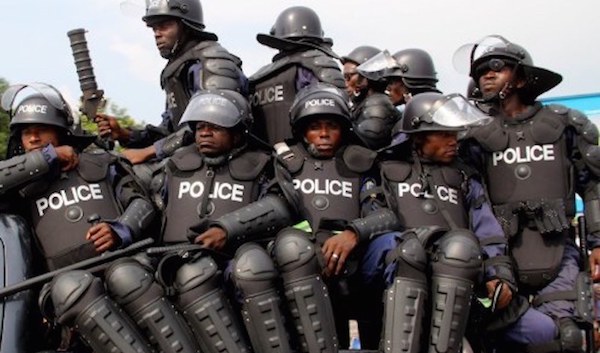
The mystery surrounding the death of a man whose body was found by the roadside in Abuja has taken a new turn, with police tracing the case through his missing mobile phone to a married woman who allegedly spent time with him at a hotel.
The FCT Commissioner of Police, Mohammed Sanusi, disclosed this on Saturday in Abuja, saying investigators arrested Rukayat Muhammed after tracing the deceased’s final communications.
The man was found dead on August 26 along the Kubwa Expressway, near Katampe under the bridge, after his family had earlier reported him missing.
According to the police, the case initially raised suspicion of a possible “one chance” incident. Investigators, however, established that the dead man was the missing person after identifying his remains.
Sanusi said the deceased’s mobile phone was missing and had been switched off. Police investigators subsequently traced his last known communication, leading them to Rukayat, a resident of Garki Area 2.
Investigators reportedly discovered that Rukayat, who is married, was allegedly in a romantic relationship with the deceased. The police said she had saved his contact under the name “Safiyat.”
The CP said the pair had lodged at Good Samaritan Guest House on 2nd Avenue, Gwarinpa, where the man later died.
Sanusi said Rukayat allegedly discovered that the man was no longer breathing but failed to alert the police or hotel management. Instead, she allegedly took his phone and left the hotel.
The case took another turn when hotel management later discovered the man’s body inside the room after attempts to contact the occupants failed.
Rather than reporting the discovery, two hotel staff members, Ibrahim Omeiza and Kefat Bitrus, allegedly removed the body from the room and transported it to the Kubwa Expressway, where they dumped it under the Katampe bridge.
The police said the action was apparently intended to distance the hotel and its management from the death.
Sanusi said detectives were still working to establish exactly how the man died and determine the individual roles of those connected to the incident.
He warned that anyone found to have participated in the death, concealment or abandonment of the body would face prosecution.
The commissioner said the investigation remains ongoing.
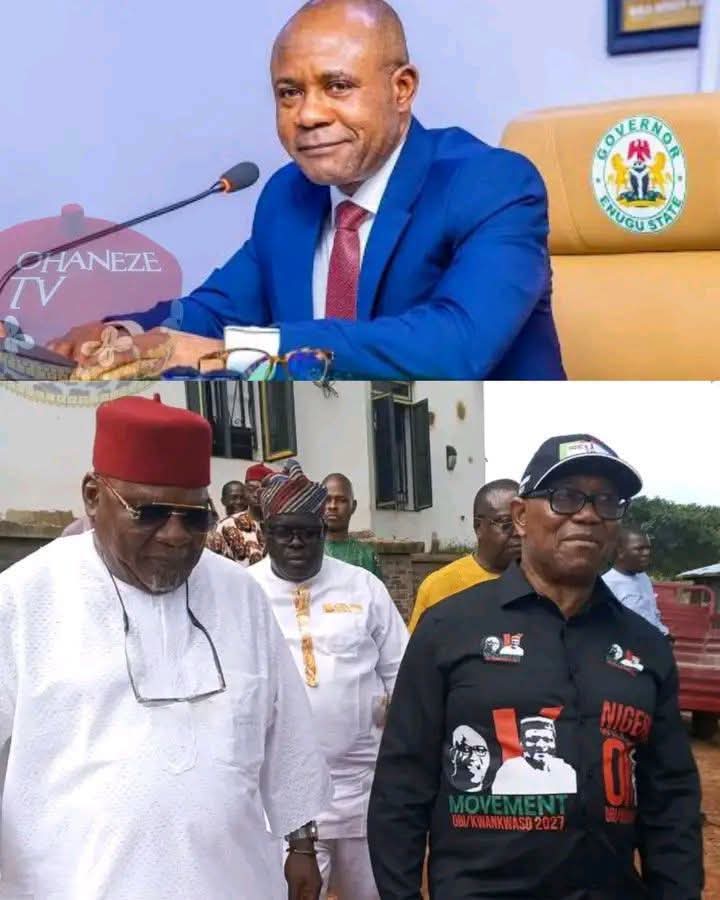
The Enugu State Government has suspended His Royal Majesty, Igwe Eze William Ezugwu, the traditional ruler of Ibagwa Ogbozalla Opi Autonomous Community, in Nsukka Local Government Area of Enugu state.
The state government accused Igwe Ezugwu of violating provisions of the state’s Traditional Rulers Law.
In a letter of suspension dated September 24, the Enugu State Government cited his alleged failure to constitute his cabinet, failure to establish a Town Union governing body, and persistent conduct deemed inconsistent with the laws governing traditional rulers in the state.
The suspension comes barely three weeks after Igwe William Ezugwu received NDC presidential candidate Peter Obi at his palace in Opi, Nsukka LGA, where he reportedly blessed Obi’s presidential ambition.
-

 News2 years ago
Senate to speed up conclusion of Nigeria Forest Security Service Bill
-

 News1 year ago
The Many Lies Against Bashir Haske
-

 News3 years ago
Breaking: Tinubu’s authentic ministerial nominees
-
 News3 years ago
“Anytime we want to kill terrorists, President would ask us to take permission from France but they were killing our soldiers-” Niger Republic coup leader
-

 News3 years ago
“I’m leaving the Catholic church because Bishop Onah is oppressing me,” says Okunerere
-

 News3 years ago
My nude photo leak was a mistake- lawyer Ifunanya
-
 News4 months ago
See your state governor’s performance ranking
-

 News3 years ago
Radio Nigeria’s veteran broadcaster Kelvin Ugwu dies three months after retirement from service