News
Agabaidu Chukwuemeka Jideani: STRENGTHENING BUSINESS AND HUMAN RIGHTS COMPLIANCE IN NIGERIA: BILLE AND OGALE COMMUNITIES VS. SHELL CASE AS A CATALYST


As we approach 2026, the ongoing legal battle between the Bille and Ogale communities in the Niger Delta and Shell plc stands as one of the most significant developments in transnational business and human rights (BHR) litigation. Known formally as Okpabi v Royal Dutch Shell plc and Alame v Shell plc, this case which was initiated in 2015 by over 42,000 claimants, alleges decades of chronic oil pollution from Shell’s operations that have devastated livelihoods, contaminated water sources, and posed severe health risks.
In 2025, a pivotal preliminary issues trial in the UK High Court (February–March) culminated in a June judgment by Justice May, ruling that Shell plc and its former Nigerian subsidiary (Shell Petroleum Development Company of Nigeria) can be held liable for legacy (historic) oil pollution. This rejected Shell’s attempts to limit the scope of claims, clearing the path for a full four-month trial scheduled for 2027. While Shell attributes most spills to third-party sabotage and illegal refining, the ruling underscores potential parent company responsibility for systemic failures in oversight and remediation.
This case is critically important for Business and Human Rights compliance in Nigeria, particularly in light of the National Action Plan (NAP) on BHR, the UN Guiding Principles on Business and Human Rights (UNGPs), and the extractive industry’s central role in the Nigerian economy.
Nigeria’s NAP on BHR, approved in April 2023 and embedded within the broader National Action Plan for Human Rights (2024–2028), represents a commitment to operationalizing the UNGPs. It prioritizes due diligence in high-risk sectors, enhanced access to remedy through strengthened non-judicial mechanisms, and multi-stakeholder engagement. Ongoing implementation includes workshops led by the National Human Rights Commission (NHRC), the Abuja Chamber of Commerce and Industry, and the establishment of the African Continental Centre for Business and Human Rights as well as continued support by the UNDP.
The Shell case directly challenges these efforts, exposing enforcement gaps in the Niger Delta while highlighting opportunities to advance Pillar III objectives, such as improving grievance mechanisms and fostering business-community partnerships.
The UNGPs, endorsed in 2011, outline three pillars: the state’s duty to protect human rights, the corporate responsibility to respect them, and effective access to remedy. The Bille/Ogale litigation starkly illustrates challenges under Pillar III in Nigeria, where local judicial and non-judicial remedies have frequently fallen short due to delays, limited resources, or other barriers. By permitting claims against a UK-domiciled parent company, the case reinforces the expectation that home states provide extraterritorial remedies when host-state options are insufficient. It also underscores the importance of robust human rights due diligence under Pillar II to address salient risks, including environmental degradation affecting rights to health, clean water, and adequate livelihoods.
The oil and gas sector continues to dominate Nigeria’s economy, driving substantial government revenue and foreign exchange amid diversification initiatives. Despite challenges like oil theft and global energy shifts, extractives underpin GDP growth and atact major investments. Yet, persistent pollution in the Niger Delta erodes sustainable development, intensifies community tensions, and poses health risks.
The Bille/Ogale proceedings demonstrate how unresolved human rights impacts in this vital sector can generate legal, reputational, and operational risks, potentially discouraging investment and perpetuating instability.
With the 2027 trial approaching, 2026 presents a critical opportunity for stakeholders to proactively align practices with the NAP and UNGPs, averting future conflicts and promoting responsible business conduct.
The organized private sector and businesses, particularly in extractives (e.g., NNPC and international operators), should embed human rights due diligence, targeting salient risks such as pollution and displacement. This includes developing remediation plans for legacy issues, fostering genuine community engagement, and advancing sector-wide standards through organizations like the Abuja Chamber of Commerce and Industry, the African Continental Centre for Business and Human Rights, the Nigerian Chambers of Commerce Dispute Resolution Centre and various Extractive Industry associations.
Civil society organizations and community groups can monitor NAP progress, push for robust remedy mechanisms (including NHRC processes), conduct impact assessments, and document ongoing harms to shape policy and support grievance efforts.
Regulators and government entities, including the NHRC, National Oil Spill Detection and Response Agency (NOSDRA), and Ministry of Environment, need to expedite NAP initiatives, build capacity for non-judicial remedies, enforce environmental regulations, incorporate Business and Human Rights into licensing, and enhance transparency. It would be helpful to work with the Nigeria Extractive Industries Transparency Initiative (NEITI) in this initiative.
Independent Business and Human Rights experts, serve as essential neutral advisors. They can guide government on NAP execution and policy refinement, assist businesses with due diligence and risk management, and facilitate access to remedies through mediation or arbitration. Existing platforms, such as the Nigerian Chambers of Commerce Dispute Resolution Centre (established for commercial alternative dispute resolution), could be adapted or expanded to incorporate specialized Business and Human Rights (BHR) panels, enabling quicker, cost-effective resolutions that preserve relationships and align with the NAPBHR and UNGP standards.
Ultimately, the Bille/Ogale vs. Shell case transcends mere litigation; it is a compelling imperative to integrate human rights into Nigeria’s economic foundation. By harnessing the NAPBHR and UNGPs, all stakeholders (in all sectors) can convert vulnerabilities into pathways for equitable, rights-respecting development in 2026 and beyond. Inaction risks deepening Niger Delta alienation, jeopardizing both human dignity and national economic resilience.
Agabaidu Chukwuemeka Jideani, a Business and Human Rights Compliance, Risk, and Governance Expert, Serves as the Director General of the Abuja Chamber of Commerce and Industry and a Director of the African Continental Centre for Business and Human Rights.
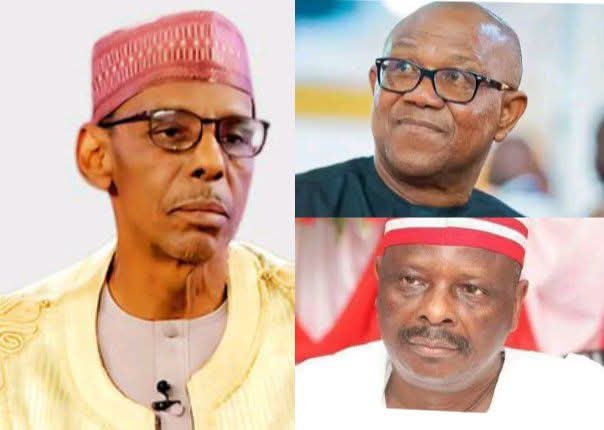
The revelation by the national chairman of Proples Redemption Party, PRP, Hakeem Baba Ahmed, that the party rejected attempt by Peter Obi and Rabiu Kwakwanso to join them before the fuo moved to National Democratic Congress, NDC, has continued to generate public reaction.
Baba Ahmed made the statement in a report that was published on Wednesday, May 13, 2026.
This is coming after the former governor of Anambra state and the former governor of Kano state defected from the African Democratic Congress, ADC to the Nigeria Democratic Congress, NDC.
In the report that surfaced online, the PRP Chairman said he blocked Peter Obi and Rabiu Musa Kwankwaso from joining the party because they demanded for the ticket of the party.
“But for you to come even before a decision is made and ask us to guarantee you the ticket without opposition. If you are truly strong contenders, then why fear competition?”.
News
Nigeria’s human rights body demands accountability over recurrent civilian casualties from military airstrikes
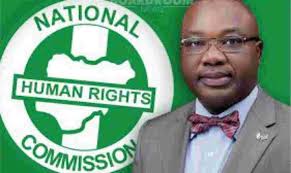
The National Human Rights Commission has expressed deep concern over the recurrent incidents of military airstrikes reportedly resulting in significant civilian casualties across different parts of the country, describing the development as troubling and incompatible with established human rights and humanitarian law standards.
The Executive Secretary of the Commission, Dr. Tony Ojukwu OFR, SAN, who stated this in a statement on Wednesday, said while the fight against insurgency, banditry, and other forms of insecurity remains a legitimate responsibility of the Nigerian State, such operations must at all times be conducted in strict compliance with the Constitution of the Federal Republic of Nigeria, international human rights obligations, and international humanitarian law principles.
According to the statement which was signed by Fatimah Agwai Mohammed, Director, Corporate Affairs and External Linkages, Ojukwu said repeated reports of civilian deaths and injuries, including women, children, and other vulnerable persons, arising from aerial bombardments raise serious concerns regarding the protection of the right to life, human dignity, and the obligation of State actors to exercise precaution and proportionality during security operations.
The Commission therefore calls on the Nigerian Air Force to provide a comprehensive explanation regarding the circumstances surrounding these incidents and the measures being taken to prevent further loss of innocent civilian lives.
“Nigerians deserve to know why this has become a recurring decimal, in April and May alone we have recorded the following casualties, in April Jilli market Yobe, in May Shiroro market Niger, again in May Tumfa market in Zamfara, for how long will this continue?” The Chief Human Rights Officer asked.
The NHRC Cheif emphasized that the principles of distinction, necessity, proportionality, and accountability are fundamental obligations under international humanitarian and human rights law and must guide all military engagements, particularly in conflict-affected communities.
Dr. Ojukwu noted that civilian lives must never be treated as collateral damage and urged security agencies to strengthen intelligence gathering, operational safeguards, and accountability mechanisms in order to minimize harm to non-combatants during military operations.
He further called for prompt, transparent, and independent investigations into all reported incidents of civilian casualties resulting from airstrikes, with a view to ensuring accountability, justice for victims, and adequate remedies, including compensation and psychosocial support for affected families and communities.
The NHRC reiterated that national security objectives and human rights protection are not mutually exclusive, stressing that sustainable peace and public trust can only be achieved where security operations are carried out within the bounds of legality, accountability, and respect for human dignity.
Ojukwu reaffirmed the Commission’s commitment to monitor the situation closely and engage relevant authorities and stakeholders to ensure the protection and promotion of the rights of all persons in Nigeria.

River State Governor, Sir Siminalayi Fubara on Wednesday, broke his silence over widespread speculations that he had defected from the All Progressives Congress (APC) and joined the Nigeria Democratic Congress (NDC) in the ongoing realignment of political forces ahead of the 2027 General Elections..
Governor Fubara made the clarification during an inspection tour of the newly constructed General Hospital and the fully remodelled Neuropsychiatric Hospital, both in Rumuigbo, Obiakpor Local Government Area of Rivers State.
According to Onwuka Nzechi, Chief Press Secretary to the Governor, Fubara said that contrary to the erroneous reports in a section of the media in the last couple of days, suggesting that he had joined another political party, he remained a member of the ruling party and will continue to work for the overall interest of the party.
“I know that there have been a lot of drama in the media; one story or another. I am a member of the All Progressives Congress (APC) and nothing has changed. People should stop using whatever situation that they pick up from the social media or their own interpretation of any situation to present me wrongly.
“I’ve not gone anywhere; I’m still a member of the APC and I remain a member. Whatever happens, what is important is supporting the overall interest of the party,” he said.
Governor Fubara was conducted round the facilities by the Director of Medical Services in the Rivers State Ministry of Health, Dr. Vincent Wachukwu, who led him through the hospital wards, a conference hall, ICT centre, students hostel, staff quarters, and other critical sections.
He expressed delight at the completion of the two projects which according to him, were conceived to address critical needs in the health sector in the state. He recalled that the while the rehabilitation of the Psychiatric Hospital became necessary at some point, the administration also discovered that the area had no General Hospital to take care of the basic health needs of the people.
“This very project, if you could remember, when we came in we had an issue that required our sudden visit and it had to do with mental health. So when we came here for the inspection of the Rehabilitation Centre that the board was trying to put together, we found out that we had more issues than even the mental health issue.
“We didn’t have a General Hospital to serve the people within this area. The closest medical center that they had here was the University of Port Harcourt Teaching Hospital ( UPTH) which is very far from here. We felt that with the space we have in this compound, it will be proper for us to also have a General Hospital situated in this particular facility to take care of the neighboring communities up to Rumuola, Rumuolumeni and all the surrounding areas.
“Today, to the glory of God, we can see that the project is already completed. It is not 95 percent complete, it is a hundred percent completed.
We’re happy because, it is a promise made and a promise fulfilled. Like I’ll always say, what is important is doing what will touch the life of our people. Our people should be first and that is how important this project is for us in this administration,” he said.
-

 News1 year ago
Senate to speed up conclusion of Nigeria Forest Security Service Bill
-

 News9 months ago
The Many Lies Against Bashir Haske
-

 News3 years ago
Breaking: Tinubu’s authentic ministerial nominees
-
 News3 years ago
“Anytime we want to kill terrorists, President would ask us to take permission from France but they were killing our soldiers-” Niger Republic coup leader
-

 News3 years ago
“I’m leaving the Catholic church because Bishop Onah is oppressing me,” says Okunerere
-

 News3 years ago
Radio Nigeria’s veteran broadcaster Kelvin Ugwu dies three months after retirement from service
-
 News3 years ago
Dokpesi and the Gazebo Mystique
-

 News3 years ago
Tsunami: Tinubu orders dissolution of managements, boards of MDAs, to sack all Buhari’s political appointees