
News
UNDP, GJF collaboration and promise of rethinking governance, building trust in the Sahel

By Wealth Ominabo Dickson
The quest for solutions to the daunting challenges in the Sahel is poised to receive a significant boost. In a region long plagued by political instability, insecurity, and economic hardship, the Sahel Governance Forum has emerged as a vital platform for reshaping the narrative. The inaugural edition of this landmark initiative, being hosted by The Gambia on July 30-31, 2025, in collaboration with the Goodluck Jonathan Foundation (GJF), the United Nations Office for West Africa and the Sahel (UNOWAS), the Office of the Special Coordinator for Development in the Sahel (OSCDS), and the United Nations Development Programme (UNDP), signals a pivotal moment for governance in the Sahel region. It will not just be a meeting of minds, it is billed to be a strategic intervention in the fragile democratic fabric of the subregion.
The Sahel is no doubt at a crossroads. From Mali to Burkina Faso and from Chad to Niger, democratic institutions are under severe strain. Military coups, insurgent violence, disinformation campaigns, and the marginalization of youth and women have combined to undermine peace and good governance. In this context, the Forum was convened not merely as a conference but as an incubator for resilience, a platform where leaders, civil society, and international partners could collectively chart a path forward.
Crucially, the Forum has come to serve as a convener of dialogue at a time when dialogue is under constraint. With rising authoritarian tendencies and waning trust in electoral processes, forums such as this become sanctuaries for democratic discourse. The Sahel Governance Forum, therefore, is more than an event, it is a defiant stand for inclusive governance, institutional strengthening, and sustainable peace.
This is knowing that at the heart of the governance conundrum in the Sahel lies a deeper legitimacy crisis. When citizens lose faith in the state’s ability, or willingness to deliver justice, security, and opportunity, governance becomes fragile, and the potential for unrest multiplies. This is why the Forum’s focus on social cohesion and trust is not only timely but essential.
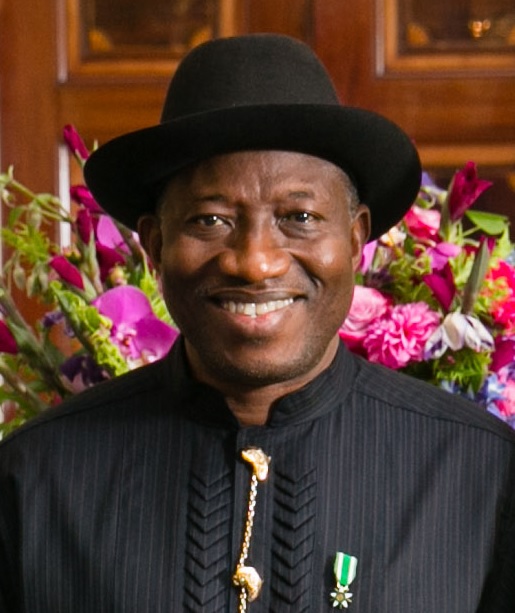
The conference is being availed further weight by the enduring legacy of Dr. Goodluck Ebele Jonathan, former President of Nigeria and a globally recognized champion of peace and democracy. Through the Goodluck Jonathan Foundation, he has consistently advanced the ideals of democracy, reconciliation, and good governance, particularly in conflict-prone societies. His presence and active leadership at the Forum underscores his deep commitment to these values.
Dr. Jonathan’s post-presidency has become a case study in transformative leadership. Rather than retreat into quiet retirement, he has thrown his weight behind peace mediation efforts, electoral integrity missions, and democratic reforms across Africa. His role in helping to peacefully resolve political crises in The Gambia (2016-2017), Mali, and elsewhere, attests to his diplomatic clout and unwavering belief in democracy as a tool for development.
The Foundation he leads has become a respected pan-African institution, convening stakeholders, producing research, and advocating for policies that deepen democratic practice, especially in leading mediation missions during elections in order to prevent election related crises in the nations of the subregion. Through its work, GJF has built a bridge between theory and practice, between policymakers and the people, and between conflict and consensus.
What makes the Sahel Governance Forum especially significant is its collaborative DNA. The GJF, in joining forces with the UNDP, UNOWAS, OSCDS, underscores the necessity of multilateral approaches to the region’s complex governance challenges. Each partner brings to the table a wealth of experience, institutional capacity, and local knowledge. UNOWAS offers political insight and regional strategy. OSCDS brings in development-oriented perspectives crucial to tackling root causes of fragility. The UNDP contributed its global development lens, with special attention to inclusive governance and capacity building.
The GJF which hosts the West African Elders Forum (WAEF) brings to bear on the process, the wealth of experience and wisdom of the subregion’s former Presidents and statesmen who populate the body as members.
Together, these institutions forged a coalition of intent; intent on restoring citizen trust, empowering local governance structures, and promoting peaceful political transitions.
Hosting the inaugural Forum in The Gambia is a symbolic masterstroke. Once under autocratic rule, The Gambia has emerged in recent years as a hopeful example of democratic renewal. Its peaceful transition of power in 2017, in which Dr. Jonathan played a mediating role, highlighted the power of dialogue over violence. By returning to Banjul to host this Forum, the region was reminded of what is possible when democracy is protected and nurtured.
President Adama Barrow’s administration, in hosting the Forum, affirms its commitment to regional leadership on governance.
The success of the Sahel Governance Forum must not be measured solely by the speeches delivered or communiqués released. Its real legacy will lie in how effectively its recommendations are implemented, how robustly its networks are maintained, and how consistently its spirit of dialogue is kept alive. Forums come and go, but institutions and movements must endure.
This is where the Goodluck Jonathan Foundation can play a unique role. With its growing influence, it can serve as a moral compass and a strategic convener, helping to translate forum outcomes into real-world impact. Its independence and credibility position it well to act as a bridge between governments, civil society, and international partners.
The Sahel Governance Forum is a model worth replicating across Africa, a model rooted in inclusive dialogue, multilateral collaboration, and African leadership. It is a timely reminder that Africa’s governance challenges, while formidable, are not insurmountable.
Dr. Goodluck Jonathan’s vision of “democracy as a tool for peace” continues to resonate across the continent. His Foundation, through initiatives like this Forum, is helping to build the scaffolding for a more stable, democratic, and prosperous Sahel.
The work is far from over, but the journey has begun. And thanks to the Sahel Governance Forum, it is a journey that now has direction, allies, and renewed hope.
· Mr. Dickson is a media officer, Goodluck Jonathan Foundation (GJF)

Health professionals have warned that regular consumption of shawarma containing high amounts of salt, sugar, fat, seasoning and processed meat may contribute to hypertension, obesity, diabetes and kidney disease.
Excessive salt can raise blood pressure and put additional strain on the kidneys, while high-calorie sauces may contribute to weight gain.
Nutrition experts advised Nigerians to eat shawarma in moderation, use less mayonnaise and other sauces, choose lean grilled meat and add more vegetables. Consumers were also urged to check vendors’ cleanliness and avoid food prepared where ingredients are exposed to flies, dust or poor handling.
A recent report by experts also warned that frequent consumption of Shawarma may increase the risk of other food-borne infections and long-term health problems.
The report contains documented cases of people who suffered vomiting, diarrhoea, stomach pain and weakness after eating shawarma, with some requiring hospital treatment.
According to the report, poor hygiene could allow bacteria and other contaminants into shawarma, causing illnesses including cholera, dysentery, typhoid and salmonellosis.
It also raised concerns about mayonnaise and creamy sauces kept without proper refrigeration and warned that poor storage could encourage bacterial growth and increase the risk of food poisoning.
A study cited in the report found bacterial contamination in ready-to-eat shawarma sold on the streets
Experts also raised concerns about processed meat such as sausage, noting that the International Agency for Research on Cancer classifies processed meat as carcinogenic to humans.
The mystery surrounding the death of a man whose body was found by the roadside in Abuja has taken a new turn, with police tracing the case through his missing mobile phone to a married woman who allegedly spent time with him at a hotel.
The FCT Commissioner of Police, Mohammed Sanusi, disclosed this on Saturday in Abuja, saying investigators arrested Rukayat Muhammed after tracing the deceased’s final communications.
The man was found dead on August 26 along the Kubwa Expressway, near Katampe under the bridge, after his family had earlier reported him missing.
According to the police, the case initially raised suspicion of a possible “one chance” incident. Investigators, however, established that the dead man was the missing person after identifying his remains.
Sanusi said the deceased’s mobile phone was missing and had been switched off. Police investigators subsequently traced his last known communication, leading them to Rukayat, a resident of Garki Area 2.
Investigators reportedly discovered that Rukayat, who is married, was allegedly in a romantic relationship with the deceased. The police said she had saved his contact under the name “Safiyat.”
The CP said the pair had lodged at Good Samaritan Guest House on 2nd Avenue, Gwarinpa, where the man later died.
Sanusi said Rukayat allegedly discovered that the man was no longer breathing but failed to alert the police or hotel management. Instead, she allegedly took his phone and left the hotel.
The case took another turn when hotel management later discovered the man’s body inside the room after attempts to contact the occupants failed.
Rather than reporting the discovery, two hotel staff members, Ibrahim Omeiza and Kefat Bitrus, allegedly removed the body from the room and transported it to the Kubwa Expressway, where they dumped it under the Katampe bridge.
The police said the action was apparently intended to distance the hotel and its management from the death.
Sanusi said detectives were still working to establish exactly how the man died and determine the individual roles of those connected to the incident.
He warned that anyone found to have participated in the death, concealment or abandonment of the body would face prosecution.
The commissioner said the investigation remains ongoing.
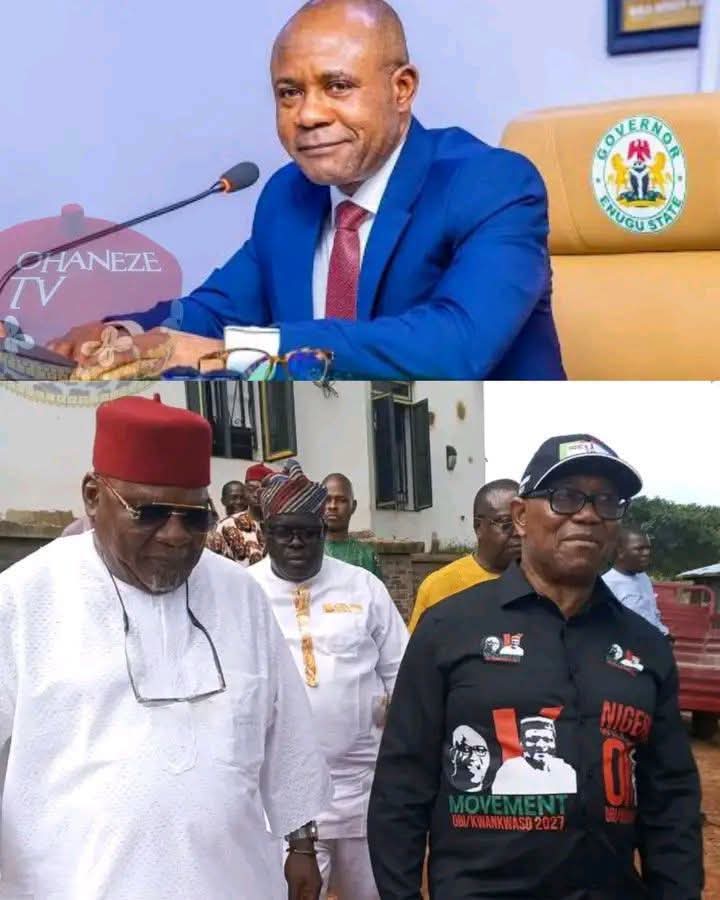
The Enugu State Government has suspended His Royal Majesty, Igwe Eze William Ezugwu, the traditional ruler of Ibagwa Ogbozalla Opi Autonomous Community, in Nsukka Local Government Area of Enugu state.
The state government accused Igwe Ezugwu of violating provisions of the state’s Traditional Rulers Law.
In a letter of suspension dated September 24, the Enugu State Government cited his alleged failure to constitute his cabinet, failure to establish a Town Union governing body, and persistent conduct deemed inconsistent with the laws governing traditional rulers in the state.
The suspension comes barely three weeks after Igwe William Ezugwu received NDC presidential candidate Peter Obi at his palace in Opi, Nsukka LGA, where he reportedly blessed Obi’s presidential ambition.
-

 News2 years ago
Senate to speed up conclusion of Nigeria Forest Security Service Bill
-

 News1 year ago
The Many Lies Against Bashir Haske
-

 News3 years ago
Breaking: Tinubu’s authentic ministerial nominees
-
 News3 years ago
“Anytime we want to kill terrorists, President would ask us to take permission from France but they were killing our soldiers-” Niger Republic coup leader
-

 News3 years ago
“I’m leaving the Catholic church because Bishop Onah is oppressing me,” says Okunerere
-

 News3 years ago
My nude photo leak was a mistake- lawyer Ifunanya
-
 News4 months ago
See your state governor’s performance ranking
-

 News3 years ago
Radio Nigeria’s veteran broadcaster Kelvin Ugwu dies three months after retirement from service