News
Nigeria’s Unique Tripartite Distribution System Under the Acts Authentication Act and its Role in Resolving Alleged Post-Passage Alternations in the 2025 Tax Reform Legislation


By Agabaidu Chukwuemeka Jideani
I was once again invited by some colleagues and PhD Scholars of Legislative Studies and members of the Nigerian Association of Legislative Practice Professionals, to proffer a view on the directives to the Clerk of the National Assembly to re-publish the authenticated copy of the ‘Tax Reform Legislation.’
A sound starting point for delving into the above is to pronounce, because it is unknown to many including scholars, that Nigeria has a, unique one-of its-kind in the world, tripartite distribution system for the authentication and publication of federal legislation.
The Acts Authentication Act[1] institutes a singular tripartite distribution mechanism for the authentication of federal legislation. Section 2 of the Act, mandates that, upon presidential assent, the Clerk to the National Assembly shall authenticate the enacted text and distribute identical authenticated copies in three directions as follows: one retained in the permanent records of the National Assembly, one delivered to the President, and one transmitted to the Chief Justice of Nigeria for formal enrollment in the records of the Supreme Court.
When this tripartite distribution is done, all subsequent reproductions, including those published in the Official Gazette of the Federation, must be printed directly from this authenticated master form.
This deliberate dispersal of authoritative copies across the three arms of government, legislature, executive, and judiciary, creates multiple independent institutional custodians of the definitive enacted text, thereby providing built-in verificatory safeguards against unilateral post-passage alterations while preserving a clear evidentiary hierarchy for determining textual fidelity.
This Nigerian mechanism is markedly distinct from authentication and enrollment practices in other common law jurisdictions, where finality typically attaches to a single enrolled or certified document, often protected by strong conclusive presumptions that limit or preclude judicial inquiry into textual integrity post-authentication.
In the United States of America, the authentication process culminates in the enrollment of the bill after signature by the Speaker of the House, the President of the Senate/Vice president, and the US President. The enrolled bill doctrine, firmly established by the US Supreme Court in the case of Marshall Field & Co. v. Clark[2], holds that a properly enrolled and authenticated bill is “conclusive evidence of its due enactment” and cannot be impeached by recourse to legislative journals or extrinsic evidence of irregularities in passage or textual discrepancies. This doctrine was reaffirmed in subsequent cases such as United States v. Ballin[3], and has been consistently applied to insulate enrolled statutes from challenges based on alleged deviations between passed and enrolled texts. While scholarly criticism has occasionally highlighted the doctrine’s potential to shield fraud, successful judicial overrides remain exceptionally rare, with courts prioritising inter-branch comity over exhaustive textual verification.
The United Kingdom, on the other hand, centres authentication on enrollment in the Parliamentary Roll following royal assent. Grounded in parliamentary sovereignty and fortified by Article 9 of the Bill of Rights 1689, the enrolled Act rule renders the text unimpeachable once recorded[4]. Courts are barred from examining internal proceedings or textual irregularities post-enrollment[5].
In other common law jurisdictions, like Canada, Australia, India, South Africa, Singapore, Kenya, and Ghana, they follow analogous unitary authentication models, in these jurisdictions, assent by the head of state, certification by legislative officers, and publication in an official gazette, without statutory provision for distributed inter-branch custody is the prescribed procedure and the practice. Finality attaches to the assented and certified document, with courts generally applying presumptions of regularity akin to or directly influenced by the enrolled bill doctrine.
Nigeria’s tripartite system thus stands alone among major common law systems in mandating distributed custody of identical authoritative copies across separate branches, deliberately facilitating independent cross-verification and enhancing resistance to undetected post-passage tampering.
This structural uniqueness has direct practical significance in addressing the alleged post-passage alterations to the 2025 tax reform statutes, the Nigeria Tax Act 2025, Nigeria Tax Administration Act 2025, Nigeria Revenue Service (Establishment) Act 2025, and Joint Revenue Board of Nigeria (Establishment) Act 2025.
Material discrepancies reportedly emerged between the harmonised texts passed by both chambers of the National Assembly, the versions transmitted for presidential assent in June 2025, and the initially gazetted publications, raising concerns over unauthorised insertions, omissions, or substitutions.
The leadership of the National Assembly, on the 26th of December 2026 issued a formal directive instructing the Clerk to the National Assembly to:
a) Re-gazette the four Acts; and
b) Issue Certified True Copies.
The Spokesperson of the House of Representatives of the national Assembly of the Federal Republic of Nigeria, Hon. Akin Rotimi in a statement issued Friday 26th of December 2025 confirmed that there was a review in respect of the alleged discrepancies between the gazetted copy of the Tax Reform Legislation and the harmonized version of the Bills passed by the National Assembly. According to him, “the review is being conducted in full conformity with the Constitution of the Federal Republic of Nigeria, the Acts Authentication Act, Cap. A4, Laws of the Federation of Nigeria, the Standing Orders of both Chambers, and established parliamentary practice…” Consequently, “…the leadership of the National Assembly, under the President of the Senate, Distinguished Senator Godswill Obot Akpabio, GCON, and the Speaker of the House of Representatives, Rt. Hon. Abbas Tajudeen, PhD, GCON, has directed the Clerk to the National Assembly to re-gazette the Acts and issue Certified True Copies of the versions duly passed by both Chambers of the National Assembly…”[6] (the italics are mine).
In its distilled state, the National Assembly directed the Clerk to re-gazette the four Acts using the authenticated tripartite master copies; and issue Certified True Copies (CTCs) drawn exclusively from the versions “duly passed by both Chambers and authenticated in accordance with the Acts Authentication Act.”
This directive squarely invokes the tripartite mechanism to restore textual fidelity. By mandating re-publication from the authenticated forms held by the Clerk, the Presidency, and the Supreme Court, it establishes an administratively authoritative baseline that overrides divergent gazetted versions. The issuance of CTCs further provides verifiable evidentiary instruments for courts, administrative agencies, and the public, ensuring enforcement aligns with legislative intent.
Despite divergent views, it is my considered opinion that the directive is legally sound. It flows directly from the Clerk’s statutory duties under the Acts Authentication Act to maintain and reproduce from the authenticated record, read alongside the National Assembly’s constitutional oversight of its legislative process (Sections 4, 58, and inherent legislative privileges). As a corrective measure limited to publication conformity, without purporting to amend the assented substance, it constitutes a lawful administrative act rather than an encroachment on executive or judicial functions.
The above being premised, it is important to note that in contradistinction to the conclusive enrollment doctrines prevalent in other common law jurisdictions and the US, the Nigerian Tripartite Distribution System (TDS) enables additional remedies as follows:
a) Evidentiary recourse in litigation: Courts may compel production and comparison of the three authenticated copies, potentially invalidating ultra vires provisions without violating separation of powers or inquiring into the internal legislative procedure, unlike the near-absolute bar in the cited cases of Field v. Clark or Pickin;
b) Legislative re-enactment: Introduction of fresh bills to cure substantive defects, preserving exclusive legislative competence under Section 4; and
c) Institutional or independent inquiry: Utilisation of the dispersed copies in Legislative, Executive or Judicial probes to independently establish accountability.
I am not unmindful of the growing calls to isolate and ascertain the criminal liabilities of the alleged perpetrators of the said post-passage insertions, but as they say in my grandmother’s village of Nteje Abogu, “Nne Ji Ya Iche” loosely translated to mean that “it has a different, albeit, maternal relationship” to the present discussion. Criminal liability, though important, is not the focus of this discourse.
In conclusion, Nigeria’s tripartite distribution system represents a deliberate statutory innovation that disperses authoritative custody across branches, distinguishing it sharply from the unitary, conclusively presumed models in the United States, United Kingdom, Canada, Australia, India, South Africa, Singapore, Kenya, and Ghana. By mandating distributed custody rather than unitary conclusiveness, the tripartite system established a balancing act which permits targeted verification to safeguard against tampering or error, while still promoting certainty.
It thus innovates on common law traditions, offering enhanced transparency and inter-branch checks suited to Nigeria’s constitutional framework, without embracing the full insulation of the enrolled bill doctrine. This mechanism uniquely positions Nigeria to address textual infirmities institutionally and, if necessary, judicially, preserving legislative independence and Constitutional supremacy while upholding rule-of-law accountability.
In the ongoing 2025 tax reform controversy, I am of the view that it has enabled a swift, lawful administrative remedy through re-gazetting and CTC issuance while preserving robust avenues for deeper rectification, demonstrating its enduring value in safeguarding legislative integrity and constitutional fidelity.
Agabaidu Chukwuemeka Jideani, a Legislative Practice and Procedure Expert (amongst others) serve as the Director General of the Abuja Chamber of Commerce and Industry.
[1] Cap. A2, Laws of the Federation of Nigeria 2004.
[2] Marshall Field & Co. v. Clark, 143 U.S. 649 (1892)
[3] United States v. Ballin, 144 U.S. 1 (1892)
[4] Edinburgh & Dalkeith Railway Co. v. Wauchope (1842) 8 Cl & F 710.
[5] British Railways Board v. Pickin [1974] AC 765, HL
[6] https://www.thecable.ng/breaking-national-assembly-to-re-gazette-tax-laws-over-alleged-alteration/; https://www.thisdaylive.com/2025/12/26/nassembly-directs-clerk-to-re-gazette-tax-law/
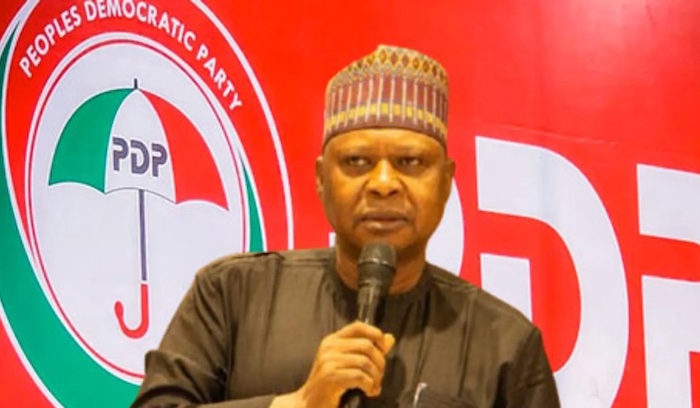
By Umar Sani
The judgment delivered on Wednesday by the Federal High Court sitting in Ibadan has been widely misrepresented, prompting unnecessary anxiety and the circulation of misleading claims suggesting that the court recognised a rival faction within the Peoples Democratic Party (PDP).
That narrative is false, mischievous, and deliberately crafted to confuse party members and the general public.
What the Ibadan court decided was narrow, procedural, and entirely predictable in law.
The Kabiru Tanimu Turaki–led National Working Committee (NWC), which emerged from the Ibadan Convention, approached the court by way of an application for an order of mandamus. The relief sought was simple and specific: to compel relevant authorities to recognise the NWC as the lawful leadership of the party.
In its ruling, the court declined to grant that order, not because it recognised any other faction, but because there are subsisting judgments of courts of coordinate jurisdiction touching on the same leadership dispute. The court held that granting the order as requested would amount to sitting on appeal over decisions of courts of equal standing an exercise it lacks jurisdiction to undertake.
In plain terms, the Federal High Court in Ibadan said: only the appellate courts can resolve the conflict arising from existing Federal High Court decisions. That is the full extent of the judgment.
At no point did the court recognise, endorse, validate, or confer legitimacy on the so-called Wike faction or any other group.
Crucially, the Ibadan court was not invited and did not attempt to determine which faction is authentic. Courts are not Father Christmas; they do not grant unsolicited relief. They either grant what is asked for or refuse it. Nothing more.
The suggestion circulating in some quarters that the Ibadan judgment “recognised the Wike faction” is therefore a deliberate falsehood. The Wike-aligned group did not file any process before the Ibadan court seeking recognition as the authentic PDP leadership. Their application seeking such relief is before a different court Justice Joyce Abdulmalik’s court in Abuja and that matter has been adjourned to 20 February.
To conflate these distinct proceedings is either a gross misunderstanding of basic legal process or a calculated attempt at disinformation.
Following the Ibadan ruling, the Kabiru Turaki–led PDP has already briefed its legal team to file an appeal immediately and pursue all lawful steps necessary to protect its mandate and clarify the legal position at the appellate level.
Until the Court of Appeal makes a definitive pronouncement, the NWC that emerged from the Ibadan Convention remains legally intact and operational.
Members of the party are therefore urged to remain calm, resolute, and focused. There is no vacuum, no judicial endorsement of any rival faction, and no setback to the REBIRTH movement.
What occurred in Ibadan was a procedural pause not a substantive defeat.
Anything beyond that is fake news, pure and simple.
Umar Sani is the SA Media to the National Chairman of the PDP

The Governing Board Chairman of the Federal Airports Authority of Nigeria (FAAN), Abdullahi Ganduje has launched 30 electric vehicles at the Nnamdi Azikiwe International Airport, Abuja to ease transportation.
The vehicles, which would be operated as airport shuttles, comprises 10 electric shuttle buses and 20 electric saloon vehicles for airport operations.
The vehicles would be used to support airside and landside logistics, staff movement and services, and strengthen passenger coordination and efficiency across the airport.
Speaking during the commissioning of the vehicles in Abuja on Thursday, Ganduje said: “Electric vehicles offer clear operational and environmental benefits. They are cleaner, quieter and more energy-efficient, significantly reducing carbon emissions and helping FAAN minimise its ecological footprint. Their use will contribute to healthier airport environments and a more comfortable work and travel experience.
“From a logistics standpoint, electric vehicles also enhance monitoring, coordination and compliance. Their predictable performance and lower maintenance demands improve operational planning, accountability and service reliability. Ultimately, this translates into more efficient, transparent and passenger-friendly services.
“This initiative directly supports global sustainability targets, including International Civil Aviation Organisation’s goal of achieving net-zero carbon emissions by 2050. By embracing electric mobility, FAAN is positioning Nigerian airports to remain competitive, responsible and future-ready.”
Ganduje pledged the commitment of the board to ensure that the initiative is utilised, maintained, and expanded to other airports in the country.
The Managing Director of FAAN, Olubunmi Kuku disclosed that the Agency has secured approval to deploy 100 electric vehicles to operate as airport shuttles at Lagos and Abuja airports.
She said: “We have secured approval to deploy 100 Electric Vehicles (EVs) to operate as airport shuttles at both Murtala Mohammed International Airport, Lagos, and Nnamdi Azikiwe International Airport, Abuja. It is a monumental step towards greening our operations and reducing our carbon footprint.
“Today, we proudly begin this journey with the first phase: the launch of these 10 state-of-the-art electric shuttle buses. They represent more than just transport; they symbolise cleaner air, quieter terminals, and a commitment to pioneering sustainable infrastructure in Nigerian aviation”.
She expressed optimism that the initiative would be replicated across all airports in the country.
News
More Feathers for Anosike as NiMet emerges among Top 10 on ICPC’s Ethics and Integrity Compliance Scorecard

By Bonaventure Phillips Melah
The Independent Corrupt Practices and Other Related Offences Commission (ICPC) has rated the Nigerian Meteorological Agency (NiMet) as one of the best performing institutions in the country, with a high mark of 82.65% on its Ethics and Integrity Compliance Scorecard (EICS) for 2025.
NiMet is the first and only agency in the entire aviation sector to receive this category of ranking and recognition as contained in a letter from ICPC, dated 29 December 2025 and ranked NiMet among the top 10 out of a total of 344 MDAs that were assessed nationwide, adding that the agency also made “Substantial Compliance,” emerging 11th out of 356 MDAs on the ACTU Effectiveness Index (AEI) where it garnered 82.50%.
The letter said by its performance, NiMet earned a “Very Effective” status for its Anti-Corruption and Transparency Unit (ACTU).
Available records show that the ICPC EICS evaluation was based on key pillars of Management Culture and Structure; Financial Management Systems; Administrative Systems; and the effectiveness of Anti-Corruption and Transparency Units, adding that it affirms the strength of the Agency’s compliance framework, governance mechanisms and the effectiveness of its operational systems.
According to the letter, which was signed by the Chairman of the ICPC, Dr. Musa Adamu Aliyu, SAN, NiMet was commended for the structures and processes it has put in place to promote efficiency and integrity, while its Management was encouraged to sustain the standard achieved to ensure consistency in ratings and continued improvement in service delivery.
Reacting to latest rating, the Director General/CEO of NiMet, Professor Charles Anosike, welcomed the development, saying however that it is rather a challenge for him and the management of the agency to do more. He said that NiMet remains committed to upholding the principles of transparency, accountability, and professionalism in the discharge of its mandate, and will continue to strengthen its institutional processes in line with national integrity standards.
In 1968, a prolific Ghanaian author and poet, Ayi Kwei Armah, wrote that masterpiece titled- ‘The Beautiful Ones are Not Yet Born.’ While many, out of generations of literature students saw the work of fiction as a love story, the author was actually lamenting the absence of committed, disciplined and selfless leaders in his country and by extension, Africa. Back home, Nigeria has had more than a fair share of ugly ones- kindred of unserious, greedy and corrupt leaders without idea of how to positively impact the lives of the people they were meant to serve.
But as they say in Nigeria, much water has passed under the bridge and change is here. Today, there are many well-educated, well-informed professionals serving as Chief Executive Officers, both in the private and public sectors, that are deploy their intellectual capacities, to transform organisations entrusted in their care. Prof. Charles Anosike is one of the beautiful ones.
When Anosike assumed office as the CEO of NiMet in December 2023, he was confronted with several institutional challenges including lack of leadership drive, slow and ineffective migration to modern technologies and a demoralized workforce that were denied series of entitlements and claims.
Within the past two years, Prof. Anosike has combined several ‘Cs’ of leadership- including competence, Courage, Consistency, Commitment, Character, Communication and Clarity to chart a new route of goal-setting and achievements for the organization. He has also Leveraged digital innovations and forged strategic partnerships with local and international institutions, to close critical gaps and achieved remarkable milestones for the organization.
His ability to draw strength from a twin-chain that include inspiration from President Bola Tinubu’s Renewed Hope Agenda that hammers on providing best quality service to the people and submission to the strict supervisory approach of the Minister of Aviation and Aerospace Development, Barrister Festus Keyamo, SAN, who does not brood indolence and would not suffer non-compliance to highest operational standards, has contributed in no small measures to the massive achievements recorded by NiMet’s management under his leadership.
As it stands today, NiMet has witnessed series of transformations that have ensured Nigeria’s weather services are more accurate, reliable, and impactful than ever before. The agency actively works with the World Meteorological Organization (WMO) and other partners to improve communication of climate information to the public as well as playing crucial role in supporting the Sustainable Development Goals (SDGs) by providing essential data to combat desertification and restore land affected by drought, thereby establishing itself as an authority with clear understanding that its responsibilities go beyond daily weather reports, but include long-term climate and environmental protection.
Identifying synergy with other organisations as essential to achieving set goals, Anosike’s management has signed partnerships agreement with sister government agencies as well as universities and research institutions within Nigeria and across the world. He sees these collaborations as vital in building a climate-resilient society and mitigating the impact of extreme weather.
Among his most significant milestones is digitalization of operations as NiMet has replaced its traditional manual flight folder system with an electronic flight folder also known as e-flight folder.
This cutting-edge tool provides virtual access to a comprehensive suite of flight briefing applications, including weather reports, to pilots and airlines, thereby facilitating informed decision-making and enhancing safety protocols.
As at today, NiMet has a world-class weather presentation infrastructure which Anosike’s management upgraded to 4K resolution. The transformative initiative was achieved in partnership with global technology leader Chyron. The cutting-edge facility plays pivotal role in NiMet’s current weather presentation capabilities and therefore a critical milestone in the agency’s commitment to delivering world-class meteorological services.
The agency has also completed full audit of dilapidated infrastructures and ill-conceived projects as well as unveiled the Aeronautical Meteorology Bulletin, a groundbreaking publication designed to promote a deeper understanding of meteorology in the aviation industry. The bulletin aims to empower airlines, pilots, air traffic controllers, and ground services to anticipate and manage weather-related challenges more effectively.
Another area of pride for NiMet is the agency’s flagship product, the Seasonal Climate Prediction (SCP), a vital early warning tool for farmers, livestock practitioners, and other sectors of the economy as well as the implementation of a co-production process, engaging relevant stakeholders in weather-sensitive sectors to craft informed, user-tailored weather forecasts. These forecasts are translated into Hausa, Yoruba, Igbo, and Pidgin to enhance uptake and facilitate better planning and climate-smart decision-making.
The agency also successfully launched a centralised Secure Aviation Data Information Service (SADIS) Application Programming Interface (API) platform aimed at boosting Aviation safety efficiency in Nigeria. It was part of the overall modernisation of the country’s aviation weather services with Nigeria becoming a trailblazer in Africa.
Not long ago, NiMet took a major step toward sustainable innovation with the deployment of electric vehicles (EVs) for airside operations across Nigeria’s five international airports — Lagos, Abuja, Kano, Port Harcourt, and Enugu. The development marked the first deployment of EVs in the nation’s aviation sector, positioning NiMet at the forefront of environmental transformation and operational efficiency which aligns with President Bola Ahmed Tinubu’s Renewed Hope Agenda on clean energy and climate resilience. The vehicles are capable of covering up to 200 kilometers on a single charge and are supported by dedicated charging stations at each airport.
Furthermore, NiMet and other stakeholders in the aviation industry concluded nationwide Quality Management System (QMS) Engagement across major airports as part of efforts to strengthen service delivery, improve aviation safety, and sustain its ISO 9001:2015 certification for aeronautical meteorological services.
Also, NiMet, Sahel, IRI and Gates Foundation launched ‘ENACTS Initiative’ to strengthen access to climate data. The event held in Abuja under the Building Agricultural Systems Resilience in Nigeria Project financed by the Bill & Melinda Gates Foundation and featured a Project Review Workshop with stakeholders across agriculture, health, water resources, blue economy and disaster management, among others.
NiMet was also part of an Investor Roundtable hosted by the Nigerian Exchange Group (NGX) to commemorate the International Sustainability Standards Board (ISSB) Preparers Readiness Programme and strengthen partnerships and networking for agencies with similar objectives.
NiMet also entered into partnership with the Kingdom of Morocco on AI-Based Weather Forecast, Early Warning Systems at an event where Anosike and his Moroccan counterpart, Mohammed Dhkissi, pledged to deepen bilateral cooperation between the two institutions, particularly in the area of Artificial Intelligence (AI)-driven weather forecasting and early warning systems for enhanced climate resilience.
To further bolster its ICT capacity aimed at greater efficiency, NiMet entered a strategic alliance with the National Information Technology Development Agency (NITDA) with Anosike saying the goal was to foster collaboration and explore strategic areas between the two key government institutions which aims to enhance the credibility of NiMet’s services.
Simultaneously also, was the signing of MoU between NiMet Landmark University aimed at advancing meteorological research and deepening climate science education in Nigeria which seeks to enhance the collection and analysis of climate data and support initiatives that promote environmental resilience and sustainable national development.
The standing ovations being given to NiMet at several national and international gatherings as well as awards and accolades, are part of the various testimonies of Anosike’s bold footprints at the agency.
Within the past twenty-four months, Anosike has received several prestigious awards including “Best Federal MDA in Open Data Excellence” by Nigeria GovTech Public Service Awards 2025 which also decorated him with the ‘Distinguished GovTech Trailblazer’s Award;’ ‘Aviation Sector CEO of the Year 2024;’ the 2025 ‘African Public Sector Leadership Impact Award’ for his transformational leadership, organized by the African Leadership Magazine at an event held in Casablanca, Morocco, where Anosike was honoured alongside other notable dignitaries including serving presidents of two African countries and the MD/CEO of First Bank of Nigeria Plc. The National Association of Nigerian Students (NANS) also honoured Anosike with ‘Outstanding Mentorship Award.’
The emergence of NiMet among the top 10 out of 344 MDAs on ICPC’s Ethics and Integrity Compliance Scorecard (EICS) is a pleasant icing on the agency’s cake and a shouting testimony that a great future awaits NiMet and its staff while at the same time reinforces the hope of patriotic Nigerians that the the and is truly Green.
-

 News11 months ago
Senate to speed up conclusion of Nigeria Forest Security Service Bill
-

 News3 years ago
Breaking: Tinubu’s authentic ministerial nominees
-

 News3 years ago
“Anytime we want to kill terrorists, President would ask us to take permission from France but they were killing our soldiers-” Niger Republic coup leader
-

 News2 years ago
“I’m leaving the Catholic church because Bishop Onah is oppressing me,” says Okunerere
-

 News6 months ago
The Many Lies Against Bashir Haske
-

 News2 years ago
Radio Nigeria’s veteran broadcaster Kelvin Ugwu dies three months after retirement from service
-

 News3 years ago
Dokpesi and the Gazebo Mystique
-

 News3 years ago
Tsunami: Tinubu orders dissolution of managements, boards of MDAs, to sack all Buhari’s political appointees