Business
Abuja- Heathrow: Keyamo hails Allen Onyema, Air Peace for another milestone


The Minister of Aviation and Aerospace Development, Festus Keyamo, SAN, has commended Air Peace and its Chairman, Dr. Allen Ifechukwu Onyema, following the achievement of a major milestone with the successful launch of direct flights from Abuja to London Heathrow.
Keyamo spoke at the grand event to mark the inaugural flight held in Abuja and described the development as a defining moment for Nigeria’s aviation sector.
He applauded Air Peace for its vision, resilience, and patriotism in taking Nigerian aviation to new heights and emphasized that securing the highly competitive Heathrow slot represents not just a triumph for the airline but also a testament to the capability of indigenous operators to compete on the world stage.
The Minister, who attended the event alongside top government officials and representatives of the Presidency, such as the Deputy Chief of Staff to the President, Hon, Ibrahim Hassan Hadejia, reaffirmed the Federal Government’s unwavering commitment to supporting local carriers.
He expressed profound appreciation to President Bola Ahmed Tinubu for his vision, foresight, and unwavering support for Nigeria’s local airlines, emphasizing that the current administration’s aviation policy was deliberately designed to promote the growth and sustainability of indigenous operators.
“The mandate from Mr. President was clear to support the growth, development, and sustenance of our local entrepreneurs within the aviation sector. Air Peace is the biggest player we have in Nigerian aviation today, and it is the duty of government to support such visionary local businesses,” Keyamo stated.
Keyamo highlighted that the realization of the Abuja–Heathrow route followed months of diplomatic engagements between Nigeria and the United Kingdom, ultimately resulting in a fairer bilateral air service framework. He stressed that such victories are proof of what can be achieved when government and local entrepreneurs work in alignment.
The Abuja–Heathrow service comes nearly two years after Air Peace’s successful entry into the Lagos–London Gatwick route, cementing its position as the first Nigerian carrier to operate direct flights from both Lagos and Abuja to the United Kingdom.
In his remarks, the Minister also praised Dr. Allen Onyema for his doggedness, selflessness, and deep commitment to Nigeria’s progress, describing him as “the Oracle himself” and a visionary who has continued to invest massively in the country despite global opportunities elsewhere.
“This is a huge investment, driven by faith in the Nigerian dream,” Keyamo said. “Dr. Onyema’s courage and consistency embody the spirit of true nation-building, and as a government, we will continue to protect and promote businesses like Air Peace that are flying the Nigerian flag with pride.”
He concluded by reaffirming that Air Peace’s success represents a new dawn for Nigerian aviation, demonstrating that local players can not only match but surpass global standards when given the right support.
Business
Business and Human Rights in Nigeria 2025: Standing Firm and Looking Forward- Agabaidu Chukwuemeka Jideani
Executive Summary
In 2025, Nigeria’s Business and Human Rights (BHR) landscape reflects a nation at a critical juncture, struggling to achieve a critical mass of stakeholders to comply with and implement the National Action Plan on Business and Human Rights, balancing economic ambitions under the National Development Plan (NDP) with persistent human rights challenges exacerbated by divestments in the oil sector, economic reforms, and global regulatory shifts.
Driven by Dr. Anthony Okechukwu Ojukwu, SAN, the Executive Secretary of the Nigerian National Human Rights commission (NHRC), grounded in the UN Guiding Principles on Business and Human Rights (UNGPs), Nigeria’s National Action Plan (NAP) on BHR, approved in April 2023 and integrated into the broader NAP on Human Rights Promotion and Protection (2024–2028), marked a foundational step toward aligning business practices with human rights obligations. However, implementation has been impacted by lack of clarity, public awareness, oil pollution legacies, judicial delays, and socioeconomic pressures from inflation and fuel price hikes.
Globally, the 14th UN Forum on BHR in November 2025 emphasized accelerating action amid crises, influencing Nigeria’s priorities.
Progress includes stakeholder dialogues and NAP rollout, but challenges like corporate divestments without remediation persist. Prospects hinge on enhanced voluntary compliance by businesses, an effort that is motivated by Dr. Anthony Okechukwu Ojukwu, SAN and is being championed by the Abuja Chamber of Commerce and Industry and NACCIMA as the leadership of the Organized Private Sector in Nigeria; as well as enforcement, international partnerships, increased involvement of stakeholders, and the integration of the BHR into the Nigeria’s Open Government Partnership (OGP) NAP 4 Commitments -being spearheaded by Agabaidu C. Jideani, Director General of the Abuja Chamber of Commerce and Industry.
This review analyzes key activities, progress, challenges, and forward-looking strategies, drawing on UN reports, national dashboards, and regional forums to advocate for a “smart mix” of measures under the NAPBHR and the UNGPs.
Introduction: Framing BHR in Nigeria’s 2025 Context
Nigeria, Africa’s largest economy and most populous nation, derives over 80% of export revenue from oil, making BHR intrinsically linked to resource extraction, labour rights, and environmental justice. The UNGPs, comprising the state’s duty to protect (Pillar I), corporate responsibility to respect (Pillar II), and access to remedy (Pillar III), provide the normative framework.
Nigeria’s NAP operationalizes these, prioritizing sectors like oil, mining, and agriculture, with actionable items on employment nondiscrimination and environmental impact assessments.
In 2025, amid global volatility, escalating conflicts, AI governance, and delayed EU directives like the Corporate Sustainability Due Diligence Directive (CSDDD), Nigeria’s BHR efforts intersect with domestic reforms. Early economic shocks, including rising inflation and petrol price surges, market uncertainties amplified vulnerabilities, exacerbated human rights violations with the NHRC dashboard showing a 15% rise in violation complaints, have given way to some form of market stability though poverty and unemployment have continued to increase and the NHRC dashboards continues to elicit concerns about human rights violations. This review evaluates 2025’s trajectory, emphasizing resilience (“standing firm”) and innovation (“looking forward”).
Key Nigerian Activities on BHR in 2025
Nigeria’s BHR agenda in 2025 centered on NAP implementation, stakeholder engagement, and sector-specific interventions.
NAP Rollout and Institutionalization
The NAP, a chapter in the 2024–2028 Human Rights NAP, advanced through the National Working Group on BHR (NWAGBHR), co-led by the National Human Rights Commission (NHRC). Key activities included:
Establishment of the African Continental Centre on Business and Human Rights (ACCBHR): The NHRC and the Abuja Chamber of Commerce and Industry established the Centre as a hub to galvanize the Organized Private Sector in Nigeria to integrate human rights into business activities and business decision making.
Multi-Stakeholder Dialogues: The May 2025 National Dialogue on BHR in Abuja, hosted by NHRC with UNDP and EU support, mapped implementation roadmaps, focusing on UNGPs integration into AfCFTA compliance. Over 200 participants from government, business, and civil society endorsed priority actions like judicial sensitization on BHR cases.
State-Level Frameworks: Engagements are continuing to facilitate subnational BHR plans, addressing land acquisition and employment rights and conflict resolution in the key sectors of Oil and Gas, Mining, Agriculture and livestock development.
Thematic Focus: NHRC’s March and June 2025 Human Rights Dashboards highlighted BHR violations, including 12% rise in employment-related complaints, prompting Advisory Opinions on freedom of expression in business contexts.
Practitioners’ Certification Course on Business and Human Rights: The NHRC in conjunction with the Abuja Chamber of Commerce and Industry, and the African Continental Centre on Business and Human Rights held a two-day intensive program (December 2 and 3, 2025). The course equipped practitioners with proficiencies and skills to become champions and advocates for the integration of respect for human rights into business and commercial activities and forms the foundation of the establishment of a Register of BHR practitioners in Nigeria.
Sectoral Initiatives
Oil and Gas: Post-divestment scrutiny dominated, with UN letters to Shell, Eni, ExxonMobil, and TotalEnergies (July 2025) demanding remediation for Niger Delta spills. The Petroleum Industry Act (PIA) 2021’s host community provisions saw initial implementation, with $12 billion estimated cleanup costs allocated via the Host Community Development Trusts.
Labour and Gender: The Women in Leadership Coalition advocated for the Reserved Seats for Women Bill, linking BHR to gender quotas in corporate boards. ILO-aligned training reached 1,200 police on human rights in labour disputes.
Digital and Emerging Risks: NHRC addressed AI’s BHR implications, aligning with global consultations on technology due diligence.
Remedy Platform: The Registrar General of the Nigerian Chamber of Commerce Dispute Resolution Centre (NCCDRC) Mrs Hauwa Kaka Usman offered the platform for the independent resolution of Human Rights Violation Complaints, offering victims easy access to effective, speedy and cost friendly platform for the resolution of human rights disputes.
These activities underscore Nigeria’s proactive NAP domestication, though funding gaps persisted.
Global Activities Influencing Nigeria
Global BHR dynamics in 2025 shaped Nigeria’s priorities, emphasizing crisis-responsive implementation.
UN Forum and Working Group Engagements
The 14th UN Forum on BHR (November 24–26, Geneva) themed “Accelerating Action Amid Crises” drew 4,000+ participants, urging a “smart mix” of regulations. Nigeria’s NHRC and UN Global Compact Network participated, aligning NAP with Forum outcomes on conflict zones and Indigenous rights, relevant to Niger Delta disputes.
Regional and Bilateral Developments
Africa BHR Forum (October 7–9, Lusaka): The 4th edition, building on the 2024 Nairobi Declaration, tracked NAP progress across Kenya, Uganda, Nigeria, Liberia, and Ghana, focusing on child rights mainstreaming, where Nigeria’s provisions remain minimal. It called for common reporting frameworks, influencing Nigeria’s AfCFTA BHR clause negotiations.
Conclusion
2025 tested Nigeria’s BHR resolve, with NAP progress and the organized private sector buy in amid economic hardship, environmental pollution in the oil and gas and solid minerals sector, insecurity and conflicts within the agriculture subsector. Standing firm on our NAPBHR and the UNGPs foundations, while looking forward to integrated reforms, offers a pathway to increased progress in the coming years.
Agabaidu Chukwuemeka Jideani is a Business and Human Rights, Compliance, Risk, and Governance Expert. He Serves as the Director General of the Abuja Chamber of Commerce and Industry and a Director of the African Continental Centre for Business and Human Rights.
….Writes NMDPRA, Engages Marketers to Stabilise Fuel Market
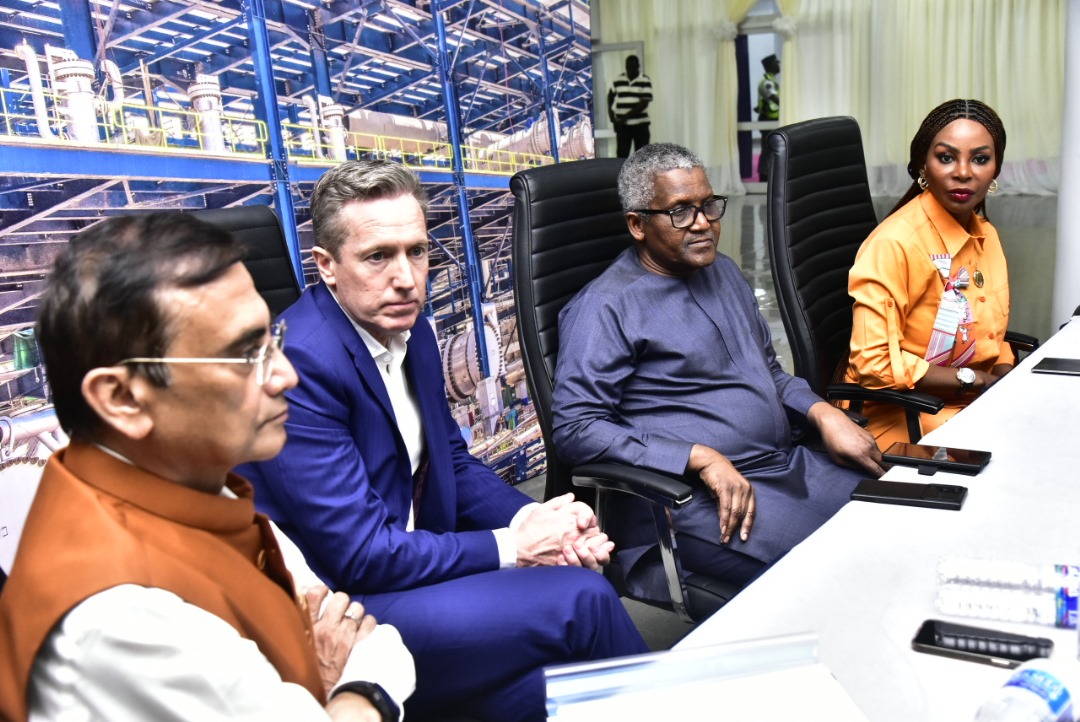
Photo caption: L R: Chief Executive Officer, Dangote Fertiliser Limited, Vishwajit Sinha; Chief Executive Officer and Managing Director, Dangote Petroleum Refinery, David Bird; President and Chief Executive, Dangote Industries Ltd, Aliko Dangote; Managing Director and Chief Executive Officer, South South Development Commission, Usoro Akpabio, during the visit of SSDC members to the Dangote Petroleum Refinery and Fertiliser Plant in Lagos on Sunday, November 30, 2025.
Dangote Petroleum Refinery has announced plans to supply one billion five hundred million litres of Premium Motor Spirit (PMS) monthly to the Nigerian market in December 2025 and January 2026, a move aimed at ensuring uninterrupted nationwide fuel availability through the festive season and into the New Year.
President and Chief Executive of Dangote Industries Limited, Aliko Dangote, disclosed the plans at the weekend, noting that the refinery will make available 50 million litres of PMS daily beginning December 1.
“In line with our commitment to national wellbeing, and consistent with our track record of ensuring a holiday season free of fuel scarcity, the Dangote Petroleum Refinery will supply 1.5 billion litres of PMS to the Nigerian market this month. This represents 50 million litres per day. We are formally notifying the Nigerian Midstream and Downstream Petroleum Regulatory Authority (NMDPRA) of this commitment. We will supply another 1.5 billion litres in January and increase to 1.7 billion litres in February, which translates to about 60 million litres per day,” Dangote said.
Photo caption: L R: President and Chief Executive, Dangote Industries Ltd, Aliko Dangote; Managing Director and Chief Executive Officer, South South Development Commission, Usoro Akpabio, during the visit of SSDC members to the Dangote Petroleum Refinery and Fertiliser Plant in Lagos on Sunday, November 30, 2025.
Speaking during a visit by the South-South Development Commission (SSDC) to the refinery and the Dangote Fertiliser complex, he stated that the facility currently has adequate stock and is producing between 40 and 45 million litres of PMS daily. He added that the daily supply of 50 million litres should dispel long-standing claims that domestic refineries lack the capacity to meet national demand.
Dangote also revealed ongoing engagement with petroleum marketers to strengthen distribution systems, including expanding the use of CNG-powered haulage.
“Our priority is to ensure Nigeria receives the products it needs. This is not driven by profit motives; it is about guaranteeing the availability of essential energy products. It is similar to the transformation we delivered in the cement sector,” he added.
He further noted that the refinery is progressing with its expansion plan to reach a capacity of 1.4 million barrels per day. More than 100,000 workers are expected to be involved in the expansion of both the refinery and the fertiliser complex. Dangote emphasised that the Group remains committed to its vision, driven by the strong public support for the company’s role in shaping Nigeria’s economic development.
During the visit, the Managing Director of SSDC, Usoro Offiong Akpabio, commended Dangote’s leadership and his continued contribution to strengthening Nigeria’s industrial capability, national energy security and long-term economic competitiveness.
She described the South-South region as Nigeria’s natural energy corridor, with vast crude oil reserves, gas infrastructure, maritime assets, agro-industrial activity and emerging industrial clusters. She noted that deeper collaboration between the region and the Dangote Group could unlock opportunities in product distribution, CNG infrastructure, petrochemicals, agriculture, and employment creation.
Akpabio added that such partnerships would advance the Federal Government’s energy stability agenda and position the South-South as a strategic growth hub for the Dangote Group.
“As the statutory development body for the South-South, SSDC is mandated to drive regional economic development, infrastructure integration, human capital advancement, and private-sector–led growth. In this regard, we stand prepared to support State-level policy and regulatory support for Ease-of-doing-business across our six states. Enabling environments for Dangote Group’s expansion into strategic sectors such as gas processing, agro-industrial value chains, renewable energy, logistics, and export-oriented manufacturing,” she said.
In a letter from the refinery’s Managing Director, David Bird, to the Authority Chief Executive of the NMDPRA, the company reaffirmed its readiness to host NMDPRA officials onsite at the refinery from December 1st to verify and publish its daily supply volumes. The refinery also sought the Authority’s support to ensure unhindered importation of crude, feedstocks and blending components, as well as smooth vessel loading for product evacuation.
“In the spirit of full transparency to the public we are willing to publish our daily production and stock volumes (online and print media),” Bird stated. “We seek the full support of NMDPRA to allow Dangote refinery to import our crude, feedstocks and blending components unhindered as well as support the lifting of our products by vessel. We continue to experience delays in vessel clearance which impacts not only the refinery operations but also our customers, adding unnecessary costs and inefficiencies”.
By Bonaventure Phillips Melah
Photo caption: L R: Chief Executive Officer, Dangote Fertiliser Limited, Vishwajit Sinha; Chief Executive Officer and Managing Director, Dangote Petroleum Refinery, David Bird; President and Chief Executive, Dangote Industries Ltd, Aliko Dangote; Managing Director and Chief Executive Officer, South South Development Commission, Usoro Akpabio, during the visit of SSDC members to the Dangote Petroleum Refinery and Fertiliser Plant in Lagos on Sunday, November 30, 2025.
Dangote Petroleum Refinery has announced plans to supply one billion five hundred million litres of Premium Motor Spirit (PMS) monthly to the Nigerian market in December 2025 and January 2026, a move aimed at ensuring uninterrupted nationwide fuel availability through the festive season and into the New Year.
President and Chief Executive of Dangote Industries Limited, Aliko Dangote, disclosed the plans at the weekend, noting that the refinery will make available 50 million litres of PMS daily beginning December 1.
“In line with our commitment to national wellbeing, and consistent with our track record of ensuring a holiday season free of fuel scarcity, the Dangote Petroleum Refinery will supply 1.5 billion litres of PMS to the Nigerian market this month. This represents 50 million litres per day. We are formally notifying the Nigerian Midstream and Downstream Petroleum Regulatory Authority (NMDPRA) of this commitment. We will supply another 1.5 billion litres in January and increase to 1.7 billion litres in February, which translates to about 60 million litres per day,” Dangote said.

Photo caption: LR: President and Chief Executive, Dangote Industries Ltd, Aliko Dangote; Managing Director and Chief Executive Officer, South South Development Commission, Usoro Akpabio, during the visit of SSDC members to the Dangote Petroleum Refinery and Fertiliser Plant in Lagos on Sunday, November 30, 2025.
Speaking during a visit by the South-South Development Commission (SSDC) to the refinery and the Dangote Fertiliser complex, he stated that the facility currently has adequate stock and is producing between 40 and 45 million litres of PMS daily. He added that the daily supply of 50 million litres should dispel long-standing claims that domestic refineries lack the capacity to meet national demand.
Dangote also revealed ongoing engagement with petroleum marketers to strengthen distribution systems, including expanding the use of CNG-powered haulage.
“Our priority is to ensure Nigeria receives the products it needs. This is not driven by profit motives; it is about guaranteeing the availability of essential energy products. It is similar to the transformation we delivered in the cement sector,” he added.
He further noted that the refinery is progressing with its expansion plan to reach a capacity of 1.4 million barrels per day. More than 100,000 workers are expected to be involved in the expansion of both the refinery and the fertiliser complex. Dangote emphasised that the Group remains committed to its vision, driven by the strong public support for the company’s role in shaping Nigeria’s economic development.
During the visit, the Managing Director of SSDC, Usoro Offiong Akpabio, commended Dangote’s leadership and his continued contribution to strengthening Nigeria’s industrial capability, national energy security and long-term economic competitiveness.
She described the South-South region as Nigeria’s natural energy corridor, with vast crude oil reserves, gas infrastructure, maritime assets, agro-industrial activity and emerging industrial clusters. She noted that deeper collaboration between the region and the Dangote Group could unlock opportunities in product distribution, CNG infrastructure, petrochemicals, agriculture, and employment creation.
Akpabio added that such partnerships would advance the Federal Government’s energy stability agenda and position the South-South as a strategic growth hub for the Dangote Group.
“As the statutory development body for the South-South, SSDC is mandated to drive regional economic development, infrastructure integration, human capital advancement, and private-sector–led growth. In this regard, we stand prepared to support State-level policy and regulatory support for Ease-of-doing-business across our six states. Enabling environments for Dangote Group’s expansion into strategic sectors such as gas processing, agro-industrial value chains, renewable energy, logistics, and export-oriented manufacturing,” she said.
In a letter from the refinery’s Managing Director, David Bird, to the Authority Chief Executive of the NMDPRA, the company reaffirmed its readiness to host NMDPRA officials onsite at the refinery from December 1st to verify and publish its daily supply volumes. The refinery also sought the Authority’s support to ensure unhindered importation of crude, feedstocks and blending components, as well as smooth vessel loading for product evacuation.
“In the spirit of full transparency to the public we are willing to publish our daily production and stock volumes (online and print media),” Bird stated. “We seek the full support of NMDPRA to allow Dangote refinery to import our crude, feedstocks and blending components unhindered as well as support the lifting of our products by vessel. We continue to experience delays in vessel clearance which impacts not only the refinery operations but also our customers, adding unnecessary costs and inefficiencies”.
-

 News11 months ago
Senate to speed up conclusion of Nigeria Forest Security Service Bill
-

 News3 years ago
Breaking: Tinubu’s authentic ministerial nominees
-
 News3 years ago
“Anytime we want to kill terrorists, President would ask us to take permission from France but they were killing our soldiers-” Niger Republic coup leader
-

 News2 years ago
“I’m leaving the Catholic church because Bishop Onah is oppressing me,” says Okunerere
-

 News6 months ago
The Many Lies Against Bashir Haske
-

 News2 years ago
Radio Nigeria’s veteran broadcaster Kelvin Ugwu dies three months after retirement from service
-
 News3 years ago
Dokpesi and the Gazebo Mystique
-

 News3 years ago
Tsunami: Tinubu orders dissolution of managements, boards of MDAs, to sack all Buhari’s political appointees