News
Sokoto 2027: Frontrunners for State Governor’s office


By Bonaventure Melah
As Nigerian politician align and realign across party lines and other considerations preparatory to the 2027 general election, stakeholders in Sokoto State are also strategizing on who occupies the No. 1 seat at the Government House.
Although Alhaji Ahmed Aliyu Sokoto, the incumbent governor of the state came to office in 2023 which means he is constitutionally entitled to contest for a second term in 2027, many pundits say his performance so far is far below expectations.
However, there are others who believe the governor has not stayed in office enough to determine whether or not he is doing well, arguing that he needs a second term of four years to prove his mettle.
Apart from the Governor, six other prominent personalities have been identified as having interest to contest the 2027 election on the platform of the ruling All Progressives Congress (APC), main opposition Peoples Democratic Party (PDP), New Nigeria Peoples Party (NNPP) and others.
The six other aspirants Hon. Yusuf Sulaiman, Hon. Ma’sud Musa Bashar, Hon. Faruku Malami Yabo, Mallam Saidu Umar, Senator Ibrahim Lamido, Hon. Umar Ajiya and Hon. Umar Bature.
How They Stand
Gov. Ahmed Aliyu Sokoto
As stated earlier, Alhaji Ahmed Aliyu Sokoto is the current Governor of Sokoto State and, as is the case in Nigeria, the odds favour him, because of the power of incumbency which throws the apparatus of government at his disposal.
In Sokoto State, critics say the Governor has performed very poorly, in view of the huge resources at his disposal. They therefore argue that he has no business contesting for reelection in 2027 but should be shown the way out to pave way for a more focused leadership that would transform the state and give the people value for their money.
But those who support the Governor say he has done well within the past two years, especially in areas like
Giving more children access to quality education, healthcare, improved water supply, especially in Sokoto metropolis housing, solar-powered street light and improved agricultural productivity, among others. The Governor is considered to have the right of first refusal due to the above-mentioned factors and especially due to power of incumbency.
Hon. Yusuf Sulaiman
Alhaji Yusuf Sulaiman who was born in 1963 served as Minister of Transportation and later, Minister for Sports under the administration of President Goodluck Jonathan.
He is popular among people of Sokoto state because he comes from the traditional ruling family of the Sokoto Caliphate and was in the state civil service before joining politics.
Following the end of his appointment as minister, he left office in December 2011 and joined the Sokoto governorship contest under the People Democratic party (PDP) but was defeated at the party primaries.
A well-educated technocrat, Alhaji Yusuf Sulaiman have experience in administration, having worked both at the state and federal levels. He was director of industry in 1991 and was appointed Executive Director at the National Maritime Authority of Nigeria (now NIMASA).
Analysts say that Alhaji Yusuf Sulaiman has good record of service but with poor performance record at the federal level. As minister of transport, his scorecard was said to be less than average which made then president Jonathan to replace and redeploy him to the ministry of sports. The only achievement recorded in his name at the ministry was the reconciliation of factions in the nation’s football Administration.
Hon. Mas’ud Musa Bashar
Ma’sud Musa Bashar is the President of Allena Petroleum Limited as well as Chairman, Almasud Oil and Gas Limited and many other companies.
The 35-year old Sokoto Prince and Tarakin Wazirin Sokoto, is one of the most successful young and inspiring entrepreneurs and Chief Executive Officers in the country with business interests that extend to diverse fields including oil, gas and general investment in the energy sector, agriculture, haulage and construction, among others.
As a young man, Mas’ud dared to go into petroleum, energy, gas and other sectors that were usually the exclusive reserve of well-established entrepreneurs and have not only excelled, but also built reputable profiles for himself and his numerous business brands.
Well-known for his charity works, Ma’sud has devoted large portion of his wealth to the upliftment of the poor and the underprivileged in the society, through various charity works and philanthropic gestures to people from his immediate community, Sokoto State and other parts of the country.
Through his charity organization, Ma’sud Dan Musa Foundation, the young entrepreneur feeds thousands provides food, shelter materials, clothing and water for hundreds of indigent people every year and feeds more than 10,000 during Ramadan fasting while distributing uncooked food items to families. The Foundation also carries of periodic renovation of burial grounds within Sokoto metropolis and environs while hundreds of people benefit from its pilgrimage sponsorship every year while his Ma’sud Dan Musa Academy has become training ground for hundreds of young people who are achieving their dream of playing professional football both at local league level and internationally.
While he is doing well in business, Hon. Ma’sud Musa Bashar has his eyes in politics also. In 2023, he indicated interest in the office of the governor of Sokoto State but was prevailed upon by stakeholders, especially elders and traditional rulers to step down his ambition but to seek the position of House of Representative member.
Even as he shelved his plans to contest the position of state governor in 2023, Ma’sud worked assiduously for the victory of President Bola Tinubu as he served as Deputy Director, APC Presidential Campaign Council in charge of the entire North West, the largest geopolitical zone in Nigeria comprising Kaduna, Kano, Katsina, Kebbi, Jigawa, Sokoto and Zamfara states. The zone is the largest in terms of population and number of votes. He was the youngest politician to serve as Deputy Zonal Director during the election and was so appointed in recognition of his grassroots mobilisation capacity and popularity among young people.
In addition to the above credentials and massive personal achievements, Hon. Ma’sud is being favoured to become the next governor of Sokoto State because of his age, being the youngest among all the identified aspirants so far, in addition of his charity projects that have empowered thousands of young people, especially young men and women who are clamouring for him to contest the 2027 governorship election.
Hon. Faruku Malami Yabo
Born in September 1969, Hon. Faruk Malami Yabo, was an Ambassador Extraordinary and Plenipotentiary of Nigeria to the Hashemite Kingdom of Jordan with concurrent accreditation to the Republic of Iraq. He is a Fellow Certified National Accountant (FCNA). He served as commissioner for Finance and later Commissioner for Local Government and Community Development, Sokoto State and was a member, Board of Trustees of the Buhari Campaign organization (BCO).
While in active service, he was also Chairman, Millennium Development Goals (MDG), Conditional Cash Transfer Program (CCT) Sokoto State and was also Member of the Federation Account Allocation Committee (FAAC), Joint Tax Board (JTB) and New Partnership for Africa’s Development (NEPAD) Peer Review Committee.
In spite of his long track record of service, Faruk Yabo is harshly criticized for the role he played as member on the conditional cash transfer as many said the process was hardly transparent and that hundreds of thousands of names on the list of beneficiaries were fictitious across the country.
Being part of previous administrations both in Sokoto State and at national level, Hon. Malami Yabo is been seen as part of Nigera’s past corrupt history and the reason most Nigerians are clamouring for real change.
Senator Ibrahim Lamido
Ibrahim Lamido is the senator representing Sokoto East senatorial District. Before he won the 2023 election, Lamido was a rooky in politics but rode on the back of godfatherism to become a senator.
As senator, he has deployed part of his resources to execute some empowerment projects which his supporters listed to include cash donation to widows and other indigent people, allocation of money for student registration fees, grant of ₦50,000 scholarships to some students and purchase of JAMB forms and motorcycles for transportation. He also installed solar-powered boreholes in some communities.
Political and social analysts have however dismissed Lamido as one of non-performing lawmakers who have not added much of their voices to the call for people-oriented leadership.
According to his critics, the job of a lawmaker is to initiate bills, raise motions and contribute in debates aimed of making quality laws of good governance and not “buying bags of noodles,” as some of them are doing.
In addition, Lamido is currently locked in tug-of-war with former governor, Aliyu Magatakarda Wamakko, who is perceived to be his political godfather. The fight is said to be so bad that many believe it would take a miracle for Lamido to return to the senate, not more becoming governor of Sokoto State in 2027.
Hon. Umar Ajiya
Hon. Umar Ajiya Isah hails from Isa Local Government of Sokoto State.
The former Chief Finance officer of the Nigeria National Petroleum Company, NNPC, holds the title of Ajiyan Sokoto, a title said to reflect both his professional accomplishments and his service to the community.
His career at Nigeria’s oil and gas subsectors spanned 22-year and he was reputed to have developed the strategic and financial acumen that later propelled his work in the public energy sector.
Ajiya is also said to have deep understanding of the global gas economy and project financing that combined to make him a valuable asset in the sector.
Although he held other top management positions in the petroleum sector, including Managing Director of Pipelines and Products Marketing Company (PPMC), is a total novice in politics and community leadership. Many also accuse him of being part of the ugly story associated with Nigeria’s oil and gas industry, adding that the nation and its over 200 million people have only tested ash in their mouth while a few who held sway and the sector amassed unfinishable wealth.
Also, as the current co-chair of the Sokoto State Economic Advisory Council, Ajiya cannot exonerate himself from whatever is the fate of Sokoto people under the current administration. Therefore, the question remains, if he has a magic wand, why not apply it to make Sokoto a better place now, rather than aspiring to become governor himself.
Umar Bature
He is a chieftain of the main opposition Peoples Democratic Party (PDP) and its National Organising Secretary.
Rumours that Umar Bature is angling to contest for office of Sokoto State governor in 2027 has been described as a joke taken too far, mainly because of his role in the ongoing internal wrangling that has torn the PDP umbrella to shreds.
Bature was elected as a member of the PDP national working committee alongside Senator Iyorchia Ayu and following their dismal performance during the 2023 presidential election that saw President Bola Tinubu of APC defeat Atiku Abubakar, the party threw away Ayu but Bature and some others having been hanging on ever since and have been divided along lines that are laced with corruption, ineptitude and lack of focus which combined to make critics ask how can such a character aspire to govern the Seat of the Caliphate?
Bonaventure Melah is an Abuja based journalist, Author and Political Analyst.
08036062975
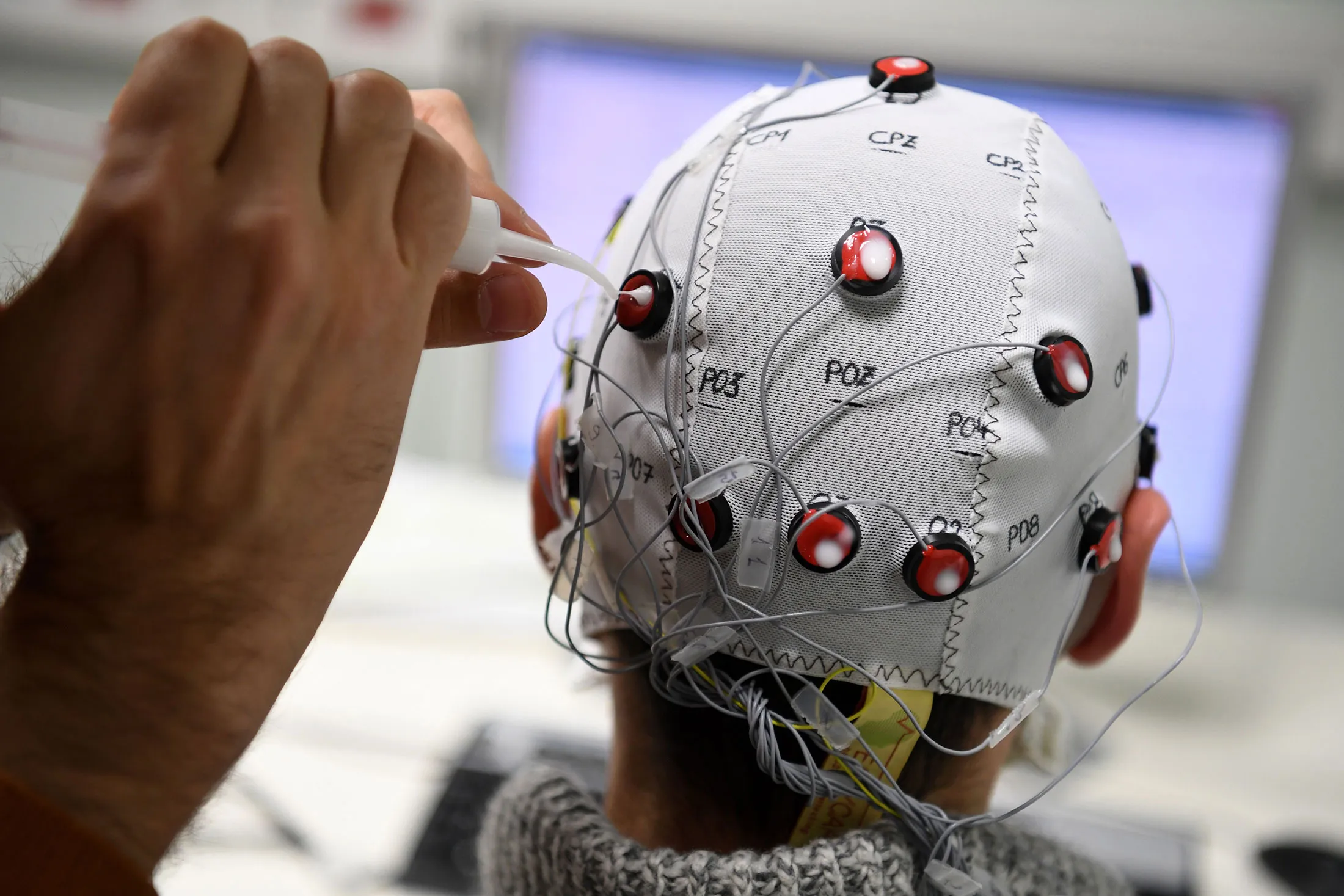
According to available records, Neo, a coin sized brain computer officially approved by China in March this year, is recording great successes in brain related medicare.
Neo is an interface developed at Tsinghua University and commercialized by Neuracle / Borui Kang Medical Technology.
It is now the world’s first invasive brain-computer interface cleared for commercial medical use.
The implant has eight electrodes placed outside the brain tissue, on the dura, where it detects signals when a patient imagines moving their hand. Those signals are decoded and used to operate a robotic rehabilitation glove.
Before approval, it was implanted in 32 patients across 11 hospitals in China with cervical spinal cord injuries. Every participant achieved brain-controlled grasping, with significant improvement in hand function.
How it works:
A person thinks about moving. A machine reads the signal. Technology interprets the thought. And a device responds.
Meanwhile, Elon Musk’s Neuralink remains in investigational human trials and does not have general commercial approval.
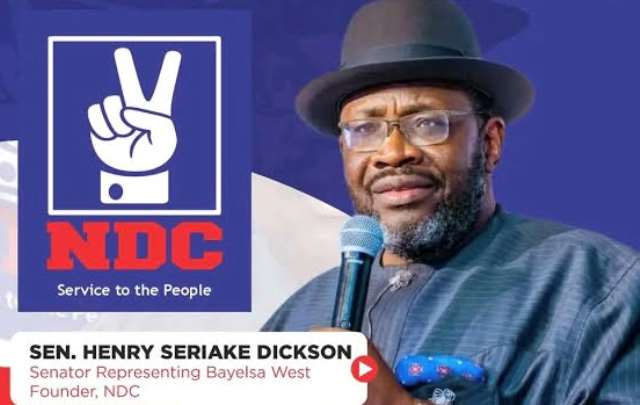
The National Leader of the Nigeria Democratic Congress (NDC), Senator Seriake Dickson, has criticised the activities of the OK Movement, warning political support groups affiliated with the party against operating as parallel structures or competing with it for control.
Dickson spoke while receiving former Secretary to the Government of the Federation (SGF), Babachir Lawal, into the NDC.
“Support groups don’t compete with the political party that is sponsoring candidates. Support groups don’t compete for supremacy, for space. Support groups are what they are: support groups.”
He added, “Support groups don’t play the role of a political party. They don’t sponsor candidates. They provide grassroots support, mobilisation, and support. They don’t convert themselves to become critics of the political party sponsored.”
Dickson said the NDC has made room for support groups, noting, “The NDC from day one made it clear that we have a huge place, an important place for all support groups. I’ve actually held meetings with Obidient groups.”
He stressed that several groups could operate under the party, saying, “We have thousands of support groups, and many more are welcome.” He added that the party has a department responsible for coordinating and managing them.
According to Dickson, support groups should not attack their sponsoring party or establish competing campaign structures.
“They don’t attack the political party sponsor. They don’t do that. Never in the history of political election, everywhere in the world.”
He said, “None of them will dare say they are setting up a campaign, presidential campaign council. It’s unheard of. Nonsensical.”
Dickson said support groups could be “gentle” or “more active,” but remained support groups, adding that their role was to mobilise at the grassroots and promote the party and its candidates.
He urged them to “confine themselves to their role” and focus on “providing support for our candidates, galvanising support at the grassroots level, propagating the candidates and the party.”
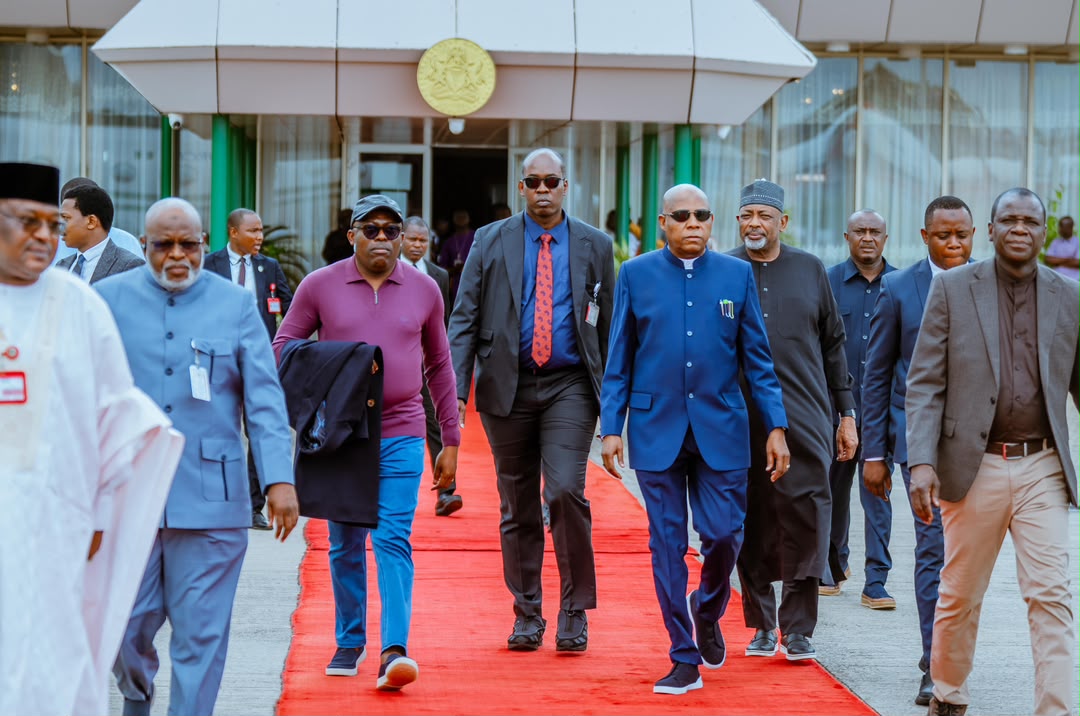
Photo caption: Vice President Kashim Shettima, Governor Fubara and other Nigerian delegates arriving in New York for UNGA
Governor Siminalayi has said that Rivers State will take centre stage at the 81st United Nations General Assembly (UNGA 81) in New York, as his administration moves to showcase the State’s huge investment potentials to the world.
Sir Fubara said the UNGA platform provides a unique opportunity to market Rivers State as Nigeria’s number one investment destination in oil and gas as well as other critical sectors.
Speaking with journalists on the sidelines of the conference in New York, the Governor said the essence of his participation at the global meeting is to give visibility to Rivers State and showcase its economic endowments and woo investors to the state.
“The issue is very simple. We’re trying to give visibility to the state and also showcase the areas where God has really endowed us in the oil and gas sector and other aspects of the state.
“I strongly believe that at the end of this conference and other side meetings, business opportunities will be made open and presented to interested investors who might have very serious and immediate needs to come to our dear state, knowing full well the position of Rivers State in the oil and gas industry.
“I also strongly believe that we are also going to make some inroad into financing and investors opportunities for our dear state,” he stated.
According to Onwuka Nzechi, Chief Press Secretary to the River State Governor, Fubara explained that the investment drive at UNGA 81 is in sync with the deliberate economic reforms of his administration, particularly the establishment of the Rivers State Investment Promotion Agency (RSIPA) as a one-stop shop to facilitate and protect investments.
“This is not different from what we have already done before in establishing what we call the Rivers State Investment Promotion Agency. What we are doing here will also aid the programme of that agency.
“Overall, I will say that Rivers State will be visible and prominent in this conference and we will come home with some good investments for our dear state,” he stated.
Onwuka in a statement quoted Governor to have assured investors that Rivers State remains peaceful, stable, and open for business, with vast opportunities in oil and gas, agriculture, blue economy, manufacturing, and renewable energy.
Rivers State is among the few Nigerian sub-nationals participating actively at UNGA 81, with engagements lined up with development finance institutions, multinational corporations, and diaspora investors.
-

 News2 years ago
Senate to speed up conclusion of Nigeria Forest Security Service Bill
-
 News1 year ago
The Many Lies Against Bashir Haske
-

 News3 years ago
Breaking: Tinubu’s authentic ministerial nominees
-
 News3 years ago
“Anytime we want to kill terrorists, President would ask us to take permission from France but they were killing our soldiers-” Niger Republic coup leader
-
 News3 years ago
“I’m leaving the Catholic church because Bishop Onah is oppressing me,” says Okunerere
-

 News3 years ago
My nude photo leak was a mistake- lawyer Ifunanya
-
 News4 months ago
See your state governor’s performance ranking
-

 News3 years ago
Radio Nigeria’s veteran broadcaster Kelvin Ugwu dies three months after retirement from service