
News
Steps to Impeach State Governor in Nigeria


The Nigerian constitution, 1999, as amended provides that the legislative arm of government can impeach a governor if found to have committed gross misconduct.
To carry out such impeachment, below are the legal processes that the lawmakers must follow:
Step 1: A written allegation of gross misconduct against the governor must be signed by at least one-third of the members of the State House of Assembly and presented to the Speaker of the State House of Assembly.
Step 2: Within seven days, the Speaker of the House of Assembly is expected to serve the state governor with a copy of the notice of allegation.
Step 3: The governor has a right to reply to the allegation levelled against him. The state lawmakers must be served each with the response from the governor.
Step 4: Within 14 days of the presentation of the notice to the Speaker of the House, they shall resolve by motion without any debate whether or not the allegation shall be investigated. The motion must be passed by at least a two-thirds majority of all members of the State House of Assembly.
Step 5: If the motion fails to get two-thirds, the process shall be halted. If the required votes is met, then the Speaker shall within 7 days of the passing of the motion, request the Chief Judge of the State to appoint a Panel to investigate the allegations.
Step 6: Within three months, The panel is expected to report its findings to the State House of Assembly.
During the proceedings of the Panel, the Governor shall have a right to defend himself or have the right to be defended by a legal practitioner.
Step 7: Where the allegations of gross misconduct against the governor can not be proven, the impeachment proceedings shall end right there.
If the allegations can be substantiated, the House of Assembly shall consider the report and a resolution for adoption of the report shall be moved.
Step 8: At least two-thirds of members of the House of Assembly must vote in support of the resolution to be adopted and the governor shall be impeached while his motion to swear in his deputy shall be moved immediately and adopted.
….The Commission wants IGP to address use of excessive force by police
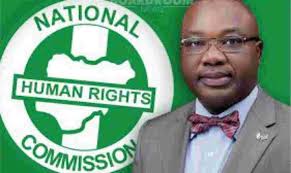
The Executive Secretary of the National Human Rights Commission (NHRC), Dr. Tony Ojukwu OFR, SAN, has strongly condemned the alleged extrajudicial killing of a 28-year-old Nigerian, Mene Ogidi, by a police officer, ASP Nuhu Usman, on April 26, 2026, in Efurun, Uvwie Local Government Area of Delta State.
In a statement issued in Abuja, Dr. Ojukwu described the incident as “deeply disturbing and a direct assault on human dignity, the Constitution of the Federal Republic of Nigeria, and the rule of law.”
He stressed that no Nigerian should lose their life at the hands of those sworn to protect them, reiterating that every life matters and must be protected.
According to him, “the reported action of the officer involved is condemnable, unacceptable, and completely inconsistent with the principles of justice and a civilized society.”
The statement which was signed by Hajia Fatimah Agwai Mohammed, Director, Corporate Affairs and External Linkages, quoted Ojukwu to have expressed grave concern over the recurring incidents of excessive use of force by law enforcement officers and called on the Nigeria Police Force to take urgent and decisive steps to address the issue.
He specifically urged the police authorities to subject officers deployed on special duties to periodic mental and psychological evaluations to ensure they are fit to carry arms and engage with civilians responsibly.
Dr. Ojukwu further called for the immediate disciplinary action against ASP Nuhu Usman in line with extant laws and police regulations.
He also emphasized the need for the Nigeria Police Force to fully implement the recommendations of the Commission’s Panel on Police Brutality as a necessary step toward meaningful reform and prevention of future violations.
“The Commission demands immediate arrest and a transparent investigation into the incident, dismissal of the officer involved, and swift prosecution in accordance with the law.
We hereby call for adequate compensation and justice for the family of the victim,” he stated.
He warned that justice delayed only deepens public distrust in state institutions and undermines confidence in law enforcement.
The Executive Secretary assured that the NHRC will continue to monitor the case closely and will persist in its advocacy for accountability, justice, and the protection of the fundamental rights of all Nigerians.
“Nigeria must never normalize brutality. Justice must speak louder than silence,” he concluded.

The Supreme Court of Nigeria will on Thursday, deliver judgments in two cases involving the leadership crises rocking the African Democratic Congress and the Peoples Democratic Party.
According to information on the official website of the court, the matters, listed under “Political Appeals”, have been added to the cause list for Thursday, April 30, 2026.
While judgment in the ADC matter, marked SC/CV/180/2026, has been fixed for 2 pm, there is no time yet for that if the PDP.
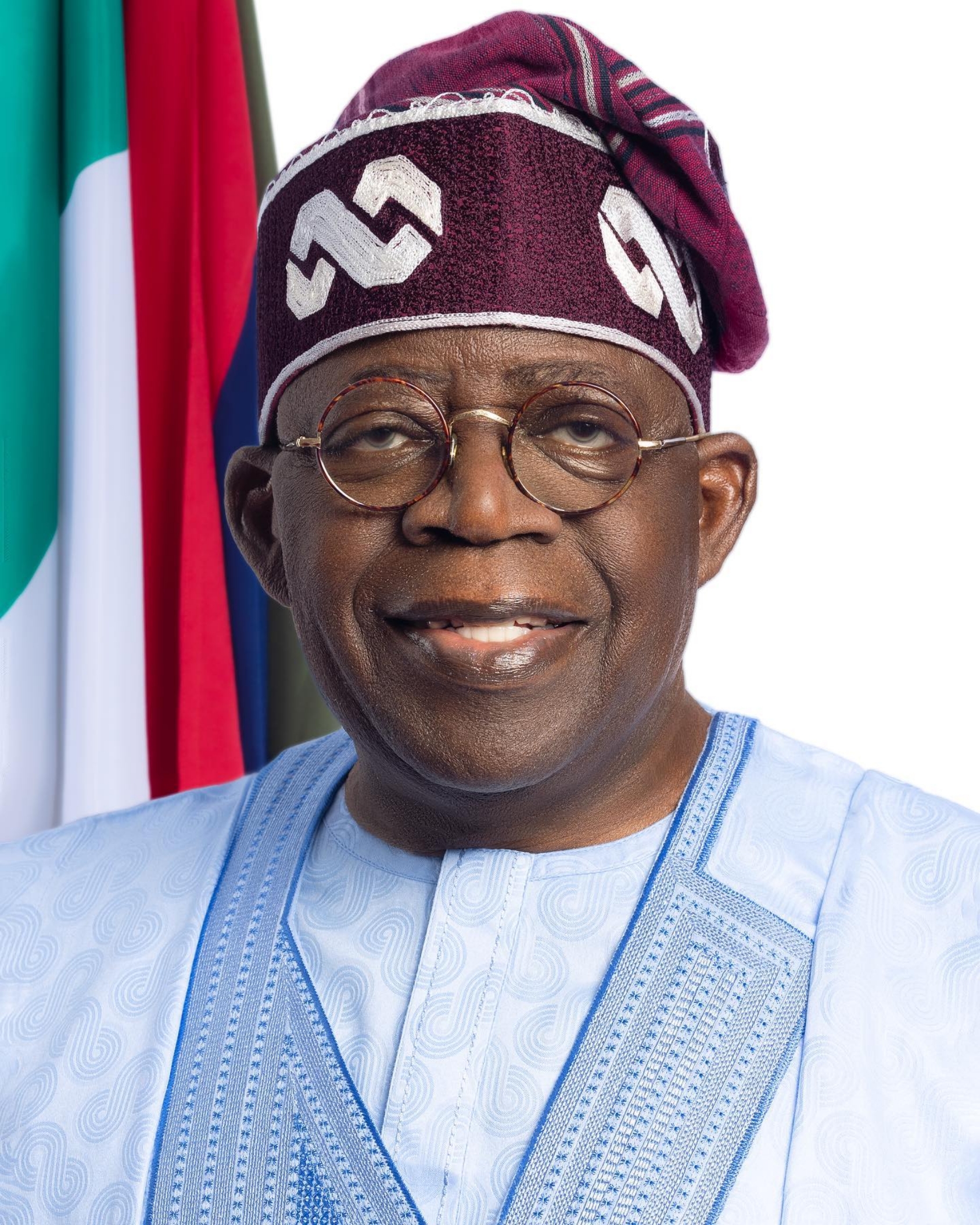
President Bola Tinubu has written the Senate, seeking the screening and subsequent confirmation of fifteen nominees to the National Human Rights Commission (NHRC).
The letter was read by the President of the Senate, Senator Godswill Akpabio.
The letter seeks the reconstitution of the commission’s board in line with statutory provisions with the list comprising nominees from diverse professional backgrounds, including the media and legal sectors.
Among the nominees are the President, Nigeria Guild of Editors and Editor, Vanguard Newspapers, Mr. Eze Anaba; and Dr. Salamatu Hussaina Suleiman, who has been proposed as chairman of the board.
The Executive Secretary of the Commission, Dr. Anthony Ojukwu (SAN) is to retain his position as the Chief Executive Officer.
Other nominees include Mrs Roseline Tasha, Ambassador Adam Yubak Baku, ACG Felix Lawrence, Mr. Edmund Chinonye, Mr. Chinonye Obiaku (SAN), Oluwakemi Asiwaju Okere-Odo, Professor Adedeji Ogunji, Kingsley Chidozie, Mohammed Adelodu, Maupe Ogun Yusuf, and Otunba Francis Meshioye as members.
Also nominated are Patience Patrick and Hawwa Ibrahim, listed as members.
The President said the nominations were made pursuant to Section 2(3) of the National Human Rights Commission (Establishment) Act, 2010, which empowers him to constitute the board subject to Senate confirmation.
He explained that the reconstitution of the board was necessary to enhance the commission’s institutional capacity and enable it to more effectively discharge its mandate to promote and protect human rights across the country.
If confirmed, the new board is expected to play a critical role in reinforcing the NHRC’s oversight functions, particularly at a time of heightened concerns over rights protection and accountability in Nigeria.
Following the presentation of the request, the Senate referred the nominations to its Committee on Judiciary, Human Rights and Legal Matters for screening and report within two weeks.
-

 News1 year ago
Senate to speed up conclusion of Nigeria Forest Security Service Bill
-

 News9 months ago
The Many Lies Against Bashir Haske
-

 News3 years ago
Breaking: Tinubu’s authentic ministerial nominees
-
 News3 years ago
“Anytime we want to kill terrorists, President would ask us to take permission from France but they were killing our soldiers-” Niger Republic coup leader
-
 News3 years ago
“I’m leaving the Catholic church because Bishop Onah is oppressing me,” says Okunerere
-

 News3 years ago
Radio Nigeria’s veteran broadcaster Kelvin Ugwu dies three months after retirement from service
-
 News3 years ago
Dokpesi and the Gazebo Mystique
-

 News3 years ago
Tsunami: Tinubu orders dissolution of managements, boards of MDAs, to sack all Buhari’s political appointees