
News
Real reason man who stole fowl was sentenced to death


By Akinwole Olasubomi A.
The Osun State Government’s recent consideration of the prerogative of mercy for convicted individuals has drawn significant attention and have invariably stirred public opinion based on incomplete or misleading narratives. While this action demonstrates the government’s commitment to exercising compassion and upholding constitutional provisions, it is imperative that such privilege is not misinterpreted or misused to distort the sanctity of judicial decisions. Misleading narratives aimed at undermining the judiciary not only threaten public trust but also obscure the real facts surrounding this case.
The Osun State Government deserves commendation for its thoughtful approach to this matter, particularly its willingness to consider clemency in light of the convicts’ circumstances through the prerogative of mercy as exercised by the executive arm of government is a constitutional provision designed to temper justice with compassion and mercy when appropriate. But this authority is not in anyway a critique of judicial decisions. Instead, it reflects a complementary relationship between the arms of government, underscoring the separation of powers.
However, it is equally crucial to avoid abusing this constitutional privilege by turning the law into a tool to fit a distorted narrative, especially one that trivializes the gravity of the original crimes. This recent development does not, and should not, be interpreted as a challenge to the judiciary’s authority. The judiciary’s role is to ensure that justice is served based on evidence and the letter of the law, while the executive’s mercy is a discretionary act that operates within a separate but complementary sphere.
It is therefore crucial to clarify the facts and reaffirm the role of the judiciary as the backbone of any functional democracy tasked with interpreting and enforcing the law impartially based on evidence, legal statutes, and due process. The misleading portrayal of the judiciary, and in particular the judge who presided over the case, is not only unfair but risks undermining public trust in this vital arm of government.
The current case is a reflection of this democratic balance. The judiciary fulfilled its mandate by delivering a verdict based on the facts and the law. Any subsequent exercise of clemency by the executive does not negate the judiciary’s integrity but highlights the collaborative nature of governance under the separation of powers.
*The Facts of the Case*
Contrary to sensationalized reports, the conviction of Olowookere Segun and Morakinyo Sunday was not for the petty theft of a fowl, but for armed robbery and related crimes. The prosecution, led by the state Solicitor-General, Mrs. Abiola Adewemimo, presented irrefutable evidence, including eyewitness accounts and confessions from the accused.
The case stemmed from an incident in the year 2010, when the convicts forcefully broke into the home of Mr. Balogun Tope, a police officer, armed with a cutlass and a dane gun. They carted away valuables, including livestock, and were apprehended following their involvement in similar robberies. The evidence showed a clear pattern of criminal behaviour, including their admission to robbing another individual, Alhaja Umani Oyewo, from whom they stole broilers, eggs, and kegs of vegetable oil.
Justice Jide Falola of the Osun State High Court, sitting in Okuku, delivered a judgment grounded in the law. The convicts were found guilty of conspiracy, robbery, and stealing, with sentences proportionate to the gravity of their crimes, death by hanging for conspiracy, in accordance with Section 6(b) and 1(2)(a) of the Robbery and Firearm (Special Provisions) Act, Cap R 11, Laws of the Federation of Nigeria, 2004. Life imprisonment for robbery. Three years’ imprisonment for stealing.
The judge also showed humanity in his judgment, recommending that the governor may consider commuting the death sentence to a ten-year prison term, given the convicts’ ages and circumstances. This reflects a balanced application of the law, tempered with empathy, a situation we now witnessed been put into play by the Osun State government.
It is however disheartening to see attempts to trivialize this case by focusing solely on the theft of a fowl, ignoring the armed robbery charges and the overwhelming evidence presented in court. Such distortions risk misleading the public and eroding confidence in the judiciary. It is important for citizens to understand that the judiciary operates based on evidence and established legal frameworks, not emotion or public sentiment.
To those who care to know, the judiciary system in Nigeria cutting across the 36 sates and federal capital territory is a pillar of democracy, tasked with delivering justice impartially and without bias. So in the case of Osun State, Justice Falola’s handling of the case in question reflects the professionalism and integrity that underpin the judiciary’s work. The prerogative of mercy, if exercised, is not a repudiation of the court’s judgment but a constitutional tool for tempering justice with clemency.
Members of the public are urged to seek facts and reject narratives designed to undermine the judiciary. Trust in this institution is essential for maintaining law, order, and justice in society. Let us protect the integrity of the judiciary and support its critical role in safeguarding our democracy.
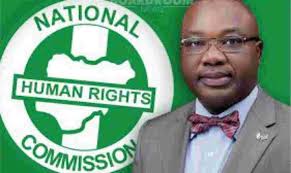
….The Commission wants IGP to address use of excessive force by police
The Executive Secretary of the National Human Rights Commission (NHRC), Dr. Tony Ojukwu OFR, SAN, has strongly condemned the alleged extrajudicial killing of a 28-year-old Nigerian, Mene Ogidi, by a police officer, ASP Nuhu Usman, on April 26, 2026, in Efurun, Uvwie Local Government Area of Delta State.
In a statement issued in Abuja, Dr. Ojukwu described the incident as “deeply disturbing and a direct assault on human dignity, the Constitution of the Federal Republic of Nigeria, and the rule of law.”
He stressed that no Nigerian should lose their life at the hands of those sworn to protect them, reiterating that every life matters and must be protected.
According to him, “the reported action of the officer involved is condemnable, unacceptable, and completely inconsistent with the principles of justice and a civilized society.”
The statement which was signed by Hajia Fatimah Agwai Mohammed, Director, Corporate Affairs and External Linkages, quoted Ojukwu to have expressed grave concern over the recurring incidents of excessive use of force by law enforcement officers and called on the Nigeria Police Force to take urgent and decisive steps to address the issue.
He specifically urged the police authorities to subject officers deployed on special duties to periodic mental and psychological evaluations to ensure they are fit to carry arms and engage with civilians responsibly.
Dr. Ojukwu further called for the immediate disciplinary action against ASP Nuhu Usman in line with extant laws and police regulations.
He also emphasized the need for the Nigeria Police Force to fully implement the recommendations of the Commission’s Panel on Police Brutality as a necessary step toward meaningful reform and prevention of future violations.
“The Commission demands immediate arrest and a transparent investigation into the incident, dismissal of the officer involved, and swift prosecution in accordance with the law.
We hereby call for adequate compensation and justice for the family of the victim,” he stated.
He warned that justice delayed only deepens public distrust in state institutions and undermines confidence in law enforcement.
The Executive Secretary assured that the NHRC will continue to monitor the case closely and will persist in its advocacy for accountability, justice, and the protection of the fundamental rights of all Nigerians.
“Nigeria must never normalize brutality. Justice must speak louder than silence,” he concluded.

The Supreme Court of Nigeria will on Thursday, deliver judgments in two cases involving the leadership crises rocking the African Democratic Congress and the Peoples Democratic Party.
According to information on the official website of the court, the matters, listed under “Political Appeals”, have been added to the cause list for Thursday, April 30, 2026.
While judgment in the ADC matter, marked SC/CV/180/2026, has been fixed for 2 pm, there is no time yet for that if the PDP.

President Bola Tinubu has written the Senate, seeking the screening and subsequent confirmation of fifteen nominees to the National Human Rights Commission (NHRC).
The letter was read by the President of the Senate, Senator Godswill Akpabio.
The letter seeks the reconstitution of the commission’s board in line with statutory provisions with the list comprising nominees from diverse professional backgrounds, including the media and legal sectors.
Among the nominees are the President, Nigeria Guild of Editors and Editor, Vanguard Newspapers, Mr. Eze Anaba; and Dr. Salamatu Hussaina Suleiman, who has been proposed as chairman of the board.
The Executive Secretary of the Commission, Dr. Anthony Ojukwu (SAN) is to retain his position as the Chief Executive Officer.
Other nominees include Mrs Roseline Tasha, Ambassador Adam Yubak Baku, ACG Felix Lawrence, Mr. Edmund Chinonye, Mr. Chinonye Obiaku (SAN), Oluwakemi Asiwaju Okere-Odo, Professor Adedeji Ogunji, Kingsley Chidozie, Mohammed Adelodu, Maupe Ogun Yusuf, and Otunba Francis Meshioye as members.
Also nominated are Patience Patrick and Hawwa Ibrahim, listed as members.
The President said the nominations were made pursuant to Section 2(3) of the National Human Rights Commission (Establishment) Act, 2010, which empowers him to constitute the board subject to Senate confirmation.
He explained that the reconstitution of the board was necessary to enhance the commission’s institutional capacity and enable it to more effectively discharge its mandate to promote and protect human rights across the country.
If confirmed, the new board is expected to play a critical role in reinforcing the NHRC’s oversight functions, particularly at a time of heightened concerns over rights protection and accountability in Nigeria.
Following the presentation of the request, the Senate referred the nominations to its Committee on Judiciary, Human Rights and Legal Matters for screening and report within two weeks.
-

 News1 year ago
Senate to speed up conclusion of Nigeria Forest Security Service Bill
-

 News9 months ago
The Many Lies Against Bashir Haske
-

 News3 years ago
Breaking: Tinubu’s authentic ministerial nominees
-
 News3 years ago
“Anytime we want to kill terrorists, President would ask us to take permission from France but they were killing our soldiers-” Niger Republic coup leader
-
 News3 years ago
“I’m leaving the Catholic church because Bishop Onah is oppressing me,” says Okunerere
-

 News3 years ago
Radio Nigeria’s veteran broadcaster Kelvin Ugwu dies three months after retirement from service
-
 News3 years ago
Dokpesi and the Gazebo Mystique
-

 News3 years ago
Tsunami: Tinubu orders dissolution of managements, boards of MDAs, to sack all Buhari’s political appointees