
News
Why Northerners don’t call Tinubu “Jagaban”

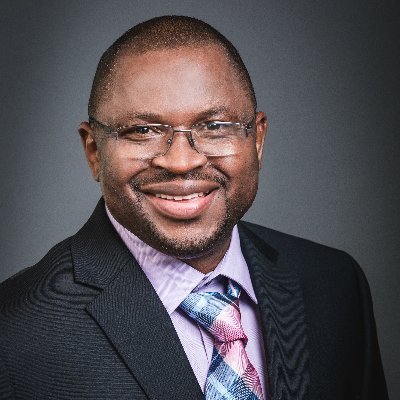
By Farooq Kperogi
Southern Nigerians have asked me two persistent, trivial questions about President Bola Ahmed Tinubu. The first is why most Hausa-speaking northerners don’t call Tinubu “Jagaban” as a standalone title like southerners do. Since I am from Borgu, I’ve also been asked why Tinubu was knighted as the “Jagaban Borgu” or the “Jagaba of Borgu.” And what does the title mean, anyway?
I didn’t think the questions were worth a response, much less a column-length one, because, until now, Tinubu was either just a major, if unofficial, political player in the Buhari regime or a candidate for president. Now that he is president, I think these questions are deserving of a response in the interest of historical and political education.
Hausa-speaking northerners don’t say “jagaban” as a stand alone word because it is ungrammatical in their language. The usual word is “jagaba.” When it transforms to “jagaban” it must be followed immediately by a place name because the additional “n” is a preposition that signifies “of.” So, it is either “the Jagaba of Borgu” or “Jagaban Borgu.” If the title is not associated with a place, it’s simply “Jagaba,” not “Jagaban”
To say “Jabagan of Borgu” is to commit an ungainly interlingual prepositional tautology since “n” and “of” mean exactly the same thing. Of course, interlingual tautologies are not uncommon. For example, we say Aso Rock even when “aso” means “rock” in the Gbagyi language. We say “Lake Chad” even when “chad” means “lake” in Kanuri. And we say “Sahara Desert” even when “sahara” means “desert” in Arabic.
Since linguistic habits often form and evolve outside notions of correct usage, I won’t be surprised if even Hausa-speaking northerners start to call Tinubu “Jagaban”—or even “Jagaban of Borgu.” Nigeria’s southwest is, after all, the country’s sociolinguistic pacesetter because of the centrality of Lagos as the cultural capital.
So, what does “jagaba” mean? Well, it’s the Hausa word for chief warrior, warlord, frontrunner, or simply a brave man. It’s derived from “ja,” which means pull and “gaba,” which means front in the Hausa language. A jagaba is, therefore, someone who leads from the front, which is another way of describing a war commander. In other words, “Jagaban Borgu” or the “Jagaba of Borgu” means the Chief Warrior of Borgu.
The title was conferred on President Tinubu in February 2006 by the late Alhaji Haliru Dantoro who was Emir of Borgu in New Bussa from 2002 to 2015. Dantoro and Tinubu struck up an enduring, if unusual, friendship in 1992 when both of them served as senators in IBB’s abortive Third Republic. Dantoro was a senator on the platform of the National Republican Convention (NRC) and Tinubu was elected on the platform of the Social Democratic Party (SDP).
Although they belonged to different political parties, had diametrically opposed ideological temperaments, and Tinubu was much younger than Dantoro, they hit it off and sustained their friendship even after Sani Abacha dissolved the senate.
On February 26, 2006, exactly four years after Dantoro became emir, he knighted Tinubu as “Jagaban Borgu” (or the Jagaba of Borgu) and Remi Tinubu, his wife, as Yon Bana Jagaban Borgu.“When God made me the Emir, I said this man was there when I was in dire need of help, so why can’t I use my position to make him what I feel will help him in future politically?” Dantoro said in a news interview before his death.
Dantoro’s graciousness toward Tinubu doesn’t come to me as a surprise. As I pointed out in my November 07, 2015, column titled “Tribute to Haliru Dantoro, Emir of Borgu,” Dantoro was a conciliatory, even-tempered, and pleasant person who loved to build bridges across cultures, regions, ideologies, and faiths. Six months before his death, former President Muhammadu Buhari testified that even though he imprisoned Dantoro in 1984, along with other Second Republic politicians, he forgave him and even went “ahead to establish [a] very strong and cherished personal relationship” with him.
Dantoro and my father’s immediate younger brother, J.B. Kperogi, were also fierce political rivals in the Second Republic in the old Borgu, yet when I had a chance to meet him in 1999 as a young reporter and he recognized me as the nephew of his former political opponent, he was kind and gracious to me, asked after my uncle, and emphasized the importance of unity in the old Nigerian Borgu that is now splintered in parts of Kwara, Niger, and Kebbi states.
Having said this, it’s important to state that “jagaba” is not a Borgu title; it’s borrowed from Hausa land. The ancient Borgu empire was a pluri-ethnic, confederate polity and was peopled by many ethnic groups, but mostly by the Baatonu (whom Yoruba people call Bariba, Ibariba, or Baruba), the Boko (or Bokobaru/Bisa), the Fulani, the Kambari, and the Dendi people.
Ancient Borgu stretched from what is now northeastern Benin Republic (where a Borgou state exists) to present-day Baruten and Kaiama local governments in Kwara State; Borgu and Agwara local governments in Niger State; and Bagudo and Dandi local governments in Kebbi State.
In 1904, Nigerian Borgu, which Lord Salisbury once angrily derided as “a malarious African desert…not worth a war,” was initially designated as a province by British colonizers. That was the equivalent of a state in modern parlance. It was later downgraded to a “division” of several provinces, including Kebbi Province, Kontagora Province, and Ilorin Province because it wasn’t economically self-sustaining.
When Kwara State was created in 1967, most of Borgu (except Bagudo and Dandi) became a part of the state and existed as Nigeria’s largest local government area until August 27, 1991, when IBB carved out what is now Borgu and Agwara local governments to Niger State.
I don’t know why Dantoro didn’t give Tinubu a title that is native to the Bisa/Boko-speaking people of New Bussa, but Professor Halidu Usman, the Emir of Desa (known as Ilesha Baruba by Yoruba people) in the Baruten Local Government in Kwara State once defended handing out Hausa-derived traditional titles because, according to him, the repertoire of native Borgu titles is severely limited and has been exhausted in light of the changing cultural environment.
In any case, Borgu has always been a melting pot that fuses multifarious cultural influences from far-flung places. Many historic and deeply entrenched Borgu royal titles have Hausa or Kanuri roots. Take Kilishi Yeruma, for example. It is a fossilized, time-honored title in all of Borgu for the heir apparent to the throne. It is derived from a fusion of Hausa and Kanuri.
Kilishi is the Hausa word for rug (which symbolizes the throne) and Yeruma is the corruption of the Kanuri “yerima,” which means prince. The town of Kishi in the Oke-Ogun area of Oyo State, was founded by a Borgu prince called Kilishi Yeruma, and Kishi (or Kisi) is the short form of Kilishi. It’s a history people of Kishi are intimately familiar with and proud of. That is why the Iba of Kishi attends the yearly Gaani festival in Borgu.
Interestingly, when I discussed Tinubu’s Borgu title with my paternal uncle a few days ago, he jokingly wondered if Tinubu was aware that he was shirking the duties his title required of him by removing fuel subsidies, which has multiplied the deprivation of border communities such as Borgu.
The leadership of Nigeria Democratic Congress, NDC, has disowned the Presidential Campaign Council, PCC, set up by the OK Movement ahead of the 2027 general elections.
This is contained in a statement signed by the party’s National Chairman, Cleopas Moses, on Saturday.
Moses stated that the announcement made by one John Ugulu was not authorised and did not come from the party.
According to him, going forward, no individual or group is authorised to announce, constitute or publish any campaign structure or organ in the name of the party without the approval of the party’s National Working Committee, NWC.
The statement partly read: “The leadership of our party, the Nigerian Democratic Congress, NDC, has noted with concern a publication credited to one John Ugulu, announcing a Presidential Campaign Council, PCC, under the guise of the OK Movement.
“For the avoidance of doubt, the party wishes to state categorically as follows: The party hereby dissociates itself in totality from the said OK Movement PCC announcement. It did not emanate from the party and should be disregarded by the public and the media.
“All candidates of the party must appreciate that they are not running as independent candidates. They are products of the party and remain subject to the authority and discipline of the party. Therefore, only the party’s leadership can constitute and announce a PCC.
“No member, candidate or support group should, under any guise, undermine the party or demarcate the party. The party recognises and deeply appreciates the contribution of all support groups and encourages their continued support. We welcome even more support groups who identify with our mission to rescue Nigeria.
“While the party will continue to work collaboratively with all support groups, such groups should not see themselves as alternative party structures or parallel organs of the party.”
News
25 dead bodies recovered as families remain uncertain over fate of 500 residents abducted from Niger communities
25 decomposing bodies belonging to victims of a mass abduction that took place in four communities in Niger state have been recovered.
They were part of residents that were abducted by terrorists Dekara, Kpenya, Sabon-Gida and Gidan-Zana in Borgu Local Government Area.
The bodies were recovered after the communities were reportedly alerted on Monday by the abductors to come and identify and retrieve the bodies.
The victims were said to be among about 500 worshippers abducted after Friday Jumm’at prayers on August 21, 2026.
25 bodies were recovered and later given a mass burial in a nearby bush.
The reported killings have heightened anxiety among families whose relatives remain in captivity, with residents saying they are increasingly uncertain about the fate of the remaining abductees.
A source said the abductors allegedly warned that more captives could be killed if their ransom demands were not met.
“They first asked each family to bring N10 million for each captive, but later reduced it to N5 million. There is no way we can afford it,” he said.
News
Democracy: NHRC calls for people-centered policies, robust debate, respect for human rights, dignity
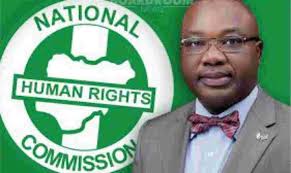
Ahead of the 2027 general election, the National Human Rights Commission (NHRC), has urged authorities and policy makers to prioritize rights of citizens and respect for human dignity over and above the quest to win election and occupy leadership position,
The Executive Secretary of the Commission, Chief Tony Ojukwu, SAN, made the call on Wednesday, as Nigeria joins the rest of the world to commemorate the 2026 International Day of Democracy.
Ojukwu said the day reminds us that democracy is not just about elections, but about the dignity, voice, and rights of every citizen.
He stated that democracy represents the freedom to speak, to choose, to participate, and to hold power accountable without fear; and called on all politicians, political parties and their supporters to exercise restraint and responsibility in public utterances.
He further stressed that democracy thrives on debate, not on hate speech, inciting statements, ethnic profiling, or threats.
A statement by Hajia Fatimah Agwai Mohammed, Director Corporate Affairs and External Linkages at the Commission, quoted Ojukwu to have reiterated that words can build peace or destroy the nation, and urged the political class to make campaigns issue-based and shun any language capable of inciting violence or undermining national unity.
The Chief Human Rights Officer of the country noted that the Commission will continue to monitor hate speech and electoral violence. He called on every eligible Nigerian to rise above voter apathy and actively exercise their civic rights, adding that citizens should not stay away from the polls, sell votes, or believe that votes do not count as these emanate from voter apathy.
Chief Ojukwu lamented that democracy dies when citizens withdraw, and remain silent, he emphasized that the Permanent Voter’s Card remains the power of the people to choose desired leaders.
He therefore urged citizens to come out, vote, and make votes count, describing the choice of leaders as both a right and a duty to Nigeria.
The Executive Secretary who is also the President of the Network of National Human Rights Institutions in West Africa (NNHRI-WA) called on the Federal Government, the Independent National Electoral Commission, and all security agencies to ensure a level playing field for all.
He further stated that government must guarantee the safety of voters, journalists, observers, human rights defenders and the citizens at large.
“Anyone regardless of status or party affiliation, who attempts to make the polity unbearable, who sponsors violence, vote-buying, voter suppression, or attacks on democratic institutions ahead of the 2027 General Elections, must be promptly investigated and prosecuted in accordance with the law, adding that impunity remains the greatest threat to democracy.
In conclusion, Chief Ojukwu called for commitment to a democracy that delivers not just elections, but justice, equality, and human rights for all.
-

 News2 years ago
Senate to speed up conclusion of Nigeria Forest Security Service Bill
-
 News1 year ago
The Many Lies Against Bashir Haske
-

 News3 years ago
Breaking: Tinubu’s authentic ministerial nominees
-
 News3 years ago
“Anytime we want to kill terrorists, President would ask us to take permission from France but they were killing our soldiers-” Niger Republic coup leader
-
 News3 years ago
“I’m leaving the Catholic church because Bishop Onah is oppressing me,” says Okunerere
-

 News3 years ago
My nude photo leak was a mistake- lawyer Ifunanya
-

 News3 years ago
Radio Nigeria’s veteran broadcaster Kelvin Ugwu dies three months after retirement from service
-
 News4 months ago
See your state governor’s performance ranking