
News
Another win for Nigeria at WFP dialogue as AfDB, partners vote additional $1b to fund SAPZs in 24 states


It was yet another bountiful harvest for the President Bola Ahmed Tinubu administration in its investment drive, as the African Development Bank (AfDB), Islamic Development Bank (IDB) and the International Fund for Agricultural Development hinted on Thursday that they have voted $1 billion to further deliver special agro-industrial processing zones in 24 States of Nigeria.

This is in addition to an initial $520 million voted by the development partners for the development of eight special agro-industrial processing zones in Nigeria.
President of African Development Bank Group, Dr. Akinwumi A. Adesina, disclosed this at the Norman Borlaug International Dialogue, World Food Prize 2023, in Des Moines, Iowa, United States of America.
A statement issued by Stanley Nkwocha, Senior Special Assistant to the President on Media and Communications, Office of the Vice President, said that Vice President Kashim Shettima, who is attending the event in pursuance of the food security and diversification policy of the Tinubu administration, had on Wednesday delivered his keynote address at the ongoing Dialogue.
Delivering his own speech titled, “From Dakar to Des Moines,” Dr. Adesina noted that the decision to pump such huge funds into Nigeria’s agribusiness was part of the resolve to develop Special Agro-Industrial Processing Zones (SAPZs) in 13 countries.
Explaining that it was the core of the food and agriculture delivery compacts from the Dakar 2 Summit held earlier this year in Dakar, Senegal, the AfDB President said, “We are investing heavily in the development of SAPZs to support the development of agricultural value chains, food processing and value addition, enabling infrastructure and logistics to promote local, regional, and international trade in food.
“The African Development Bank Group is investing $853 million in the development of the Special Agro-Industrial Processing Zones, and it has mobilized additional co-financing of $661 million, for a total commitment of $1.5 billion. We are deploying effective partnerships at scale. We are currently implementing 25 Special Agro-industrial Processing Zones in 13 countries.
“For example, the African Development Bank, Islamic Development Bank, and the International Fund for Agricultural Development provided $520 million for the development of 8 special agro-industrial processing zones in Nigeria. The second phase of the program aims to mobilize an additional $1 billion to deliver special agro-industrial processing zones in 24 States of Nigeria”.
Dr. Adesina regretted that while much progress had “been made in African agriculture, 283 million people still go to bed hungry in Africa, about a third of the 828 million people that suffer hunger globally.”
He however described the Norman Borlaug International Dialogue World Food Prize 2023, as a “journey and narrative of how we are combining the power of science, technology, policies, and politics to ensure that Africa fully unlocks its agricultural potential, and feeds itself, with pride.”
The AfDB President thanked Vice President Kashim Shettima, and the President of Ethiopia, Sahle-Work Zewde, for participating in the global event, saying their presence is an indication “that Africa has the political will and is fully ready to tackle food insecurity and make hunger history” on the continent.
Also speaking during the fire-side chat with the AfDB President, Dr Akinwunmi Adesina, Vice President Kashim Shettima who spoke on the Tinubu administration’s initiatives for food security said the quality of present leadership in Nigeria and the rest of Africa will drive transformation in agriculture and other sectors.
According to him, “a nation falls or rises fundamentally due to the quality of its leadership. Right now Africa is blessed with quite a handful of quality leaders that have the drive, passion and skills set to redefine the meaning and concept of modern leadership.
“Bola Ahmed Tinubu, my boss, is a good example, Macky Sall of Senegal and of course, Abdel Fattah El-Sisi of Egypt are doing wonderfully well, just to mention a few of the African leaders that are distinguishing themselves in leadership.
“I want to assure this gathering of investors and stakeholders in the agricultural sector that my boss, President Bola Ahmed Tinubu is a quintessential 21st century modern African leader who is determined to redefine the meaning and concept of modern leadership.
“Be rest assured that there will be a sea change in the fortunes of the Nigerian nation and by extension the African continent in the next couple of years because Nigeria is an anchor nation,” the VP added.
On wheat production, Sen. Shettima said “our target towards wheat production in Nigeria is to achieve 50% self-sufficiency in the next 3 cycles. It is inconceivable that we are the second largest wheat importer in the world.
“Luckily, we have already procured the heat tolerant variety of wheat seeds and we are going to drive that process by supporting the farmers with the heat tolerant variety, agricultural extension services, fertilizer and also hope to increase the irrigation areas to 1 million hectares in the next cropping cycle.
“We need to produce about 2.4 million tonnes of wheat grains in Nigeria. We are going to reach out to our farmers through small irrigation schemes and through digitalisation. All the actors in the value chain will be sufficiently taken care of through innovative finance, partial credit guarantees and crop insurance,” the VP emphasized.
For rice production, the VP said the major challenge for Nigeria is the insufficiency of paddy rice. He noted that Nigeria has adequate milling capacity but “we need to produce 3 to 4 million tonnes of paddy rice to meet our requirement of about 2.5 million tonnes per annum. We have 75 million hectares of arable land and most of it is suited for rice cultivation.”
He added that “we will provide our farmers with certified seeds, fertilizer, extension services, the digitization of services, inputs, finance and market information. Our target is to achieve self-sufficiency in rice latest by 2027.”
The VP also spoke about the Special Agro-Industrial Processing Zones (SAPZs), reiterating the Tinubu administration’s commitment to providing an enabling environment for investors in the zones.
He said the government would create an SAPZ development authority that will operate like a one-stop shop where regulatory and associated issues will be addressed.

The Supreme Court of Nigeria will on Thursday, deliver judgments in two cases involving the leadership crises rocking the African Democratic Congress and the Peoples Democratic Party.
According to information on the official website of the court, the matters, listed under “Political Appeals”, have been added to the cause list for Thursday, April 30, 2026.
While judgment in the ADC matter, marked SC/CV/180/2026, has been fixed for 2 pm, there is no time yet for that if the PDP.
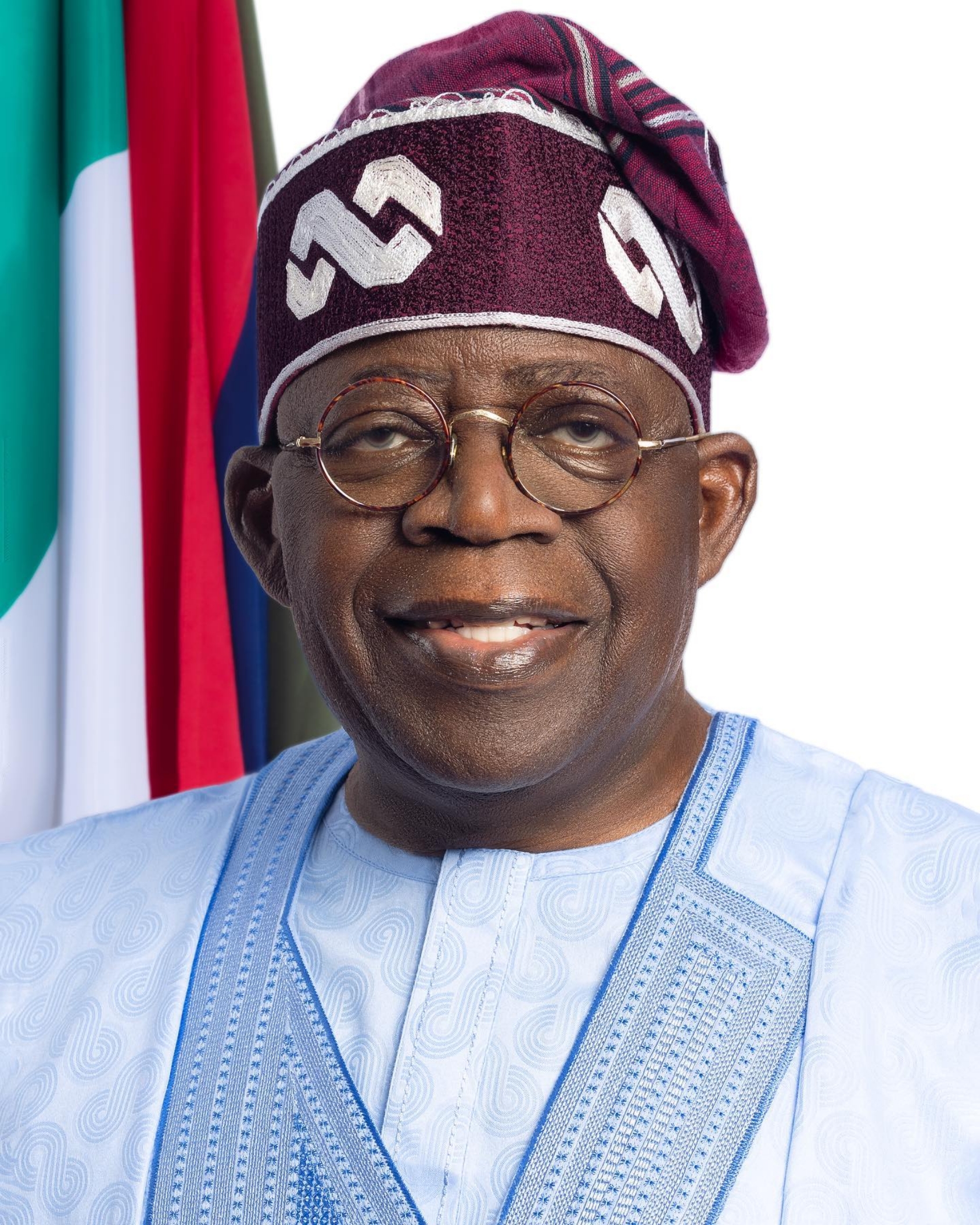
President Bola Tinubu has written the Senate, seeking the screening and subsequent confirmation of fifteen nominees to the National Human Rights Commission (NHRC).
The letter was read by the President of the Senate, Senator Godswill Akpabio.
The letter seeks the reconstitution of the commission’s board in line with statutory provisions with the list comprising nominees from diverse professional backgrounds, including the media and legal sectors.
Among the nominees are the President, Nigeria Guild of Editors and Editor, Vanguard Newspapers, Mr. Eze Anaba; and Dr. Salamatu Hussaina Suleiman, who has been proposed as chairman of the board.
The Executive Secretary of the Commission, Dr. Anthony Ojukwu (SAN) is to retain his position as the Chief Executive Officer.
Other nominees include Mrs Roseline Tasha, Ambassador Adam Yubak Baku, ACG Felix Lawrence, Mr. Edmund Chinonye, Mr. Chinonye Obiaku (SAN), Oluwakemi Asiwaju Okere-Odo, Professor Adedeji Ogunji, Kingsley Chidozie, Mohammed Adelodu, Maupe Ogun Yusuf, and Otunba Francis Meshioye as members.
Also nominated are Patience Patrick and Hawwa Ibrahim, listed as members.
The President said the nominations were made pursuant to Section 2(3) of the National Human Rights Commission (Establishment) Act, 2010, which empowers him to constitute the board subject to Senate confirmation.
He explained that the reconstitution of the board was necessary to enhance the commission’s institutional capacity and enable it to more effectively discharge its mandate to promote and protect human rights across the country.
If confirmed, the new board is expected to play a critical role in reinforcing the NHRC’s oversight functions, particularly at a time of heightened concerns over rights protection and accountability in Nigeria.
Following the presentation of the request, the Senate referred the nominations to its Committee on Judiciary, Human Rights and Legal Matters for screening and report within two weeks.

The Economic and Financial Crimes Commission, EFCC, has revealed that it investigated the founder of Streams of Joy International, Pastor Jerry Eze, for six months over suspected money laundering before clearing him.
Ola Olukoyede, chairman of the Commission, disclosed this on Wednesday while speaking at the Jerry Eze Foundation Business Grant Award Ceremony in Abuja.
According to him, the probe was triggered by intelligence reports and petitions after the commission observed large inflows of foreign currencies into the cleric’s domiciliary account.
“We work by intelligence, we work by petitions. At some point, I saw there was an account, a domiciliary account. Dollars, pounds were dropping in like raindrops, from Colombia, from America, from Sri Lanka, even from Togo.
“I said who is this man? Yes, I’ve been hearing about his name, I’ve seen his face a couple of times. I never bothered about what he was doing. I knew he was a pastor.
“So they said this one pastor of streams of joy, go and investigate him. So we went to the investigation. We combed the books,” Olukoyede stated.
The EFCC boss said he subsequently invited Eze for questioning after preliminary findings were compiled by investigators.
He added that upon meeting the cleric and reviewing the findings of the investigation, the commission found no wrongdoing.
“So he came to my office. He told me what happens and all of that, and how the money came, what he does, how he has been helping people, and all of that.
“I said, you know what, I didn’t call you here to explain to me. We have already done our work. I called you here to commend you,” he stated.
The remark drew applause from the audience, as Eze, who was present at the event, acknowledged the commendation.
He noted that the commission has a responsibility not only to investigate financial crimes but also to recognise individuals found to have acted with integrity.
The EFCC chairman, however, stated that the agency would continue to monitor financial activities where necessary, stressing that its preventive mandate remains critical in tackling corruption.
-

 News1 year ago
Senate to speed up conclusion of Nigeria Forest Security Service Bill
-
 News9 months ago
The Many Lies Against Bashir Haske
-

 News3 years ago
Breaking: Tinubu’s authentic ministerial nominees
-
 News3 years ago
“Anytime we want to kill terrorists, President would ask us to take permission from France but they were killing our soldiers-” Niger Republic coup leader
-
 News3 years ago
“I’m leaving the Catholic church because Bishop Onah is oppressing me,” says Okunerere
-

 News3 years ago
Radio Nigeria’s veteran broadcaster Kelvin Ugwu dies three months after retirement from service
-
 News3 years ago
Dokpesi and the Gazebo Mystique
-

 News3 years ago
Tsunami: Tinubu orders dissolution of managements, boards of MDAs, to sack all Buhari’s political appointees