News
One year after: How Dr Anslem is replicating Soludo Revolution in Anambra East


By Bonaventure Melah
According to Rosalynn Carter, wife of President Jimmy Carter and former First Lady of the United States, ‘a leader takes people where they want to go and a great leader takes people where they don’t necessarily want to go, but ought to be.”
The revolution currently taking place in Anambra State under the leadership of the Governor, Prof. Chukwuma Soludo, CFR, is surely a tip of the iceberg when compared to the great promises that the ‘Soludo Solution’ project would unleash in the coming three years, towards the realisation of ‘the livable and prosperous homeland’ the Governor is building for the people of Anambra State.
While a greater majority is giving standing ovation to the Governor for what he has done so far, expectedly, there are a few voices saying ‘it should have been done this or that way.’
But like Rosalynn Carter said as quoted above, ‘a great leader takes people where they don’t necessarily want to go, but ought to be.”
Having said that, there is a need to state that the efforts of Governor Soludo to develop and transform Anambra state would yield greater and faster results if the leaders of the various smaller administrative units known as Local Government Areas, do their own parts by using the resources allocated to them to provide primary and basic necessities for their communities while the Governor focuses attention on the Big Pictures, his dream legacy projects.
To achieve that, leaders of the Councils need to clearly understand the visions, mindset and body language of the Governor in order to key in to his overall developmental plan.
It is on that backdrop that we have to commend Dr. Anslem Onuorah, the Transition Committee (TC) Chairman of Anambra East Local Government Area, for the great works he is doing which is simply, a replication of the giant strides of the Governor, this time, at a local level.
It would be recalled that Dr. Anslem Onuora was appointed to that position exactly one year ago, on 2nd August, 2022, by Governor Soludo.
Considering his young age, his appointment was seen as a reflection of Soludo’s “Youth o’clock” mantra in the Anambra State leadership calibration.
From his first day in office and through the 365 days so far, Dr. Onuorah has deployed his youthful energy, education and versatility to initiate several projects, especially in the areas of rural roads construction, water, healthcare and empowerment of young people and widows.
A few of Dr. Anslem’s numerous landmarks are grading and palliative works of Eziagulu-Otu-Enugwu-Otu-Mkpunando Road; Nnadi-Nsugbe Road; Nneyi-Umueri-Anambra West Road; Ngene-Okwazi Road; Igbariam-Achalla Road; Nsugbe-Onitsha Road and many others totaling to over fifty kilometers.
His administration has also rehabilitated gully erosion sites at Umueri Road, collapsed Okwazi Bridge and erosion site; and the embankment of Umueri-Nzam-Ngene Okwazi Road.
Also on record is the renovation of the Chairman’s office at the Council Headquarters, Otuocha; digitization of staff attendance register and general digitization of Anambra East Local Government Services as well as creation of the Local Government website as a tool for interfacing with the state and the world.
In addition to the above, the transition committee under the leadership of Dr. Onuorah successfully powered and activated the IoT-enabled Geospatial Intelligence mapping of the Council Area and the installation of Close Circuit Television, CCTV camera across communities in the area with a dedicated control and situation room to curb insecurity.
In a practical demonstration of the fact that his is following the footstep of Governor Soludo in leadership and vision, Dr. Anslem Onuorah launched the Clean and Green Initiative, CGI, after the state government led the way with its Clean, Green and Sustainable Anambra project, aimed at facilitating effective waste management.
The project was followed by a ‘street by street enumeration of houses’ in the local government with the ASWAMA Committee to ensure an efficient implementation and monitoring of the initiative.
Among initiatives to drive the cause are the Waste Management and Climate Action Committee; Waste Evacuation Committee; Waste Masters; Waste Collection Roadmap; and Tree Planting Committee.
To ensure steady food production, the council ensured effective distribution of palm and coconut seedling provided by the State government to farmers at ward levels in which over 2,800 coconut and 4,800 palm seedlings have been distributed.
In the area of perennial flood menace facing the area, the local government authorities, in collaboration with development partners and the State Government responded swiftly during the 2022 national flood disaster and provided an IDP camp to accommodate displaced persons, with the provision of food, medicine, blankets, sanitary materials and solar powered light to the victims.
In addition to provision of need infrastructure and other physical development projects, Dr Onuorah’s team are neck deep in the area of human capital development which he believes are drivers of grassroots development.
To that extent, the Council has organised a 3-Day retreat for the management staff and the Committee on Education, Economic and Community.
The retreat was meant to fast track the smooth take-off of the Anambra East Special Economic City (The Gateway City) which is aimed at opening up the economic corridors of the Council Area and get management team on board.
For the above and other numerous achievements, just within one year in office, many organisations and individuals have commended Dr. Anslem Onuorah and urged him to continue with the good work.
Among them is the President General of Umueri General Assembly (UGA), Ambassador Dr. John Chukwudi Metchie who in March 2023 commended the Council Chairman- ‘for the rapid development taking place across the communities in the area.’
Metchie also noted that Dr. Onuorah’s humility and loyalty to authorities, was responsible for Governor Soludo’s interest and the state government’s several interventions, especially on security, erosion and other areas.

The Nigerian Meteorological Agency (NiMet) is advancing a national digital platform intended to give farmers, livestock keepers and agricultural advisers more reliable access to location-specific weather and climate information. The NiMet Data Hub, developed with the International Livestock Research Institute (ILRI) and Crea2Solutions, has moved from design and mock-up review to an advanced Minimum Viable Product, with NiMet weather and climate services now under testing.
Work on the hub began in February 2026 under the Climate Services for Youth (CS4Y) and AGRA programmes. By July 2026 the project had progressed from early design to a testable product. The initiative is intended to improve access to historical, monitored and forecast climate information and to support risk analysis, seasonal planning and climate-informed decision-making.
Officials and partners have described the hub as a response to persistent weaknesses in agricultural climate services, including fragmented data, limited coordination among information providers, and the difficulty of turning technical forecasts into timely, practical advice. Stakeholder engagement co-hosted by NiMet and ILRI has focused on mapping Nigeria’s agro-meteorological data and advisory landscape, identifying information and delivery gaps, strengthening institutional linkages, improving last-mile communication, and supporting gender and social inclusion.
The platform is expected to serve farmers, pastoralists, extension professionals, researchers, government institutions and private advisory providers. NiMet resources such as online map rooms and agricultural climate products are expected to feed the system, enabling the development of context-specific agro-weather advisories. ILRI’s contribution is aligned with its wider work of organising research data, developing digital tools and making information more usable for partners and decision-makers.
The project is consistent with the food security, climate-smart agriculture and digital service priorities of President Bola Ahmed Tinubu’s Renewed Hope Agenda. By seeking to place usable climate information in the hands of producers and advisers, the hub is intended to support preparedness, reduce climate-related losses and strengthen agri-food livelihoods.
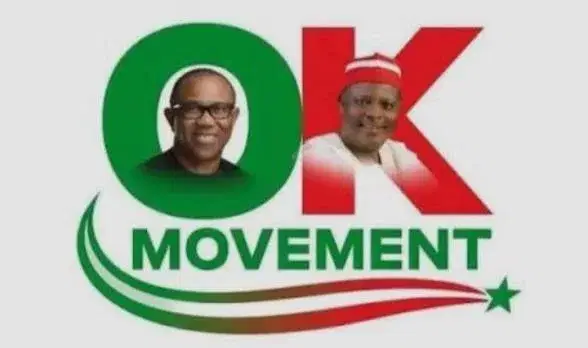
The internal dispute between the Obi/ Kwakwanso support group also known as OK Movement and the leadership of National Democratic Congress, NDC has escalated over the presidential campaign council set up by the movement ahead of the 2027 general election.
Recall that the Movement recently unveiled a 57 member presidential campaign council to work for the Peter Obi and Rabiu Kwakwanso ticket but the NDC issued a statement weekend and disowned the council.
Reacting to the development, the, OK Movement said tt does not require the personal validation or approval of any individual within the Nigeria Democratic Congress (NDC) before exercising its legitimate organisational functions in accordance with established processes.
The OK Movement National Secretary Saadatu Sani said this in a statement on Sunday in Abuja.
Sani rejected a statement credited to the party’s National Chairman, Sen. Moses Cleopas, urging him to familiarise himself with NDC’s constitution before making assertions.
Sani, in her statement, said the movement recognised the supremacy of political parties within constitutional and statutory spheres, but maintained that it remained an independent organisation with its leadership and internal processes.
She insisted that the movement would campaign for the NDC presidential and vice-presidential candidates as well as other party candidates where it had resolved to support them.
“The OK Movement does not require the personal validation or approval of any individual before exercising its legitimate organisational functions in accordance with established processes,” she said.
Sani said the movement was established from the grassroots and did not depend on sponsorship from any individual or political office holder for its activities.
She added that the movement was not seeking political appointments or positions within the NDC as a condition for its support, saying its principles remained its guiding values.
She said the movement had developed a nationwide grassroots structure, with internal membership records indicating approximately 2.5 million registered members and coordinators, supported by relevant data.
The leadership of Nigeria Democratic Congress, NDC, has disowned the Presidential Campaign Council, PCC, set up by the OK Movement ahead of the 2027 general elections.
This is contained in a statement signed by the party’s National Chairman, Cleopas Moses, on Saturday.
Moses stated that the announcement made by one John Ugulu was not authorised and did not come from the party.
According to him, going forward, no individual or group is authorised to announce, constitute or publish any campaign structure or organ in the name of the party without the approval of the party’s National Working Committee, NWC.
The statement partly read: “The leadership of our party, the Nigerian Democratic Congress, NDC, has noted with concern a publication credited to one John Ugulu, announcing a Presidential Campaign Council, PCC, under the guise of the OK Movement.
“For the avoidance of doubt, the party wishes to state categorically as follows: The party hereby dissociates itself in totality from the said OK Movement PCC announcement. It did not emanate from the party and should be disregarded by the public and the media.
“All candidates of the party must appreciate that they are not running as independent candidates. They are products of the party and remain subject to the authority and discipline of the party. Therefore, only the party’s leadership can constitute and announce a PCC.
“No member, candidate or support group should, under any guise, undermine the party or demarcate the party. The party recognises and deeply appreciates the contribution of all support groups and encourages their continued support. We welcome even more support groups who identify with our mission to rescue Nigeria.
“While the party will continue to work collaboratively with all support groups, such groups should not see themselves as alternative party structures or parallel organs of the party.”
-

 News2 years ago
Senate to speed up conclusion of Nigeria Forest Security Service Bill
-

 News1 year ago
The Many Lies Against Bashir Haske
-

 News3 years ago
Breaking: Tinubu’s authentic ministerial nominees
-
 News3 years ago
“Anytime we want to kill terrorists, President would ask us to take permission from France but they were killing our soldiers-” Niger Republic coup leader
-

 News3 years ago
“I’m leaving the Catholic church because Bishop Onah is oppressing me,” says Okunerere
-

 News3 years ago
My nude photo leak was a mistake- lawyer Ifunanya
-

 News3 years ago
Radio Nigeria’s veteran broadcaster Kelvin Ugwu dies three months after retirement from service
-
 News4 months ago
See your state governor’s performance ranking