News
NCCIMA lauds Dangote as Africa’s transformation force


Photo caption: A cross section of participants at the ongoing 2026 Niger National Trade Fair.
Nigeria’s leading industrial conglomerate, Dangote Group, has been described as Africa’s transaction force in economic Renaissance for it’s huge impact not only in the country but across the continent.
The Director General of the Niger Chamber of Commerce, Industry, Mines and Agriculture (NCCIMA), Adamu Salihu, that this whole speaking ahead of Dangote Special Day at the 22nd Niger National Trade Fair in Minna, the state capital.
Mr. Salihu said the Chamber would use the event to further showcase the achievements of the Group to the people of Niger State, Nigerians and the wider African business community.
According to him, Dangote Group’s continued investments in cement, sugar, salt, fertiliser, agriculture and energy have become a model of indigenous industrialisation and proof that African entrepreneurs can build globally competitive enterprises.
The NCCIMA Director General explained that the theme of this year’s fair, Public-Private Partnership as a Panacea for Nigeria’s Growth and Stability, was deliberately chosen to underscore the critical role of collaboration between government and the private sector in driving sustainable development.
He said Dangote Group’s investment profile aligns closely with the development priorities of Niger State, particularly in agriculture, where the company’s rice and sugar businesses complement the state’s vast arable land and ongoing drive to become Nigeria’s leading food production hub.
Mr. Salihu expressed optimism that the Group’s Vision 2030 strategy would help unlock large-scale investments in agriculture, mining and agro processing in Niger State, sectors in which the state enjoys both comparative and competitive advantages.
Dangote Group had unveiled its Vision 2030 roadmap, which seeks to expand African manufacturing, deepen supply chains and grow group revenue to $100 billion by the end of the decade.
Dangote Group currently operates across more than a dozen African countries, with interests spanning cement, sugar, salt, fertiliser, petrochemicals, agriculture and energy.
The company says its core mission is to build local manufacturing capacity, create jobs and reduce dependence on imports across the continent.
Mr. Salihu said the Group’s backward integration strategy and local sourcing model have created wealth for Nigerians by stimulating domestic production and reducing the nation’s dependence on imports.
He described the Dangote Petroleum Refinery as a landmark project that has reshaped Nigeria’s energy landscape by conserving foreign exchange, eliminating fuel shortages, promoting competition and opening new opportunities for indigenous investors.
According to Mr. Salihu, the positive impact of the refinery extends to states such as Niger, where lower logistics costs and improved fuel availability are expected to support manufacturing, agriculture and commerce.
He added that Dangote Group’s commitment to local content, technology transfer and infrastructure development demonstrates how African-owned companies can drive the continent’s industrial transformation.
The NCCIMA Director General urged Nigerian entrepreneurs to emulate the boldness of Group President Aliko Dangote by investing in the country and building businesses that create long-term value.
He also called on large corporations to support nano, micro, small and medium enterprises by integrating them into their supply chains, noting that chambers of commerce can help identify credible businesses to serve as suppliers and service providers.
Mr. Salihu appealed to exhibitors, investors and the public to support the annual Niger National Trade Fair, describing it as a strategic platform for promoting investment, forging partnerships and advancing the economic aspirations of Niger State and Nigeria as a whole.
Salihu said Dangote Group’s industrial ambition is extending beyond Nigeria, noting that recent discussions on the establishment of a major refinery in East Africa further shows the company’s commitment to transforming Africa’s economy.
He said the proposal, which was unveiled by President of Dangote Group, Aliko Dangote, would replicate the 650,000 barrels-per-day Dangote Petroleum Refinery in Lagos and serve the East African market if governments in the region provide the necessary support.
He described the move as a clear demonstration that Dangote Group is “not only industrialising Nigeria, but indeed the whole of Africa.”
According to Mr. Salihu, the planned East African refinery shows the Group’s strategic vision of building world-class industrial assets that reduce Africa’s dependence on imports, conserve foreign exchange, create jobs and strengthen regional value chains.
Dangote announced the proposal during the Africa We Build Summit in Nairobi, where he said his company was ready to construct an identical refinery in East Africa, potentially within the next four to five years, subject to government backing.
Mr. Salihu said this continental expansion aligns with Dangote Group’s Vision 2030 and confirms the company’s determination to use African capital, expertise and technology to drive industrial development across the continent.
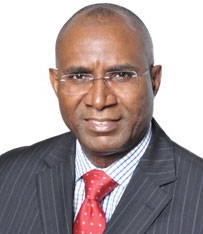
A Federal High Court in Warri has sacked Senator Ovie Omo-Agege as the Nigeria Democratic Congress, NDC, candidate for Delta Central in the 2027 election.
The court, presided over by Justice Hyeladzira Ajiya Nganjiwa, in a ruling on Tuesday, nullified Omo-Agege’s nomination on the grounds that it did not follow the Electoral Act.
The judge ordered the Independent National Electoral Commission, INEC, to delete Omo-Agege’s name from its list of candidates for Delta Central.
Justice Nganjiwa also granted an order stopping Omo-Agege from parading himself as the NDC senatorial candidate for Delta Central.
According to the Electoral Act, primaries must be done at least 180 days before the general election.
The judge held that the window has closed.
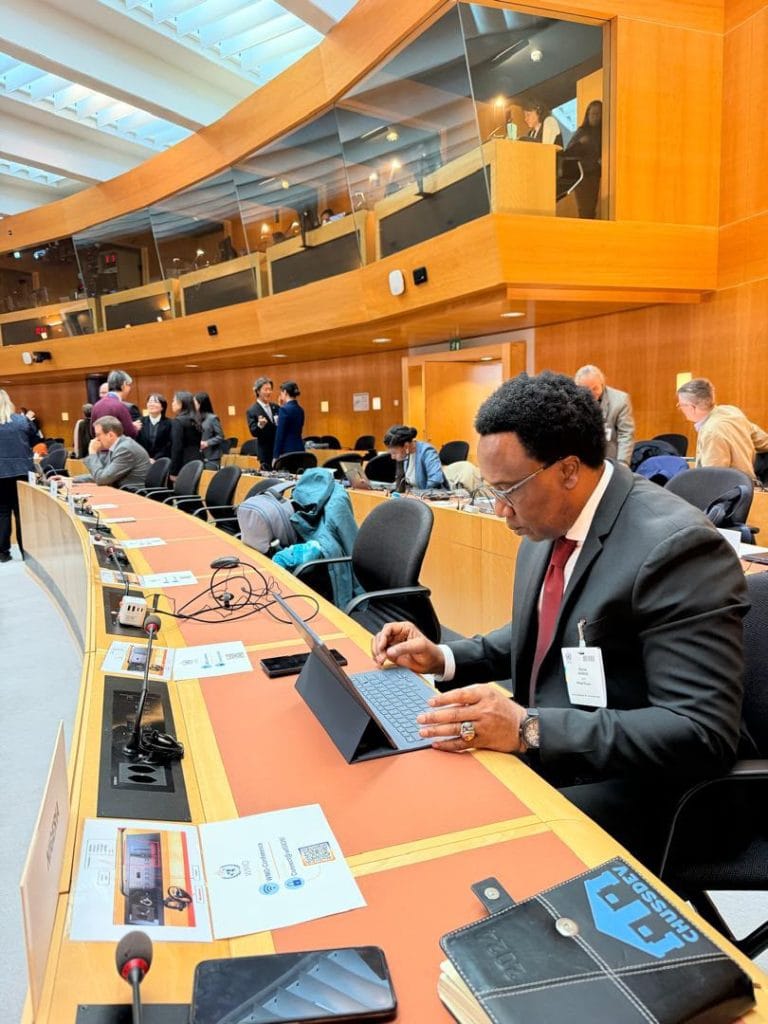
The Director General/CEO of Nigerian Meteorological Agency (NiMet) and Permanent Representative of Nigeria with WMO, Prof. Charles Anosike joins other experts and stakeholders in Geneva for a week-long session of the Commission for Observation, Infrastructure and Information Systems (INFCOM).
The fourth session of INFCOM began on Monday 23rdNovember 2026 and will discuss various technical regulations, competency requirements, standards, cooperations, data generation and exchange including marine, hydrology and cryosphere data, data quality, emerging technologies such as artificial intelligence and machine learning, satellite systems, ICT, etc. that underpin infrastructure on which meteorological, hydrological and related observations depend on.
The next accurate and reliable weather forecast and atmospheric prediction is a function of the quality and quantity of the earth system observations that are available; be it over land, the ocean and in the atmosphere. Hence, the critical importance of the session to all WMO Member Countries, including Nigeria.
Particularly, the first day discussions included WMO Integrated Global Observing System (WIGOS), Global Basic Observing Network (GBON) expansion, the WMO Information System (WIS) improvement, the framework of WMO Integrated Processing and Prediction System (WIPPS), Capacity Development of members, education and training for satellite meteorology, and various competency requirements for officers/experts involved installation, maintenance, calibration, and usage of various instruments for earth system observations.
At a side event on capacity development, the specific role of NiMet as a Peer Advisor in improving observation infrastructure and service delivery for other Meteorological Services on the continent was duly acknowledged.
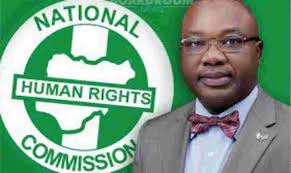
Journalists in Nigeria have been called upon to adhere to the rules of their profession as they cover the 2027 general election.
The Executive Secretary of the National Human Rights Commission (NHRC), Dr. Tony Ojukwu, SAN, OFR, stated this on Tuesday in Abuja at a media parley organized by the Commission with the theme- “Ethical Journalism and the 2027 General Elections: Promoting Professionalism, Peace and Accountability.”
Ojukwu said the choice of the theme was deliberate because elections are much more than political contests or the transfer of power but fundamental human rights processes involving the rights to freedom of expression, access to information, peaceful assembly, political participation and the right of citizens to freely determine their leaders.
He stated that the media occupies a strategic position as it informs voters, scrutinises political actors, shapes public opinion and provides a platform for democratic engagement.
“However, this influence comes with enormous responsibility, particularly at a time when misinformation, disinformation, hate speech, manipulated digital content and politically motivated narratives are increasingly capable of deepening divisions and undermining public confidence in democratic institutions,’ he said.
Accordingly, Ojukwu said the distinction between responsible journalism and irresponsible reporting can have far-reaching implications for national peace, public safety and the enjoyment of human rights adding that media must therefore remain guided by the principles of accuracy, fairness, verification, balance and respect for human dignity.
“While freedom of expression is fundamental to democracy, its exercise must be accompanied by professional responsibility. Our message is simple: the media must not become a vehicle for electoral division; it must remain an instrument for democratic accountability, peaceful participation and national cohesion.
“At the same time, the responsibility for a healthy media environment does not rest on journalists alone. The Commission recognises that journalists must operate in an environment where media freedom is protected and they can perform their professional duties without intimidation, harassment or unlawful interference. Citizens must also have access to credible information to make informed decisions and participate meaningfully in the electoral process.
“As Nigeria’s National Human Rights Institution, the Commission remains committed to promoting and protecting the rights of journalists and strengthening an environment that supports independent, free and responsible media practice. We recognise that protecting journalists is also about protecting the public’s right to information and safeguarding the democratic space.
“Furthermore, as we prepare for the 2027 General Elections, I encourage media practitioners to pay particular attention to human rights issues in the electoral process. These include voter intimidation, political violence, discrimination, attacks on journalists, restrictions on civic participation and violations of the rights of women, children, persons with disabilities and other vulnerable groups.
“In undertaking this important responsibility, however, we must not lose sight of the safety and security of journalists themselves. Election coverage can expose media practitioners to considerable professional and personal risks, particularly in volatile environments.
“It is in recognition of this challenge that the Commission, in collaboration with the Konrad Adenauer Stiftung, will on the 26th of this month launch a Safety Handbook for Journalists and Media Practitioners. The handbook is intended to provide practical guidance to journalists as they navigate the risks associated with field reporting, particularly during the forthcoming elections. We believe that journalists who inform and defend the public interest must also have the knowledge and support required to protect themselves while carrying out their duties,” Ojukwu stated.
Ojukwu thanked journalists for their partnership with the Commission in carrying out its statutory responsibilities and said their job would have been impossible without journalists
He thanked the Director of the United Nations Information Centre (UNIC), Nigeria, Mr. Ronald Kayanja, Civil Society Organisations; Directors and staff of the National Human Rights Commission for attending the parley.
“This gathering represents more than an annual meeting between the Commission and its media partners. It is an opportunity to appreciate your invaluable contributions to human rights reporting, strengthen our longstanding partnership and reflect on the shared responsibility we bear in building a society where human rights, justice, accountability and democratic values are respected.
“In this regard, let me express my sincere appreciation to journalists and media organisations that have consistently reported the activities of the Commission, amplified the voices of victims of human rights violations and brought critical human rights issues to national attention. Through your reports, investigations and public enlightenment programmes, you help connect the Commission with the people we serve. We deeply value this partnership and do not take your contributions for granted.”
He expressed confidence that the day’s parley will provide an opportunity for frank and constructive conversations on the responsibilities of the media in the electoral process.
The Chief Justice of Nigeria, represented by the Senior Special Assistant on Media, asked journalists to priorities accuracy and not speed in their reportage.
He urged journalists to obey the code of conduct of their profession, adding that they should fact chek their stories before going to the press.
He also urged media houses to invest fact checking desks to avoid regrets that comes with publishing unverified information.
Other who spoke at the event include the National Secretary of Nigerian Union of journalists (NUJ)who represented the Union’s President.
-

 News2 years ago
Senate to speed up conclusion of Nigeria Forest Security Service Bill
-
 News1 year ago
The Many Lies Against Bashir Haske
-
 News3 years ago
“Anytime we want to kill terrorists, President would ask us to take permission from France but they were killing our soldiers-” Niger Republic coup leader
-

 News3 years ago
Breaking: Tinubu’s authentic ministerial nominees
-
 News6 months ago
See your state governor’s performance ranking
-
 News3 years ago
“I’m leaving the Catholic church because Bishop Onah is oppressing me,” says Okunerere
-

 News4 years ago
My nude photo leak was a mistake- lawyer Ifunanya
-

 News3 years ago
Radio Nigeria’s veteran broadcaster Kelvin Ugwu dies three months after retirement from service