
Opinion
Two abducted JAMB candidates escape from bandits

Two Unified Tertiary Matriculation Examination, UTME, candidates who were among passengers abducted in a commercial bus in Benue State have escaped from their captors.
The State police Command confirmed their escape and said efforts are being made to rescue the other abducted candidates.
About 14 candidates travelling to Otukpo for the UTME were abducted in Benue State.
A statement by the Police Public Relations Officer, Udeme Edet, on Friday, said the vehicle involved was a Toyota Hiace bus with registration number BGT 234 S4 belonging to Benue Links Limited.
According to the police, one suspect has been arrested in connection with the incident.
The police spokesperson disclosed that the driver violated company policy by embarking on an unauthorised late-night journey.
According to Edet, the driver picked up passengers randomly along the route without issuing a formal manifest, contrary to standard operating procedures.
“The Command has deployed several tactical teams, including the Anti-Kidnapping Unit, and is working with other sister agencies to track down the perpetrators and ensure the safe return of the victims,” the statement said.
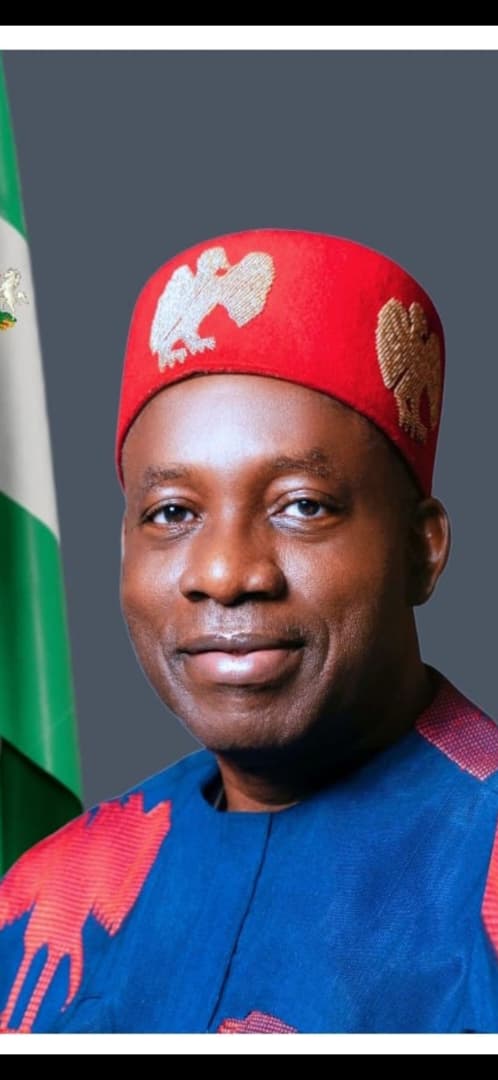
By Christian ABURIME
There is a peculiar irony in watching a supposedly learned activist who parades a platform called ‘Hungry and Angry Analytical’ and then proceeds to act tactless and offer analyses that are neither enlightening nor accurate, but only hungry and angry ranting.
Just like other disgruntled elements who take sadistic delight in campaign of calumny, Dr. Chido A. A., the self-styled social media critic and convener of the aforementioned platform, has made a cottage industry out of confrontational attacks on Governor Chukwuma Charles Soludo’s administration in Anambra State. His latest salvo, targeting the Governor’s recent visit to London for a diaspora civic town hall meeting, is perhaps his most hollow and irresponsible yet. It is not an innocuous critique. It is political mischief dressed up as civic concern.
Let us be clear about what actually happened. Governor Soludo travelled to London to render an account of his first term in office to Ndi Anambra in the diaspora. This is not a jamboree; it is governance. The Governor did not abandon his job at home. He went to meet his state stakeholders who live and work abroad, who care deeply about the state of their homeland, and who deserve the same access to their elected leader as those at home.
What the Hungry and Angry rabble-rouser and his co-travellers miss, whether by ignorance or by design, is that citizens’ engagement is not a luxury Governor Soludo occasionally indulges. It is his governing philosophy. Long before the ballot box gave him the mandate, and consistently since, Governor Soludo has treated dialogue with the people as crucial to leadership.
His town hall meetings have spanned the United Kingdom, the United States, Abuja, and Lagos. Closer to home in Anambra, he has sat with traders, transporters, community leaders, and ordinary stakeholders, not for a show-off, but because he understands that responsive government requires that the governed be heard. These interactions, however quiet and unglamorous, are among the surest foundations of transparent governance.
Our Hungry and Angry analyst is of course free to criticise. Vigorous debate about governance is healthy, even necessary. But criticism that misrepresents the facts, that frames accountability as indulgence and civic duty as dereliction, does not serve Anambra people. It serves only the critic’s profile. When a platform built on anger mistakes disruption for analysis and provocation for insight, it forfeits the moral authority to hold anyone else to account. Ultimately, Ndi Anambra, at home and abroad, know the difference between a leader who shows up and a commentator who always rants.
There are moments in the life of a nation when words feel insufficient, when language strains under the weight of loss. This is one of those moments.
Nine days ago, in a piece titled The Ink Bleeds Again, I warned that the cost of documenting power in Nigeria was becoming unbearably high. I wrote then with anxious hope, praying that those in critical condition would recover, and that our familiar tragedy would not claim another name. That warning was not rhetorical. It was a plea.
Today, that plea echoes back as lament.
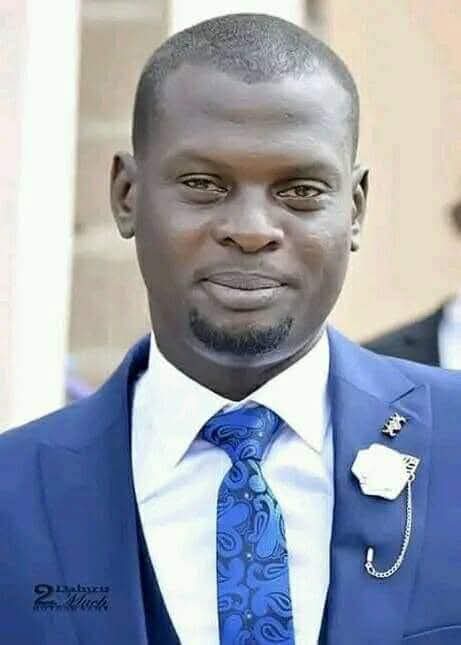
The death of Kani Ben, a cameraman with Channels Television, is not merely another headline in our weary catalogue of national grief. It is the grim confirmation that the ink I spoke of has indeed bled into loss.
It is a stark reminder that in Nigeria, even those who document history are not safe from becoming its casualties.
Kani was not a man of loud opinions. He spoke through images. Through his lens, we witnessed ribbon cuttings, policy launches, and declarations of progress.
He framed optimism carefully, capturing the theatre of governance as it unfolded across the North East. Yet behind the steady hand that held the camera was a professional navigating the perilous reality of our roads, our logistics, and our indifference to safety.
For years, I have observed a troubling pattern. The press is summoned to bear witness to achievement, but little thought is given to the cost of that summons.
Journalists and crew members are too often treated as incidental, necessary for publicity, yet invisible in planning. Transport is improvised. Safety protocols are assumed rather than assured.
Risk is normalised.
We must confront an uncomfortable truth, that this culture persists because we have allowed it to persist.
When I wrote The Ink Bleeds Again, I hoped it would serve as a mirror—an urgent reflection that might provoke change before grief became irreversible. Instead, it now reads like a preface to this mourning.
A news story is never worth a life. No commissioning ceremony, no speech, no carefully choreographed display of development justifies a journey undertaken without adequate protection.
When institutions—whether governmental or corporate—invite journalists into their orbit, they assume a duty of care. That duty cannot be rhetorical. It must be practical, structured, and enforceable.
The loss of Kani Ben should force us to reconsider what we mean by professionalism. Professionalism is not merely punctual attendance and technical excellence; it is the creation of conditions in which professionals can perform their duties without unreasonable danger.
If we truly value the media as a pillar of democracy, then safeguarding its practitioners must become non-negotiable.
There is also an introspection required within our own ranks.
We have, at times, internalised the hazards of the job as though they were badges of honour. We speak casually of dangerous assignments, unreliable transport, and impossible deadlines. We pride ourselves on resilience. But resilience should not mean resignation.
The silence that follows a death such as this is often filled with condolences and promises. Yet silence can also signal complicity if it is not followed by reform. We must demand clear safety standards for press engagements.
We must insist on accountability when those standards are ignored. And we must cultivate a professional culture that empowers journalists to refuse unsafe conditions without fear of reprisal.
Kani Ben devoted his career to ensuring that others were seen and heard. In his passing, we must ensure that he is neither reduced to a fleeting tribute nor absorbed into routine tragedy. His death is not only a loss; it is the fulfilment of a warning we should have heeded.
The camera has fallen silent. The frame is empty. What remains is our responsibility.
If we do not act—collectively and decisively—the ink will bleed again. And next time, we may once more pretend we were not warned.
~Shu’aibu Usman Leman is a former National Secretary of Nigeria Union of Journalists-NUJ~
… AUF…
(Sunday 15/02/2026)
#Opinion.

By Mazi Uchenna Nwafor
Mike Ozekhome, SAN, Represents Peace, Justice, and the Voice for the Voiceless in Nigeria.
For over four decades, Chief Mike Agbedor Abu Ozekhome, SAN, has stood as one of Nigeria’s most fearless defenders of the oppressed, the marginalized, and the constitution itself. His name is inseparable from Nigeria’s human rights movement, democratic resistance, and the long struggle against military authoritarianism and civilian impunity.
Ozekhome’s life has never been driven by personal enrichment or political convenience. Instead, he has consistently used the law as a shield for the powerless, standing and speaking for journalists silenced for speaking the truth, activists detained without trial, communities displaced by state and corporate excesses, and citizens abandoned by governance failures.
Long before democracy was fashionable, he paid personal and professional prices and sacrifices for insisting that no Nigerian is above the law, and no Nigerian is beneath its protection.
The matter now being framed as a criminal case, arising from a property gift allegedly intended to be registered in London bears all the hallmarks of a civil dispute, not a moral indictment of character. To elevate such an issue into criminal prosecution against a man (Prof. Mike Ozekhome SAN) whose public life has been marked by sacrifice, transparency, and service risks sending a dangerous signal: that those who dedicate their lives to justice may later be punished by the very system they helped to strengthen.
Chief Ozekhome has been a bridge between law and conscience, between the elite courtroom and the forgotten street. His advocacy has promoted peace by insisting on dialogue over repression, justice over vengeance, and constitutionalism over arbitrariness. Weakening such a voice through criminalization does not strengthen Nigeria, it impoverishes its moral capital.
This campaign is therefore not about immunity from the law, but about statesmanship, proportionality, and the preservation of Nigeria’s democratic ethos.
A nation that consumes its defenders risks standing defenseless tomorrow. To stand with Mike Ozekhome, SAN, is to stand with: the rule of law, the dignity of the legal profession, the hope of the voiceless, and the promise of Nigeria’s democracy.
Justice must not only be done, it must protect those who have spent their lives defending it.
@Mazi Uchenna Nwafor
#StandWithMikeOzekhome
#JusticeForMikeOzekhome
#defenderofthevoiceless
#RuleOfLaw
#JusticeMustBeDone
#SANsForJustice
#LawAndConscience #ProtectDemocracy
#HumanRightsDefenders
#NoToCriminalization
#nigeriamustrise
-

 News1 year ago
Senate to speed up conclusion of Nigeria Forest Security Service Bill
-
 News9 months ago
The Many Lies Against Bashir Haske
-

 News3 years ago
Breaking: Tinubu’s authentic ministerial nominees
-
 News3 years ago
“Anytime we want to kill terrorists, President would ask us to take permission from France but they were killing our soldiers-” Niger Republic coup leader
-
 News3 years ago
“I’m leaving the Catholic church because Bishop Onah is oppressing me,” says Okunerere
-

 News3 years ago
Radio Nigeria’s veteran broadcaster Kelvin Ugwu dies three months after retirement from service
-
 News3 years ago
Dokpesi and the Gazebo Mystique
-

 News3 years ago
Tsunami: Tinubu orders dissolution of managements, boards of MDAs, to sack all Buhari’s political appointees