
News
Nigeria’s democracy not meeting citizens aspirations- Jonathan

By Bonaventure Melah
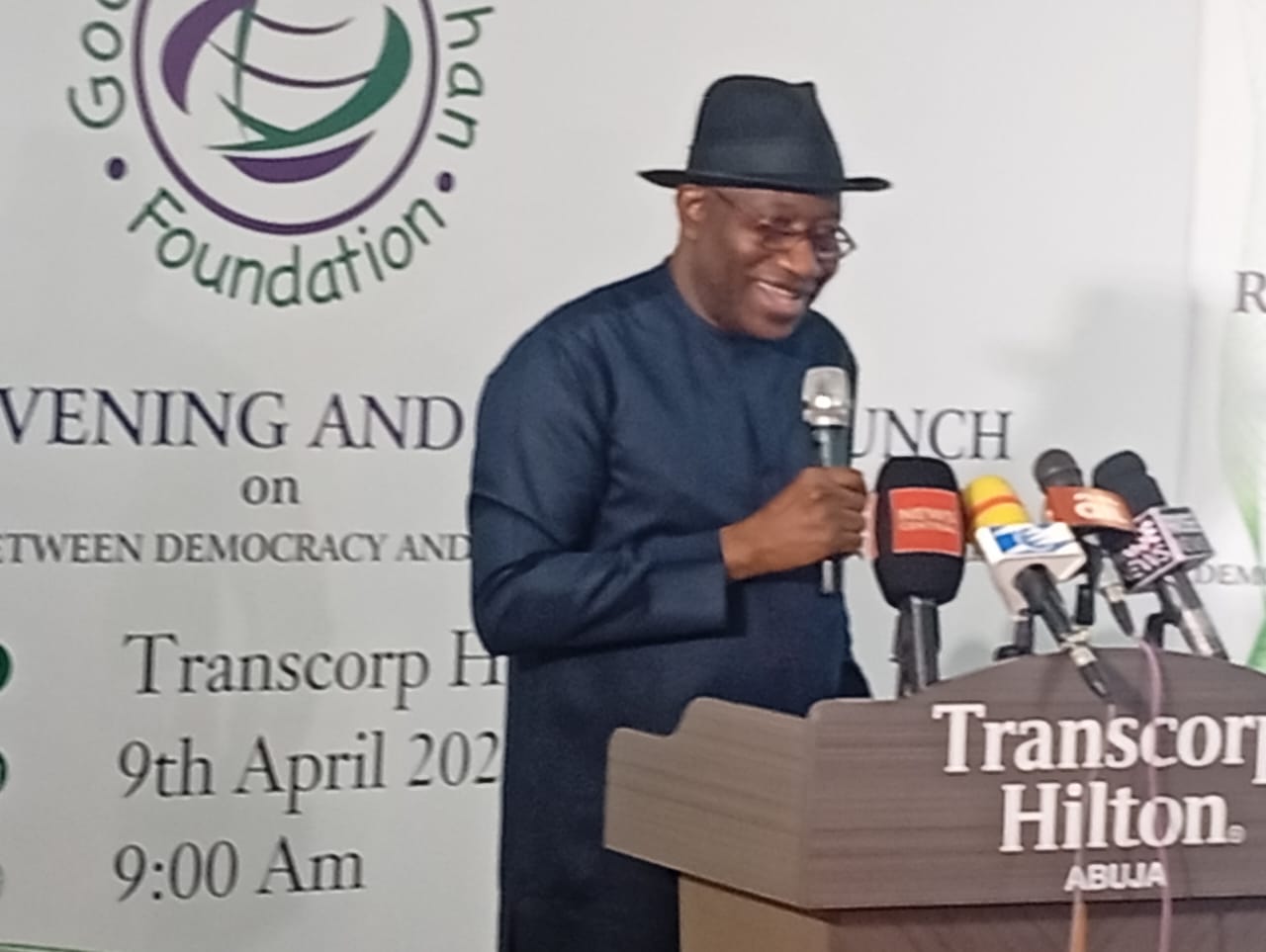
Former President, Dr. Goodluck Jonathan, on Thursday, questioned the form of democracy being practiced by Nigeria , saying the system has failed to meet the dreams and aspirations of citizens.
Jonathan said there are countries that are not practicing western style democracy but are proving quality governance for their people citing China as an example.
He therefore called for stronger alignment between democratic governance and sound economic policies, warning that Nigeria must deliver real development outcomes if its democracy is to remain sustainable.
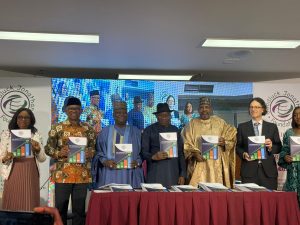
The former president made the remarks in Abuja at the launch of a research report by the Goodluck Jonathan Foundation (GJF) titled: “Strengthening the Nexus between Democracy and Economic Growth in Nigeria.”
He urged policymakers to move beyond the conduct of elections and focus instead on building transparent, accountable institutions capable of fostering innovation, enterprise and economic growth.
Jonathan said the conversation around democracy is becoming more urgent globally, as many countries grapple with economic hardship, insecurity, social tensions and declining trust in public institutions.
He therefore asked whether democratic systems automatically translate into better governance, pointing to examples of non-democratic or hybrid systems that have recorded significant development strides.
“Sometimes when I reflect on these issues, I ask myself: can we truly say democracy always guarantees better governance than other systems, such as what we see in parts of the Arab world or in monarchies?” he said.
He noted that despite not operating a democratic system, countries like China and Dubai have continued to attract global attention, investment and even foreign students.
“Many people travel to Dubai, which has become a global centre. I know some Americans who even send their children there for schooling, yet it is not a democracy,” he added.
He said that in China, governance combines elements of selection and election, yet, the system produces highly competitive leadership recruitment model.
“In China, before anyone becomes a mayor, there is a rigorous filtering process to ensure only the most capable individuals emerge. When you consider that, can we honestly say our democracy is operating at that level?” Jonathan queried.
However , Jonathan maintained that democracy remains attractive because of its core principles of freedom and justice, which he described as fundamental to human dignity and societal progress.
He concluded that for democracy to endure in Nigeria, it must deliver not just political participation but also tangible economic benefits that improve citizens’ lives.
Earlier in her welcome address, the Executive Director of the Foundation, Ann Iyonu noted that the true test of democracy doesn’t stop at elections but schools that function, clinics and hospitals that work for the people, structures that last, and institutions that deliver.
She said democracy should be judged by results, not just elections, adding that the challenge is not lack of laws or agencies but enforcement strategies put in place by government.
“Democracy thrives when institutions uphold rules, procurement is transparent, audits lead to action, and reforms survive political turnover,” she said.
According to her, government needs to dogitaluze procurement, strengthen audits, reward transparency and ensure reforms on service delivery.
In his remark, Vice President, Kashim Shettima, who was represented by his Special Adviser, General Duties, Aliyu Modibbo, praised Dr. Jonathan for his exemplary leadership qualities and the value he added in Nigeria’s leadership process, adding that the former president remains a hero for his selfless service and sacrifices to sustain Nigeria’s unity.
In his own remark , Secretary to the Government of the Federation, Senator George Akume who was represented by the Permanent Secretary, General Office, Dr. Abubakar Kana, enumerated some achievements of President Bola Tinubu’s administration and said government welcomed constructive criticisms from patriotic citizens. He commended Dr. Jonathan for his patriotism and statesmanship.
Others who spoke at the event include Dr. Matthew Ayibakuro, Governance Advisor to FCDO, who said democracy is achieved only when leaders pursue a public-centric agenda, prioritizing basic infrastructure and human capital empowerment for real democratic dividends; Public Affairs analyst, Majeed Dahiru who was among the lead discussants and representatives of the Chairman of the Economic and Financial Crimes Commission (EFCC).
Other who spoke at the event include the Secretary to the Government of the Federation, Senator George Akume who was represented by. Public Affairs analyst, Majeed Dahiru, representatives of the Economic and Financial Crimes Commission, EFCC; Centre for Democracy and Development (CDD), Media Rights Agenda, Acion Aid.
The event was attended by many dignitaries including former Anambra State governor, Mr. Peter Obi and members of the diplomatic community while Stanley Achonu presented the Research Report.
.
News
“Why did soldiers bury my son’s brain after killing him,” mother of slain Abuja NYSC member questions

Madam Habitat Abubakar, the mother of a 24-year-old civil engineer, Abdulsamad Jamiu, who was allegedly shot dead by soldiers in the Kubwa area of Abuja, has demanded justice for her son.
Abdulsamad, popularly known as Kesh, was reportedly killed inside his bedroom in the early hours of Saturday, April 26, 2026.
His mother was in Okene, Kogi State, with her husband for a burial and firdau prayers when the incident occurred.
She was said to have been shielded from the full details of her son’s death until she arrived at the family compound in Abuja, where she fainted after learning the truth.
She questioned the circumstances surrounding her son’s death and the alleged actions of the soldiers after the incident.
She said, “Why did they jump my fence? Why did they enter my son’s room? Why did they kill him? Why did they call the vigilance team to come and mop his blood? Why did they instruct them to go and bury my son’s brains?”
She described Abdulsamad as a responsible young man with a bright future.
“He was a responsible boy. He did not joke with his five daily prayers. He was straightforward. He had a bright future. He had plans for himself, for his siblings, for his mother. And just like that, his dream was cut off right in his room,” she said.
Abubakar appealed to President Bola Tinubu, the First Lady, Kogi State Governor, Ahmed Ododo, his wife, Sefiya, activists and Amnesty International to intervene and ensure justice for her son.
“This fight is too big for me. This pain is too big for me to bear,” she said.
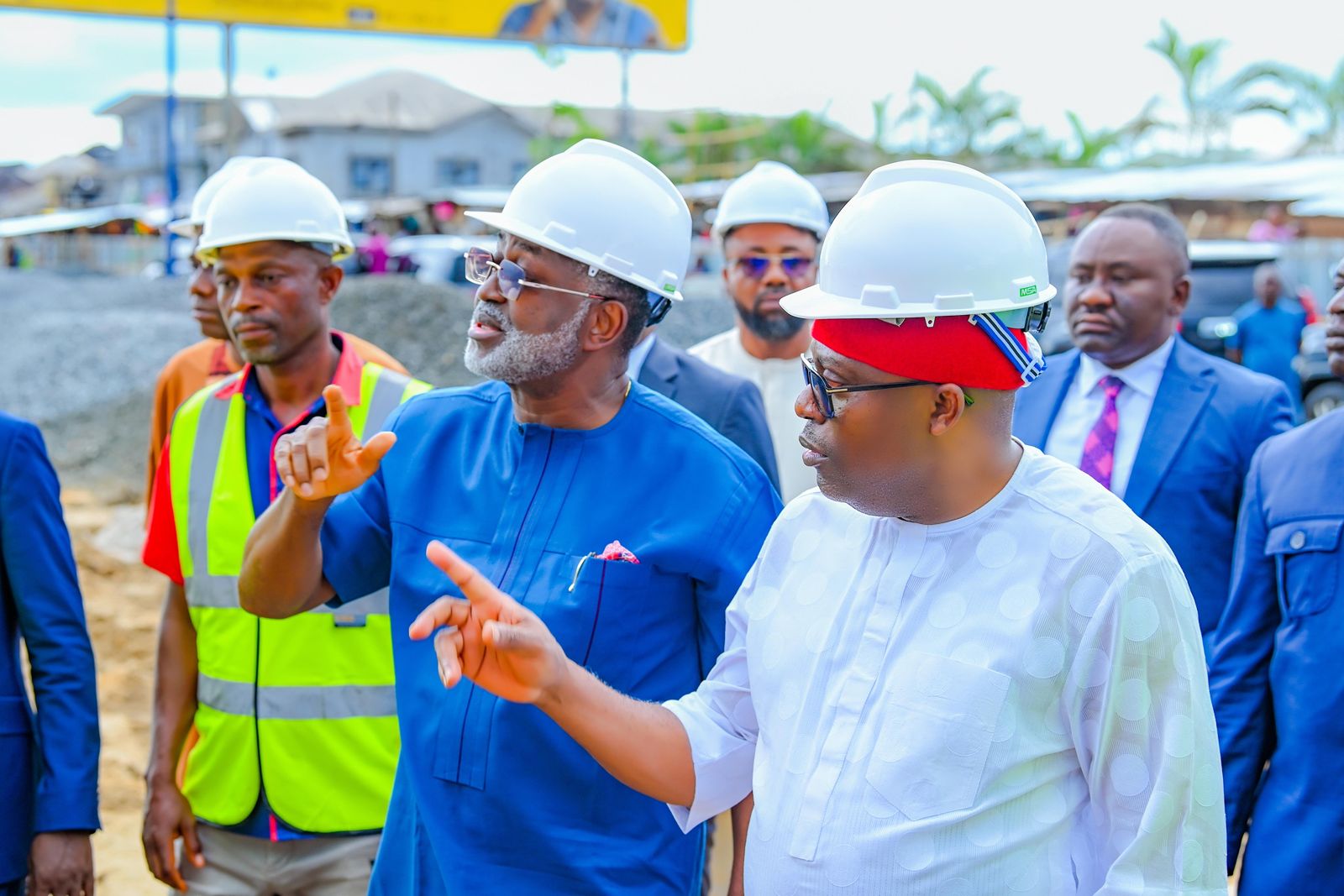
River State Governor, Sir Siminalayi Fubara, on Tuesday, inspected the ongoing construction work at the Creek Road Market, Port Harcourt, declaring that the project will be completed by January 2027.
The new market, which is divided into three sections is designed to provide a decent and more conducive environment for traders who had for many years extended their buying and selling activities to the road due to congestion in the old market.
The governor was conducted round the project site by Architect Opiribo West, the site engineer for E.S.T Masters Construction, the firm handling the project, alongside Hon. Tonye Belgam, the State Commissioner for Special Projects.
Addressing newsmen at the end of the inspection tour, Governor Fubara explained that the reconstruction of the market was borne out of the need to provide adequate space for the traders and clear the surrounding roads of the spillover from the market.
He noted that the ongoing rehabilitation of the network of roads in the old Port Harcourt Township had been significantly hampered by the lack of a modern market, stressing that the new market will be a promise kept and part of the high-quality infrastructure and urban renewal programme of his administration.
“You are aware that we did promise our people that all the roads in town will be fixed. But we had a very serious issue because of the Creek Road section of the township roads . Because of not having adequate space to accommodate the traders in the market, they extended their activities into the road and that became a serious issue for our construction work.
“So we decided that for us to deliver a better project that would impress our people, we must, as a matter of fact, embark on building a better and more comfortable market for our people,” he said.
In a statement signed by Onwuka Nzechi, Chief Press Secretary to the Governor, Sir Fubara explained that while construction work has begun in Section A of the market, Section B is being prepared for immediate commencement of construction while Section C will require a more rigorous engineering approach because of it’s location on a borrow pit.
“As you are aware, we’ve been here once to check the activities of the contractor. Today, I’m here to see for myself the extent of work that is ongoing. And I feel very happy that they are doing a very good job.
“They just informed me that the market is divided into three sections. The section A and the section B and the section C. The A is the one we just saw here that they’ve already started from the ground. This B section is the other side which they will start soon, while the C section is the one that they discovered that it was a borrow pit.
“And you know, you can’t build on top of a borrow pit. So we had to do evacuation and filling. So I believe that once those things are done, the other part of the section of the market will also commence. They even assured me that the timeline I gave to them for January that they are going to deliver the project fully for our people to use,” he said.
Governor Fubara emphasised that the investment in a modern market is an integral part of his administration’s agenda on good governance through the delivery of legacy projects.

By Bonaventure Melah
Although the federal government is currently working on the Onitsha-Enugu expressway, one of the major interconnectivity roads in South East, concerns have continued to mount over the presence of over 32 checkpoints along the expressway which, observers say, are constitution serious barrier to smooth movement of persons and goods, thereby defeating the objective of reconstructing the road, in the first place.
Below is the list of the 32 security checkpoints along Onitsha- Enugu expressway:
1. Army Gate Onitsha
2. Nkwelle Junction
3. Awkuzu Junction Army
4. Awkuzu Junction FRSC
5. Dunukofia LG hqts Police
6. Enugwu-Ukwu Junction Police
7. Amawbia Junction Police
8. Unizik Junction Army
9. Mopol base Awka Junction Police
10. Prince and Princess hostel front army
11. Amansea boundary Police
12. Ugwuoba boundary Police
13. Ugwuoba bridge police team
14. Ugwuoba Junction Army
15. Ugwuoba Junction NDLEA
16. Ugwuoba Junction FRSC
17. Ugwuoba Central Army
18. Oji River Junction Army 1
19. Oji River Junction Army 2
20. Ezeagu express Army
21. Near Nkwo ezeagu Police
22. Near tiles factory Police
23. Umumba Ndiuno express Police 1
24. Umumba Ndiuno express Police 2
25. 9th Mile Checkpoint
26. Nude express (approach to ninth mile) Police
27. Ngwo express Army
28. Ngwo express anti terror squad
29. Onyeama Hill (near refuse dump) Army
30 Onyeama Hill (near coal mine) Army
31. Abakpa Interchange Police
32. Abakpa Junction FRSC.
Note: A traveller moving just 105 KM from Onitsha to Enugu will endure will have to endure this nightmare. A journey that should ordinarily take about 40 mins therefore ends within 3 hours.
Approximately, it stands at a ratio of one checkpoint after every 3.7 km. This is in addition to heavy extortion motorists face from the security operatives stationed at the checkpoints.
Source: Dr Amaka Oforbuike.
-

 News1 year ago
Senate to speed up conclusion of Nigeria Forest Security Service Bill
-
 News9 months ago
The Many Lies Against Bashir Haske
-

 News3 years ago
Breaking: Tinubu’s authentic ministerial nominees
-
 News3 years ago
“Anytime we want to kill terrorists, President would ask us to take permission from France but they were killing our soldiers-” Niger Republic coup leader
-
 News3 years ago
“I’m leaving the Catholic church because Bishop Onah is oppressing me,” says Okunerere
-

 News3 years ago
Radio Nigeria’s veteran broadcaster Kelvin Ugwu dies three months after retirement from service
-
 News3 years ago
Dokpesi and the Gazebo Mystique
-

 News3 years ago
Tsunami: Tinubu orders dissolution of managements, boards of MDAs, to sack all Buhari’s political appointees