News
ECHOES OF LAGOS IN DAVOS: MARK CARNEY’S CALL MIRRORS BOLAJI AKINYEMI’S 1987 CONCERT OF MEDIUM POWERS


By- Agabaidu Jideani
In the crisp mountain air of Davos on January 20, 2026, Canadian Prime Minister Mark Carney delivered a resonant address at the World Economic Forum, framing the current global order as undergoing a profound “rupture” rather than a mere transition, where great powers wield economic integration as a weapon, through tariffs as leverage, supply chains as vulnerabilities, and financial infrastructure as coercion.
He invoked Václav Havel’s “The Power of the Powerless” to critique the “pleasant fiction” of a rules-based international system, urging middle powers, nations like Canada, neither hegemonic giants nor peripheral actors, to forge a “Compact for Middle Powers” through “variable geometry” coalitions: issue-specific alliances in trade, investment, culture, and security that build a “dense web of connections” to foster resilience and positive-sum complementaries.
Carney’s rhetoric, emphasizing that “if we’re not at the table, we’re on the menu,” positioned this compact as a pragmatic response to intensifying great-power rivalry, particularly amid U.S. President Donald Trump’s aggressive postures on Greenland and tariffs, advocating “values-based realism” rooted in human rights, sustainable development, solidarity, sovereignty, and territorial integrity, while rejecting bilateral subservience or a retreat into isolationist “fortresses.”
Yet, this call, hailed by many for its “true global leadership” and earning a standing ovation, is far from novel; it echoes, almost eerily, the intellectual architecture of Nigerian diplomat Professor Bolaji Akinyemi’s Concert of Medium Powers, proposed nearly four decades earlier in 1987 during his tenure as Nigeria’s Minister of External Affairs under General Ibrahim Babangida’s military regime. Akinyemi’s initiative, conceived amid the late Cold War’s bipolar tensions, sought to assemble an informal, flexible consultative organ of sixteen regionally representative medium powers, countries like Austria, Brazil, India, Malaysia, Mexico, and Sweden, that wielded significant regional influence but lacked superpower status, aiming to mediate global conflicts, promote international peace, and serve as a bridge between the U.S.-led West and Soviet East, thereby attenuating interstate distrust and filling governance voids left by hegemonic dominance. This was not mere idealism;
it was a strategic maneuver to elevate Nigeria beyond its anti-apartheid focus, which risked pigeonholing it as a “one-issue nation” as South Africa’s regime teetered, and to project Nigeria’s burgeoning leadership as Africa’s most populous and oil-rich state, with a GDP of approximately $71 billion and a robust military, onto the global stage.
The exploratory senior officials’ meeting in Lagos in March 1987 rechristened the group the Lagos Forum in deference to Nigeria’s initiatory role, underscoring a deliberate effort to consolidate regional hegemony through multilateralism, distinct yet complementary to the Non-Aligned Movement (NAM), where entities like India and Yugoslavia competed for Third World primacy.
The historical parallels between these two visions are striking, both emerging from eras of systemic fracture: Akinyemi’s amid the ideological stalemate of the Cold War’s twilight, where superpower proxy conflicts ravaged the Global South, and Carney’s in a post-hegemonic multipolarity marked by the erosion of Pax Americana, weaponized interdependence, and crises in finance, health, energy, and geopolitics that expose the vulnerabilities of over-integration. Both proposals embody a realist calculus of ‘middlepowermanship’, where non-hegemonic states leverage collective agency to hedge against dominance, prioritizing sovereignty, multilateral cooperation, and positive-sum outcomes over zero-sum confrontations.
For Akinyemi, this meant linking medium powers for economic diversification, accessing intermediate technologies from partners like Brazil or Malaysia suited to Nigeria’s developmental needs, while mediating disputes to ensure peace was not monopolized by the UN Security Council’s permanent members; for Carney, it translates to issue-based coalitions on AI governance, critical minerals, and climate sustainability, where shared resilience proves “cheaper than autonomy,” and consistent standards are applied to allies and adversaries alike.
Intellectually, they draw from the anarchic society framework, positing order through balanced groupings rather than hierarchy, with Akinyemi’s neutralist, anti-colonial ethos, rooted in dependency theory’s push for peripheral empowerment, mirroring Carney’s normative blend of liberal institutionalism and realist hedging, albeit updated for contemporary concerns like environmental degradation and digital disruption.
The impacts of these initiatives, however, reveal the fragility of such diplomatic innovations, particularly when tethered to individual leadership and national fortunes. Akinyemi’s Concert achieved immediate symbolic resonance, marking Nigeria as “the first black African country to project itself so vividly at the centre-stage of international politics,” enlisting non-African support for its agendas, and countering NAM rivals, yet it faltered post-Akinyemi’s 1987 departure, discontinued amid domestic skepticism about Nigeria’s medium-power credentials and external opposition, lacking institutional anchors to endure the Cold War’s abrupt end in 1991.
Its legacy lingers indirectly in forums like the D8 (Developing Eight) or BRICS reincarnations, but it remained more aspirational than operational, a conceptual pathfinder that highlighted medium powers’ potential without sustaining momentum. Carney’s Compact, still nascent, has sparked rhetorical fervor, praised for charting a “third path” beyond bilateral capitulation or isolation, it has prompted calls for action, new deals with entities like ASEAN and Qatar, and coalitions on Ukraine, yet its longevity hinges on translating oratory into concrete pacts amid great-power resistance, potentially fading like its predecessor if not bolstered by enduring structures.
This comparative lens sharpens when juxtaposed with Nigeria’s waning global influence since the 1980s, a decline that not only aborted Akinyemi’s vision but underscores the structural hurdles Carney’s compact may face.
In mirroring Akinyemi, Carney’s compact implicitly critiques such declines, suggesting that middle powers’ unity could mitigate internal frailties. As Havel might urge, true efficacy demands “living the truth” about these flaws, transforming rupture into renewal through sustained, principled action. In Carney’s Davos Akinyemi’s Lagos was resurrected.

The Supreme Court of Nigeria will on Thursday, deliver judgments in two cases involving the leadership crises rocking the African Democratic Congress and the Peoples Democratic Party.
According to information on the official website of the court, the matters, listed under “Political Appeals”, have been added to the cause list for Thursday, April 30, 2026.
While judgment in the ADC matter, marked SC/CV/180/2026, has been fixed for 2 pm, there is no time yet for that if the PDP.
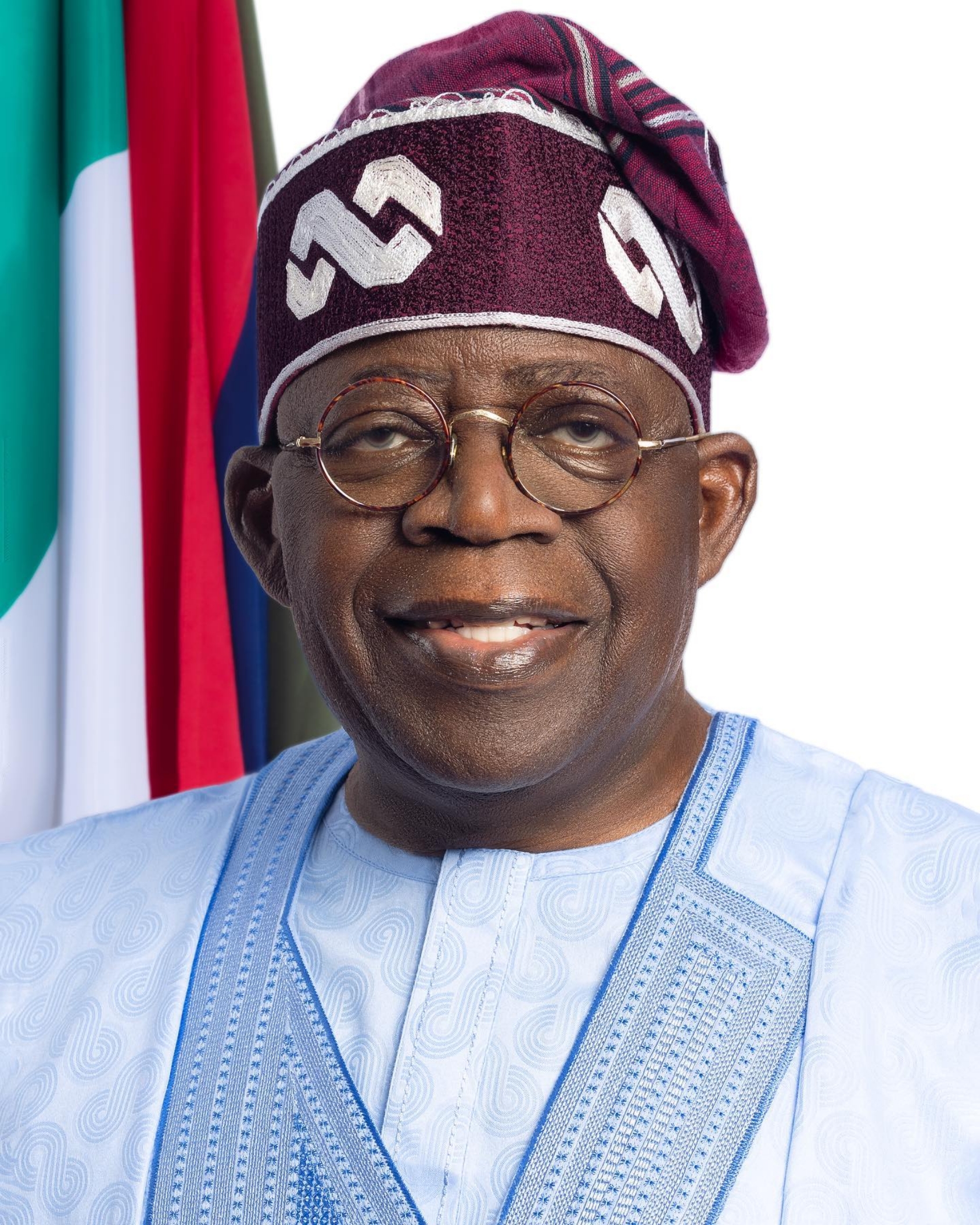
President Bola Tinubu has written the Senate, seeking the screening and subsequent confirmation of fifteen nominees to the National Human Rights Commission (NHRC).
The letter was read by the President of the Senate, Senator Godswill Akpabio.
The letter seeks the reconstitution of the commission’s board in line with statutory provisions with the list comprising nominees from diverse professional backgrounds, including the media and legal sectors.
Among the nominees are the President, Nigeria Guild of Editors and Editor, Vanguard Newspapers, Mr. Eze Anaba; and Dr. Salamatu Hussaina Suleiman, who has been proposed as chairman of the board.
The Executive Secretary of the Commission, Dr. Anthony Ojukwu (SAN) is to retain his position as the Chief Executive Officer.
Other nominees include Mrs Roseline Tasha, Ambassador Adam Yubak Baku, ACG Felix Lawrence, Mr. Edmund Chinonye, Mr. Chinonye Obiaku (SAN), Oluwakemi Asiwaju Okere-Odo, Professor Adedeji Ogunji, Kingsley Chidozie, Mohammed Adelodu, Maupe Ogun Yusuf, and Otunba Francis Meshioye as members.
Also nominated are Patience Patrick and Hawwa Ibrahim, listed as members.
The President said the nominations were made pursuant to Section 2(3) of the National Human Rights Commission (Establishment) Act, 2010, which empowers him to constitute the board subject to Senate confirmation.
He explained that the reconstitution of the board was necessary to enhance the commission’s institutional capacity and enable it to more effectively discharge its mandate to promote and protect human rights across the country.
If confirmed, the new board is expected to play a critical role in reinforcing the NHRC’s oversight functions, particularly at a time of heightened concerns over rights protection and accountability in Nigeria.
Following the presentation of the request, the Senate referred the nominations to its Committee on Judiciary, Human Rights and Legal Matters for screening and report within two weeks.

The Economic and Financial Crimes Commission, EFCC, has revealed that it investigated the founder of Streams of Joy International, Pastor Jerry Eze, for six months over suspected money laundering before clearing him.
Ola Olukoyede, chairman of the Commission, disclosed this on Wednesday while speaking at the Jerry Eze Foundation Business Grant Award Ceremony in Abuja.
According to him, the probe was triggered by intelligence reports and petitions after the commission observed large inflows of foreign currencies into the cleric’s domiciliary account.
“We work by intelligence, we work by petitions. At some point, I saw there was an account, a domiciliary account. Dollars, pounds were dropping in like raindrops, from Colombia, from America, from Sri Lanka, even from Togo.
“I said who is this man? Yes, I’ve been hearing about his name, I’ve seen his face a couple of times. I never bothered about what he was doing. I knew he was a pastor.
“So they said this one pastor of streams of joy, go and investigate him. So we went to the investigation. We combed the books,” Olukoyede stated.
The EFCC boss said he subsequently invited Eze for questioning after preliminary findings were compiled by investigators.
He added that upon meeting the cleric and reviewing the findings of the investigation, the commission found no wrongdoing.
“So he came to my office. He told me what happens and all of that, and how the money came, what he does, how he has been helping people, and all of that.
“I said, you know what, I didn’t call you here to explain to me. We have already done our work. I called you here to commend you,” he stated.
The remark drew applause from the audience, as Eze, who was present at the event, acknowledged the commendation.
He noted that the commission has a responsibility not only to investigate financial crimes but also to recognise individuals found to have acted with integrity.
The EFCC chairman, however, stated that the agency would continue to monitor financial activities where necessary, stressing that its preventive mandate remains critical in tackling corruption.
-

 News1 year ago
Senate to speed up conclusion of Nigeria Forest Security Service Bill
-
 News9 months ago
The Many Lies Against Bashir Haske
-

 News3 years ago
Breaking: Tinubu’s authentic ministerial nominees
-
 News3 years ago
“Anytime we want to kill terrorists, President would ask us to take permission from France but they were killing our soldiers-” Niger Republic coup leader
-
 News3 years ago
“I’m leaving the Catholic church because Bishop Onah is oppressing me,” says Okunerere
-

 News3 years ago
Radio Nigeria’s veteran broadcaster Kelvin Ugwu dies three months after retirement from service
-
 News3 years ago
Dokpesi and the Gazebo Mystique
-

 News3 years ago
Tsunami: Tinubu orders dissolution of managements, boards of MDAs, to sack all Buhari’s political appointees