News
Agabaidu Chukwuemeka Jideani: TAX LAWS CONTROVERSY AND PREVENTING POST-PASSAGE ALTERATIONS


….Legislative Practice and Procedure Expert
Recent controversies surrounding the four Tax Reform Acts of 2025, the Nigeria Tax Act, Nigeria Tax Administration Act, Nigeria Revenue Service (Establishment) Act, and Joint Revenue Board (Establishment) Act, have thrust into sharp relief the dangers of alleged post-passage alterations. These bills, originated by the Executive in late 2024, underwent rigorous scrutiny, were harmonised and passed by both chambers of the National Assembly in early 2025, received presidential assent from His Excellency President Bola Ahmed Tinubu, GCFR, in June 2025, and were subsequently gazetted. Yet, on 17 December 2025, Honourable Abdussamad Dasuki raised a point of privilege in the House of Representatives, contending that the gazetted versions contain substantive deviations from the harmonised texts approved in the Votes and Proceedings. Alleged discrepancies encompass expanded enforcement powers, modifications to tax scopes, alterations to appeal mechanisms, and changes impacting oversight and funding structures. So much for the background.
Now, Nigeria is a Constitutional democracy anchored on the doctrine of Separation of Powers. In ordinary and common language, the powers of the Nigerian state were enumerated and shared, by the Constitution, amongst the three arms of government, viz, the Legislature, the Executive and the Judiciary and between the three tiers of government: the Federal, the State and the Local Governments respectively.
Now, the Constitution of the Federal Republic of Nigeria (CFRN) (1999) vests legislative powers in the National Assembly, comprising the Senate and the House of Representatives[1] and the various State Houses of Assembly[2].
The Constitution, having granted law making powers to the National Assembly, immediately circumscribed the exercise of the powers so granted. In Section 58, it provides that the legislative powers granted by section 4(1) is exercisable by way of ‘Bills” passed by the Senate and the House of Representatives and assented to by the President[3].
Under our laws in Nigerian, a bill becomes an Act only after it is passed by both chambers of the National Assembly in identical form and assented to by the President[4]. It should be noted that the law-making role of the President under the Constitution is limited to granting or withholding assent[5]; there is no constitutional authority for the President or any executive official to amend, alter, or rewrite the content of a passed bill post-passage.
Post-passage alterations, (the unauthorized changes to the text of a bill after its final legislative approval but before or during official publication), pose a profound threat to democratic accountability, separation of powers, and public trust. Such alterations could arise from clerical errors, intentional tampering, or procedural lapses, potentially introducing provisions never debated or approved. This clothes the tainted enactment with Constitutional infirmity.
It is important to note that post-passage alterations could be perpetrated in the process of transmission of the harmonized bill to the President or during the return of the assented Act to the National Assembly and it could be done by any or a combination of more than one of executive and/or legislative branch functionaries.
In all of these the central figure is the Clerk of National Assembly.
The Legislative practice in Nigeria, empowers the Clerk of the National Assembly to employ procedural safeguards, including certification protocols, creation of multiple authenticated copies, enrollment in official records, and conclusive evidential rules, to mitigate these risks[6].
In doing so the legislative practice creates a verifiable “master” version of the law, dispersing authority across branches of government and establishing presumptions of authenticity that courts uphold.
This Nigerian legislative practice is anchored on a solid statutory foundation, provided by the Acts Authentication Act (Cap. A2, Laws of the Federation of Nigeria 2004).
The Acts establishes a structured process to authenticate legislation after passage by the National Assembly, ensuring the integrity and accuracy of enacted laws before presidential assent and prior to publication.
Its primary safeguards against post-passage alterations are found in the empowerment of the Clerk of the National Assembly, to take the following steps:
a) Certification[7]: Soon after a bill is passed in identical form by both the Senate and House of Representatives (harmonised version), the Clerk must prepare a clean copy incorporating all agreed amendments. The Clerk then endorses and signs a certificate on the bill stating: “I certify… that this is a true copy of the bill passed by both Houses of the National Assembly.” This certificate is conclusive evidence that the transmitted text accurately reflects the legislature’s decisions. It prevents unauthorised changes by creating an official, authenticated record.
b) Distribution[8]: Section 5 of the Act provides for distribution protocols, here the Clerk of the National Assembly is empowered to prepare multiple identical copies (triplicate), one retained for National Assembly records, one sent to the President, and one to the Chief Justice of Nigeria for enrolment in the Supreme Court. All subsequent printed copies must initially be impressions from the same authenticated form, ensuring uniformity. The tripartite distribution across legislative, executive, and judicial branches allows cross-verification, deterring unilateral alterations.
These mechanisms vest control firmly with the National Assembly’s Clerk, an independent legislative officer, to prevent executive or administrative tampering between passage and assent/publication.
In essence, while the Act provides robust procedural checks through certification and controlled distribution, a breach could occur if authenticated copies are altered subsequently without legislative re-approval, as allegedly happened in this case.
The alleged post-passage alterations of the relevant Tax Reform Legislation, if substantiated, will erode public trust in the fiscal reforms aimed at broadening revenue amid economic pressures. It risks protracted litigation, delayed implementation (originally slated for 1 January 2026), and constitutional crisis.
Ultimately, preserving legislative sanctity demands vigilance: laws must emanate solely from the people’s representatives, unadulterated by post-passage sleight. The ongoing investigation offers a pivotal opportunity to reaffirm this principle, ensuring Nigeria’s enactments withstand scrutiny as true expressions of democratic will.
Resolutions may involve legislative corrections by way of amendments, judicial invalidation of unauthorized as well as altered provisions, or presidential repudiation of the allegedly altered and gazetted enactment.
Agabaidu Chukwuemeka Jideani, a Legislative Practice and Procedure Expert (amongst others) serve as the Director General of the Abuja Chamber of Commerce and Industry.
[1] Section 4(1), CFRN 1999
[2] Section 4(6) CFRN 1999
[3] Section 58(1) CFRN 1999
[4] Community reading of sections 58 and 59 CFRN 1999
[5] Section 59 CFRN
[6] Acts Authentication Act, Cap. A2, Laws of the Federation of Nigeria 2004.
[7] Section 2 Acts Authentication Act
[8] Section 5 Acts Authentication Act
The leadership of Nigeria Democratic Congress, NDC, has disowned the Presidential Campaign Council, PCC, set up by the OK Movement ahead of the 2027 general elections.
This is contained in a statement signed by the party’s National Chairman, Cleopas Moses, on Saturday.
Moses stated that the announcement made by one John Ugulu was not authorised and did not come from the party.
According to him, going forward, no individual or group is authorised to announce, constitute or publish any campaign structure or organ in the name of the party without the approval of the party’s National Working Committee, NWC.
The statement partly read: “The leadership of our party, the Nigerian Democratic Congress, NDC, has noted with concern a publication credited to one John Ugulu, announcing a Presidential Campaign Council, PCC, under the guise of the OK Movement.
“For the avoidance of doubt, the party wishes to state categorically as follows: The party hereby dissociates itself in totality from the said OK Movement PCC announcement. It did not emanate from the party and should be disregarded by the public and the media.
“All candidates of the party must appreciate that they are not running as independent candidates. They are products of the party and remain subject to the authority and discipline of the party. Therefore, only the party’s leadership can constitute and announce a PCC.
“No member, candidate or support group should, under any guise, undermine the party or demarcate the party. The party recognises and deeply appreciates the contribution of all support groups and encourages their continued support. We welcome even more support groups who identify with our mission to rescue Nigeria.
“While the party will continue to work collaboratively with all support groups, such groups should not see themselves as alternative party structures or parallel organs of the party.”
News
25 dead bodies recovered as families remain uncertain over fate of 500 residents abducted from Niger communities
25 decomposing bodies belonging to victims of a mass abduction that took place in four communities in Niger state have been recovered.
They were part of residents that were abducted by terrorists Dekara, Kpenya, Sabon-Gida and Gidan-Zana in Borgu Local Government Area.
The bodies were recovered after the communities were reportedly alerted on Monday by the abductors to come and identify and retrieve the bodies.
The victims were said to be among about 500 worshippers abducted after Friday Jumm’at prayers on August 21, 2026.
25 bodies were recovered and later given a mass burial in a nearby bush.
The reported killings have heightened anxiety among families whose relatives remain in captivity, with residents saying they are increasingly uncertain about the fate of the remaining abductees.
A source said the abductors allegedly warned that more captives could be killed if their ransom demands were not met.
“They first asked each family to bring N10 million for each captive, but later reduced it to N5 million. There is no way we can afford it,” he said.
News
Democracy: NHRC calls for people-centered policies, robust debate, respect for human rights, dignity
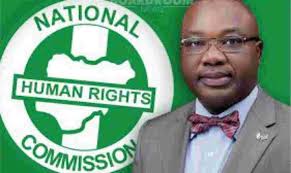
Ahead of the 2027 general election, the National Human Rights Commission (NHRC), has urged authorities and policy makers to prioritize rights of citizens and respect for human dignity over and above the quest to win election and occupy leadership position,
The Executive Secretary of the Commission, Chief Tony Ojukwu, SAN, made the call on Wednesday, as Nigeria joins the rest of the world to commemorate the 2026 International Day of Democracy.
Ojukwu said the day reminds us that democracy is not just about elections, but about the dignity, voice, and rights of every citizen.
He stated that democracy represents the freedom to speak, to choose, to participate, and to hold power accountable without fear; and called on all politicians, political parties and their supporters to exercise restraint and responsibility in public utterances.
He further stressed that democracy thrives on debate, not on hate speech, inciting statements, ethnic profiling, or threats.
A statement by Hajia Fatimah Agwai Mohammed, Director Corporate Affairs and External Linkages at the Commission, quoted Ojukwu to have reiterated that words can build peace or destroy the nation, and urged the political class to make campaigns issue-based and shun any language capable of inciting violence or undermining national unity.
The Chief Human Rights Officer of the country noted that the Commission will continue to monitor hate speech and electoral violence. He called on every eligible Nigerian to rise above voter apathy and actively exercise their civic rights, adding that citizens should not stay away from the polls, sell votes, or believe that votes do not count as these emanate from voter apathy.
Chief Ojukwu lamented that democracy dies when citizens withdraw, and remain silent, he emphasized that the Permanent Voter’s Card remains the power of the people to choose desired leaders.
He therefore urged citizens to come out, vote, and make votes count, describing the choice of leaders as both a right and a duty to Nigeria.
The Executive Secretary who is also the President of the Network of National Human Rights Institutions in West Africa (NNHRI-WA) called on the Federal Government, the Independent National Electoral Commission, and all security agencies to ensure a level playing field for all.
He further stated that government must guarantee the safety of voters, journalists, observers, human rights defenders and the citizens at large.
“Anyone regardless of status or party affiliation, who attempts to make the polity unbearable, who sponsors violence, vote-buying, voter suppression, or attacks on democratic institutions ahead of the 2027 General Elections, must be promptly investigated and prosecuted in accordance with the law, adding that impunity remains the greatest threat to democracy.
In conclusion, Chief Ojukwu called for commitment to a democracy that delivers not just elections, but justice, equality, and human rights for all.
-

 News2 years ago
Senate to speed up conclusion of Nigeria Forest Security Service Bill
-

 News1 year ago
The Many Lies Against Bashir Haske
-

 News3 years ago
Breaking: Tinubu’s authentic ministerial nominees
-

 News3 years ago
“Anytime we want to kill terrorists, President would ask us to take permission from France but they were killing our soldiers-” Niger Republic coup leader
-
 News3 years ago
“I’m leaving the Catholic church because Bishop Onah is oppressing me,” says Okunerere
-

 News3 years ago
My nude photo leak was a mistake- lawyer Ifunanya
-

 News3 years ago
Radio Nigeria’s veteran broadcaster Kelvin Ugwu dies three months after retirement from service
-
 News4 months ago
See your state governor’s performance ranking