
News
Northern Nigeria in danger of total collapse, Dangote, Atiku warn


Africa’s richest person, Aliko Dangote and former vice president Atiku Abubakar have warned that northern Nigeria may further slide into chaos and become totally deserted by investors if the current state of insecurity is not brought under control.
They gave the warning, directly to northern leaders, at the Arewa Consultative Forum, ACF, 25th anniversary dinner in Kaduna.
Dangote, a foreman industrialist and founder of Dangote Group, linked the North’s slow economic growth and rising insecurity to decades of policy inconsistency and chronic electricity shortages.
He said many promising northern industries collapsed because government policies “kept shifting the goalpost,” eroding investor confidence.
He recalled commissioning Arthur Andersen (now part of KPMG) to study why northern textile magnates and other industrialists failed despite strong starts.
The findings, he said, pointed largely to unpredictable government policies and an unreliable power supply. Dangote disclosed that his group connects to public electricity only in South Africa and Ethiopia, because of Nigeria’s unstable grid.
“Without electricity, you cannot have growth, no matter how hard you try,” he warned.
He added that today’s insecurity — banditry, youth joblessness and economic displacement — is a direct consequence of long-standing neglect.
Dangote urged northern leaders to commit to a coherent, long-term economic roadmap anchored on education, industry and agriculture, aligning with the transformation agenda highlighted by Atiku.
He noted that the North has the landmass and population to become West Africa’s food hub, but remains far from realising that potential due to poor planning and inconsistent investment.
He cautioned that unless urgent steps are taken, the crises confronting the region “will consume everyone, whether guilty or not”.
Despite the celebratory tone of the ACF’s silver jubilee, both leaders stressed that the anniversary should serve as a wake-up call.
He cautioned that without a clear vision and collective resolve, the region would “stagnate and sink deeper into insecurity”.
On his part, Atiku praised past ACF leaders for sustaining the body through “thick and thin”. But, he insisted, nostalgia must give way to honest assessment and strategic action.
He recalled how, upon assuming office in 1999, he led efforts to unify the region’s divided political blocs through a reconciliation committee chaired by the Emir of Ilorin, Ibrahim Sulu-Gambari — a process that birthed the modern ACF.
Atiku stressed that the forum was conceived not only to foster political harmony, but to drive development in line with the vision of Sir Ahmadu Bello.
He cited the Sardauna’s 1961 priorities — education, agriculture and industrial growth — noting that they remain more urgent today than ever.
He outlined past initiatives such as the Northern Education Project, which exposed the region’s crumbling school system and triggered reforms that boosted enrolment and transition rates.
He also referenced the Northern Development Project, NDP, which sought to rebuild agricultural value chains and address climate-induced productivity challenges. Yet, he lamented that key obstacles — from energy poverty to multiple taxation — still plague northern industries two decades on.
Warning that diversity was becoming a weapon in the hands of adversaries exploiting fear and disinformation, Atiku urged the North to emulate countries like India and China, which have achieved economic transformation despite vast pluralism.
He challenged northern leaders to confront questions of population growth, food security, education, jobs and the region’s readiness for a knowledge-driven global economy.
“If ever there was a moment for the North to come together, that time is now,” he said.
The leadership of Nigeria Democratic Congress, NDC, has disowned the Presidential Campaign Council, PCC, set up by the OK Movement ahead of the 2027 general elections.
This is contained in a statement signed by the party’s National Chairman, Cleopas Moses, on Saturday.
Moses stated that the announcement made by one John Ugulu was not authorised and did not come from the party.
According to him, going forward, no individual or group is authorised to announce, constitute or publish any campaign structure or organ in the name of the party without the approval of the party’s National Working Committee, NWC.
The statement partly read: “The leadership of our party, the Nigerian Democratic Congress, NDC, has noted with concern a publication credited to one John Ugulu, announcing a Presidential Campaign Council, PCC, under the guise of the OK Movement.
“For the avoidance of doubt, the party wishes to state categorically as follows: The party hereby dissociates itself in totality from the said OK Movement PCC announcement. It did not emanate from the party and should be disregarded by the public and the media.
“All candidates of the party must appreciate that they are not running as independent candidates. They are products of the party and remain subject to the authority and discipline of the party. Therefore, only the party’s leadership can constitute and announce a PCC.
“No member, candidate or support group should, under any guise, undermine the party or demarcate the party. The party recognises and deeply appreciates the contribution of all support groups and encourages their continued support. We welcome even more support groups who identify with our mission to rescue Nigeria.
“While the party will continue to work collaboratively with all support groups, such groups should not see themselves as alternative party structures or parallel organs of the party.”
News
25 dead bodies recovered as families remain uncertain over fate of 500 residents abducted from Niger communities
25 decomposing bodies belonging to victims of a mass abduction that took place in four communities in Niger state have been recovered.
They were part of residents that were abducted by terrorists Dekara, Kpenya, Sabon-Gida and Gidan-Zana in Borgu Local Government Area.
The bodies were recovered after the communities were reportedly alerted on Monday by the abductors to come and identify and retrieve the bodies.
The victims were said to be among about 500 worshippers abducted after Friday Jumm’at prayers on August 21, 2026.
25 bodies were recovered and later given a mass burial in a nearby bush.
The reported killings have heightened anxiety among families whose relatives remain in captivity, with residents saying they are increasingly uncertain about the fate of the remaining abductees.
A source said the abductors allegedly warned that more captives could be killed if their ransom demands were not met.
“They first asked each family to bring N10 million for each captive, but later reduced it to N5 million. There is no way we can afford it,” he said.
News
Democracy: NHRC calls for people-centered policies, robust debate, respect for human rights, dignity
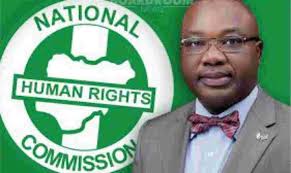
Ahead of the 2027 general election, the National Human Rights Commission (NHRC), has urged authorities and policy makers to prioritize rights of citizens and respect for human dignity over and above the quest to win election and occupy leadership position,
The Executive Secretary of the Commission, Chief Tony Ojukwu, SAN, made the call on Wednesday, as Nigeria joins the rest of the world to commemorate the 2026 International Day of Democracy.
Ojukwu said the day reminds us that democracy is not just about elections, but about the dignity, voice, and rights of every citizen.
He stated that democracy represents the freedom to speak, to choose, to participate, and to hold power accountable without fear; and called on all politicians, political parties and their supporters to exercise restraint and responsibility in public utterances.
He further stressed that democracy thrives on debate, not on hate speech, inciting statements, ethnic profiling, or threats.
A statement by Hajia Fatimah Agwai Mohammed, Director Corporate Affairs and External Linkages at the Commission, quoted Ojukwu to have reiterated that words can build peace or destroy the nation, and urged the political class to make campaigns issue-based and shun any language capable of inciting violence or undermining national unity.
The Chief Human Rights Officer of the country noted that the Commission will continue to monitor hate speech and electoral violence. He called on every eligible Nigerian to rise above voter apathy and actively exercise their civic rights, adding that citizens should not stay away from the polls, sell votes, or believe that votes do not count as these emanate from voter apathy.
Chief Ojukwu lamented that democracy dies when citizens withdraw, and remain silent, he emphasized that the Permanent Voter’s Card remains the power of the people to choose desired leaders.
He therefore urged citizens to come out, vote, and make votes count, describing the choice of leaders as both a right and a duty to Nigeria.
The Executive Secretary who is also the President of the Network of National Human Rights Institutions in West Africa (NNHRI-WA) called on the Federal Government, the Independent National Electoral Commission, and all security agencies to ensure a level playing field for all.
He further stated that government must guarantee the safety of voters, journalists, observers, human rights defenders and the citizens at large.
“Anyone regardless of status or party affiliation, who attempts to make the polity unbearable, who sponsors violence, vote-buying, voter suppression, or attacks on democratic institutions ahead of the 2027 General Elections, must be promptly investigated and prosecuted in accordance with the law, adding that impunity remains the greatest threat to democracy.
In conclusion, Chief Ojukwu called for commitment to a democracy that delivers not just elections, but justice, equality, and human rights for all.
-

 News2 years ago
Senate to speed up conclusion of Nigeria Forest Security Service Bill
-
 News1 year ago
The Many Lies Against Bashir Haske
-

 News3 years ago
Breaking: Tinubu’s authentic ministerial nominees
-
 News3 years ago
“Anytime we want to kill terrorists, President would ask us to take permission from France but they were killing our soldiers-” Niger Republic coup leader
-
 News3 years ago
“I’m leaving the Catholic church because Bishop Onah is oppressing me,” says Okunerere
-

 News3 years ago
My nude photo leak was a mistake- lawyer Ifunanya
-

 News3 years ago
Radio Nigeria’s veteran broadcaster Kelvin Ugwu dies three months after retirement from service
-
 News4 months ago
See your state governor’s performance ranking