
News
June 12 and Nigeria’s Democratic Journey


By Victorson Agbenson
When Nigeria became an independent nation in 1960 neither the British colonial masters nor Nigerians themselves were sure of what was in stock for the new country. The amalgamation of 1914 had brought together, the Northern and the Southern protectorates, a deft but tricky political move which has continued to test the will and commitment of the people of the most populous black nation on earth. The tragic events that began to unfold shortly after the British union jack was lowered in 1960 was an offshoot of this complexity.
And so it was only six years down the line – in the early hours of January 15, 1966, that a group of five majors led a military revolt.
It took another thirty-something years in the wilderness of coups and counter coups, including a bitter civil war, before the country could find its way back on the path of democratic governance.
But this was not without a tough battle.
So, about thirty three years ago, on june 12, 1993, millions of Nigerians trooped out to vote in a landmark election that turned out to be the freest and fairest in our chequered history.
When the military annulled that election, eminent and patriotic Nigerians from all walks of life joined the struggle to restore Chief Moshood Kashimawo Abiola’s mandate and for democracy to return to Nigeria.
Some even paid the supreme price.
So in effect, democracy in Nigeria is still much at an infant, since it began to take root only in 1999 with the Abdulsalami – Obasanjo transition.
Democracy seems to have been over-described and over-defined.
But among the many definitions the most common, and yet most apt, remains government of the people, for the people and by the people, which was postulated by President Abraham Lincoln when he declared in a very critical time in America’s history that “the government of the people, for the people and by the people would not perish from the earth forever”
This description of democracy is one that captures the very idea of some form of organised system, with political parties and regular elections through which the will of the people is expressed.
Democracy has come to be accepted by many today as the most desirable form of government, and as man’s best idea on earth for governance. But unfortunately, the Nigerian democracy has been dogged by the challenge of corruption and bad governance – promoted by a systemic elite that has held tightly to power largely for the purpose of self enrichment.
It was our own Chief Emeka Anyaoku, Former Secretary General of Commonwealth, who pointed out the universal, essential ingredients that must be present in a true democracy. These he said, are “the right of the people to freely choose their governments periodically, the right to freedom of association, especially in forming political parties, the right to freedom of expression, especially freedom of speech and a free media, the primacy of the rule law, and the independence of the judiciary; transparency and accountability of governments to the electorate.”
Upon the return to democracy in 1999, the PDP breasted the tape and soon began to ride rough shod, often disregarding the feelings of Nigerians until it was voted out of power in the historic March 28, 2015 presidential elections. It failed to build an inclusive society, creating a few super rich political elite and their cronies which they are now paying dearly for.
The all Progressives Congress APC that took over has not fared much better as it has dawned on many watchers that Nigerians problem is not about the political platform or party but the inherent nature of politicians in the country.
No doubt, quality leadership has always been a problem in Nigeria. Celebrated writer, Late Chinua Achebe in his book The Trouble with Nigeria traced the nation’s woes to the door post of poor leadership.
Today Asiwaju Bola Tinubu, a prime actor in the pro- June struggle is on the saddle as the elected President of the country but his administration has been dogged by mounting economic challenges which he inherited and has been grappling with.
The coherence that is expected from those who run the levers of government and the cooperation in terms of achieving set goals have been largely lacking amongst the political class.
On the overall, we have been witnessing some form of improvements since the return to democracy.
Without controversy, the 2015 presidential election was a watershed in the history of Nigeria as for the first time an opposition party defeated and took over the reins of authority from an entrenched ruling party, the PDP since the country returned to democratic rule in 1999.
This keenly contested election was a big tussle on all fronts. It was a major test for the country as for the first time, major opposition parties fused to wrestle power from the ruling PDP. That is the beauty of democracy.
The legislative arm has also made some slow progress. During the Obasanjo years it was a case of whoever the president wanted became the Senate President and he removed them at will when they fell out of favour with him.
But today we have seen a more stable legislature which is the main bastion of democracy.
As things stand today, there is the urgent need for a new attitude amongst Nigerians elite.
Writing on Nigeria’s political journey, a prime pro democratic students leader during the June 12 struggle , Ezenwa Nwagwu wrote :
“If it was just about service delivery, the military actually held their own. They built bridges, and they built roads and hospitals. In fact, they built some of the most important and enduring infrastructure our country still relies on today. But there were incredible values that they inculcated – negative values, command-style leadership, suppression of dissent, and authoritarian thinking. It is for this reason that we fought to remove the military and entrench democracy”
Ezenwa says he prefers to focus on the attitude of Nigerian politicians:
“after 26 years, has the attitude of our politicians truly changed? Have we strengthened our processes and institutions? Have we built robust political parties—and just as importantly, a credible opposition? Is governance today more open and accountable? Or are we still struggling to shake off the negative values the military left behind?” On quote.
Already, our nation has been left behind by her contemporaries such as India, Malaysia, Brasil and Singapore. So we must all now insist on a sincere, focused and disciplined leadership that can lead us to the much desired manifest greatness. The way to go is rapid industrialization and diversification. The current administration has embarked on reforms sweeping across various sectors, a process that is still unfolding amidst rising economic challenges.
From the streets of protests to the corridors of government, the spirit of June 12 continues to shape nigeria’s democratic journey.
The labours of our heros past shall never be in vain.
Democracy is not a hundred meters dash , it is a journey and Nigeria is gallantly progressing on that journey!
LET’S CELEBRATE OUR DEMOCRATIC JOURNEY!
The leadership of Nigeria Democratic Congress, NDC, has disowned the Presidential Campaign Council, PCC, set up by the OK Movement ahead of the 2027 general elections.
This is contained in a statement signed by the party’s National Chairman, Cleopas Moses, on Saturday.
Moses stated that the announcement made by one John Ugulu was not authorised and did not come from the party.
According to him, going forward, no individual or group is authorised to announce, constitute or publish any campaign structure or organ in the name of the party without the approval of the party’s National Working Committee, NWC.
The statement partly read: “The leadership of our party, the Nigerian Democratic Congress, NDC, has noted with concern a publication credited to one John Ugulu, announcing a Presidential Campaign Council, PCC, under the guise of the OK Movement.
“For the avoidance of doubt, the party wishes to state categorically as follows: The party hereby dissociates itself in totality from the said OK Movement PCC announcement. It did not emanate from the party and should be disregarded by the public and the media.
“All candidates of the party must appreciate that they are not running as independent candidates. They are products of the party and remain subject to the authority and discipline of the party. Therefore, only the party’s leadership can constitute and announce a PCC.
“No member, candidate or support group should, under any guise, undermine the party or demarcate the party. The party recognises and deeply appreciates the contribution of all support groups and encourages their continued support. We welcome even more support groups who identify with our mission to rescue Nigeria.
“While the party will continue to work collaboratively with all support groups, such groups should not see themselves as alternative party structures or parallel organs of the party.”
News
25 dead bodies recovered as families remain uncertain over fate of 500 residents abducted from Niger communities
25 decomposing bodies belonging to victims of a mass abduction that took place in four communities in Niger state have been recovered.
They were part of residents that were abducted by terrorists Dekara, Kpenya, Sabon-Gida and Gidan-Zana in Borgu Local Government Area.
The bodies were recovered after the communities were reportedly alerted on Monday by the abductors to come and identify and retrieve the bodies.
The victims were said to be among about 500 worshippers abducted after Friday Jumm’at prayers on August 21, 2026.
25 bodies were recovered and later given a mass burial in a nearby bush.
The reported killings have heightened anxiety among families whose relatives remain in captivity, with residents saying they are increasingly uncertain about the fate of the remaining abductees.
A source said the abductors allegedly warned that more captives could be killed if their ransom demands were not met.
“They first asked each family to bring N10 million for each captive, but later reduced it to N5 million. There is no way we can afford it,” he said.
News
Democracy: NHRC calls for people-centered policies, robust debate, respect for human rights, dignity
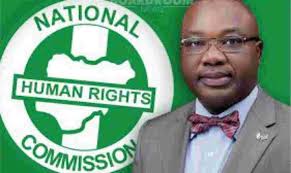
Ahead of the 2027 general election, the National Human Rights Commission (NHRC), has urged authorities and policy makers to prioritize rights of citizens and respect for human dignity over and above the quest to win election and occupy leadership position,
The Executive Secretary of the Commission, Chief Tony Ojukwu, SAN, made the call on Wednesday, as Nigeria joins the rest of the world to commemorate the 2026 International Day of Democracy.
Ojukwu said the day reminds us that democracy is not just about elections, but about the dignity, voice, and rights of every citizen.
He stated that democracy represents the freedom to speak, to choose, to participate, and to hold power accountable without fear; and called on all politicians, political parties and their supporters to exercise restraint and responsibility in public utterances.
He further stressed that democracy thrives on debate, not on hate speech, inciting statements, ethnic profiling, or threats.
A statement by Hajia Fatimah Agwai Mohammed, Director Corporate Affairs and External Linkages at the Commission, quoted Ojukwu to have reiterated that words can build peace or destroy the nation, and urged the political class to make campaigns issue-based and shun any language capable of inciting violence or undermining national unity.
The Chief Human Rights Officer of the country noted that the Commission will continue to monitor hate speech and electoral violence. He called on every eligible Nigerian to rise above voter apathy and actively exercise their civic rights, adding that citizens should not stay away from the polls, sell votes, or believe that votes do not count as these emanate from voter apathy.
Chief Ojukwu lamented that democracy dies when citizens withdraw, and remain silent, he emphasized that the Permanent Voter’s Card remains the power of the people to choose desired leaders.
He therefore urged citizens to come out, vote, and make votes count, describing the choice of leaders as both a right and a duty to Nigeria.
The Executive Secretary who is also the President of the Network of National Human Rights Institutions in West Africa (NNHRI-WA) called on the Federal Government, the Independent National Electoral Commission, and all security agencies to ensure a level playing field for all.
He further stated that government must guarantee the safety of voters, journalists, observers, human rights defenders and the citizens at large.
“Anyone regardless of status or party affiliation, who attempts to make the polity unbearable, who sponsors violence, vote-buying, voter suppression, or attacks on democratic institutions ahead of the 2027 General Elections, must be promptly investigated and prosecuted in accordance with the law, adding that impunity remains the greatest threat to democracy.
In conclusion, Chief Ojukwu called for commitment to a democracy that delivers not just elections, but justice, equality, and human rights for all.
-

 News2 years ago
Senate to speed up conclusion of Nigeria Forest Security Service Bill
-
 News1 year ago
The Many Lies Against Bashir Haske
-

 News3 years ago
Breaking: Tinubu’s authentic ministerial nominees
-
 News3 years ago
“Anytime we want to kill terrorists, President would ask us to take permission from France but they were killing our soldiers-” Niger Republic coup leader
-
 News3 years ago
“I’m leaving the Catholic church because Bishop Onah is oppressing me,” says Okunerere
-

 News3 years ago
My nude photo leak was a mistake- lawyer Ifunanya
-

 News3 years ago
Radio Nigeria’s veteran broadcaster Kelvin Ugwu dies three months after retirement from service
-
 News4 months ago
See your state governor’s performance ranking